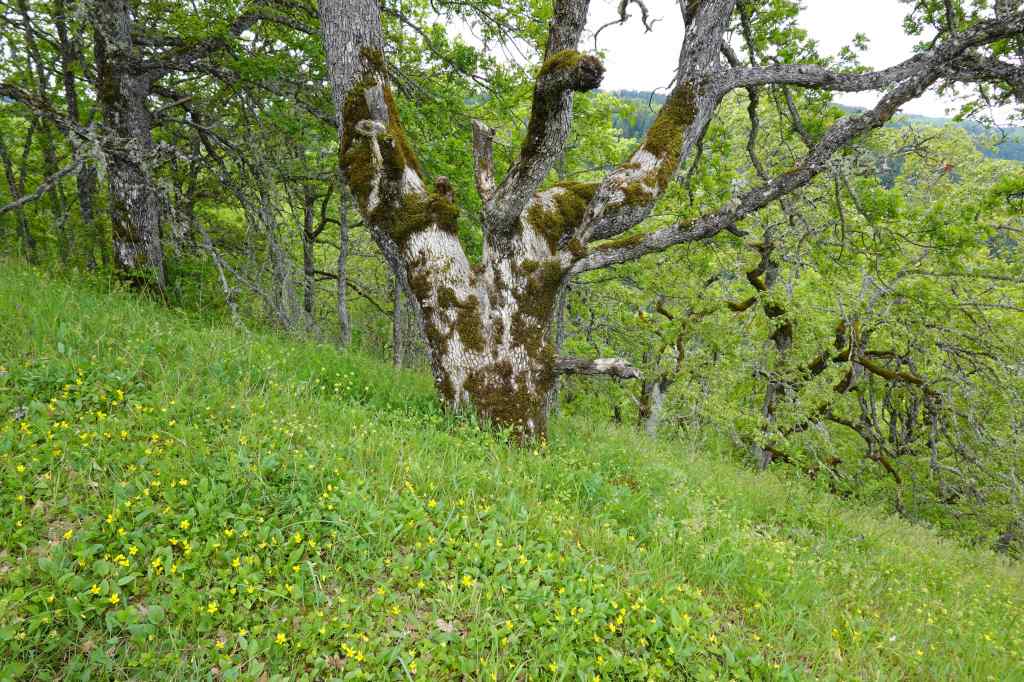
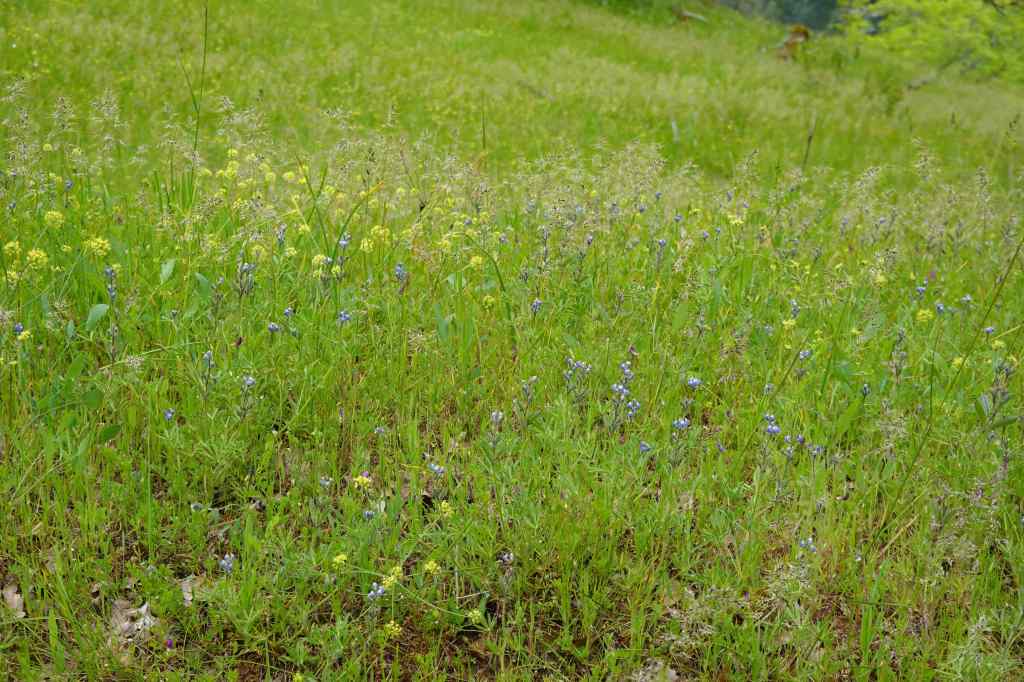
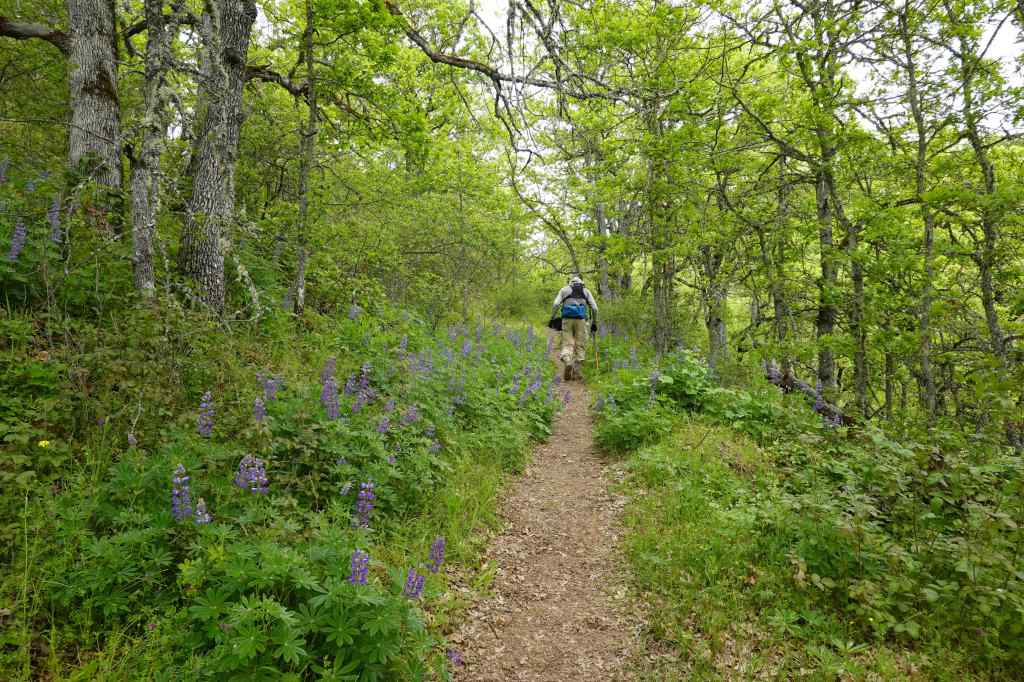
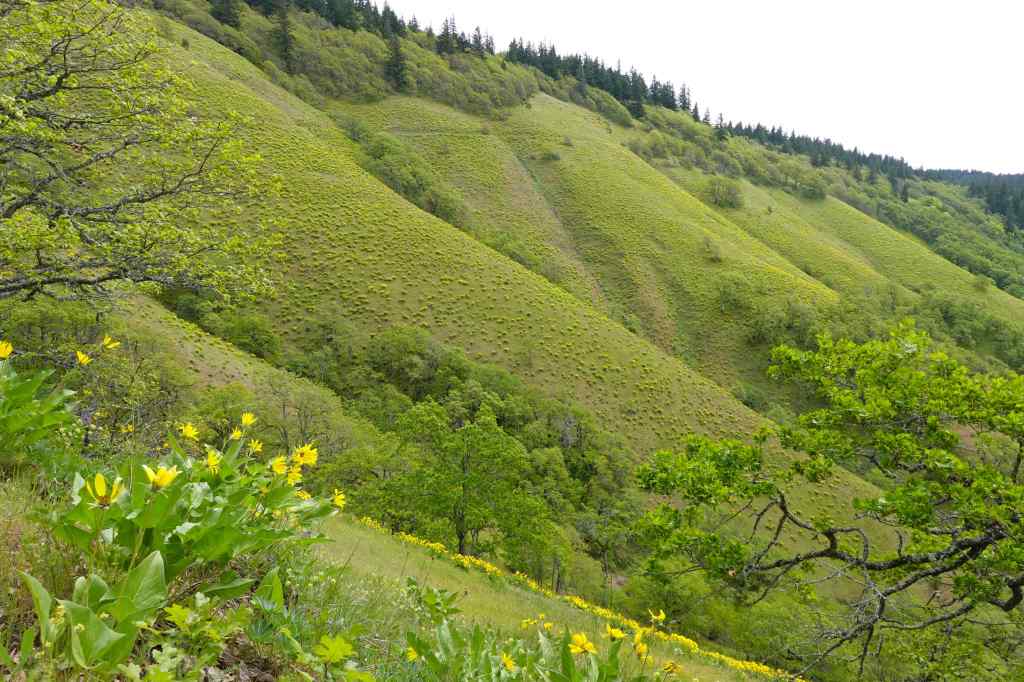
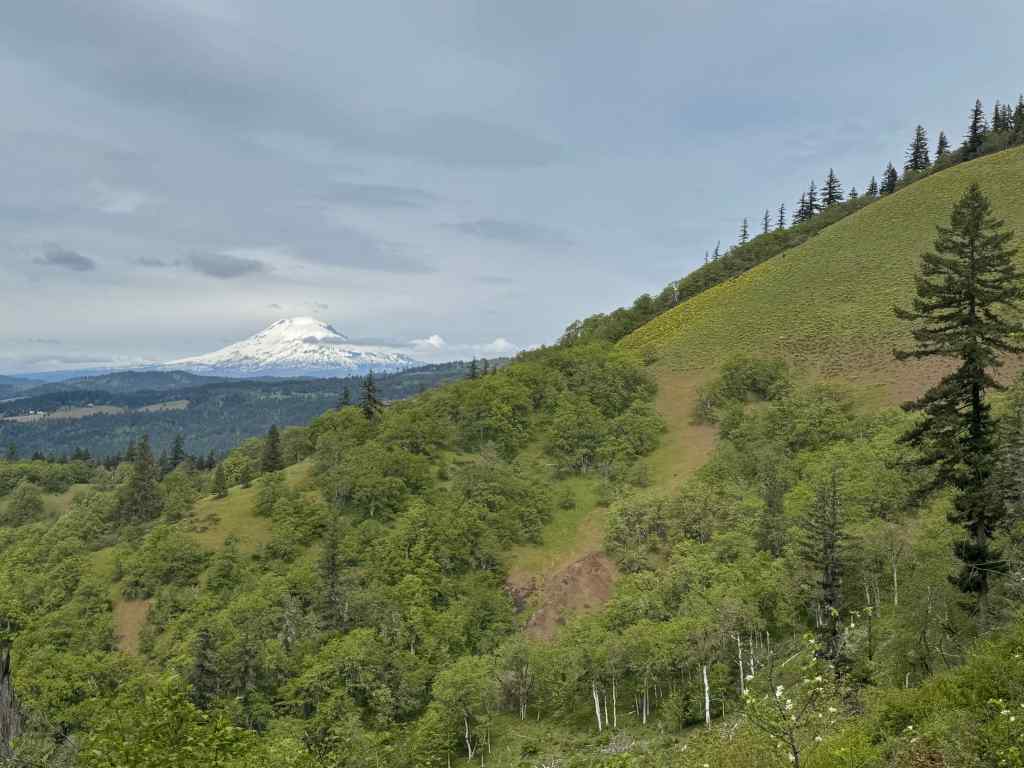
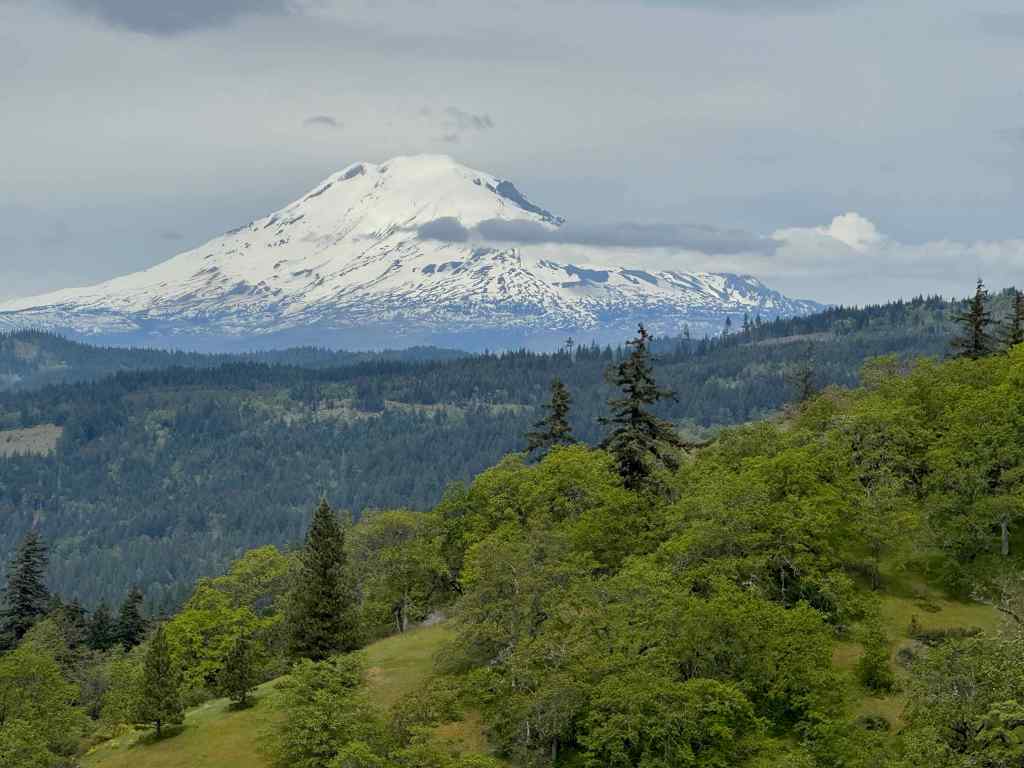
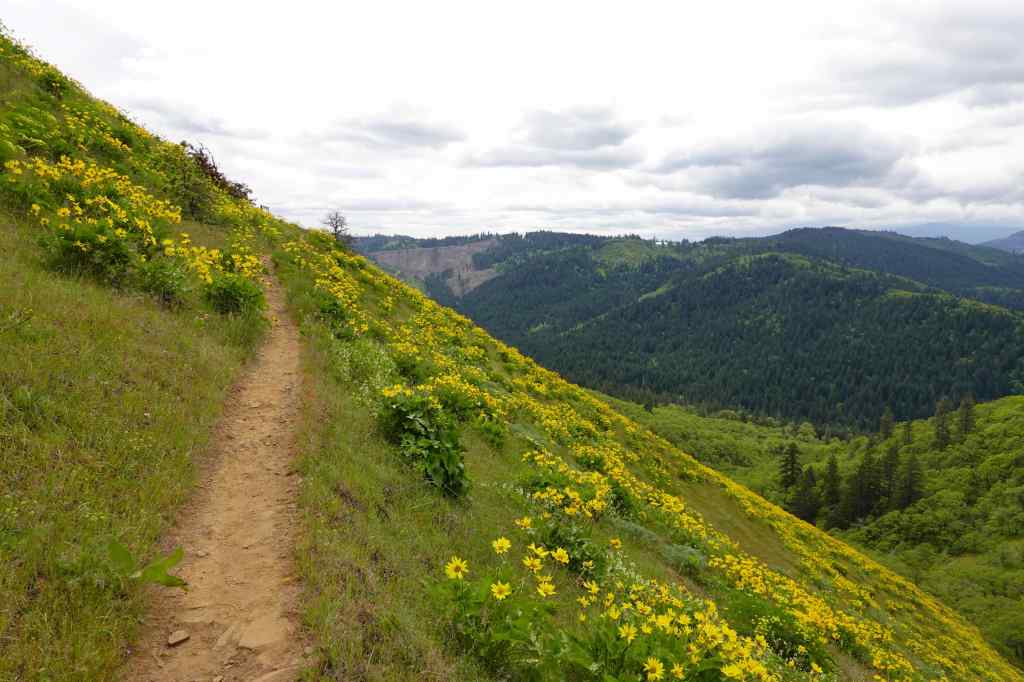
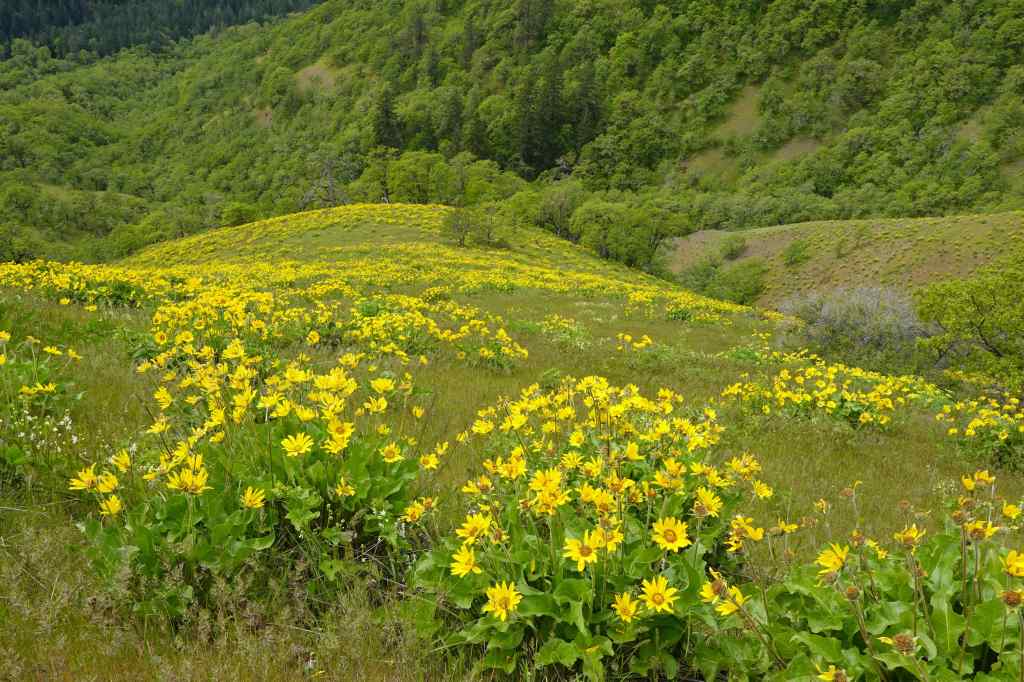
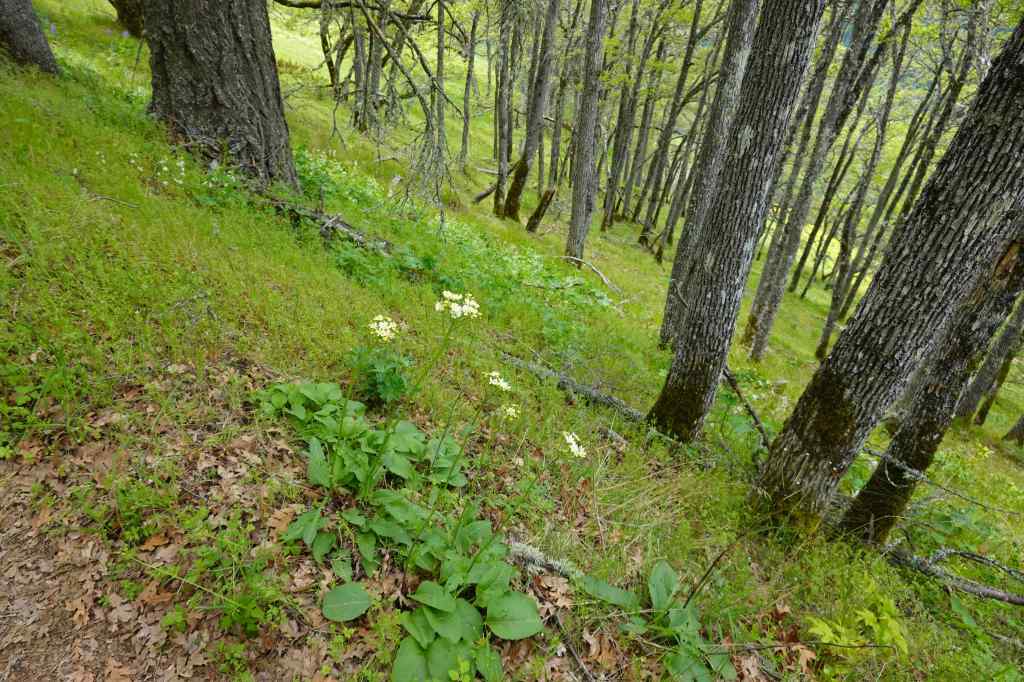
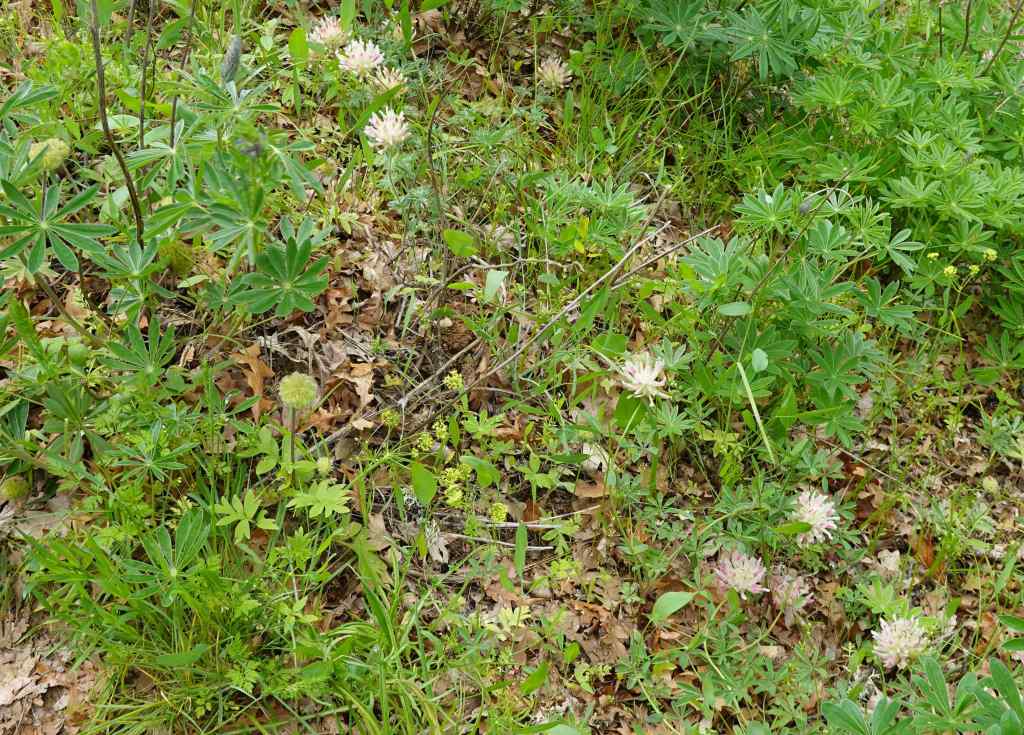
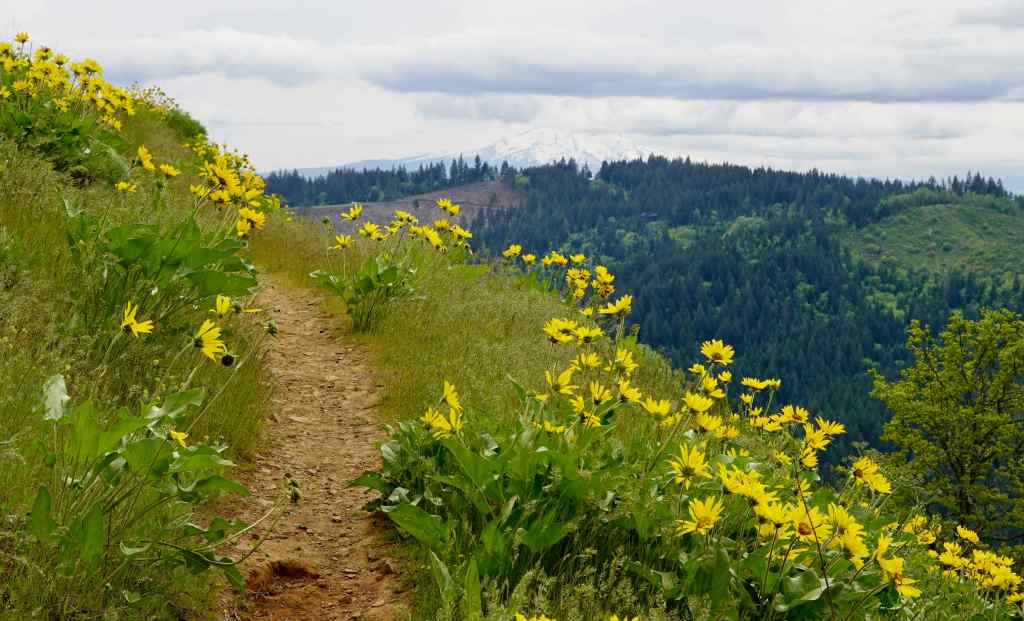
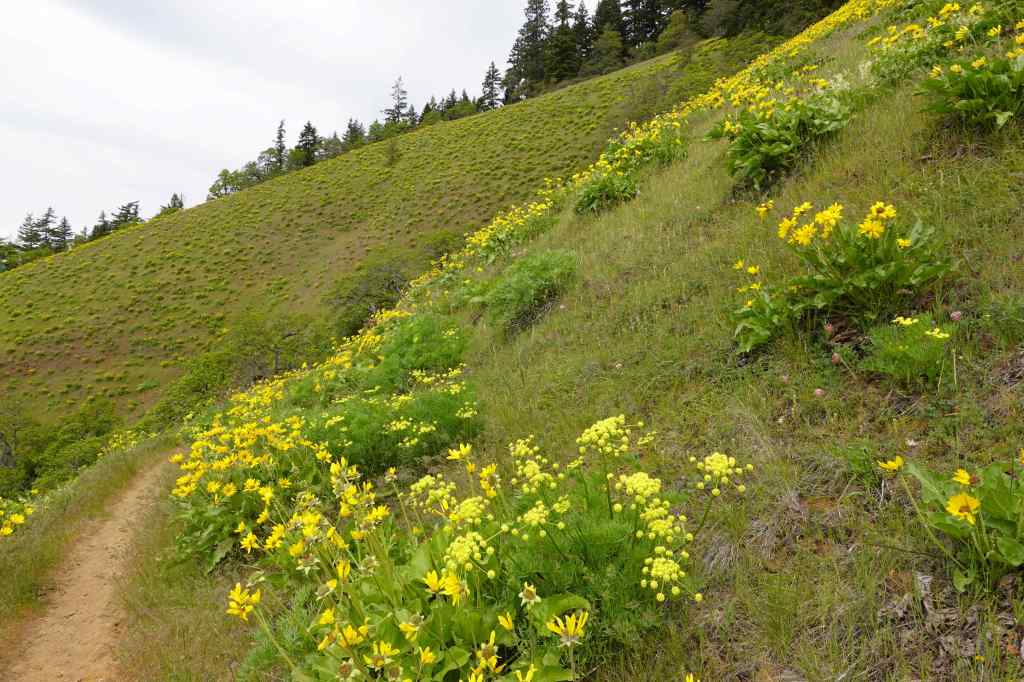
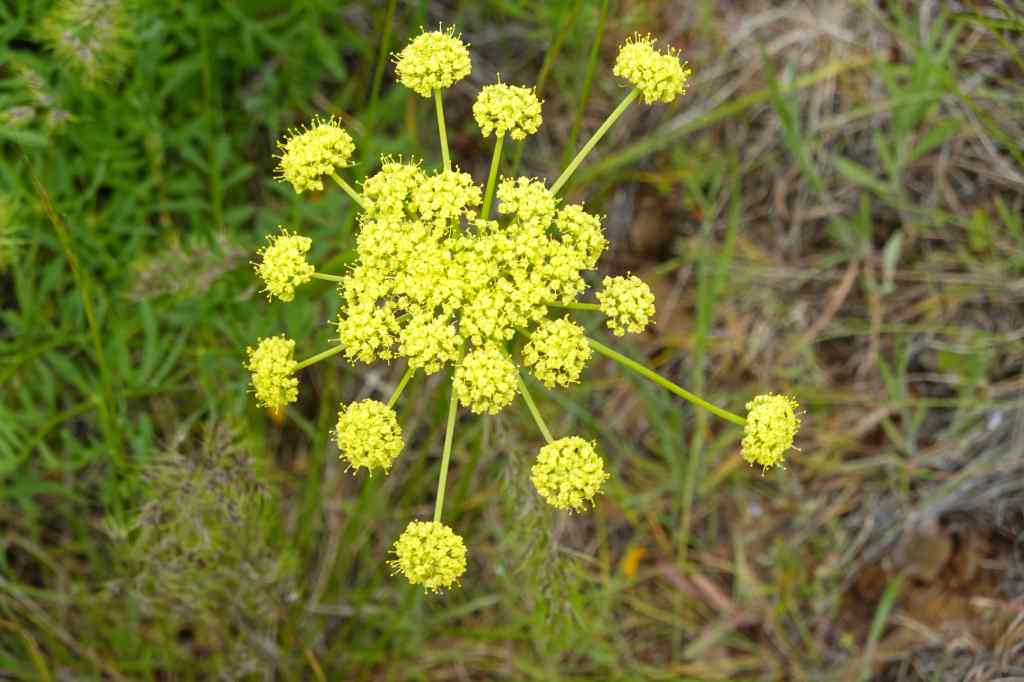
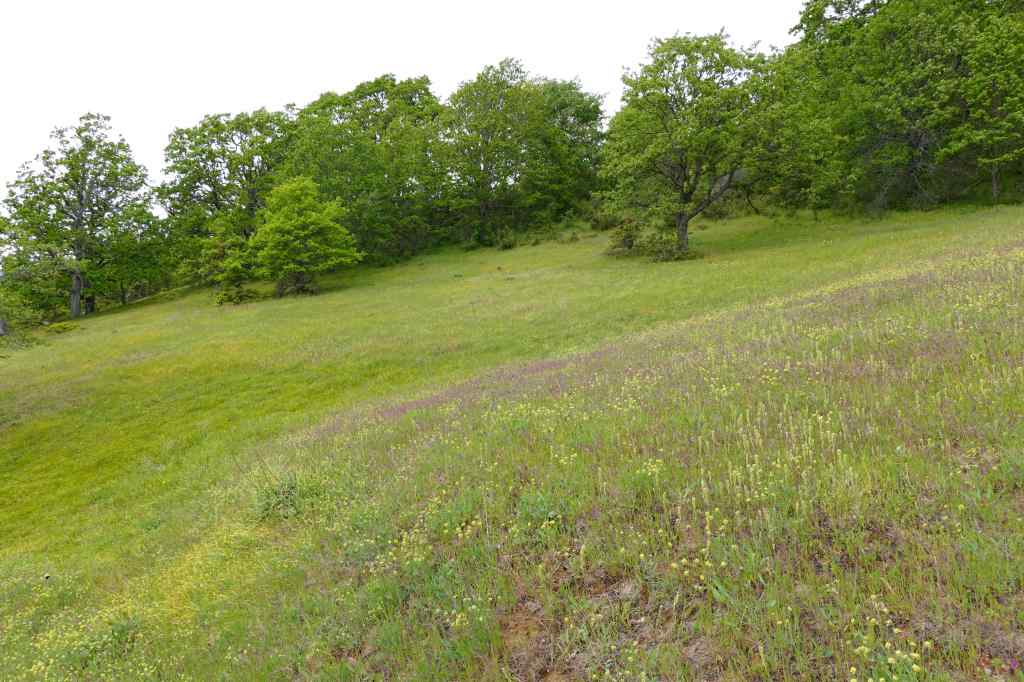
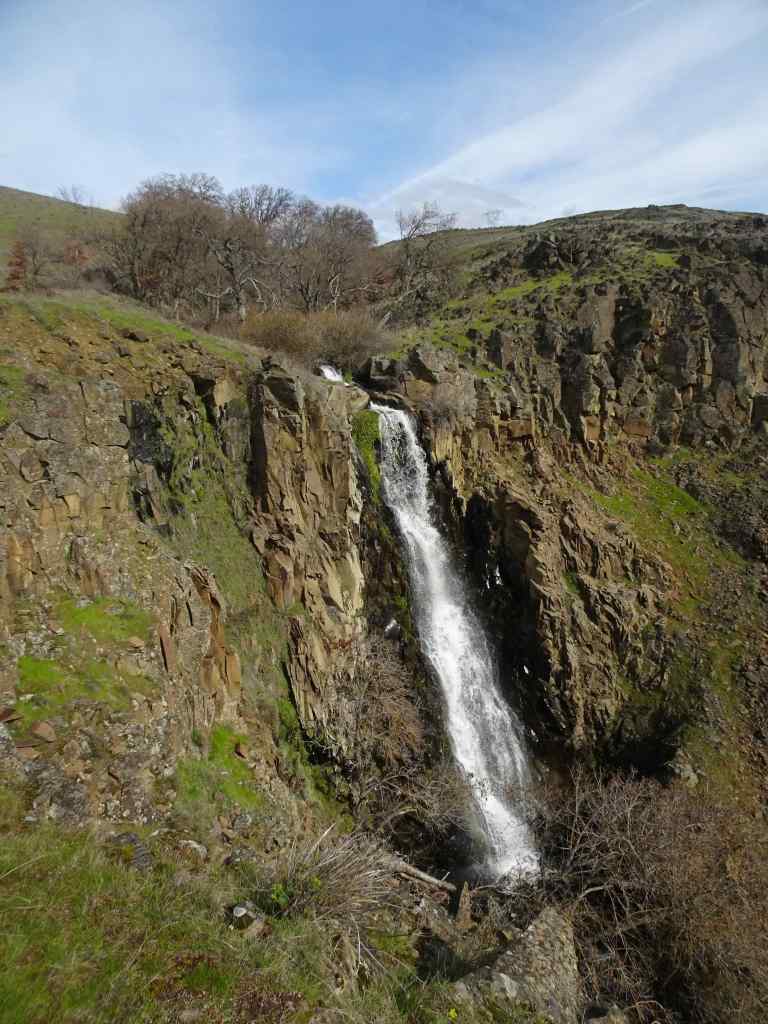
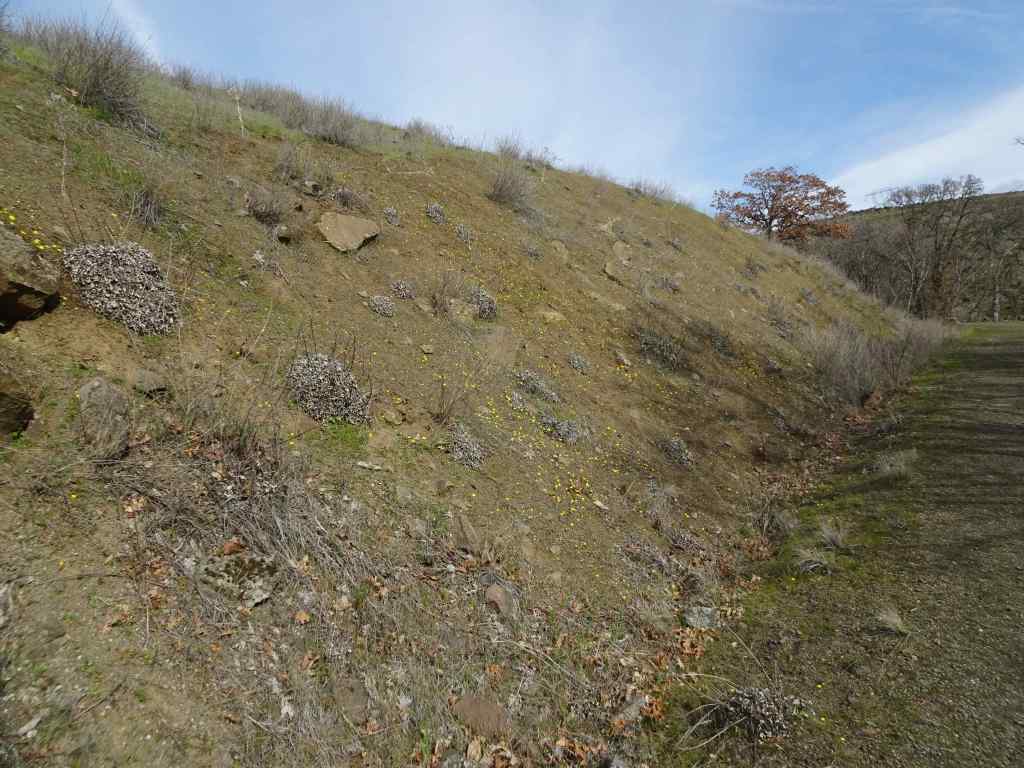
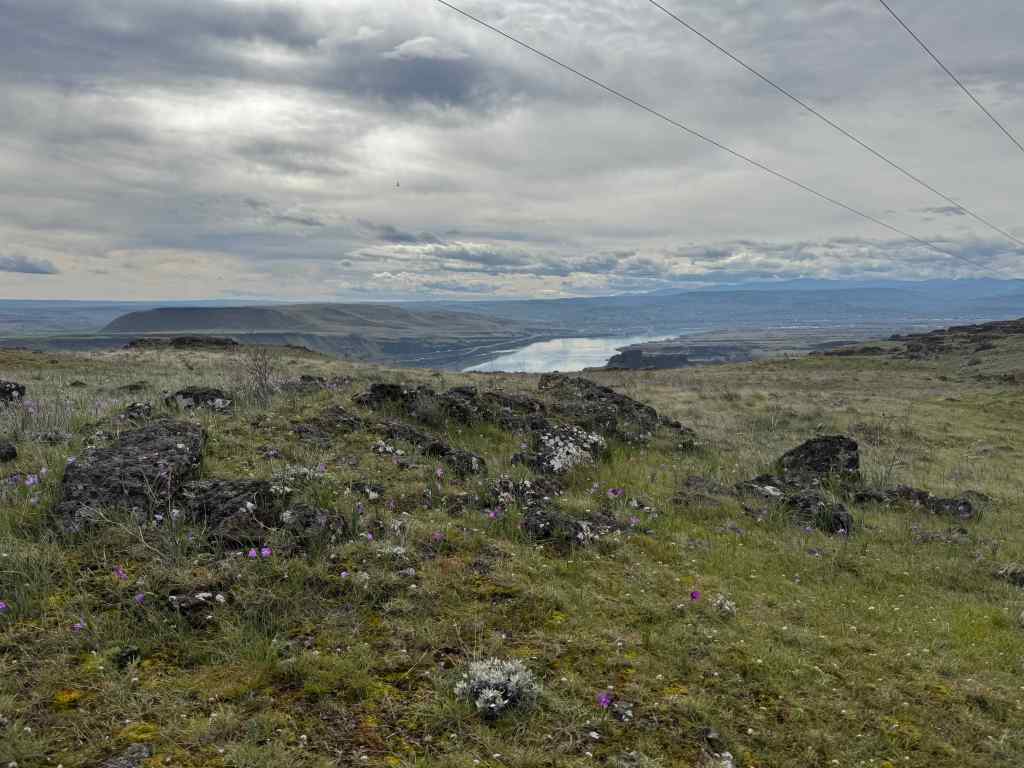
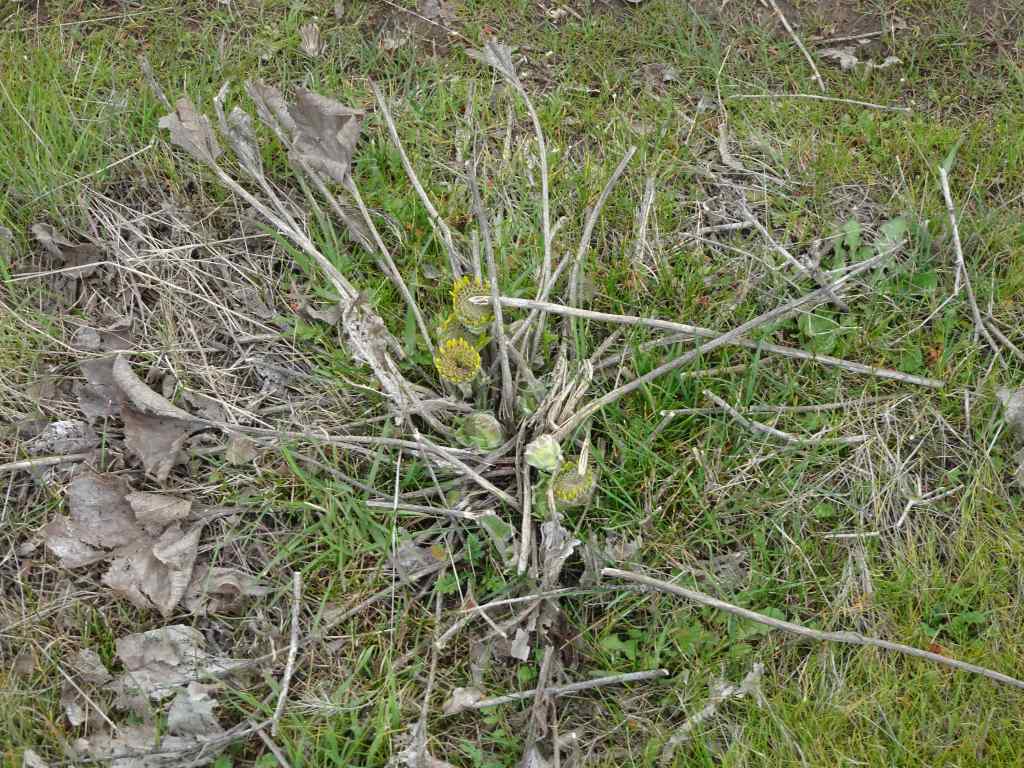
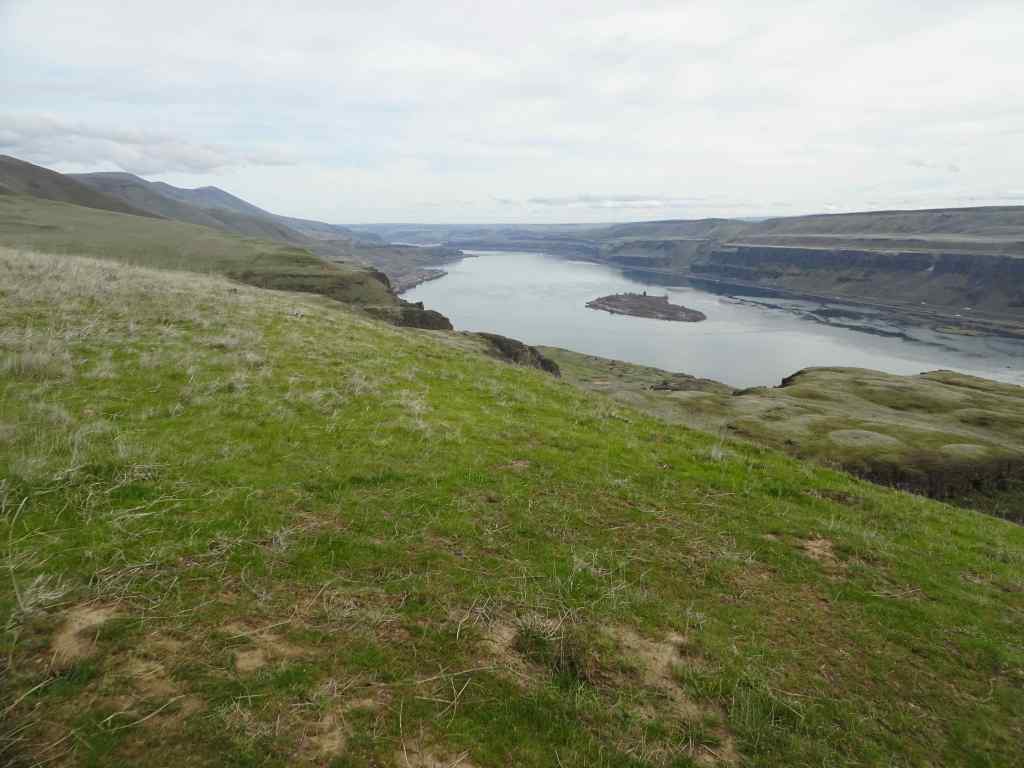
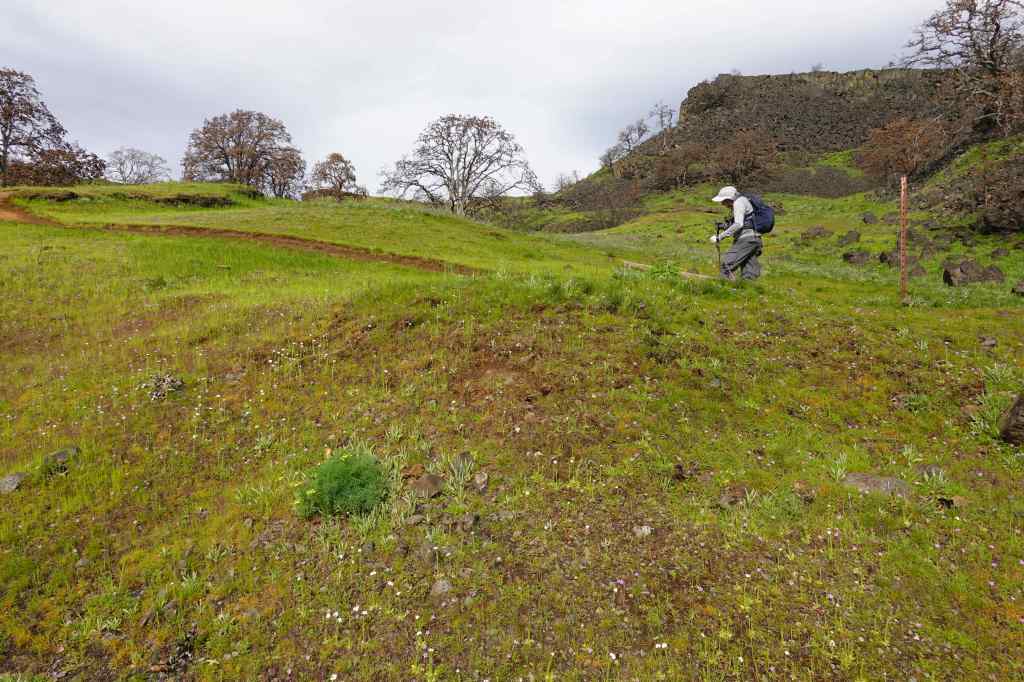
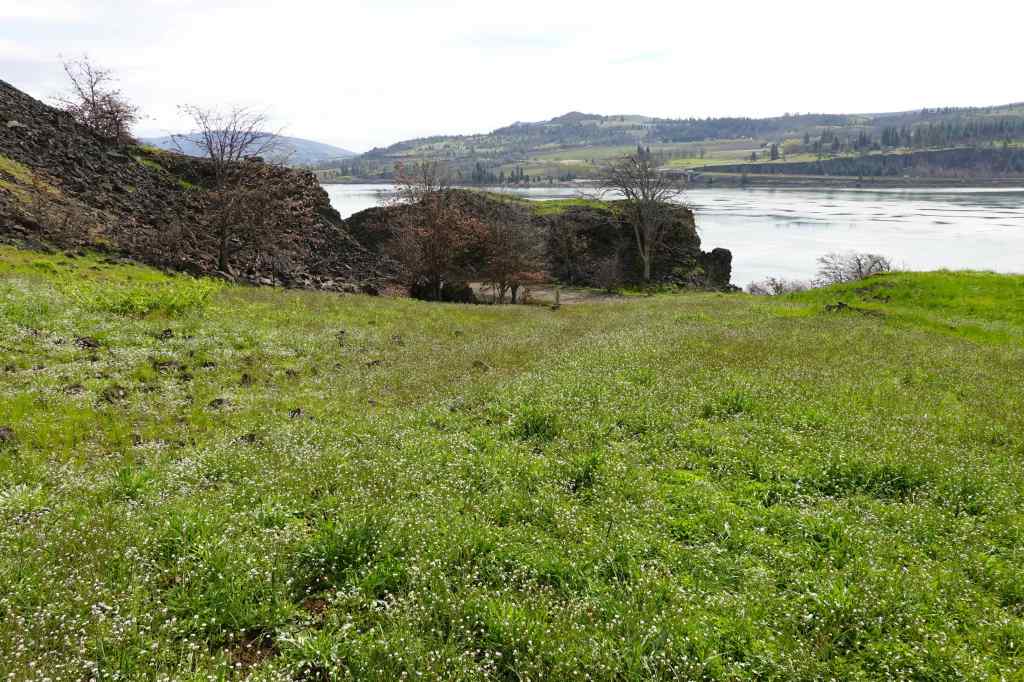
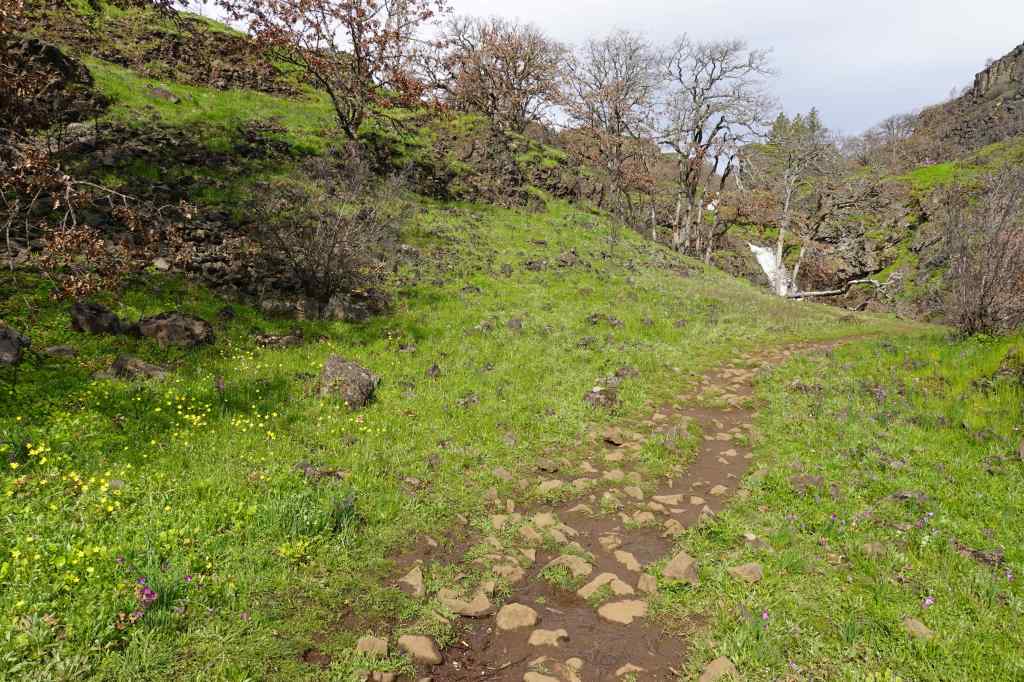
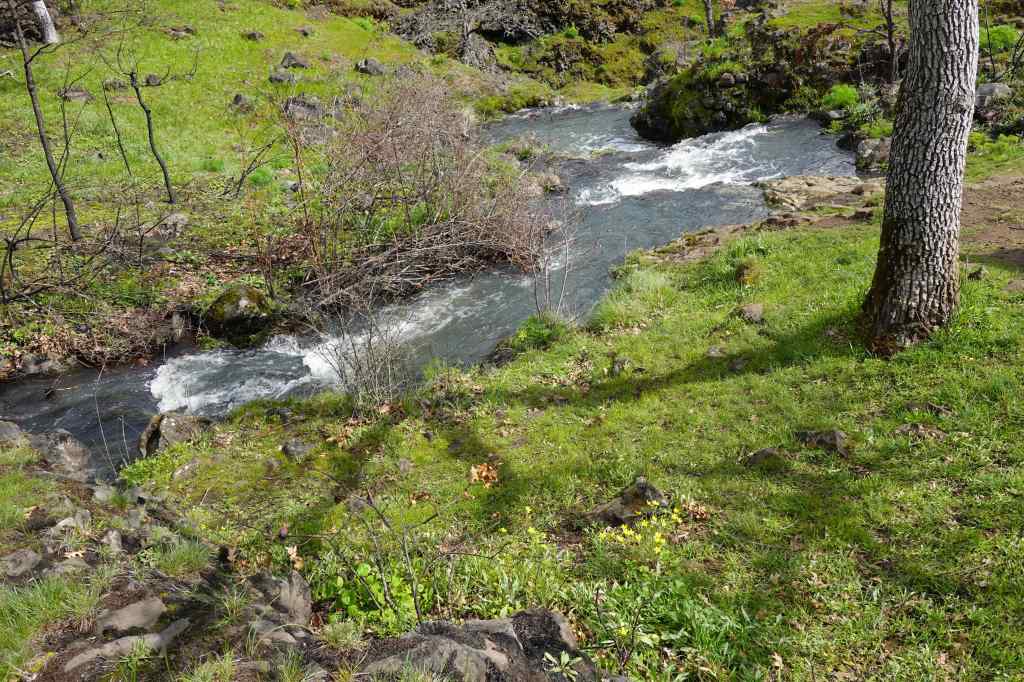
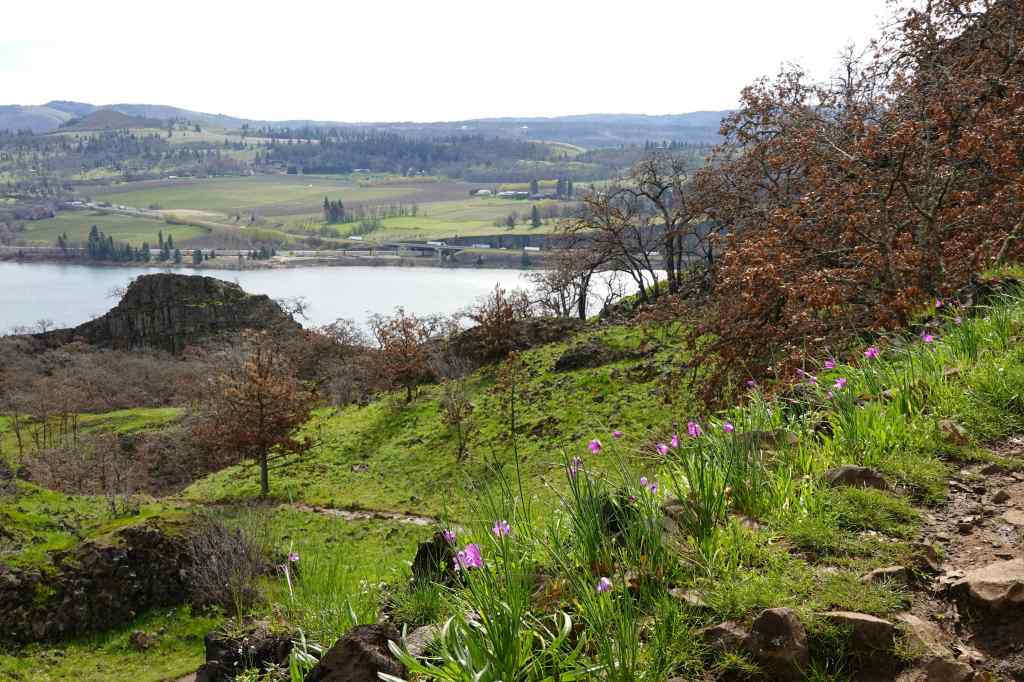
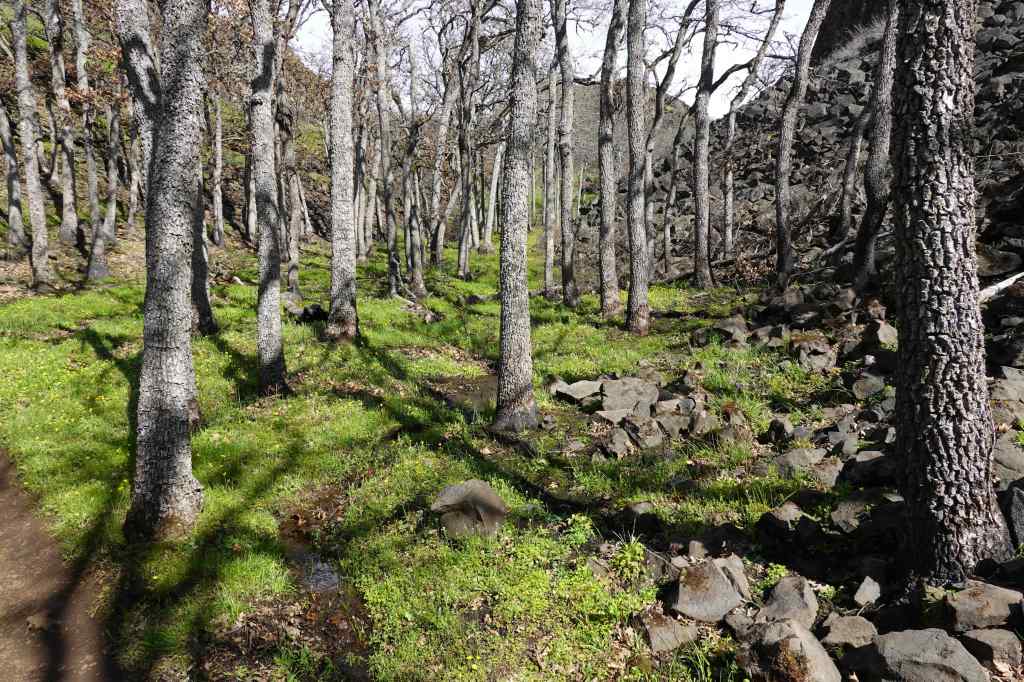
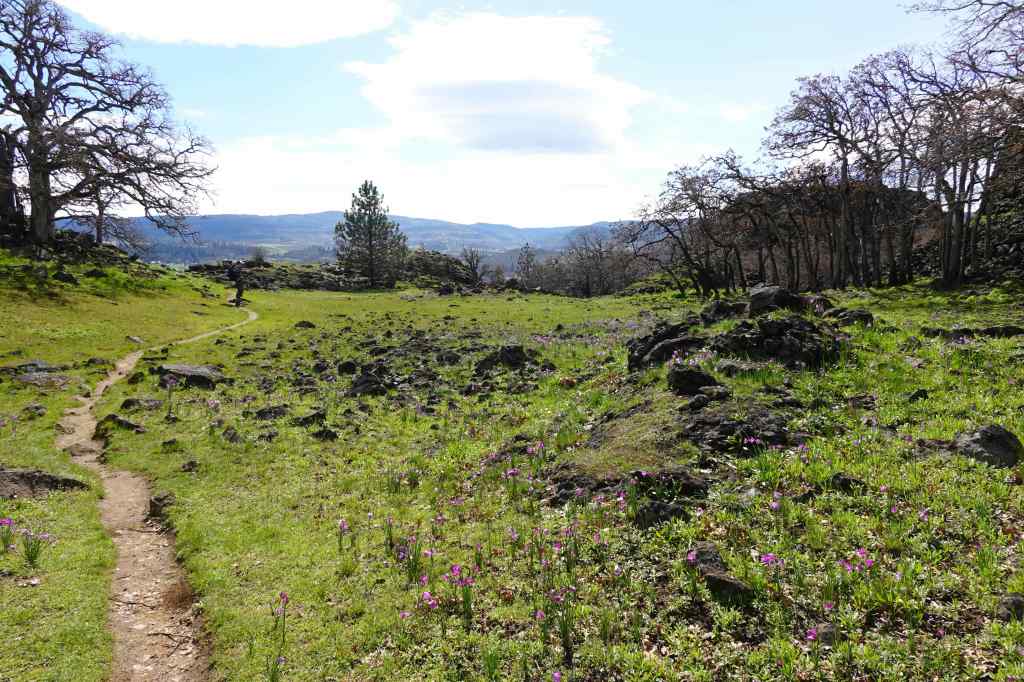
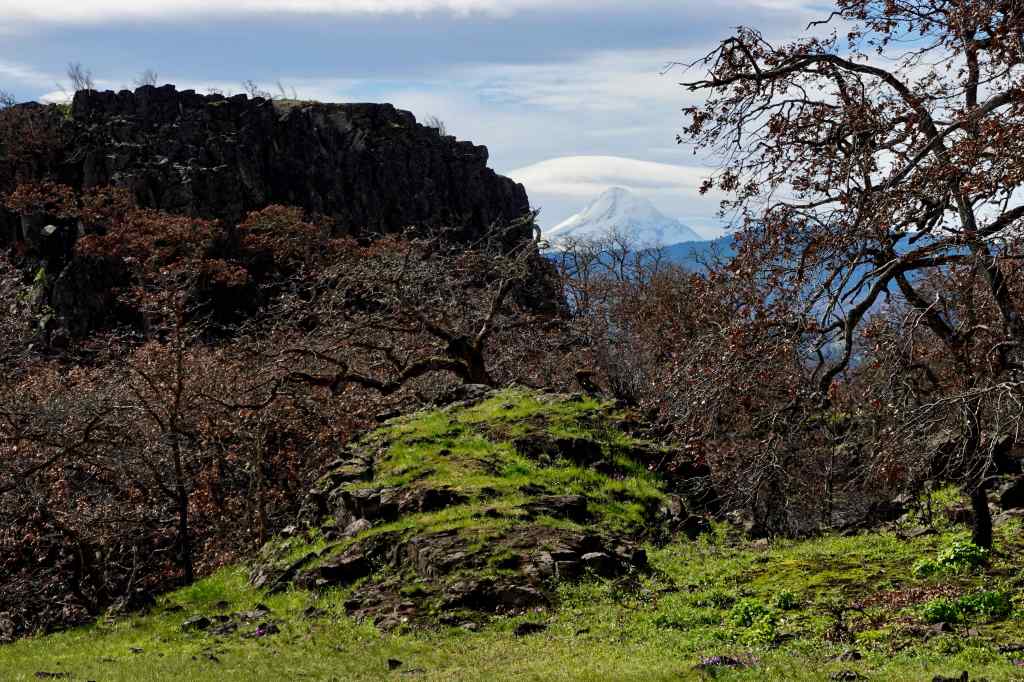
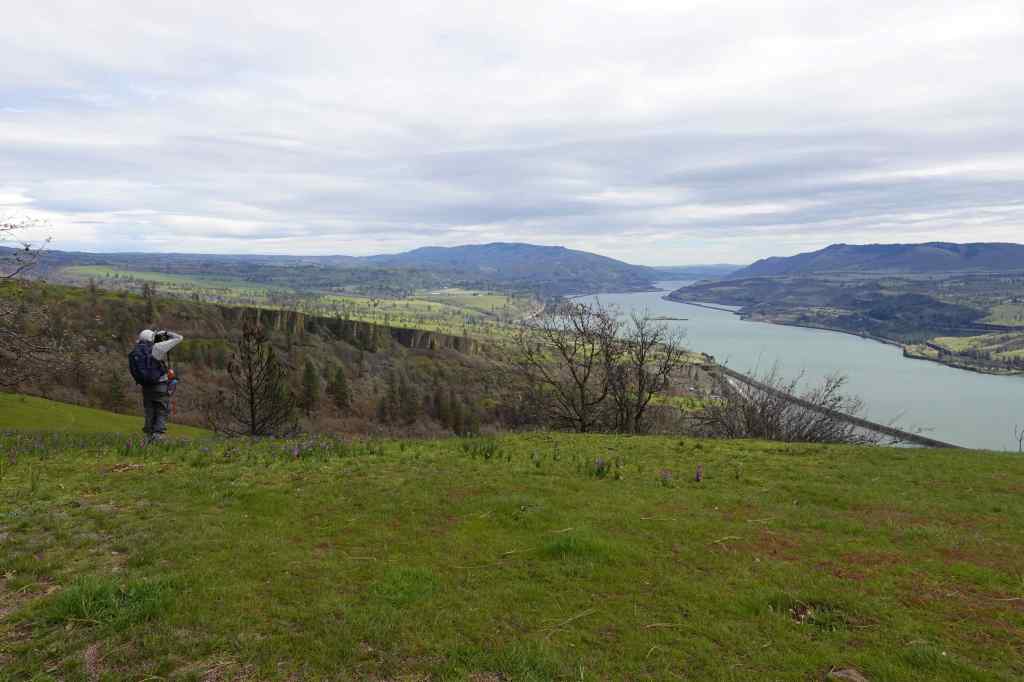
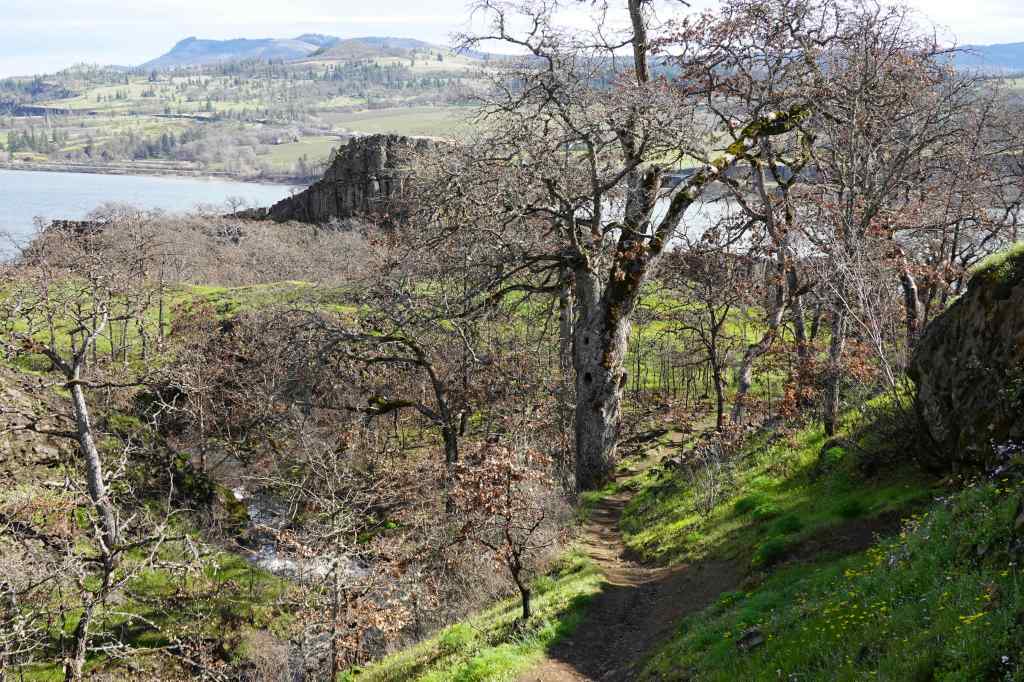
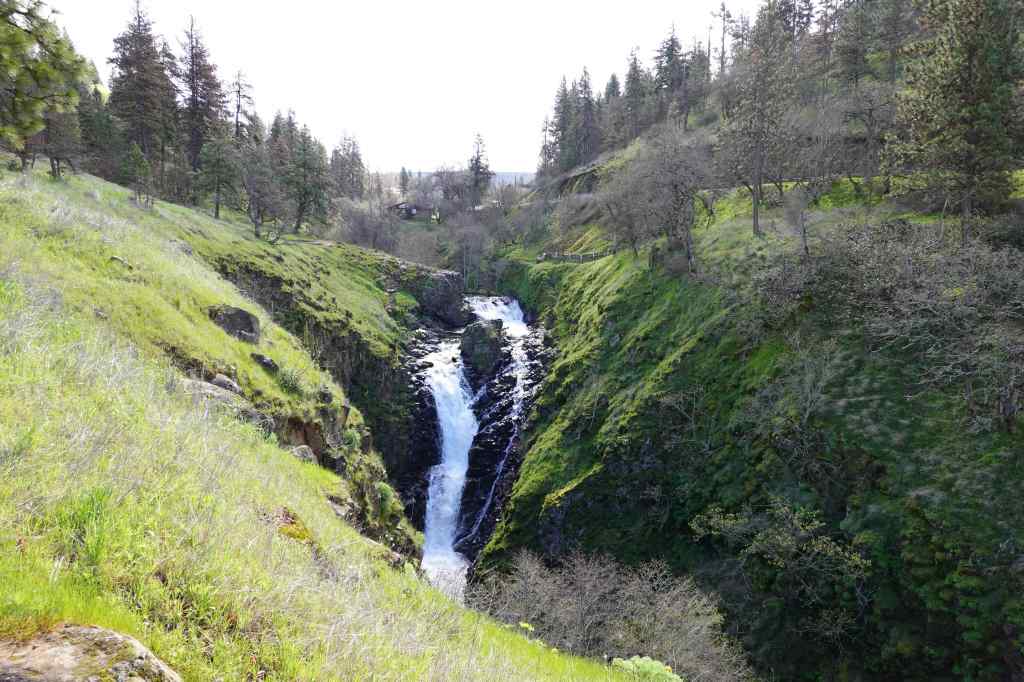
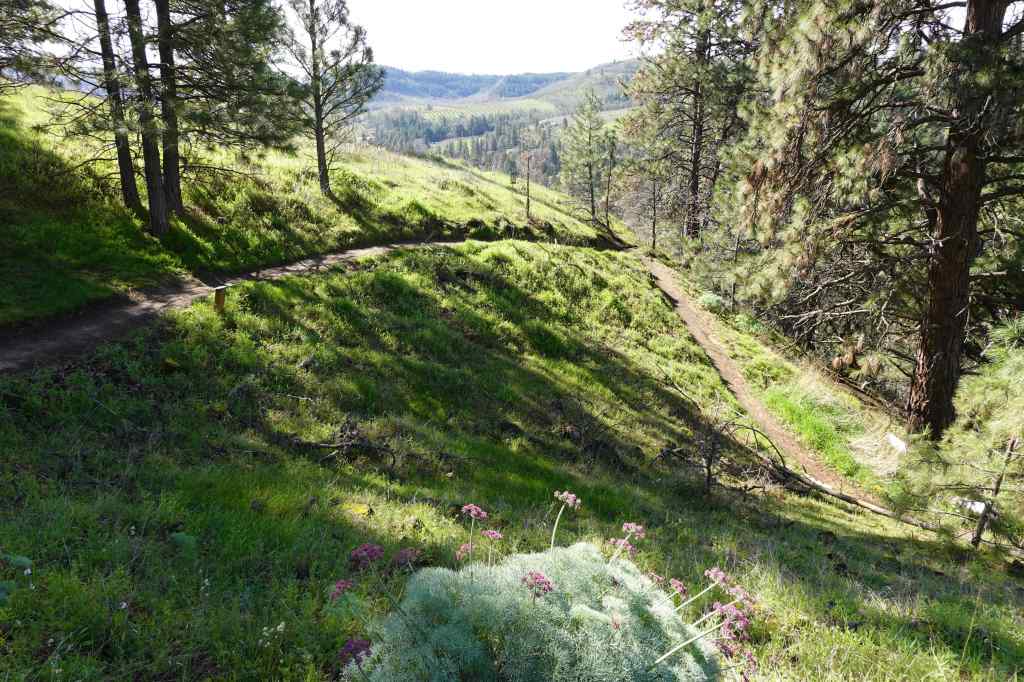
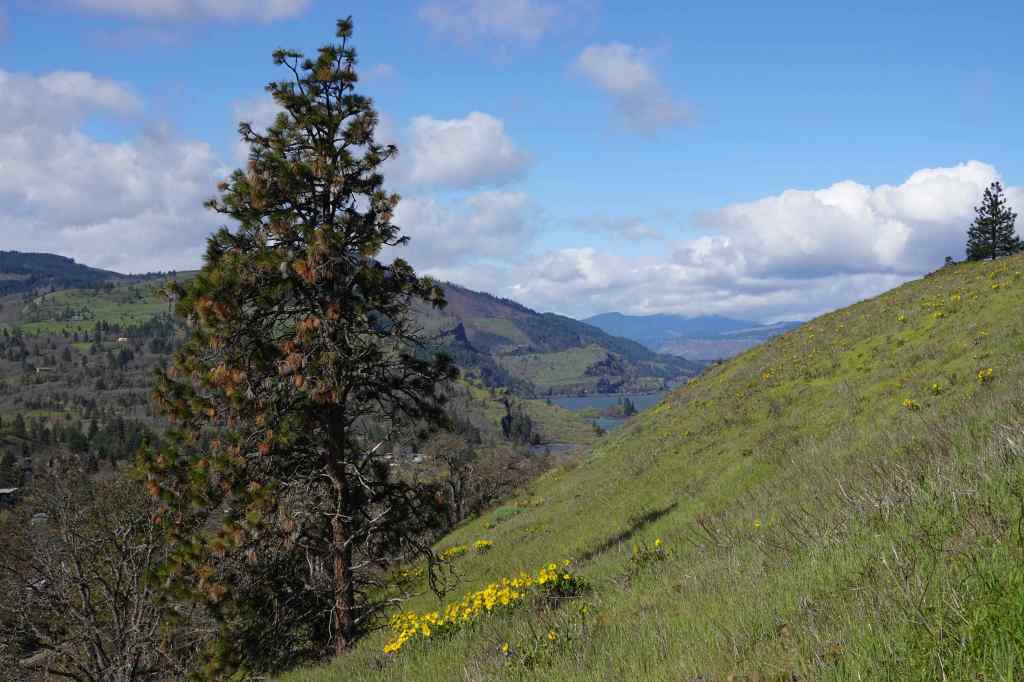
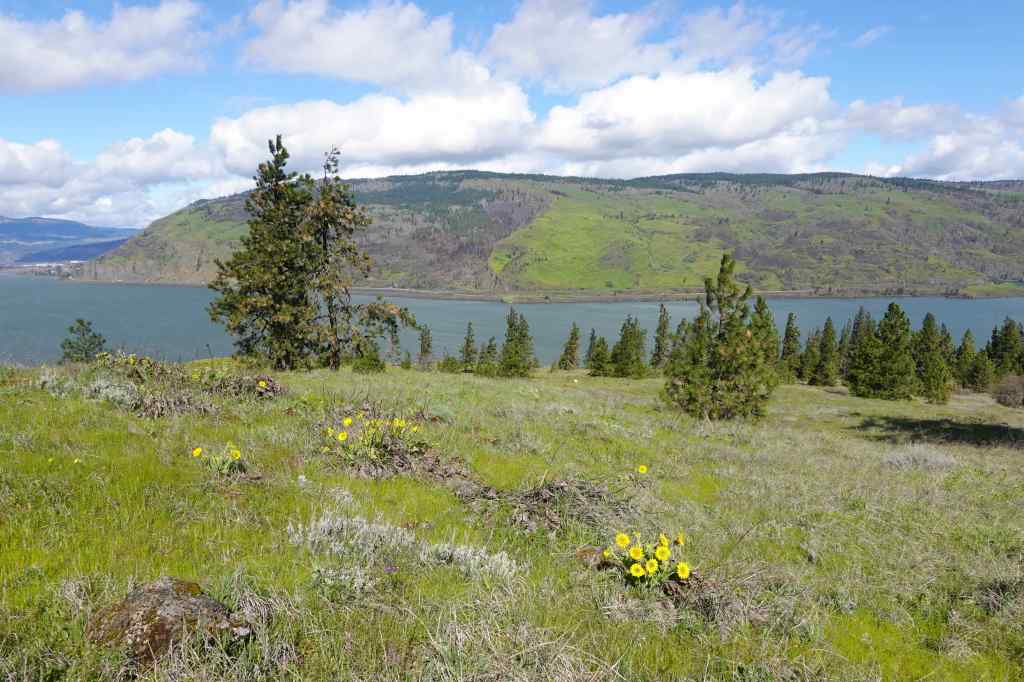
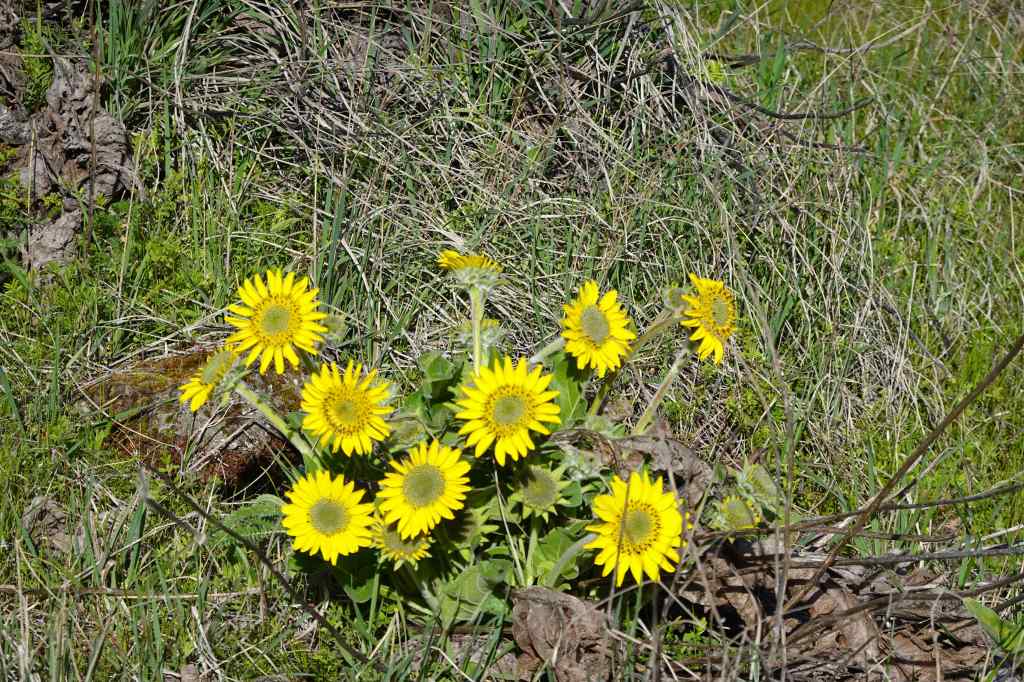
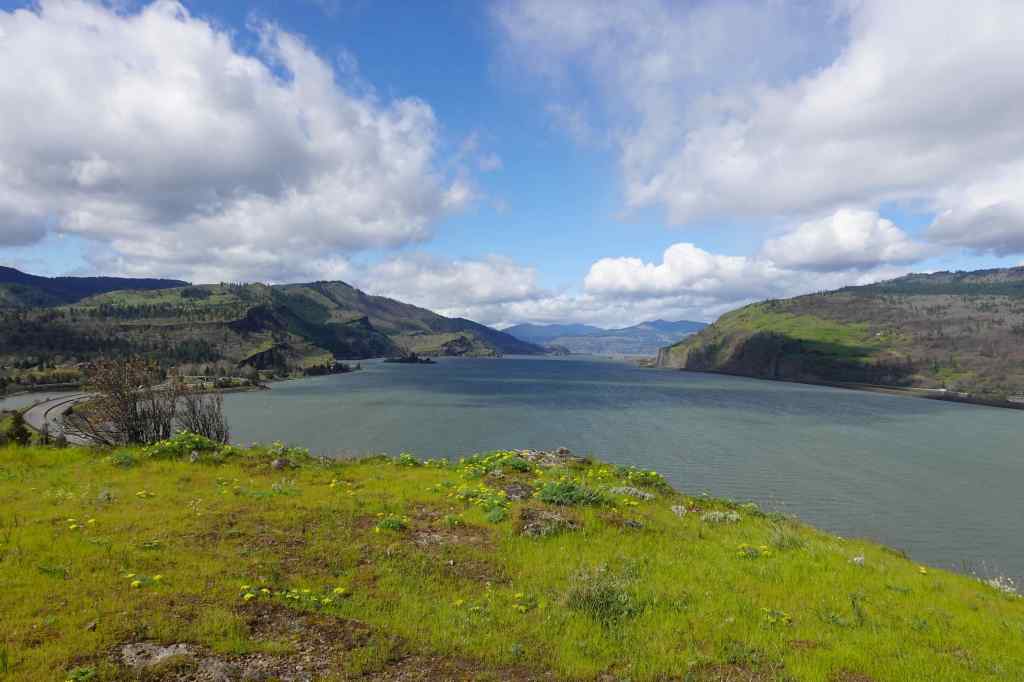
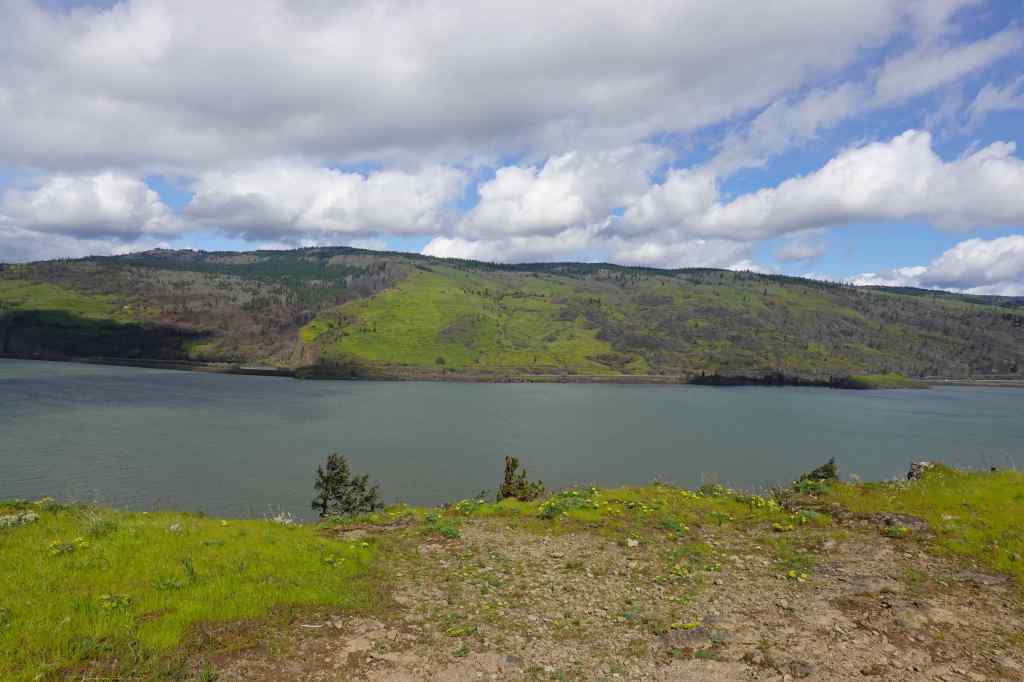
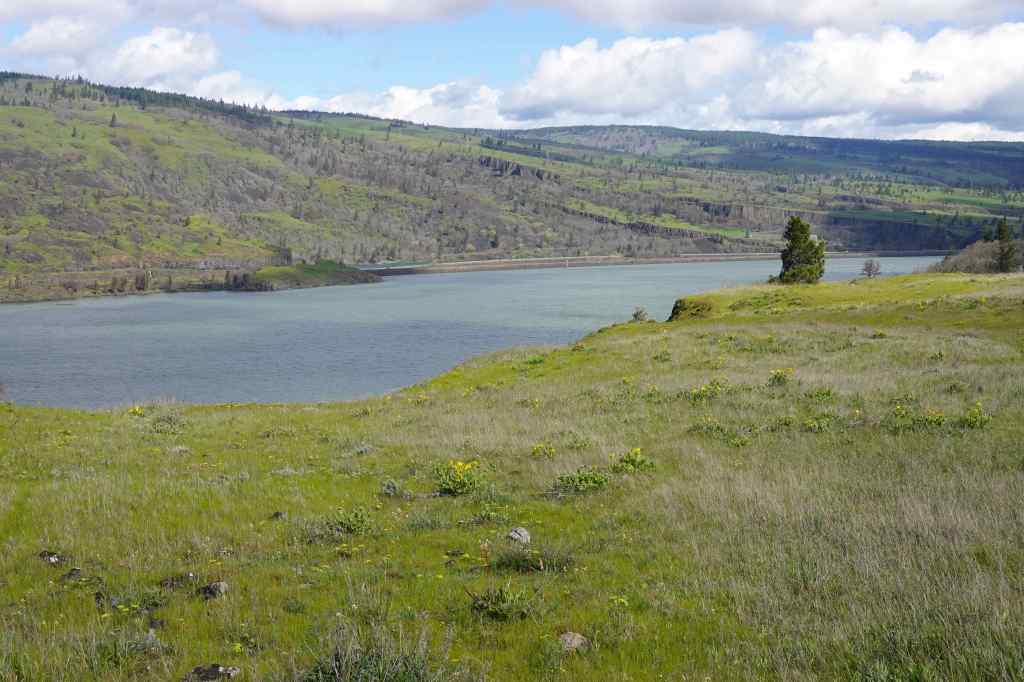
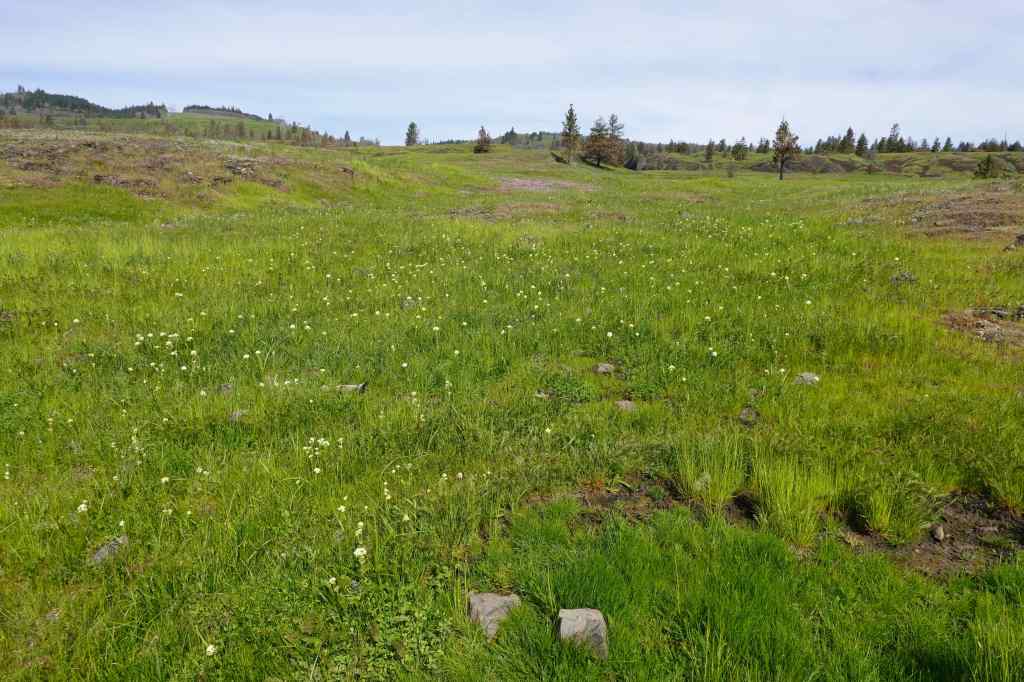
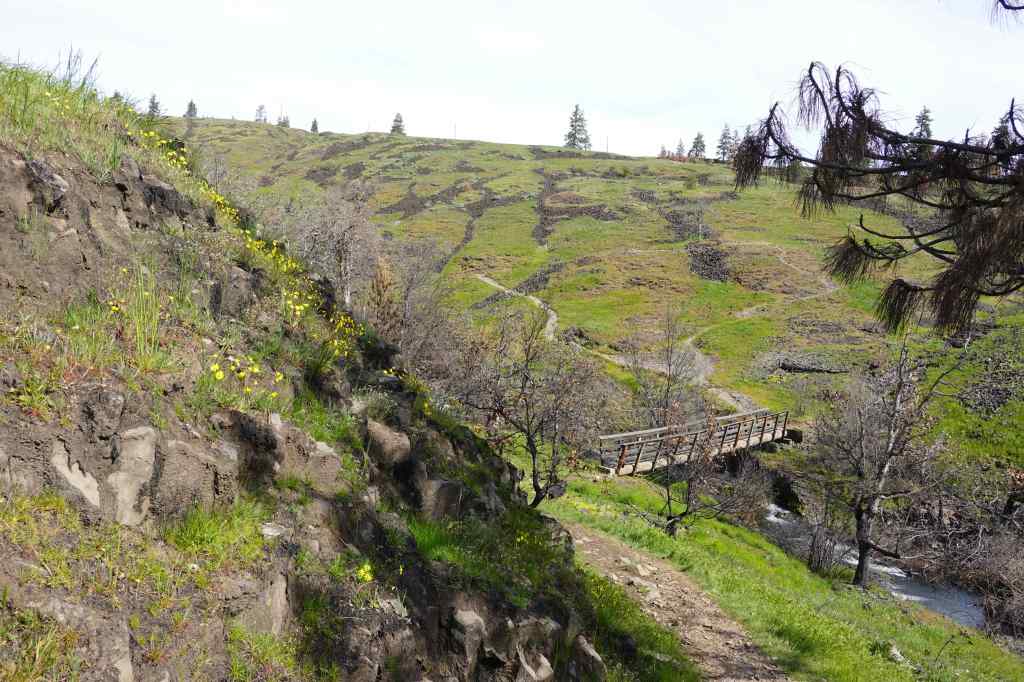
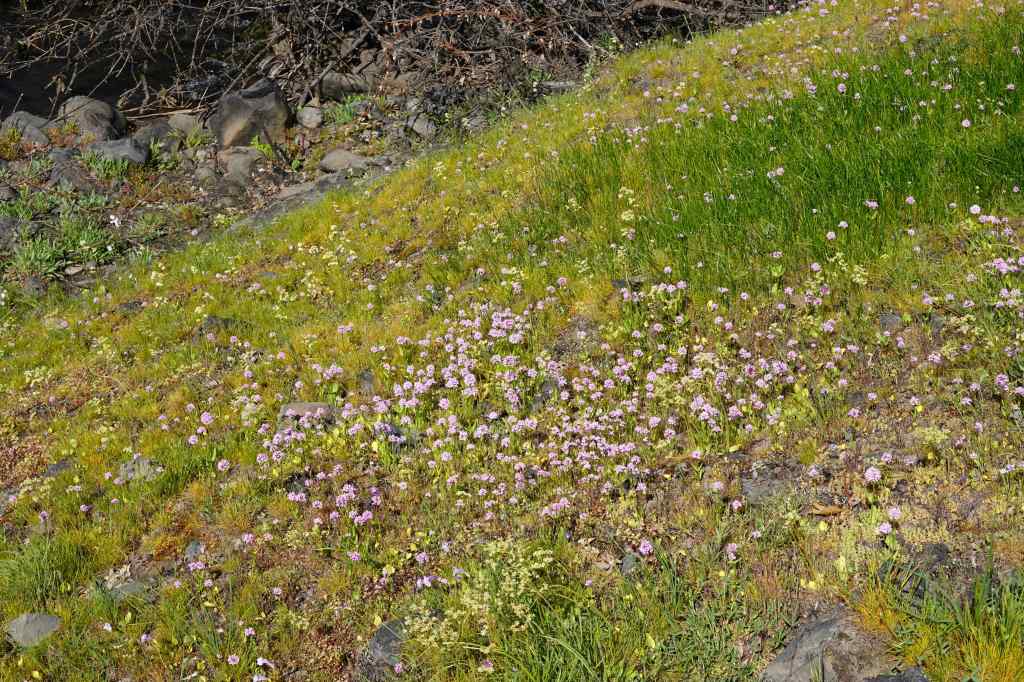
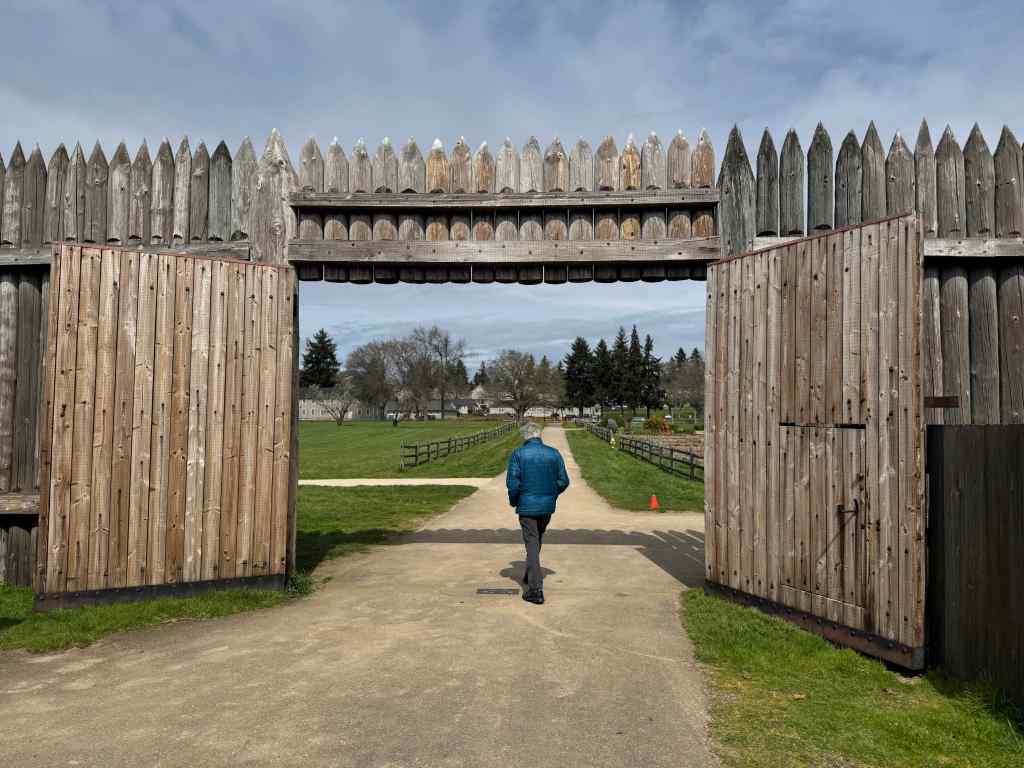
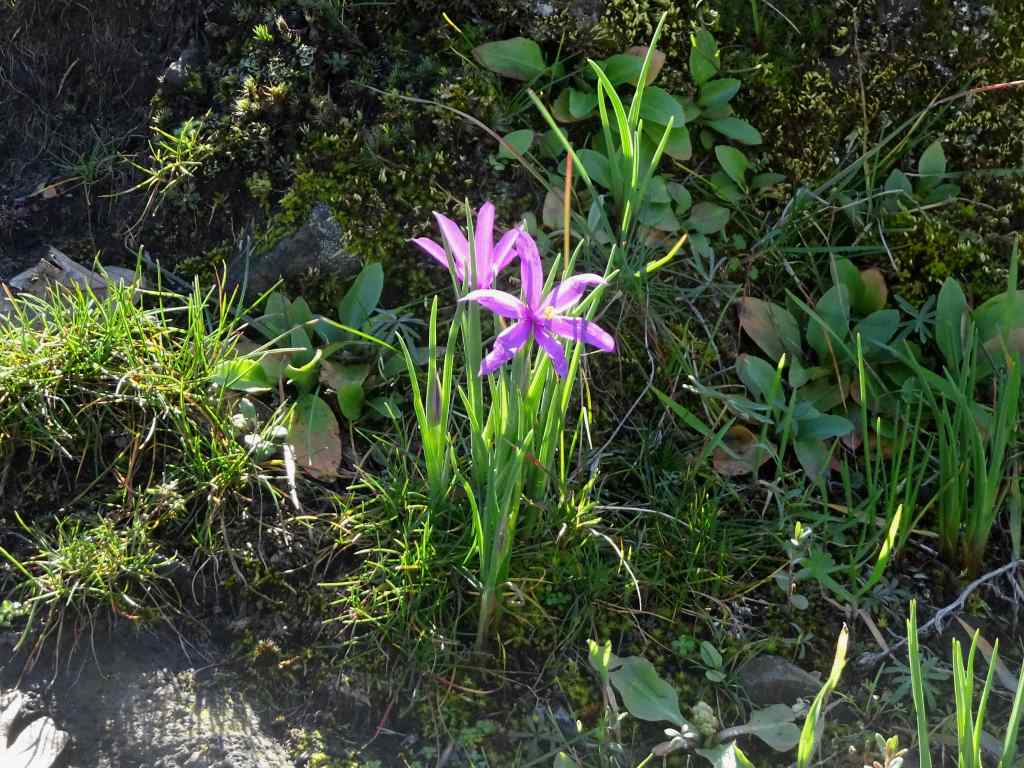
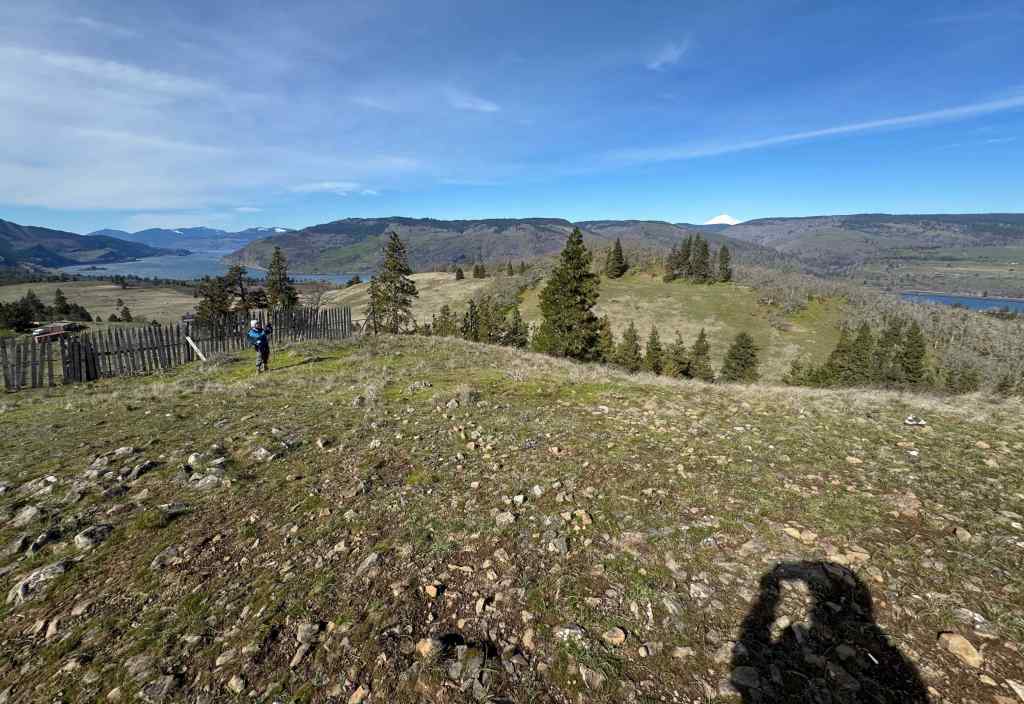
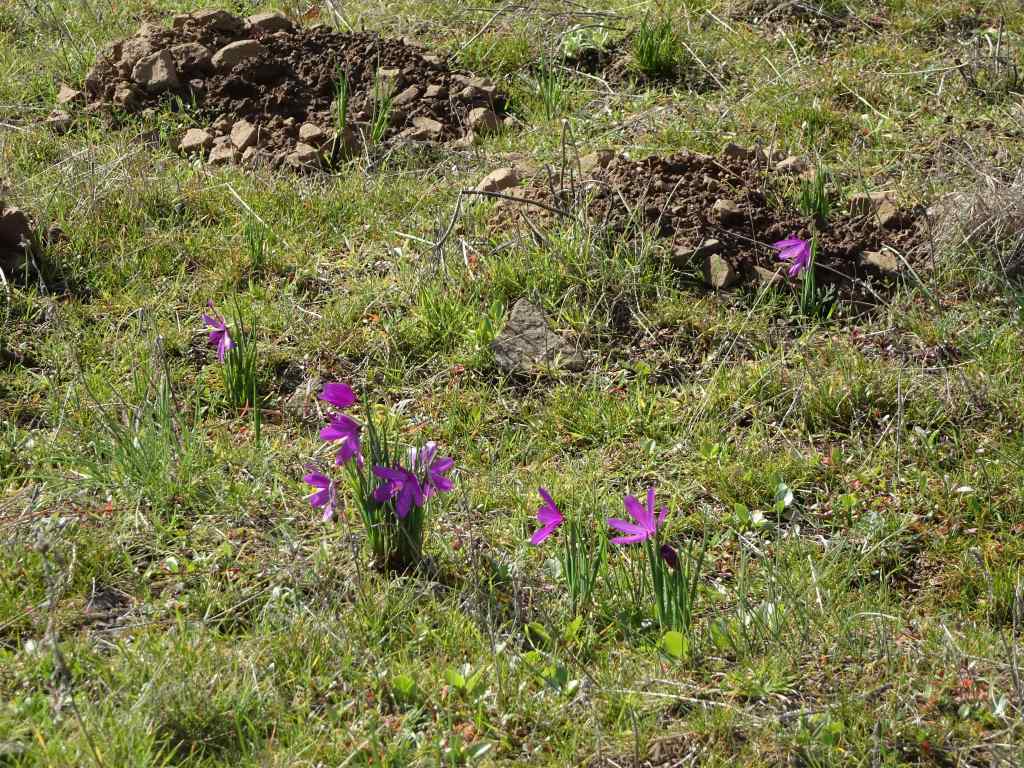
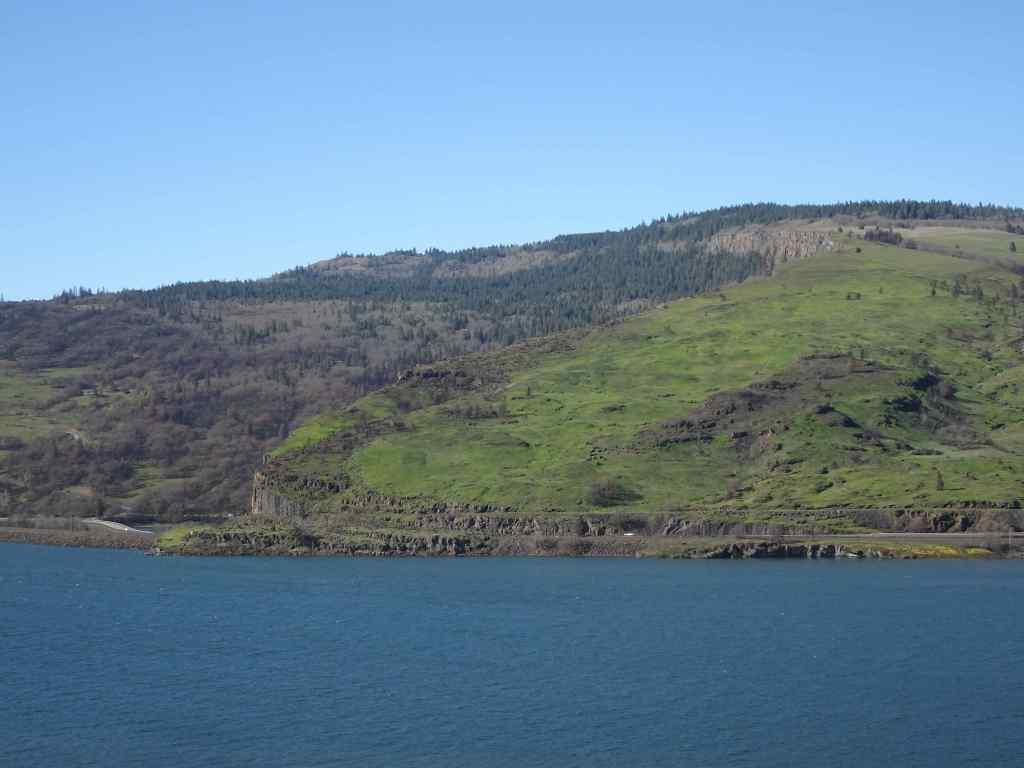
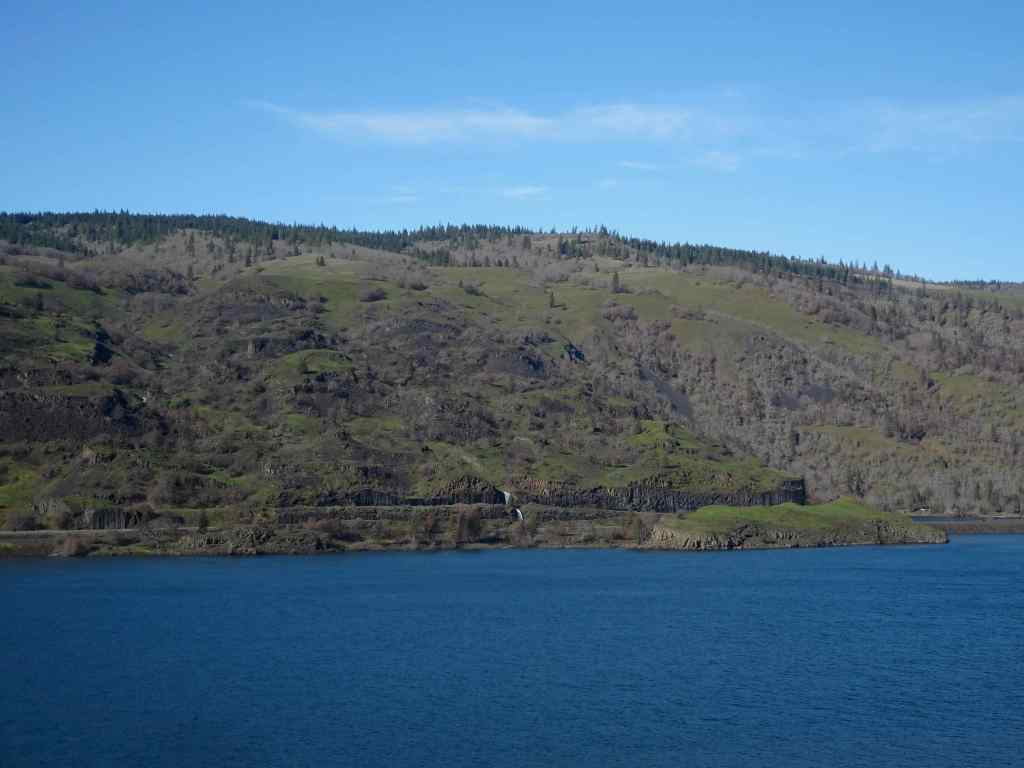
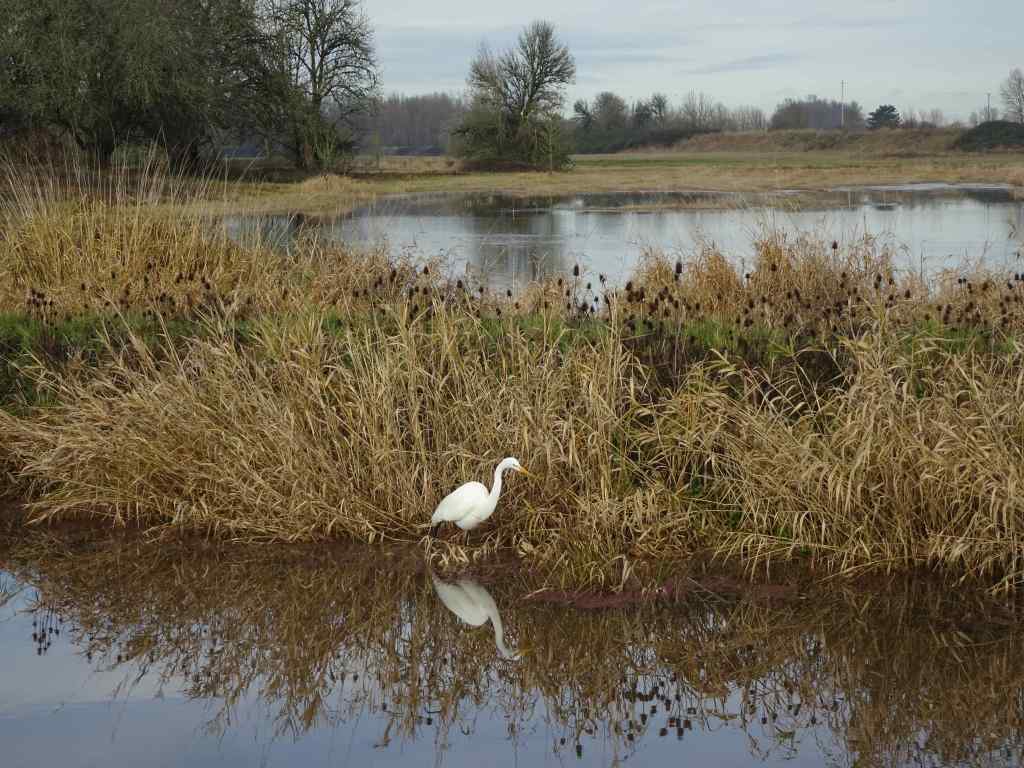
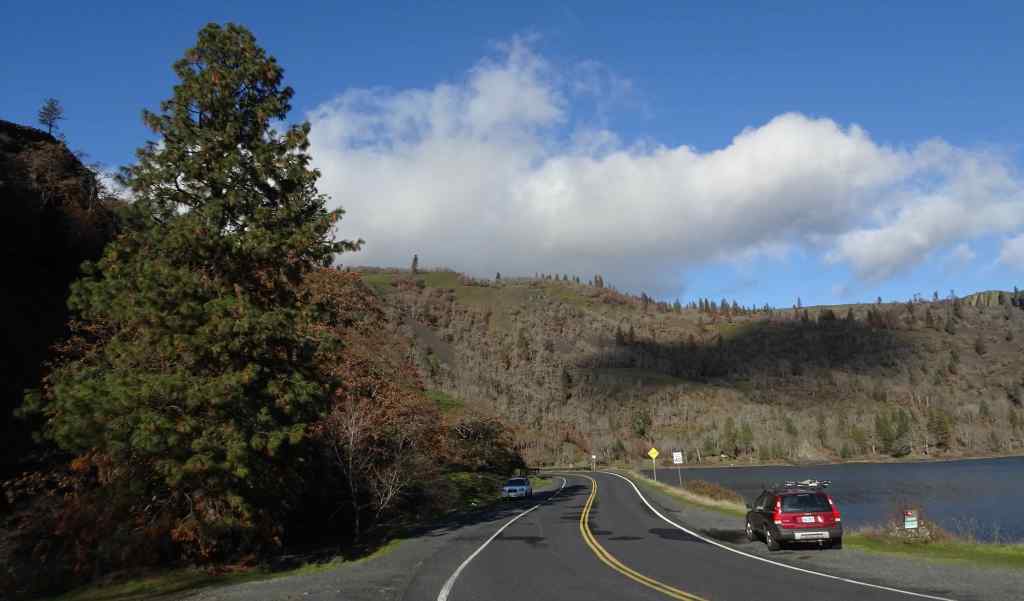
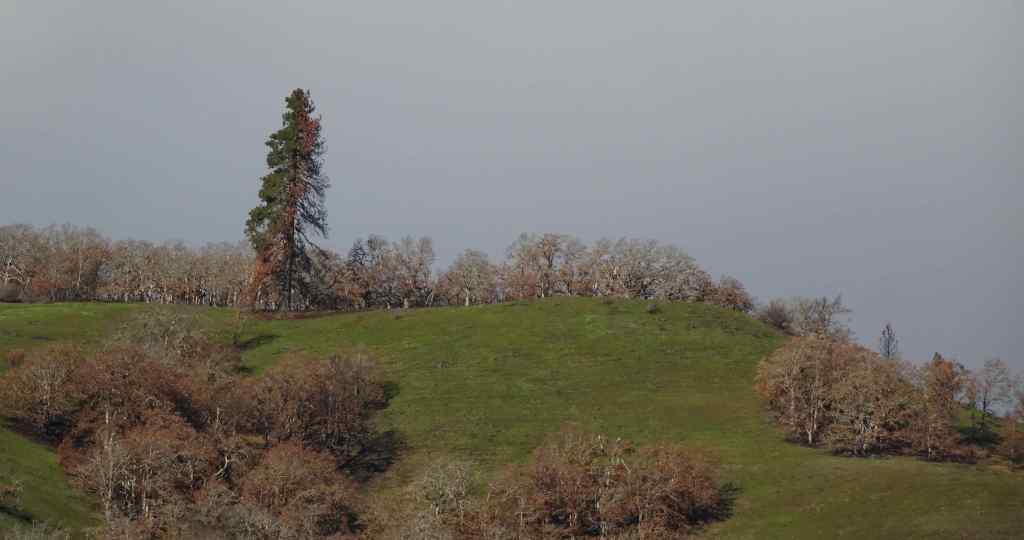
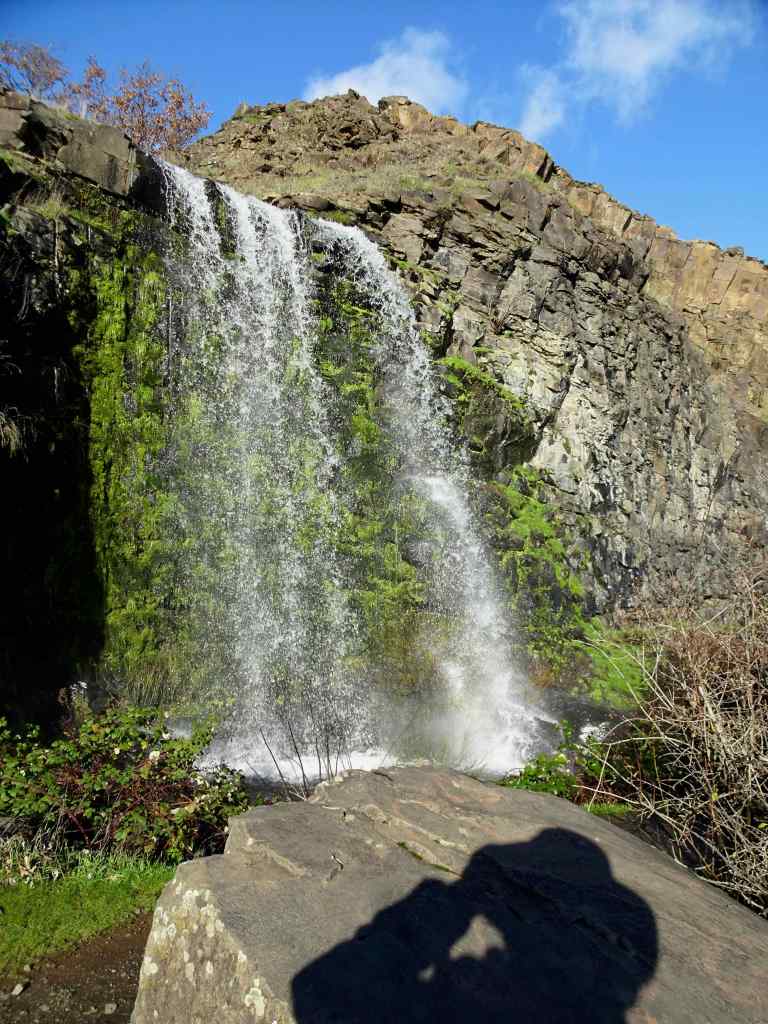
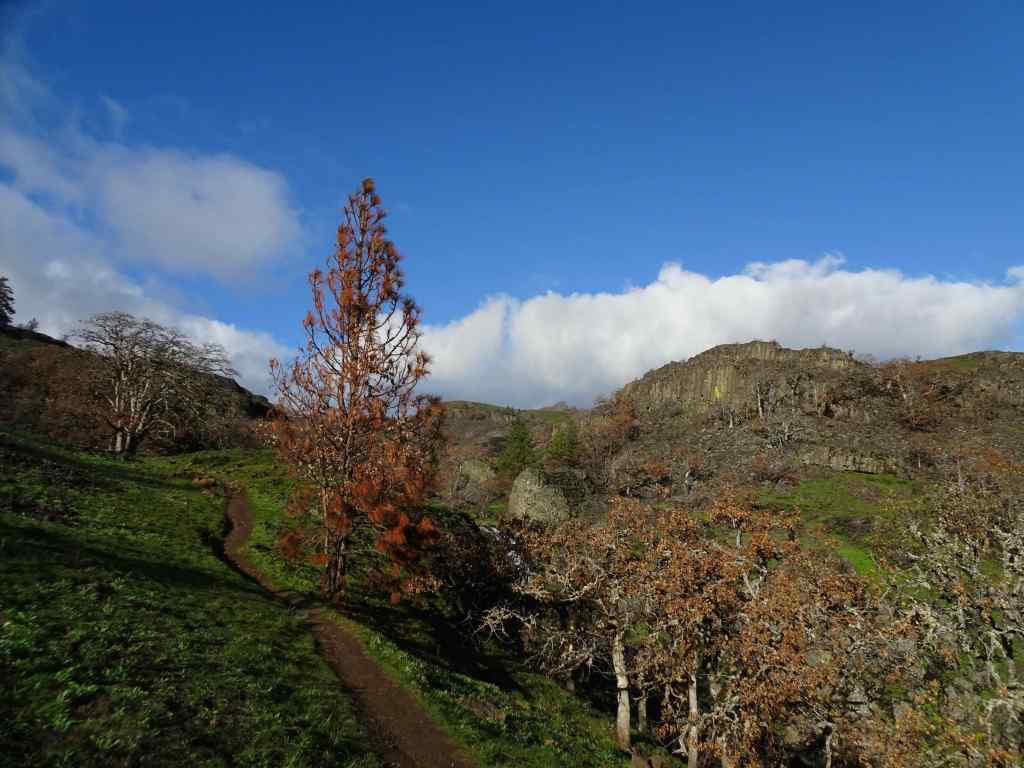
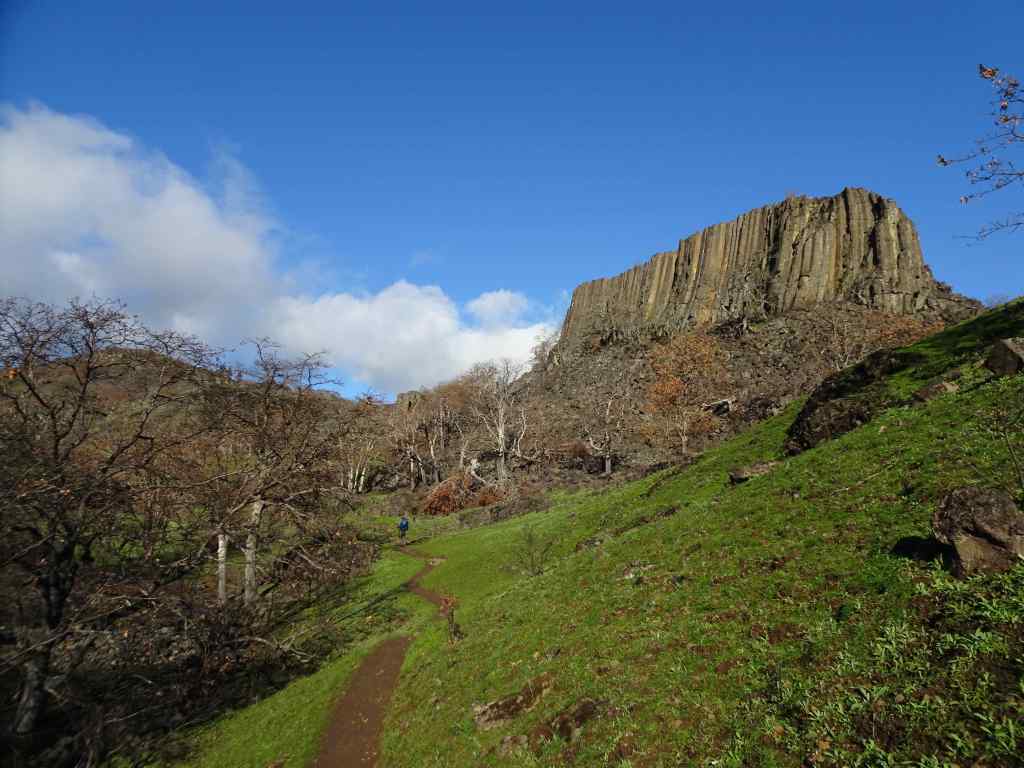
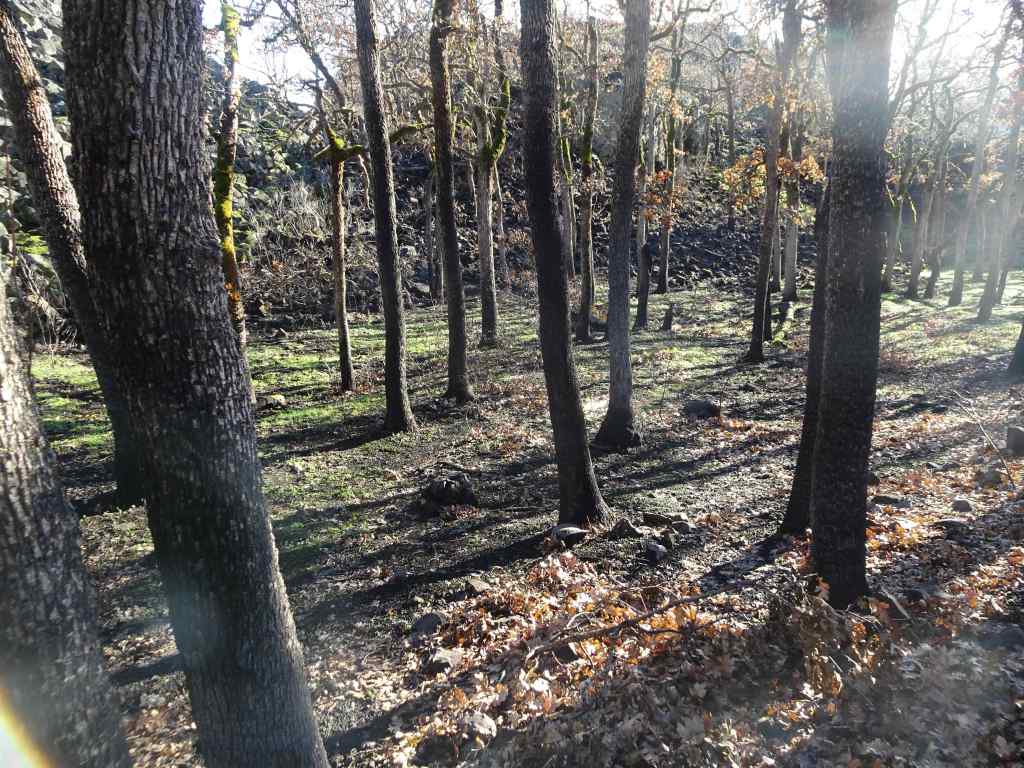
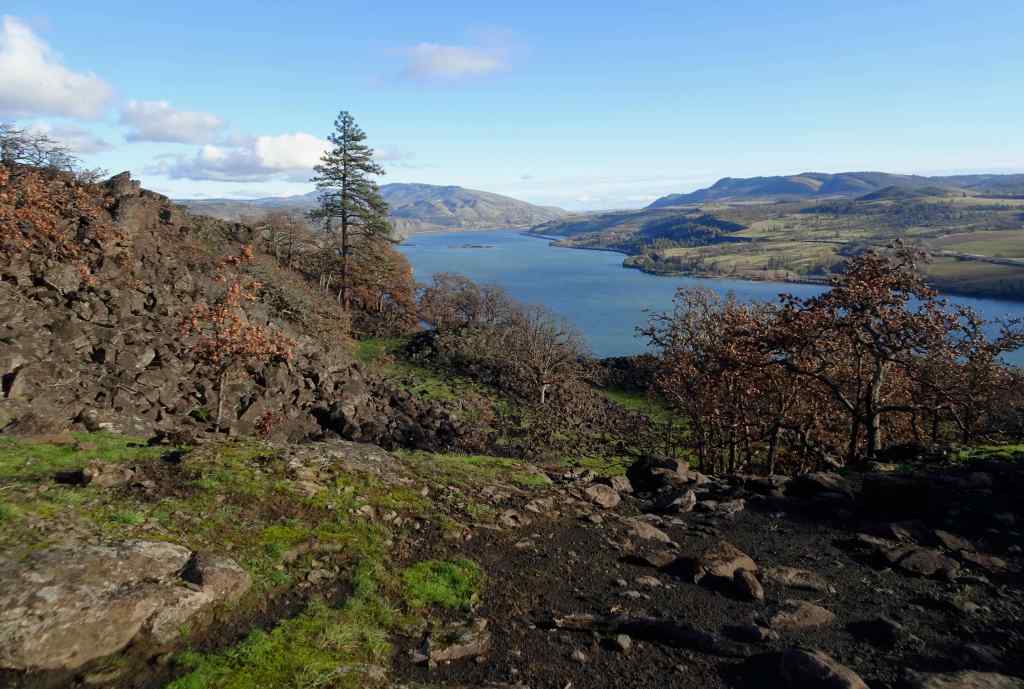
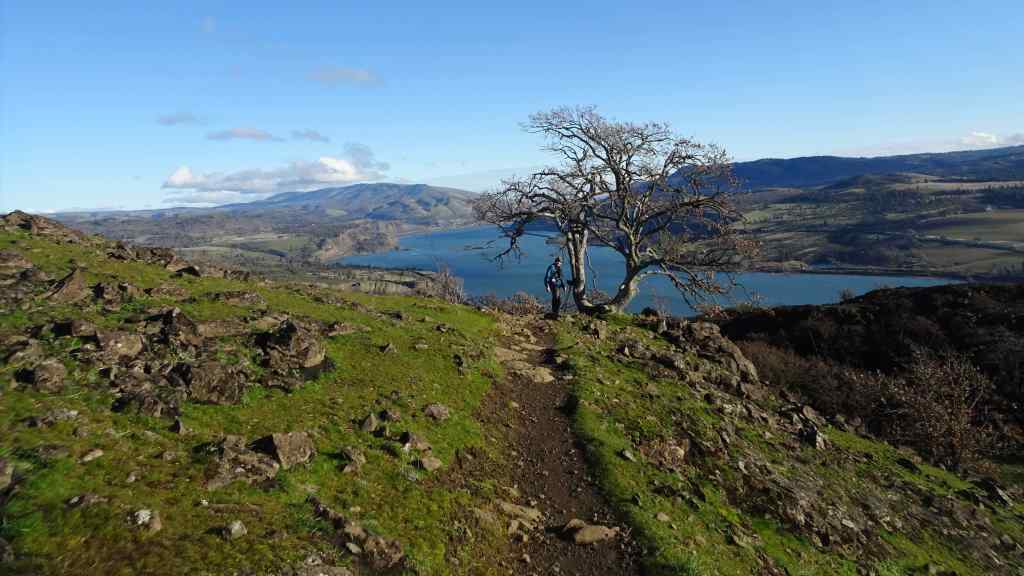
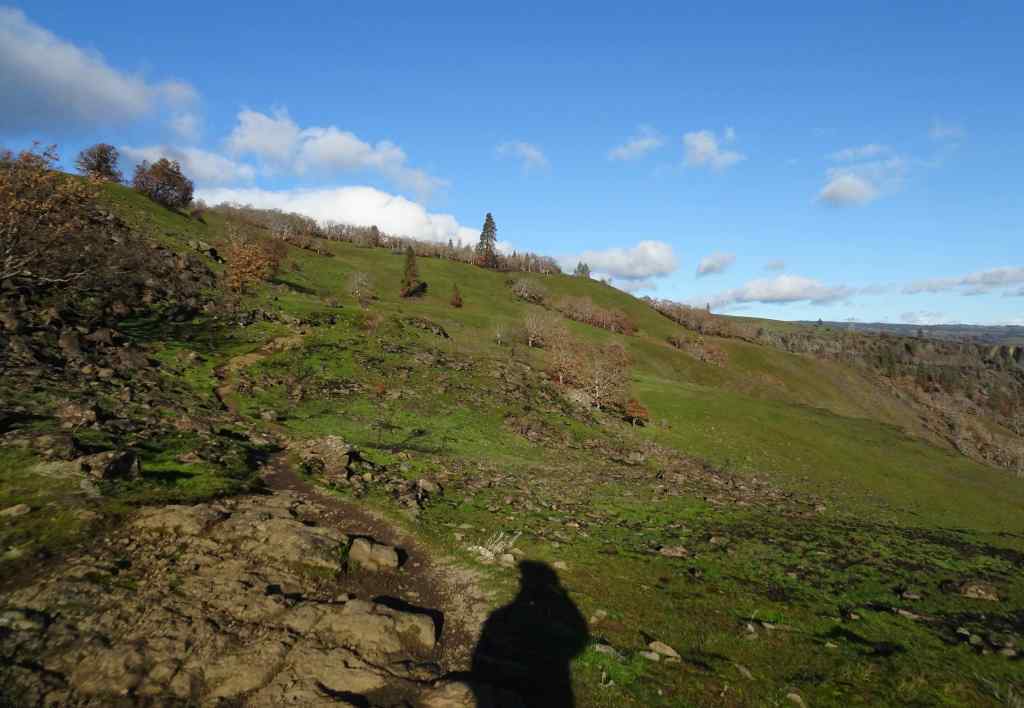
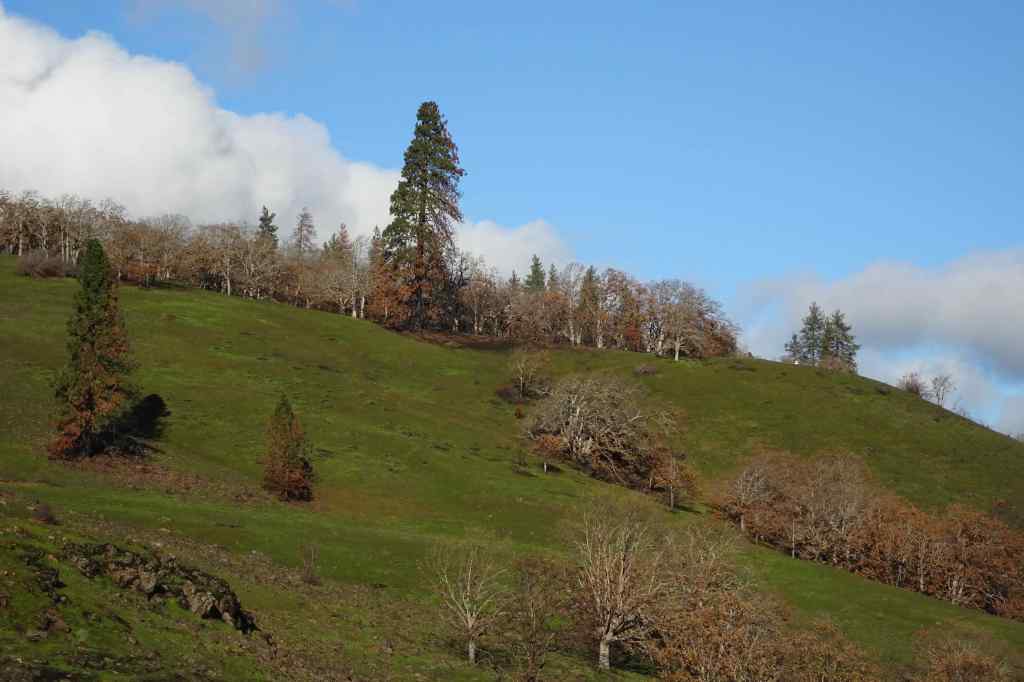
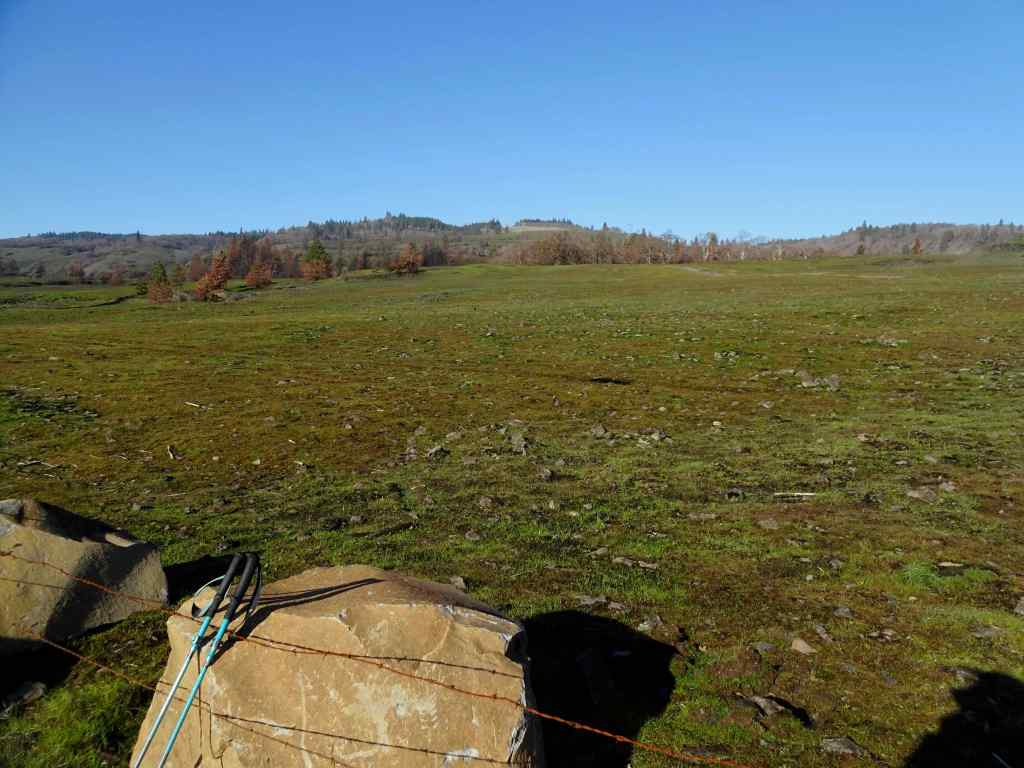
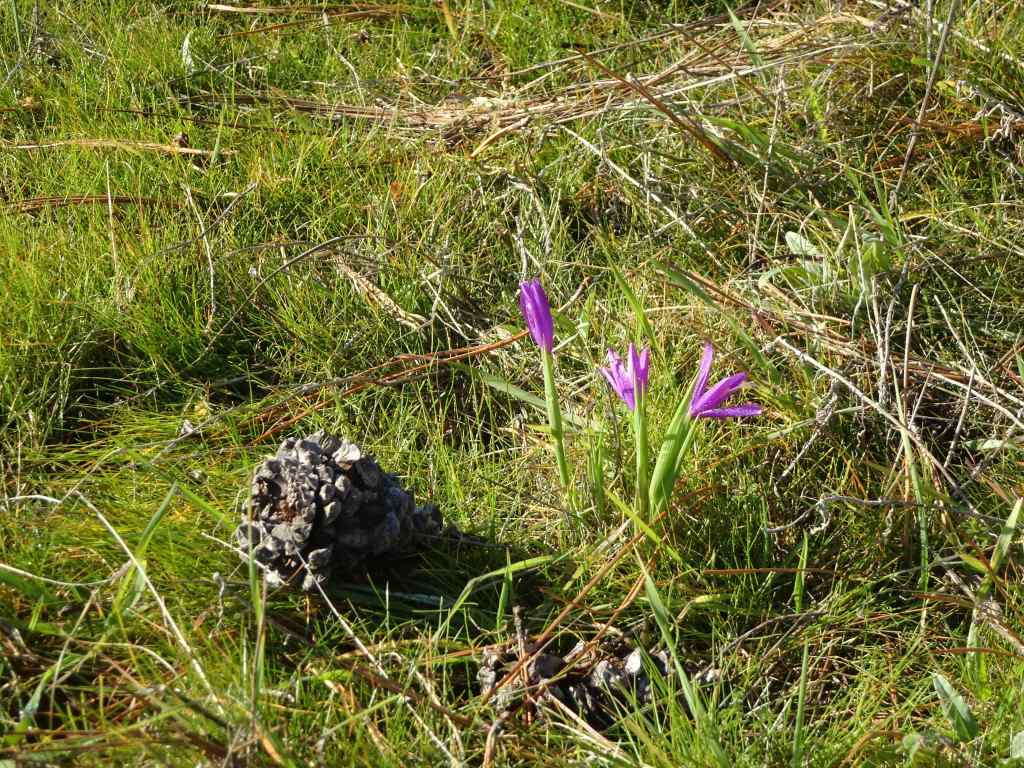
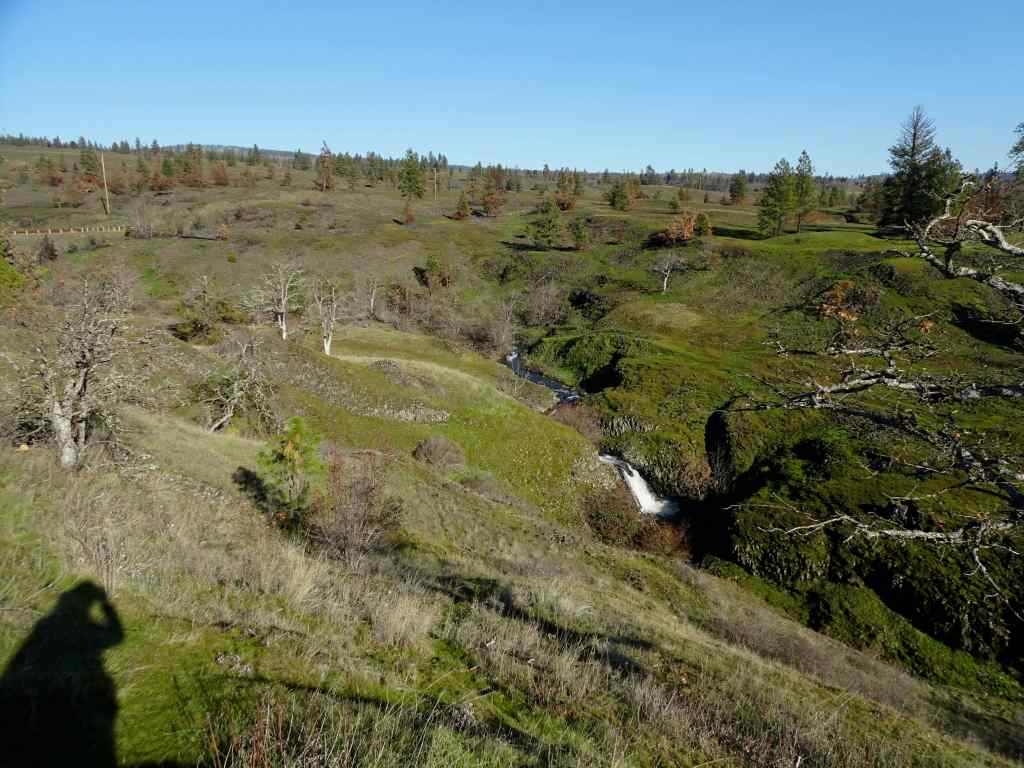
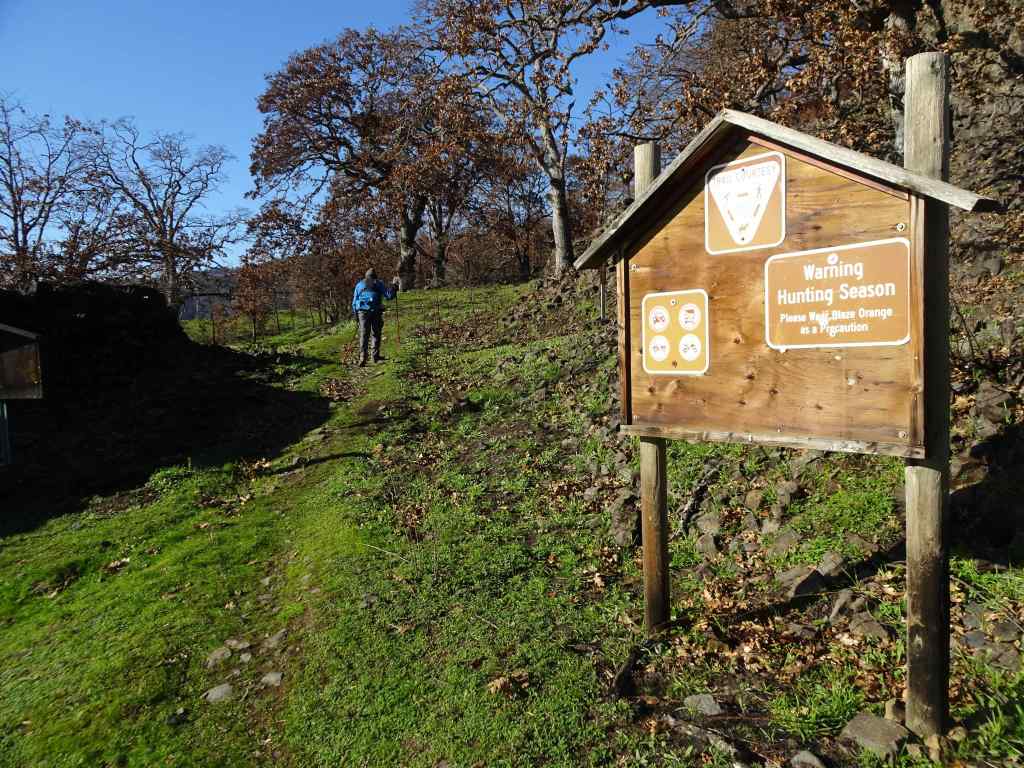
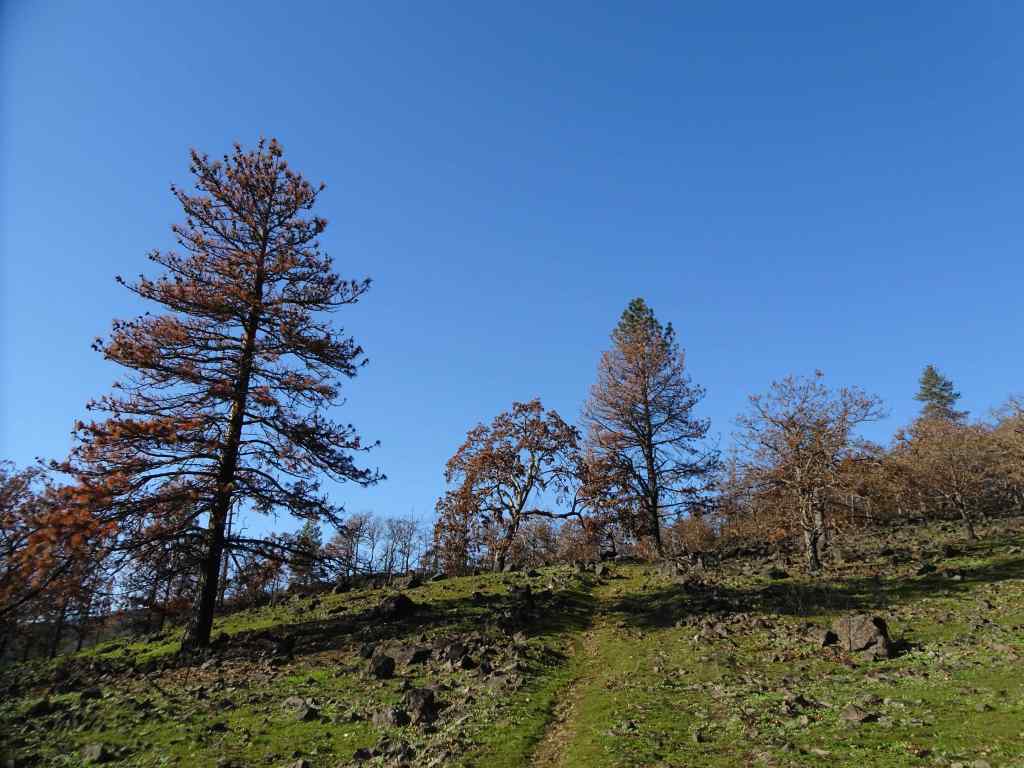
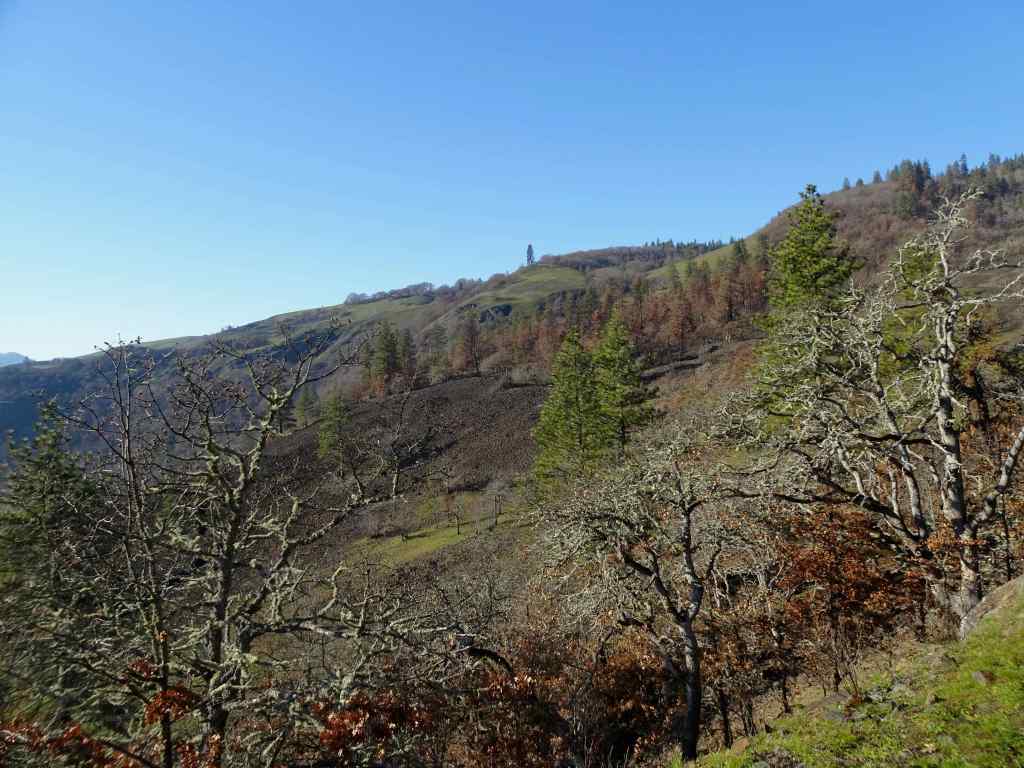
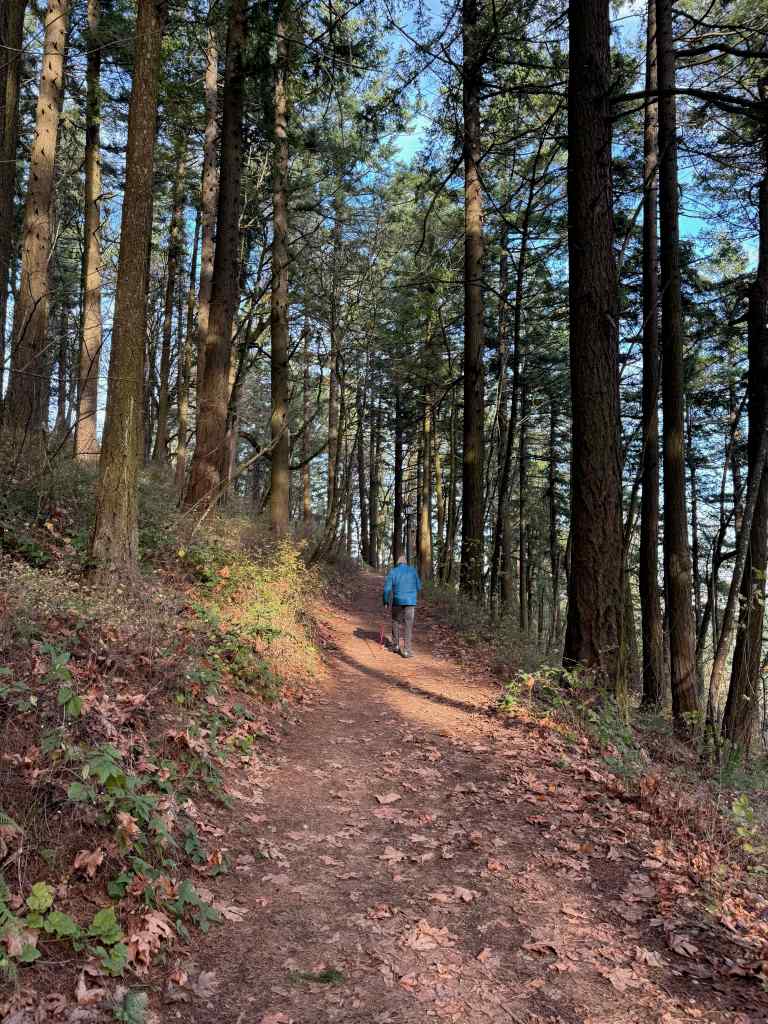
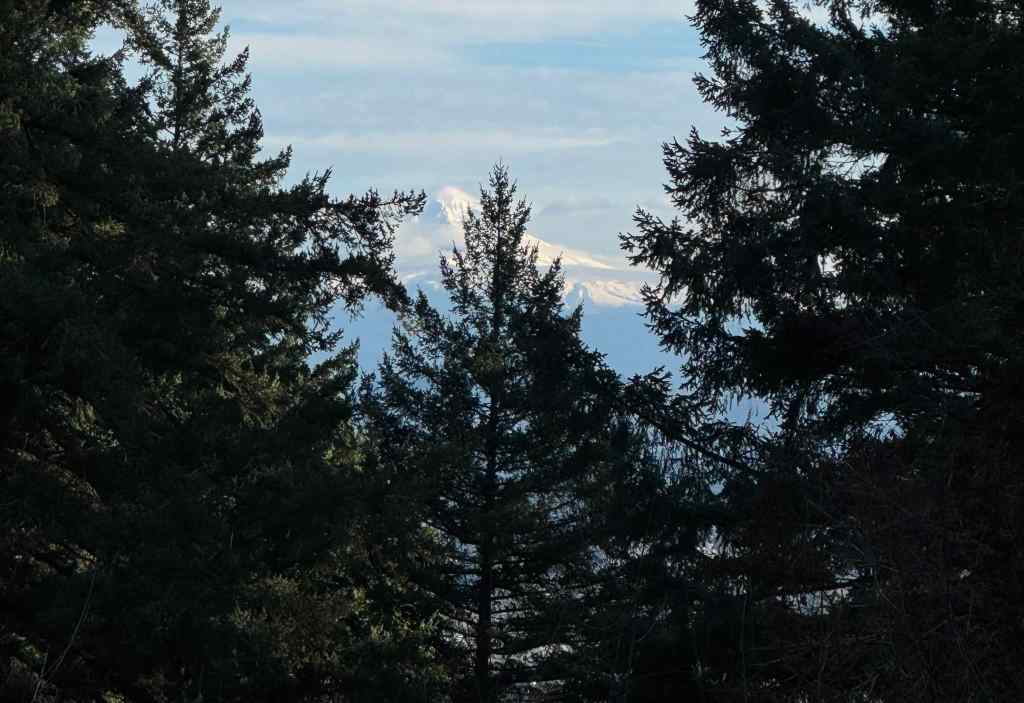
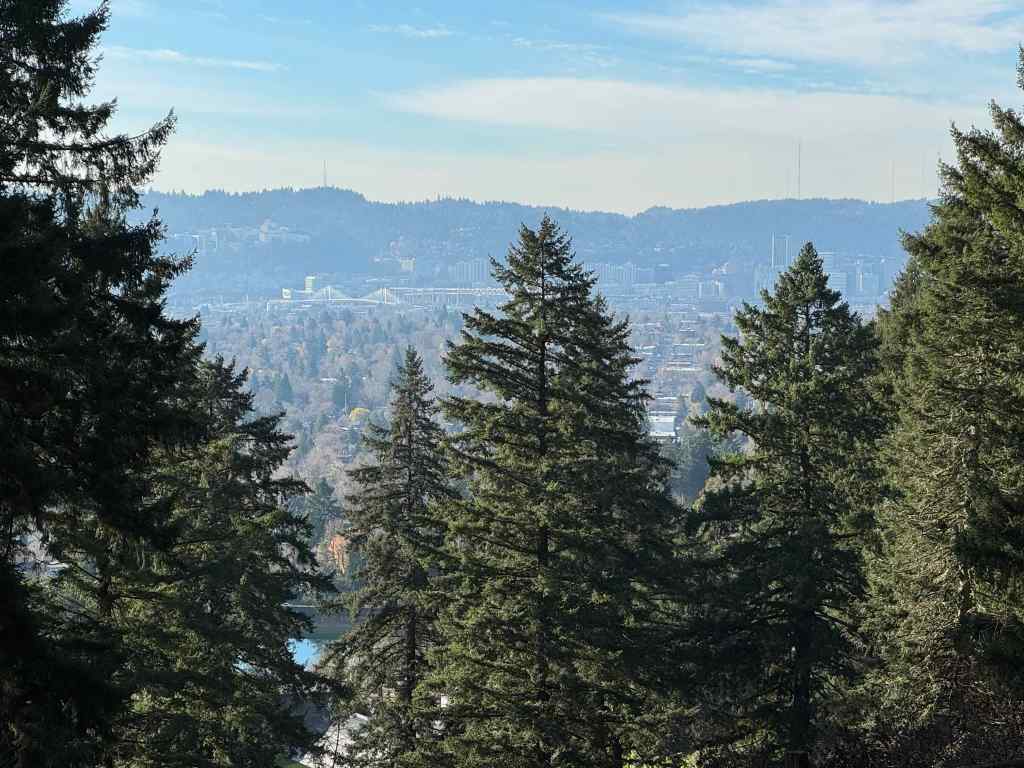
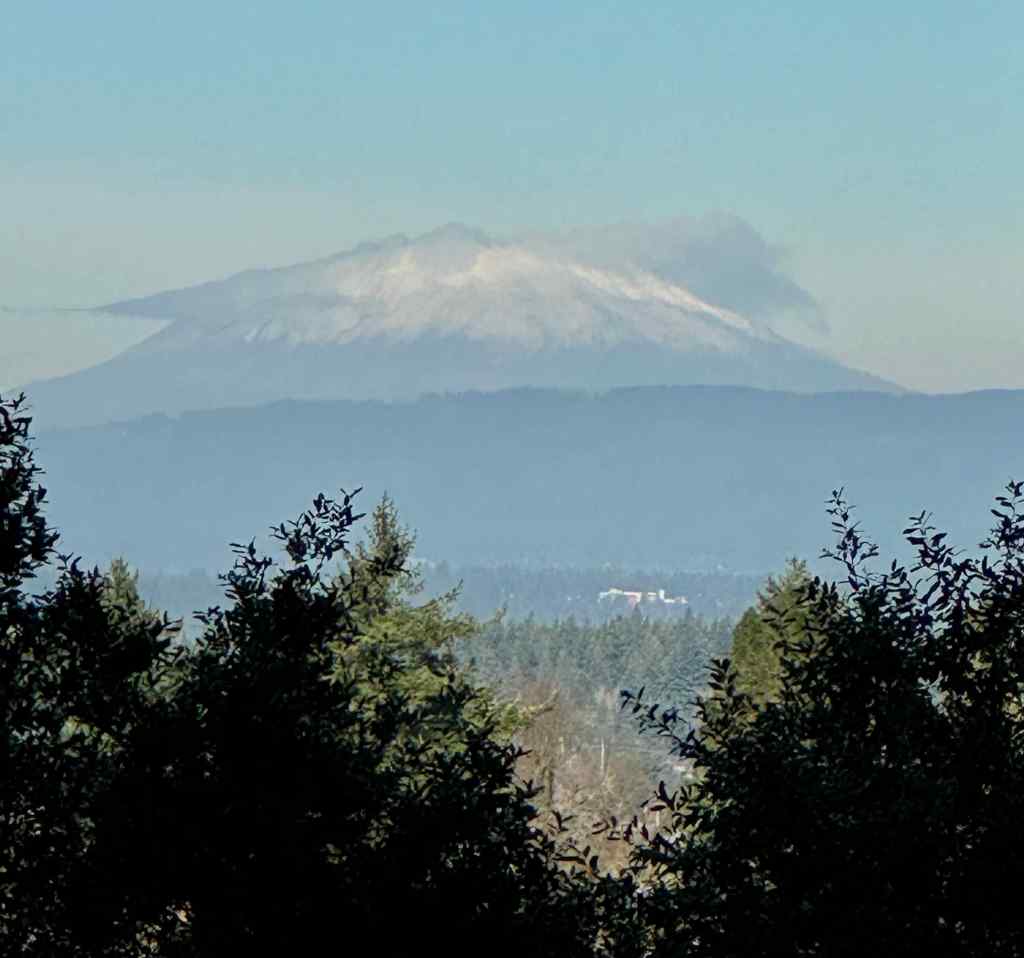
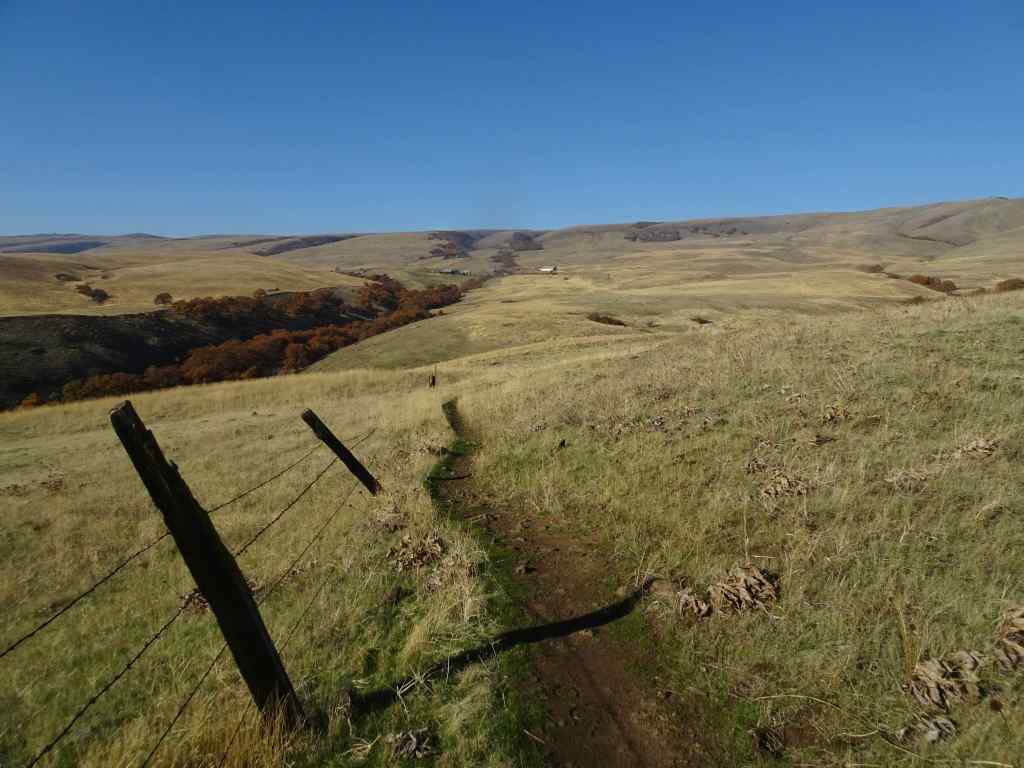
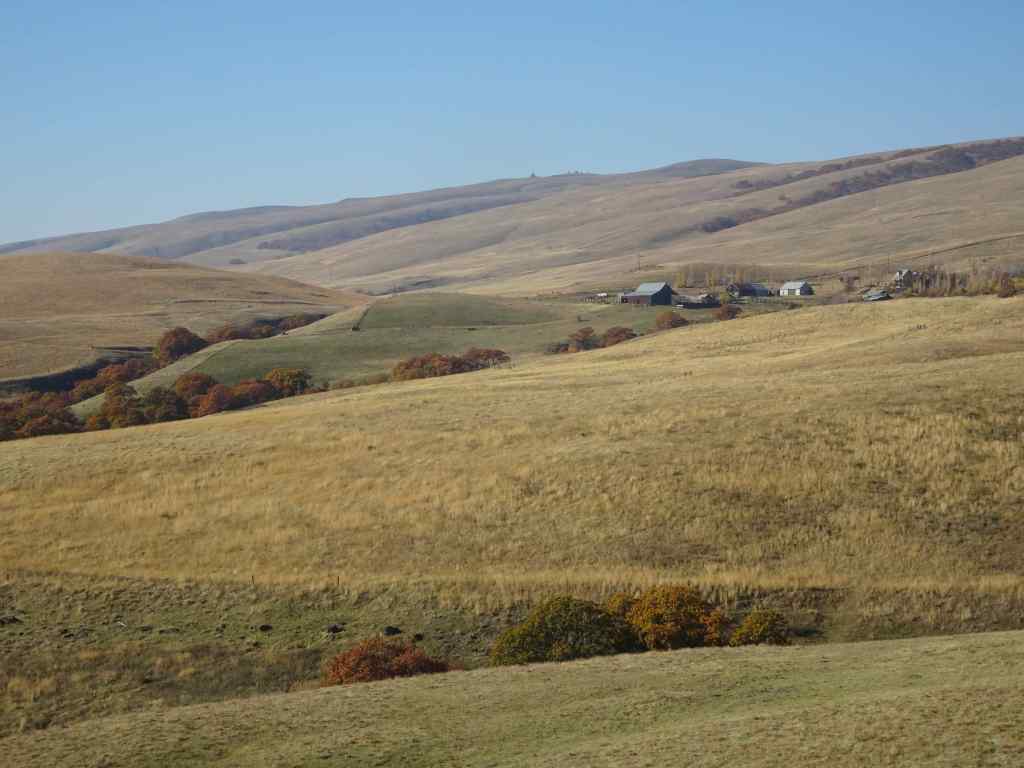
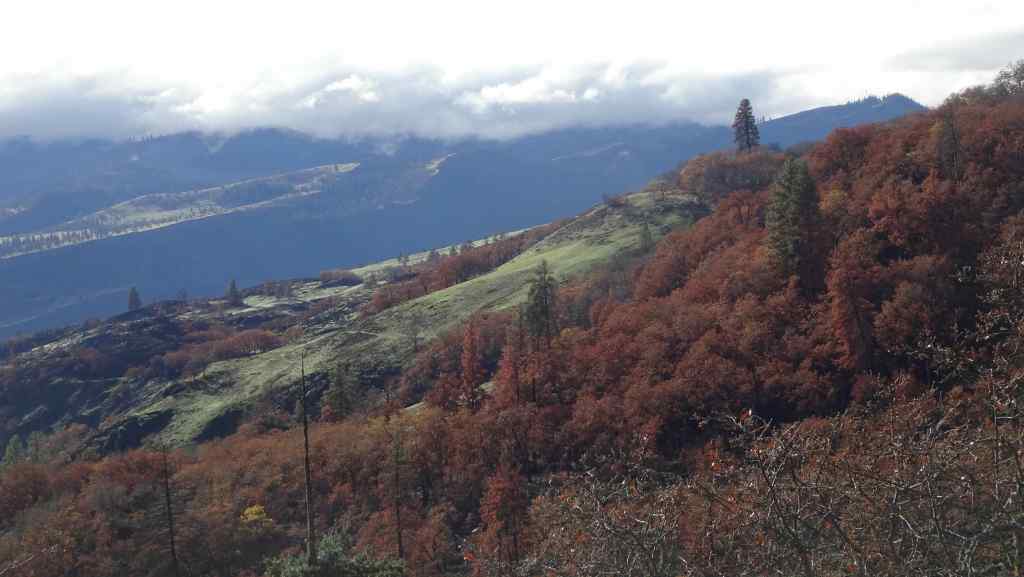
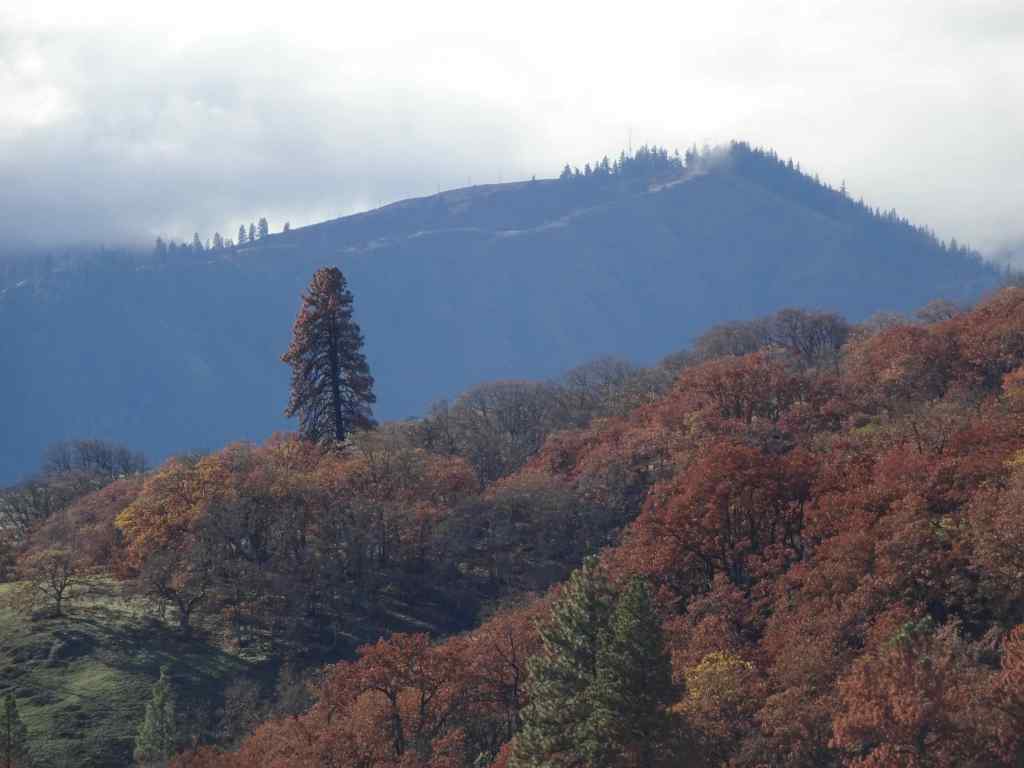
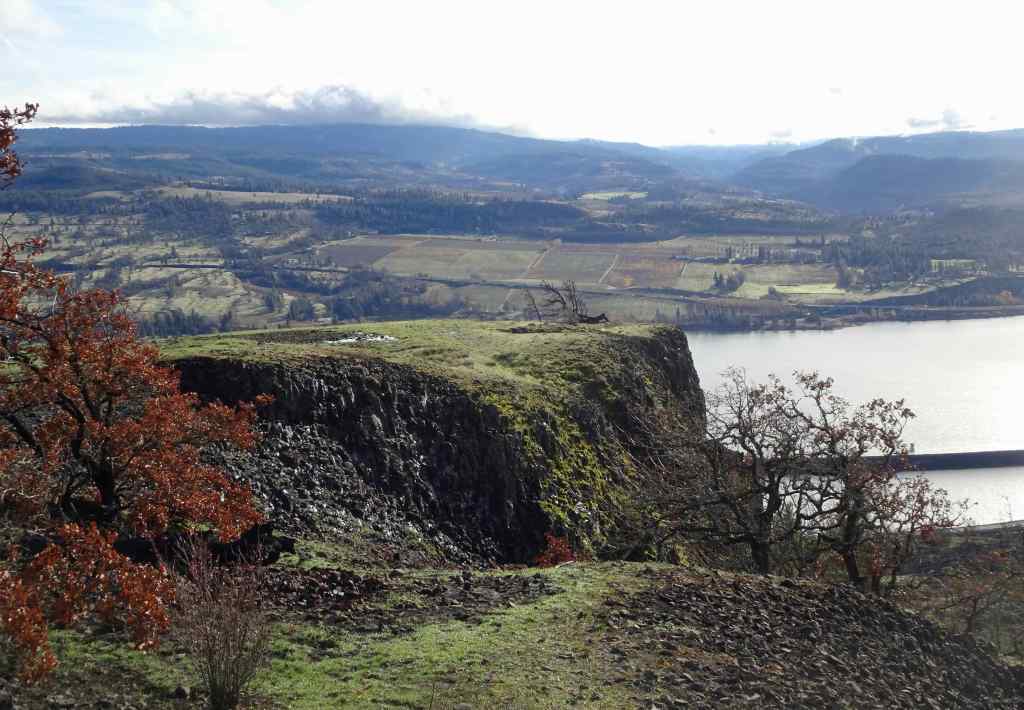
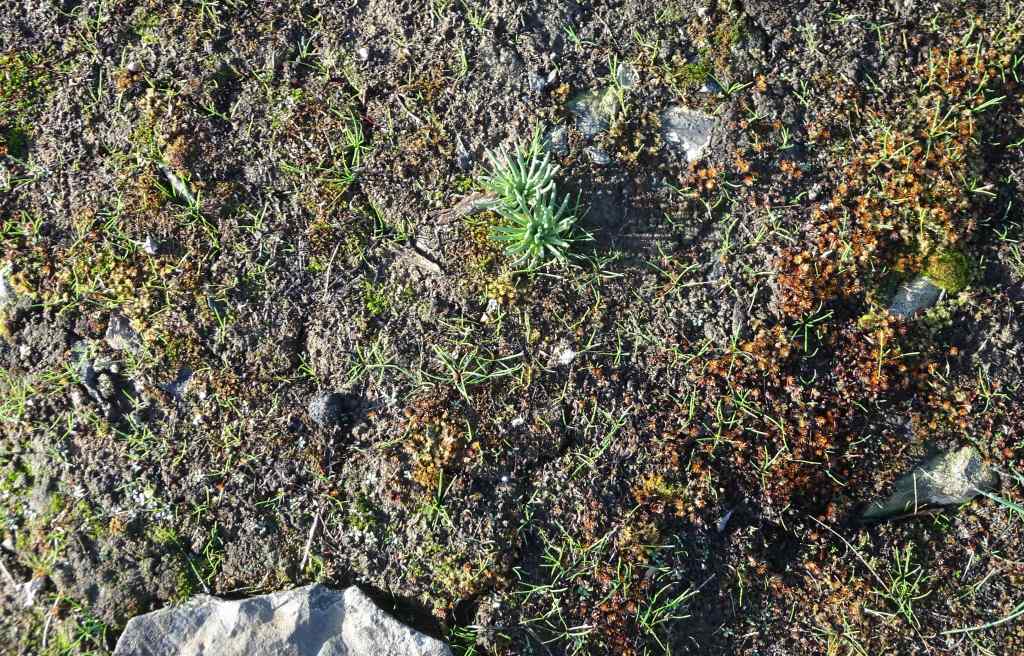
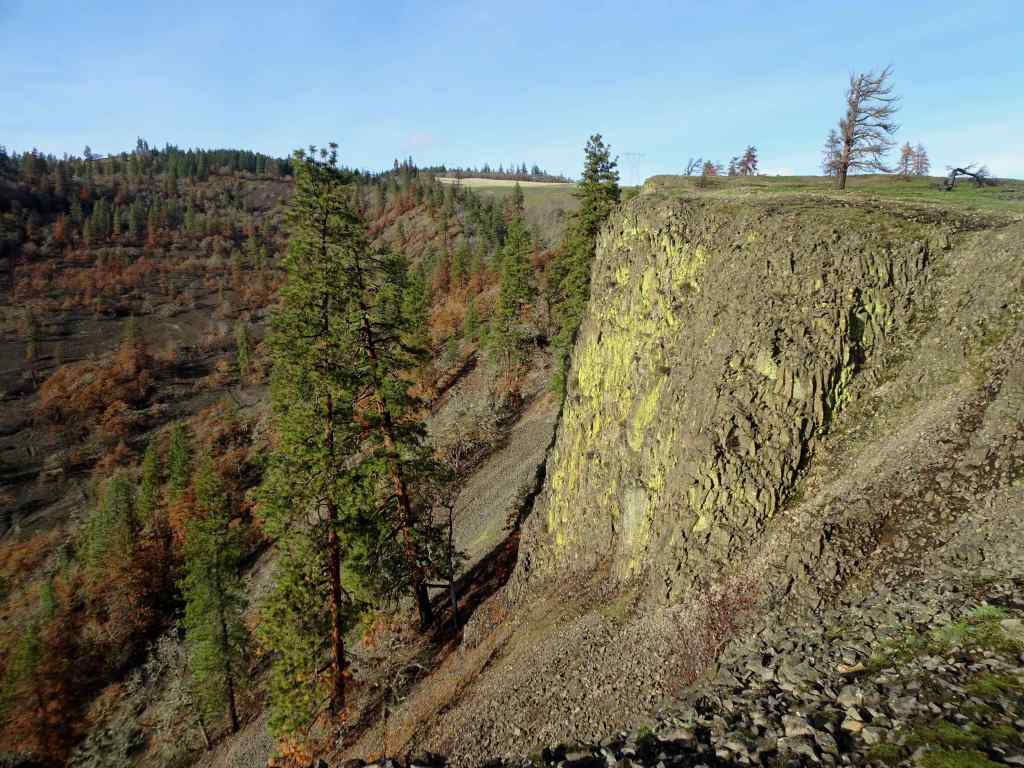
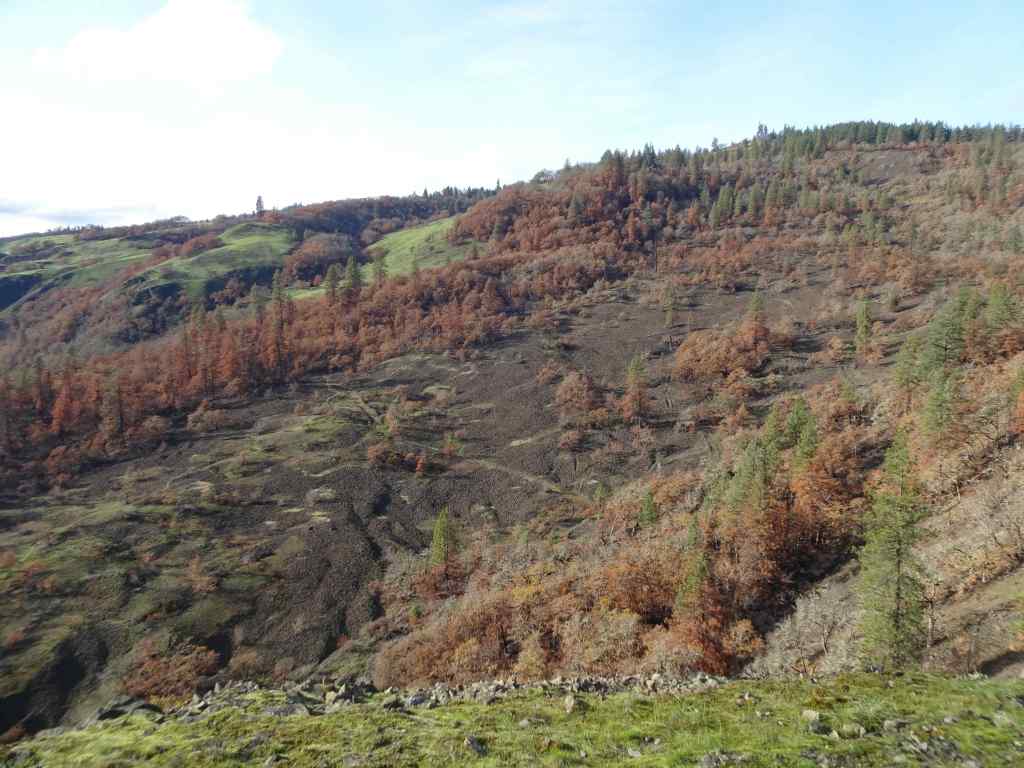
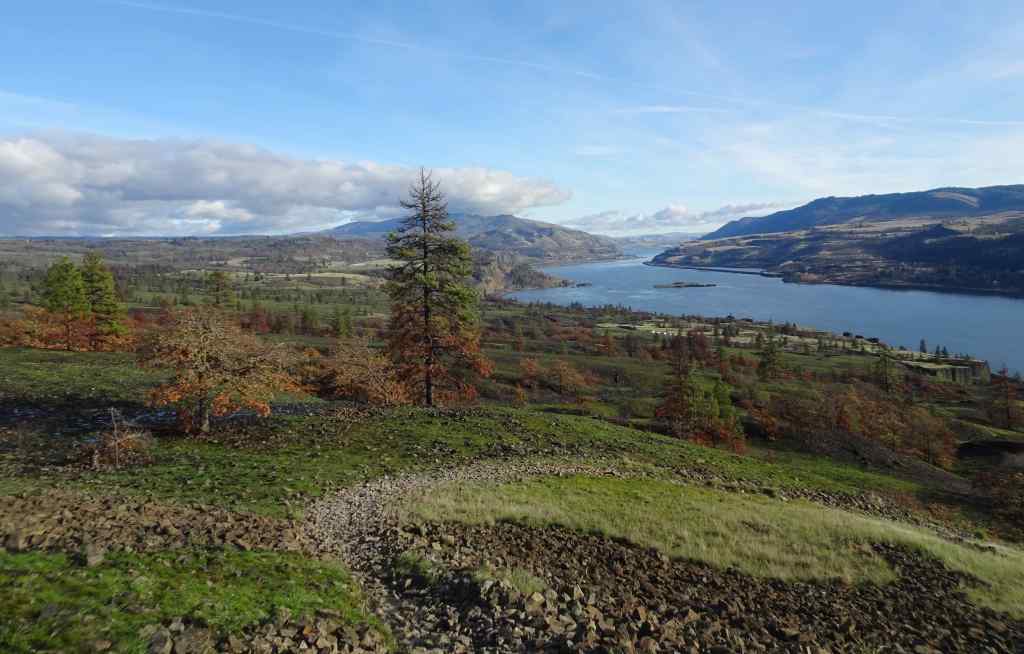
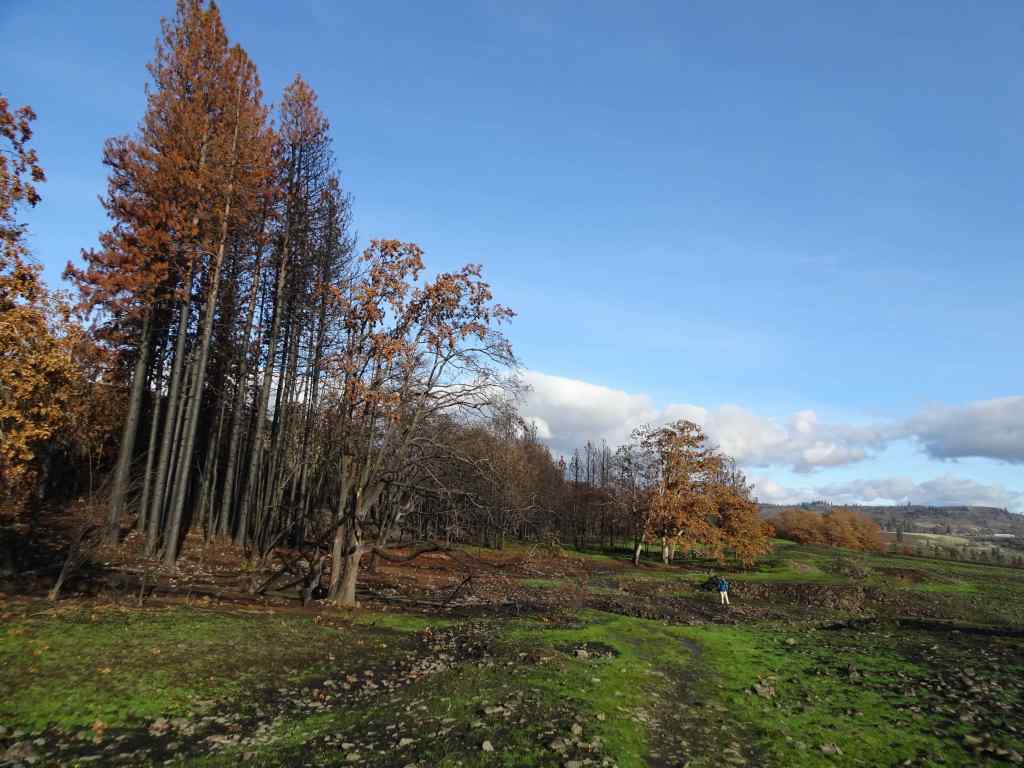
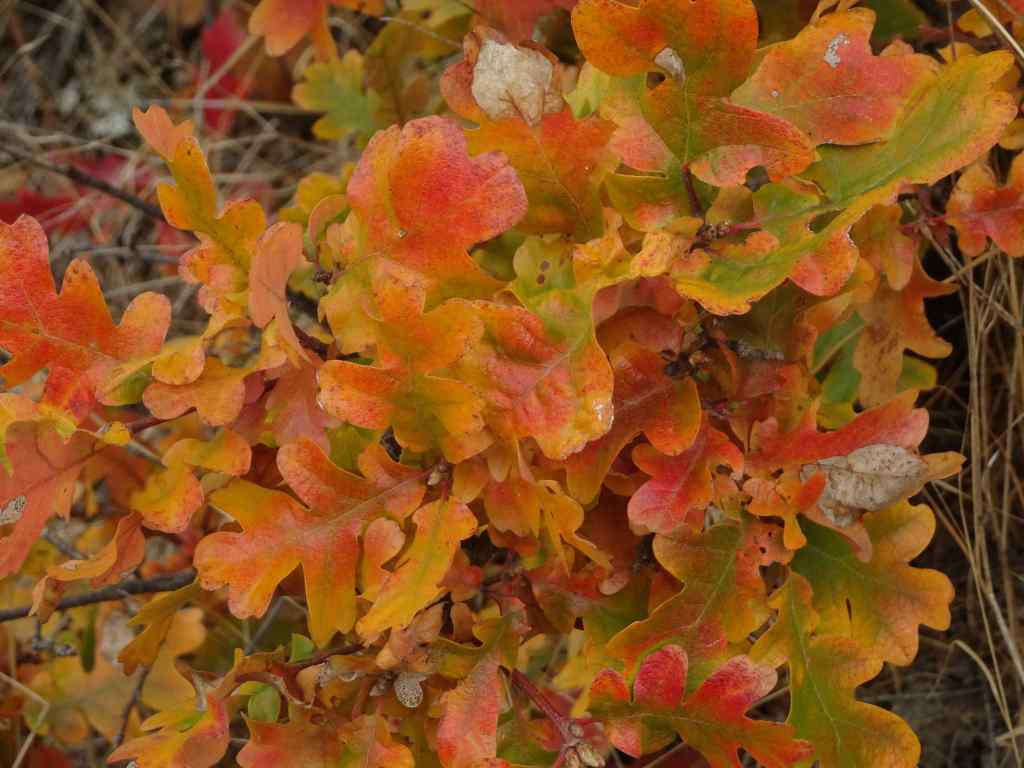
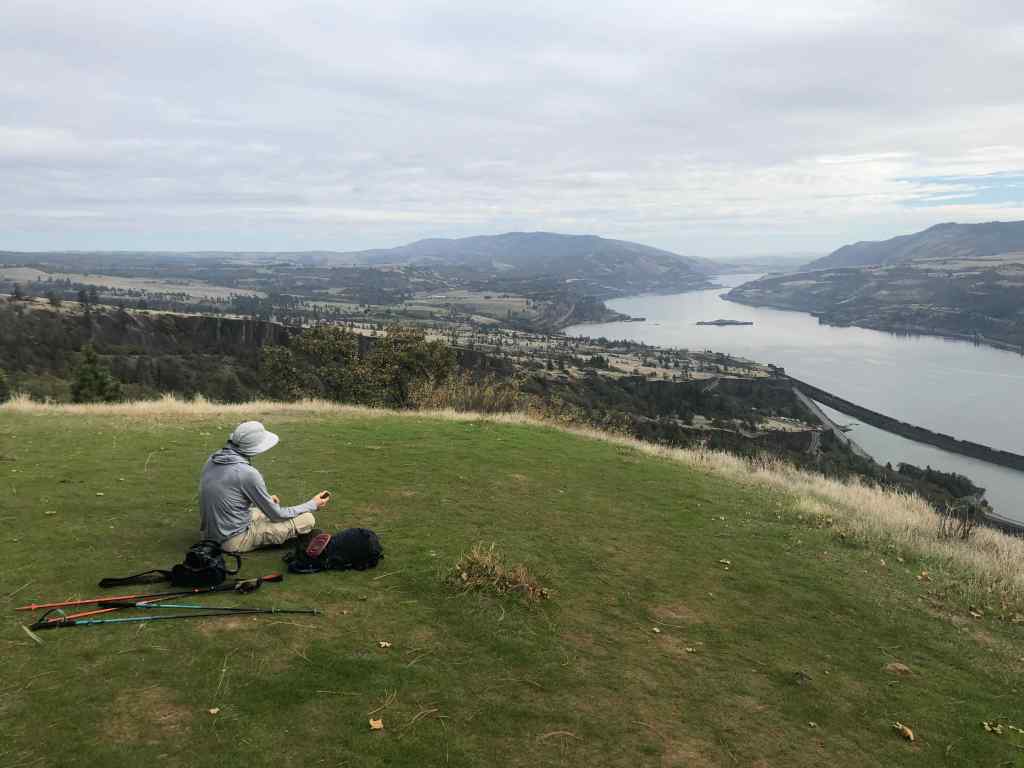
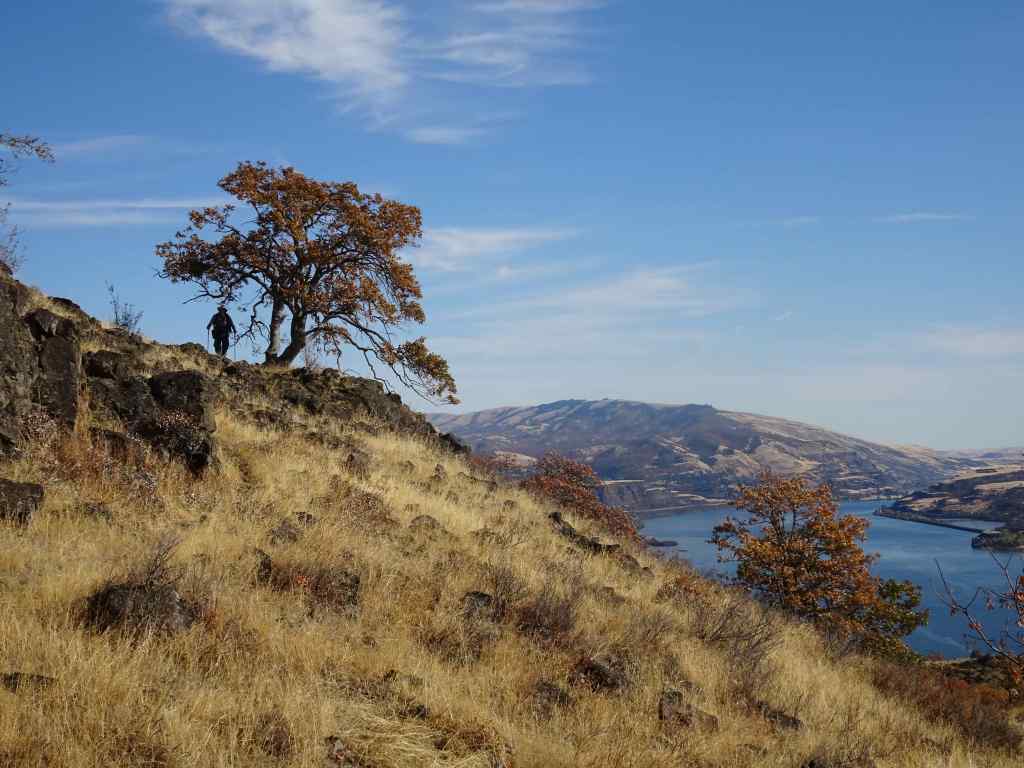
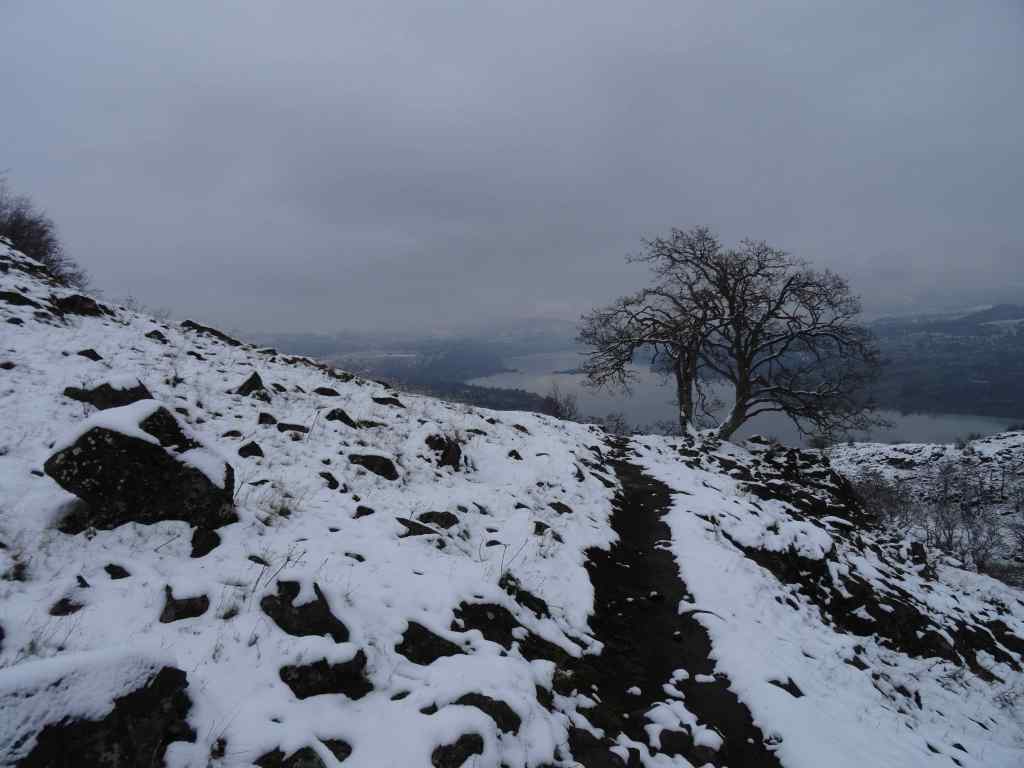
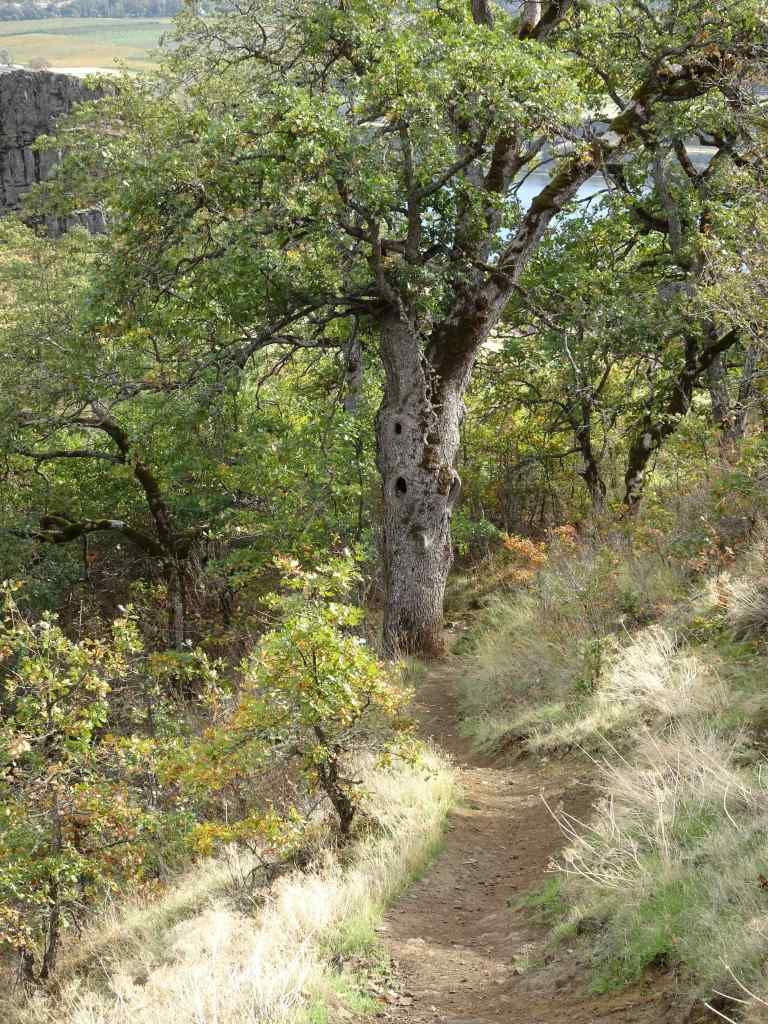
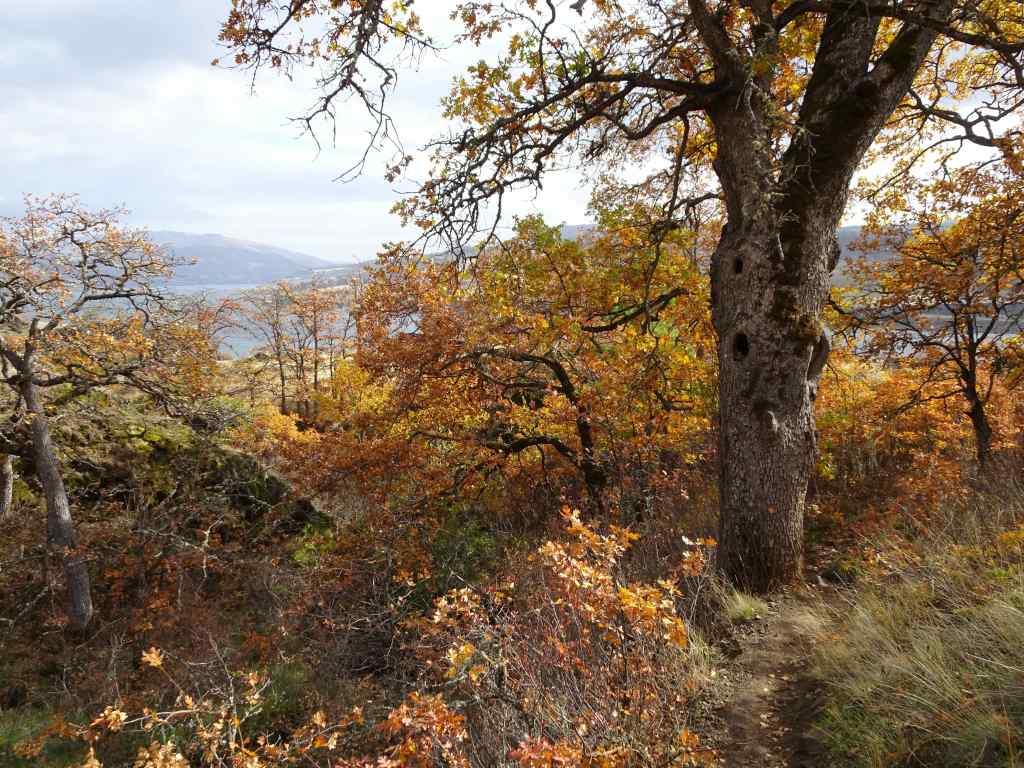
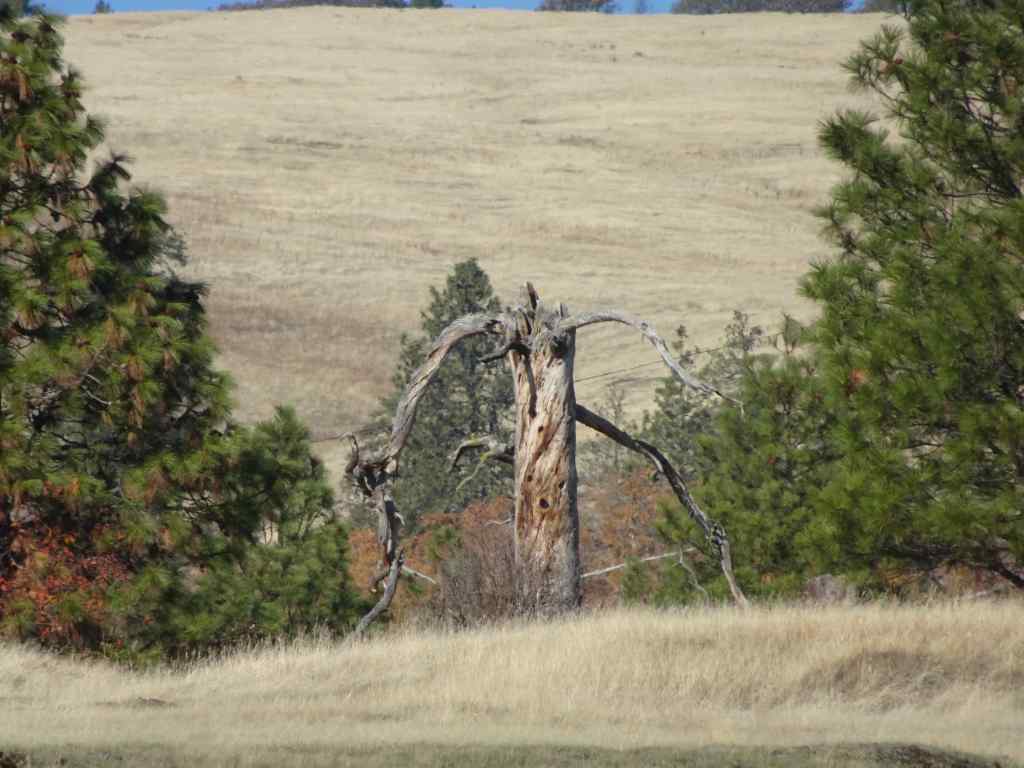
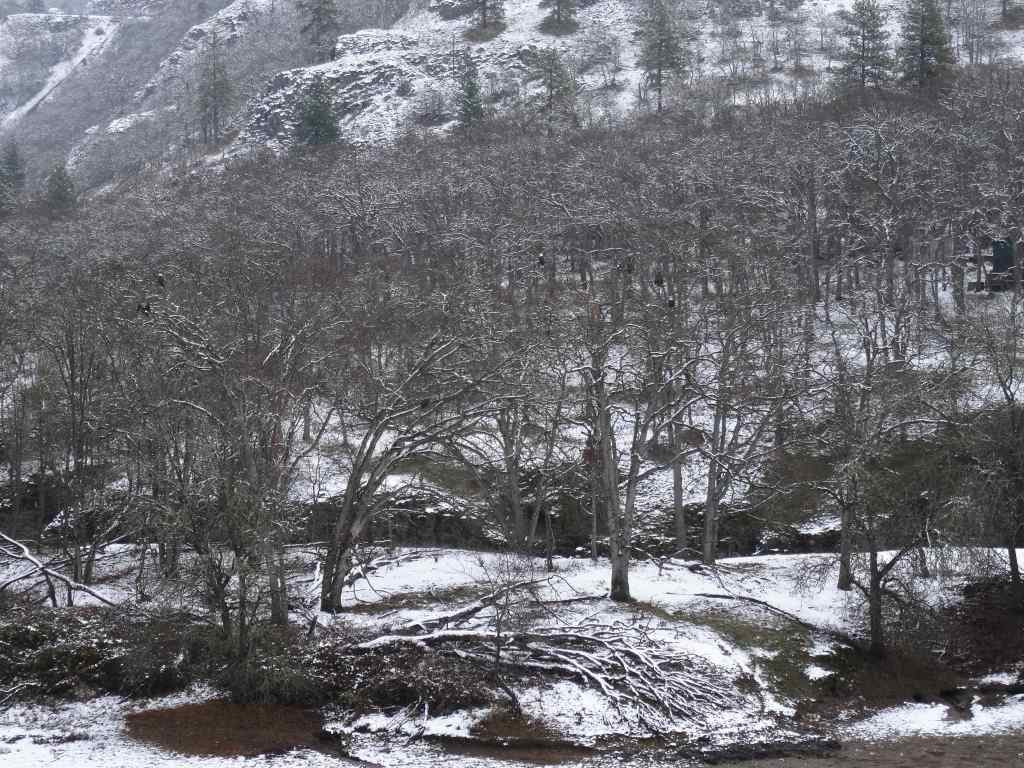
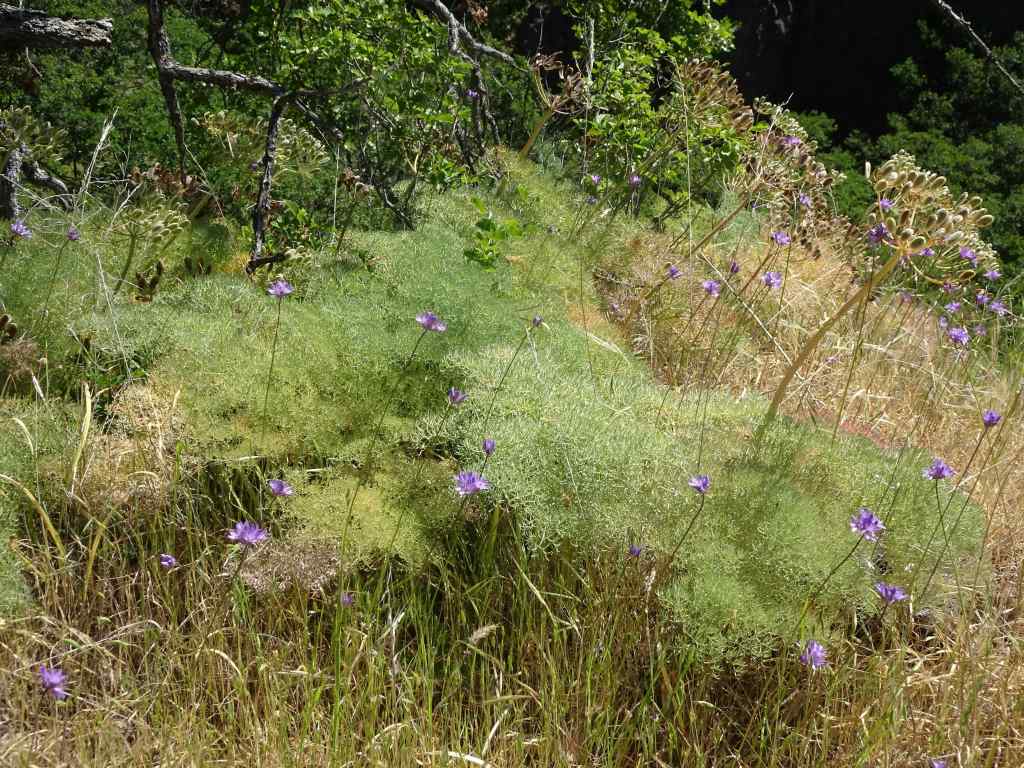
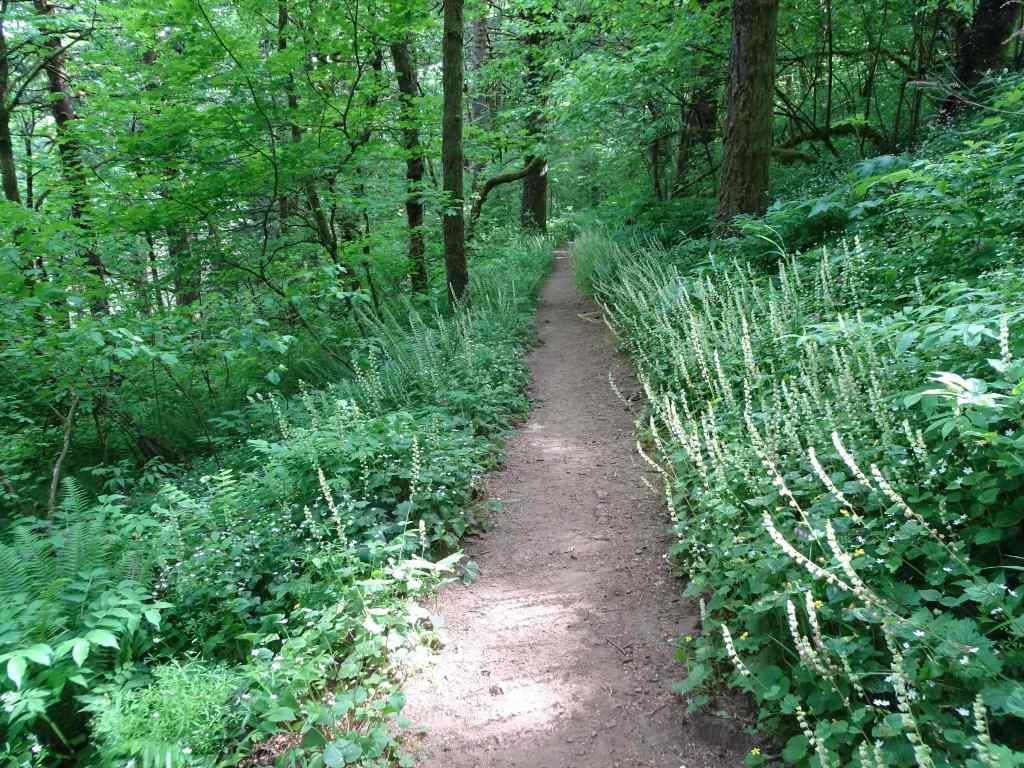
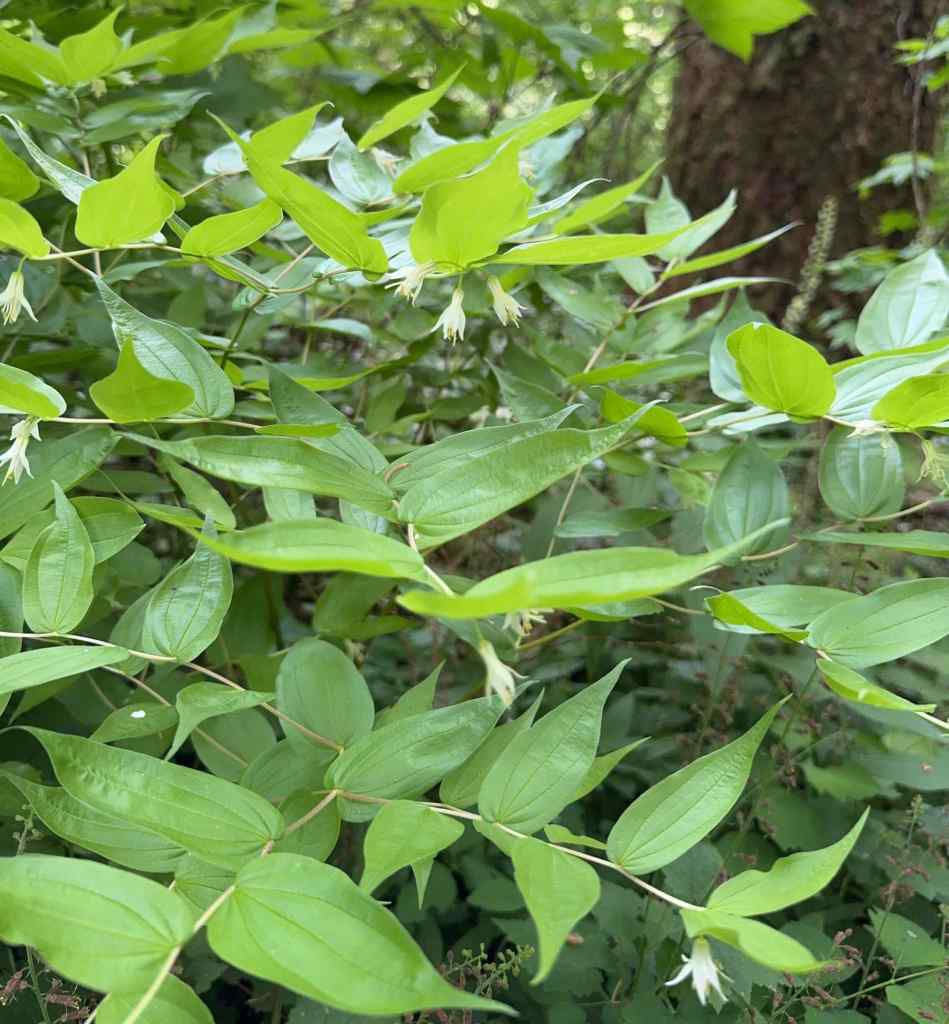
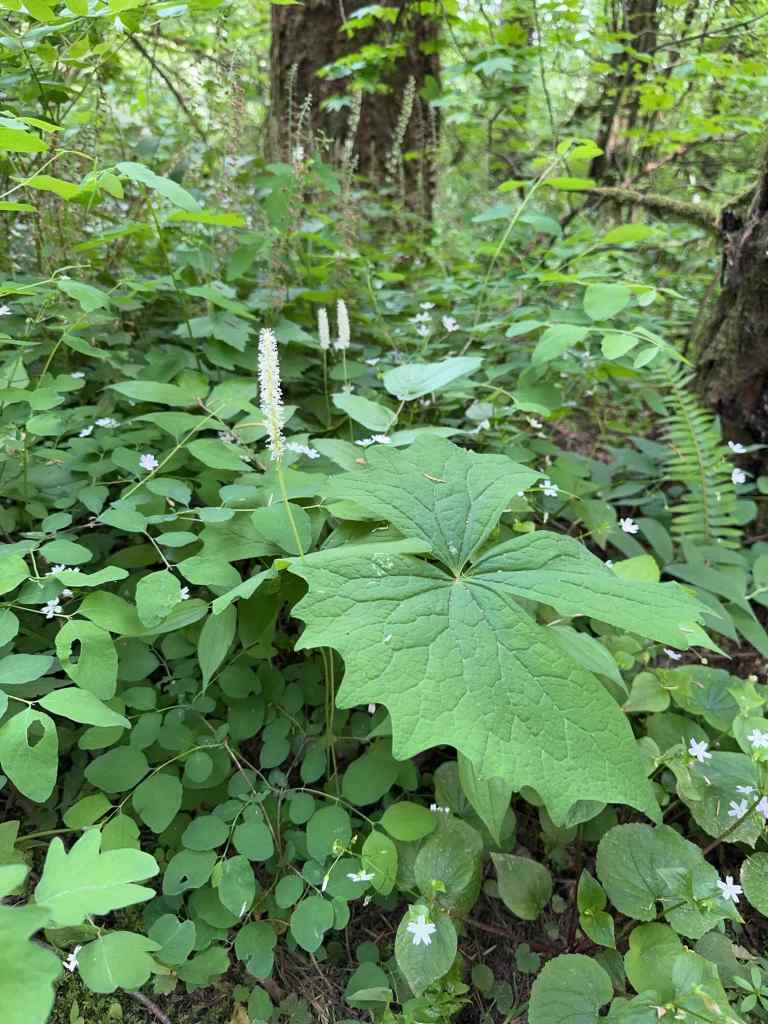
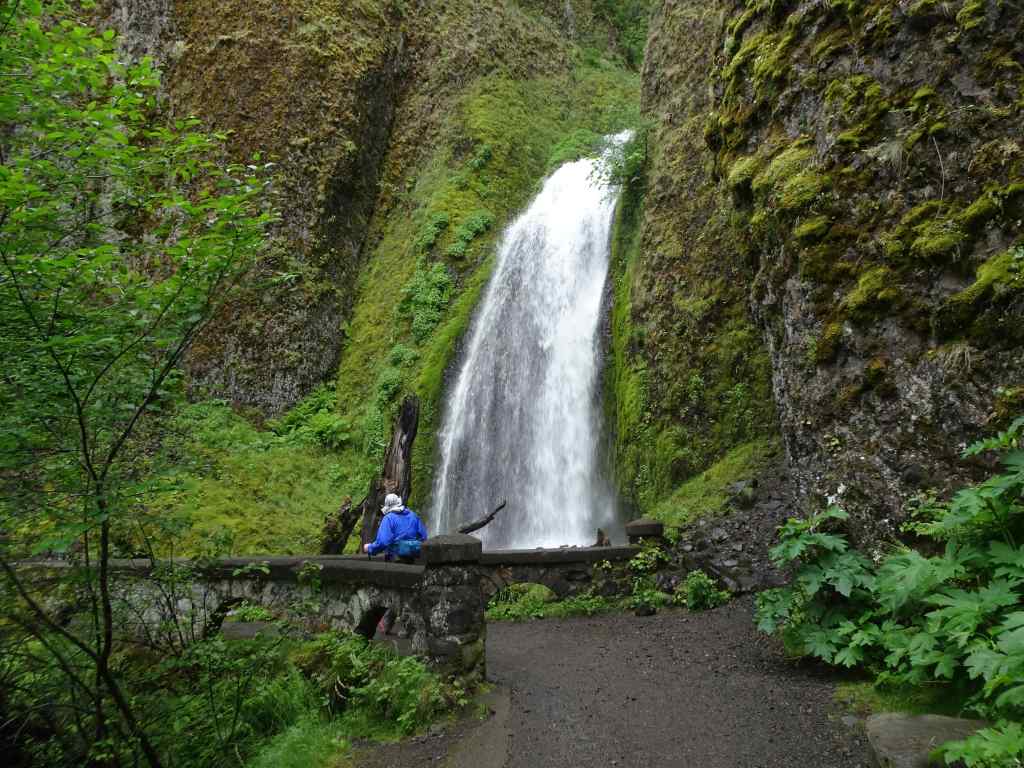
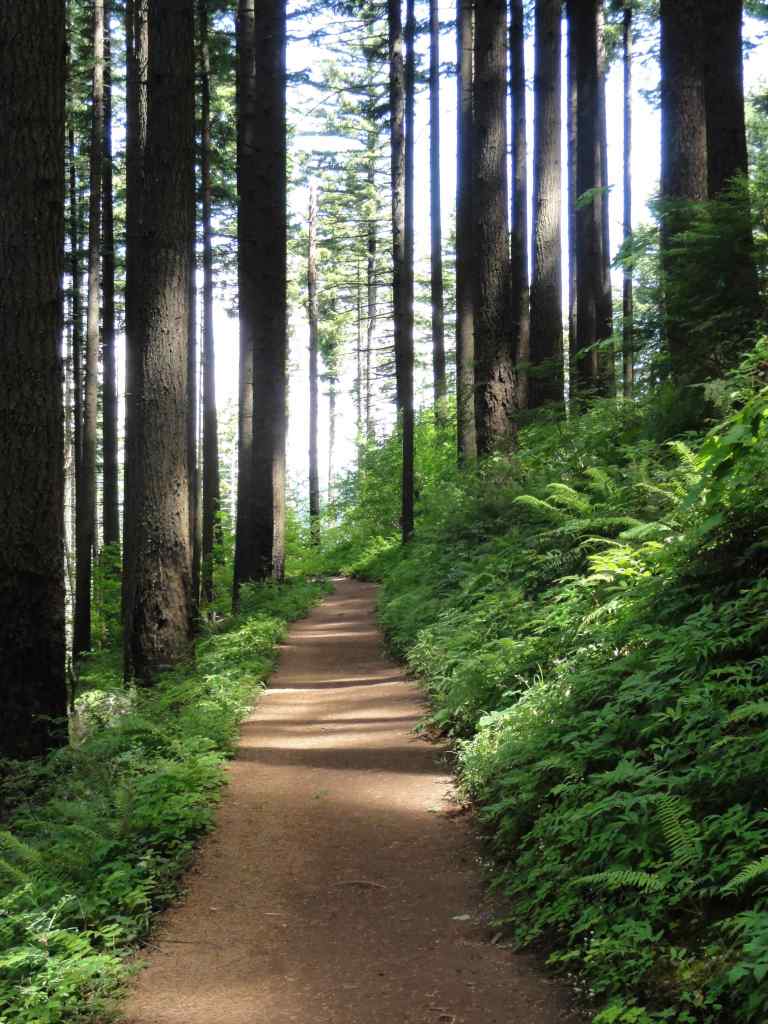
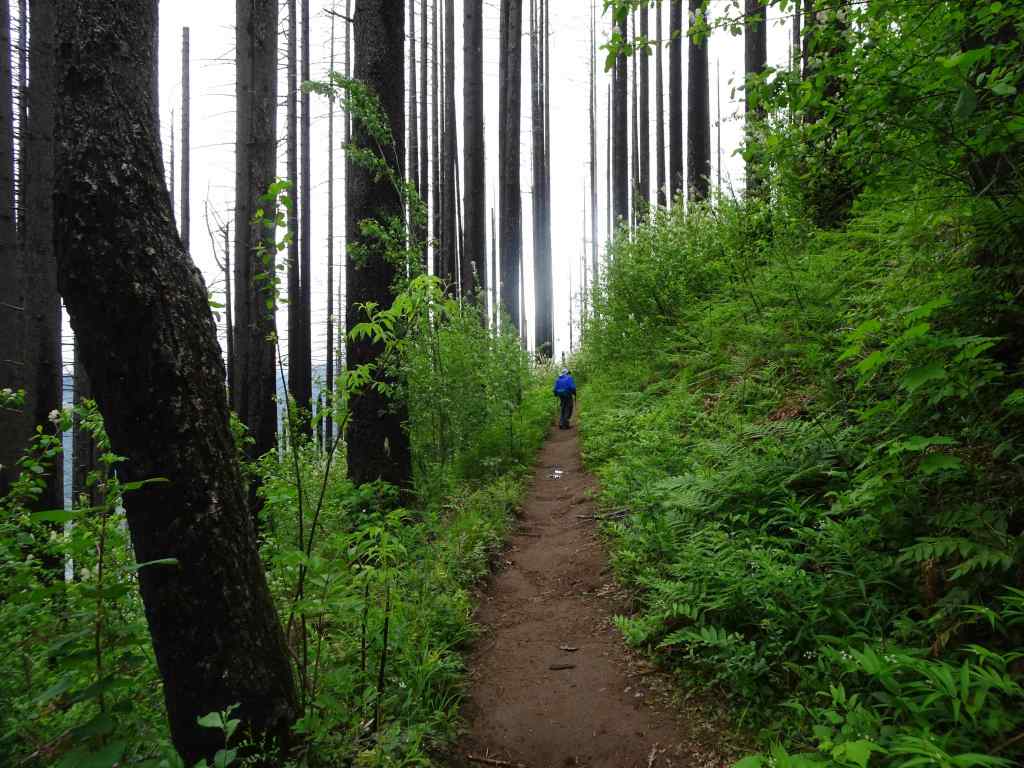
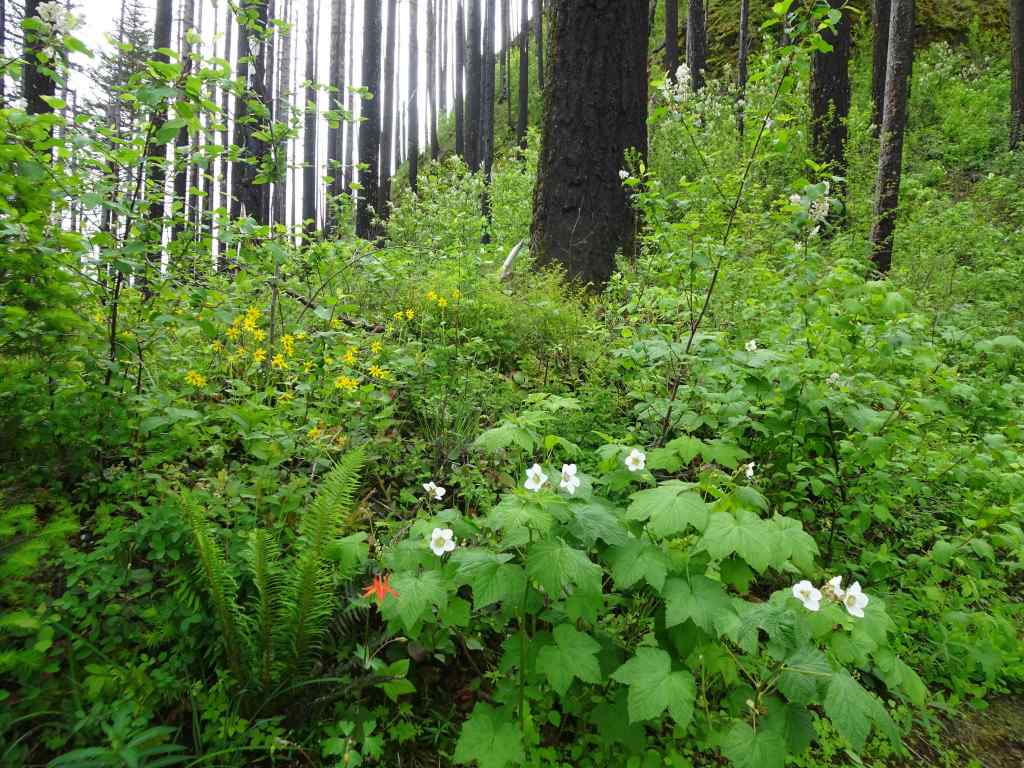
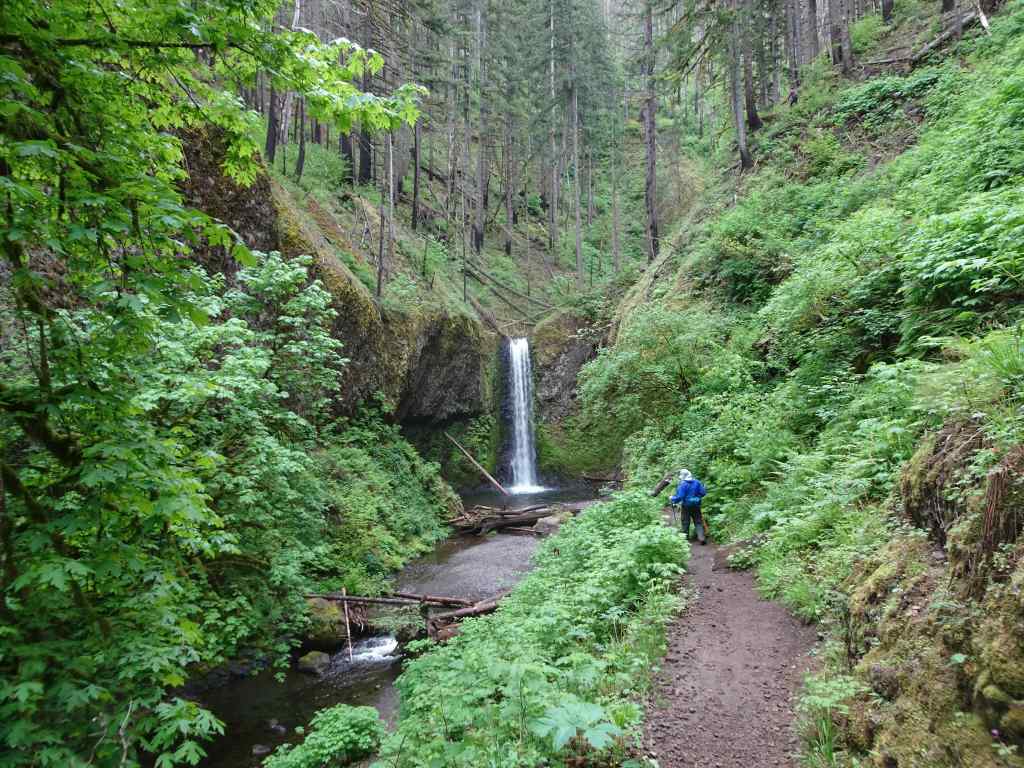
We are back to our usual weekly hiking schedule, with four hikes in May; all repeat hikes, with wildflowers and waterfalls.
5/6 – Eagle Creek, OR
We walked most of the way to the High Bridge on this warm day (5.8 miles, 600 feet). The trail has been recently reopened after repair of landslide and fallen trees from last winter. Still beautiful, with lots of wildflowers.
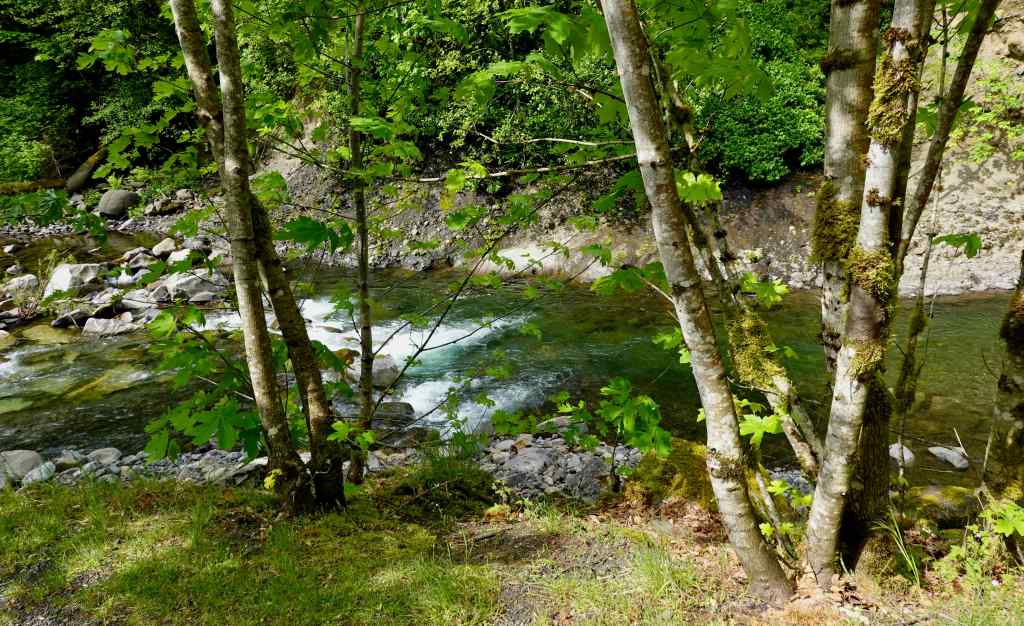
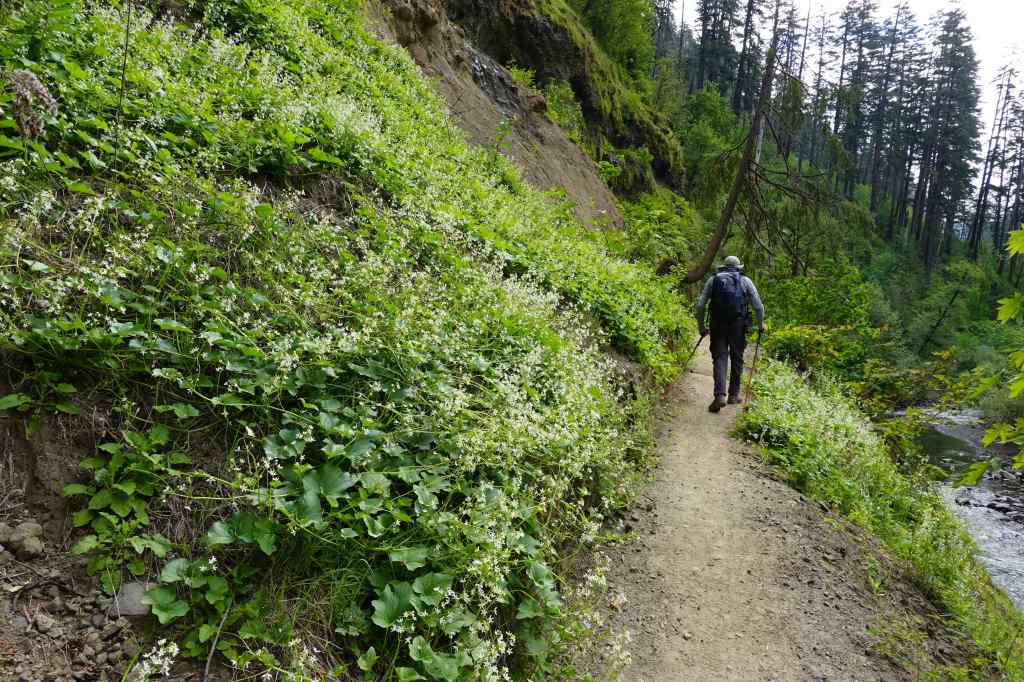
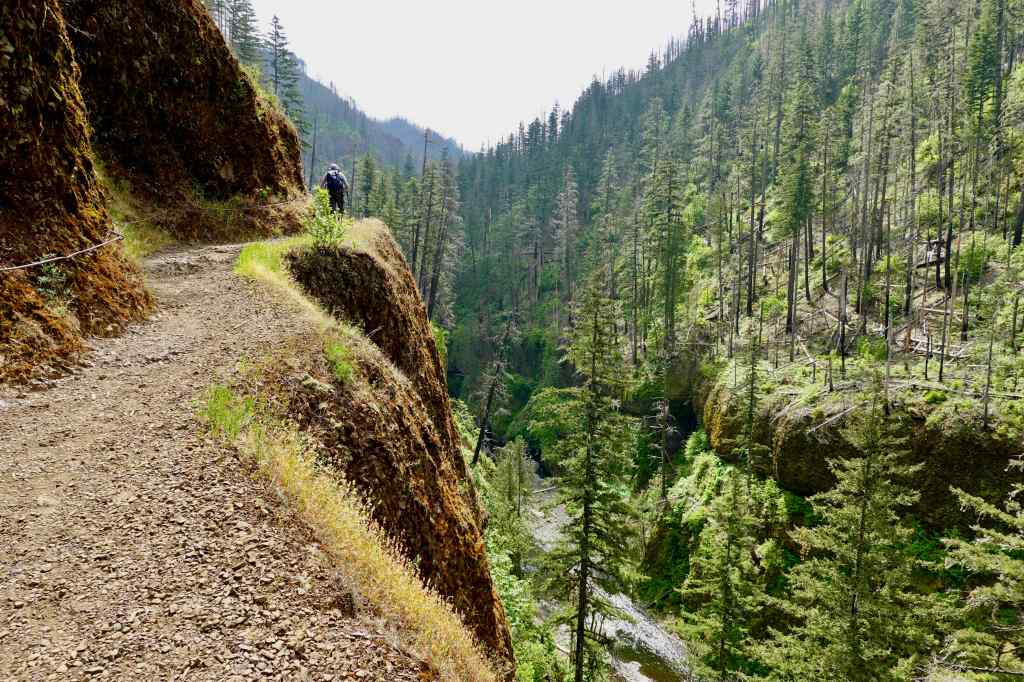
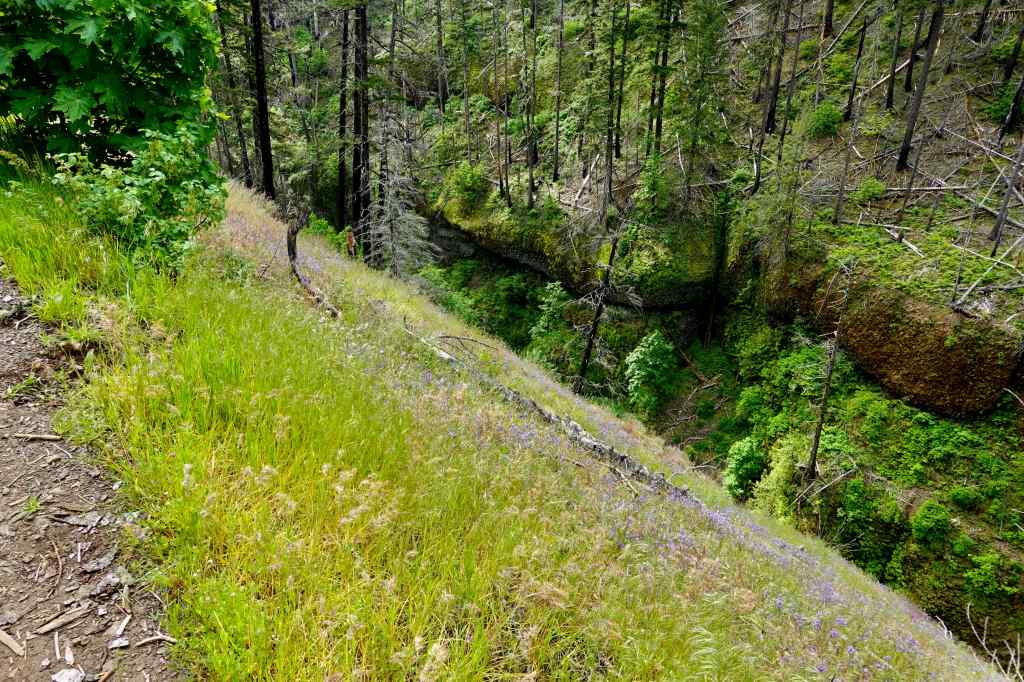
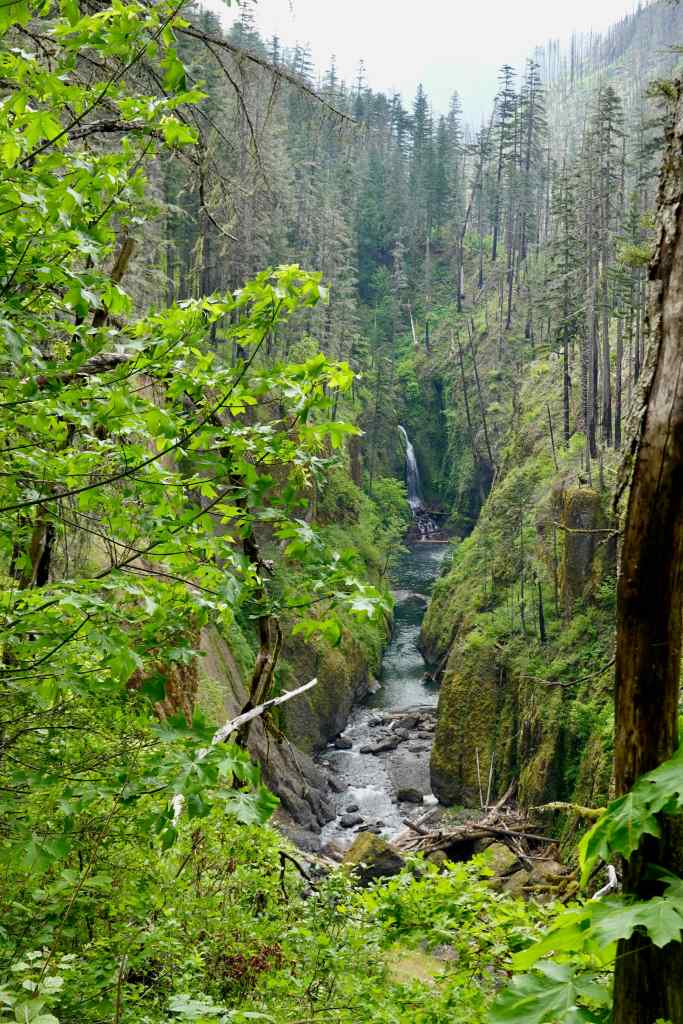
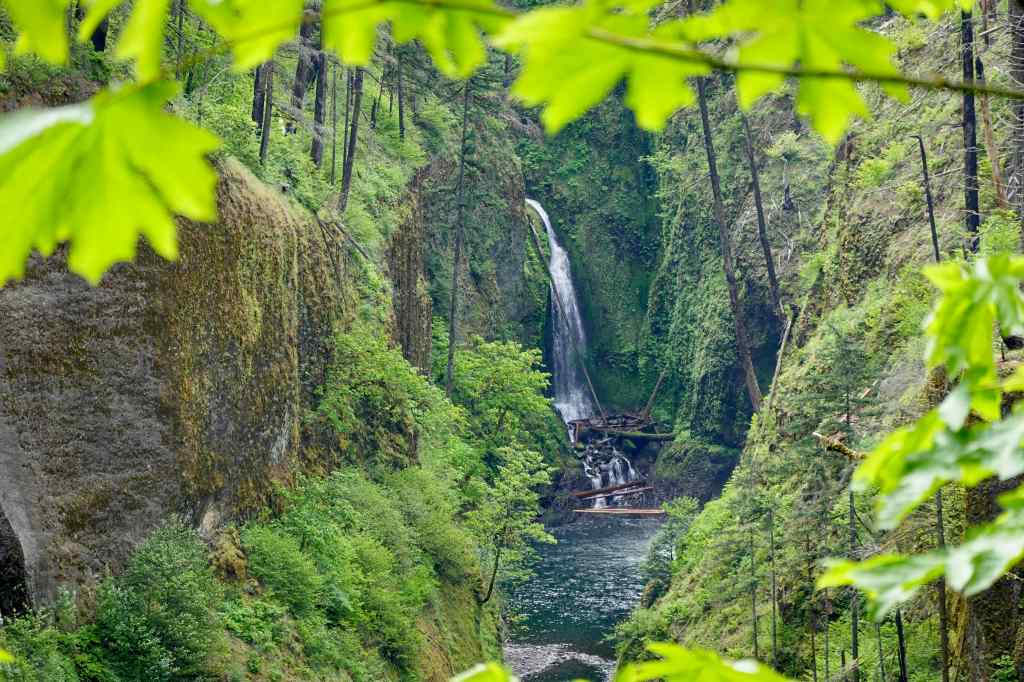
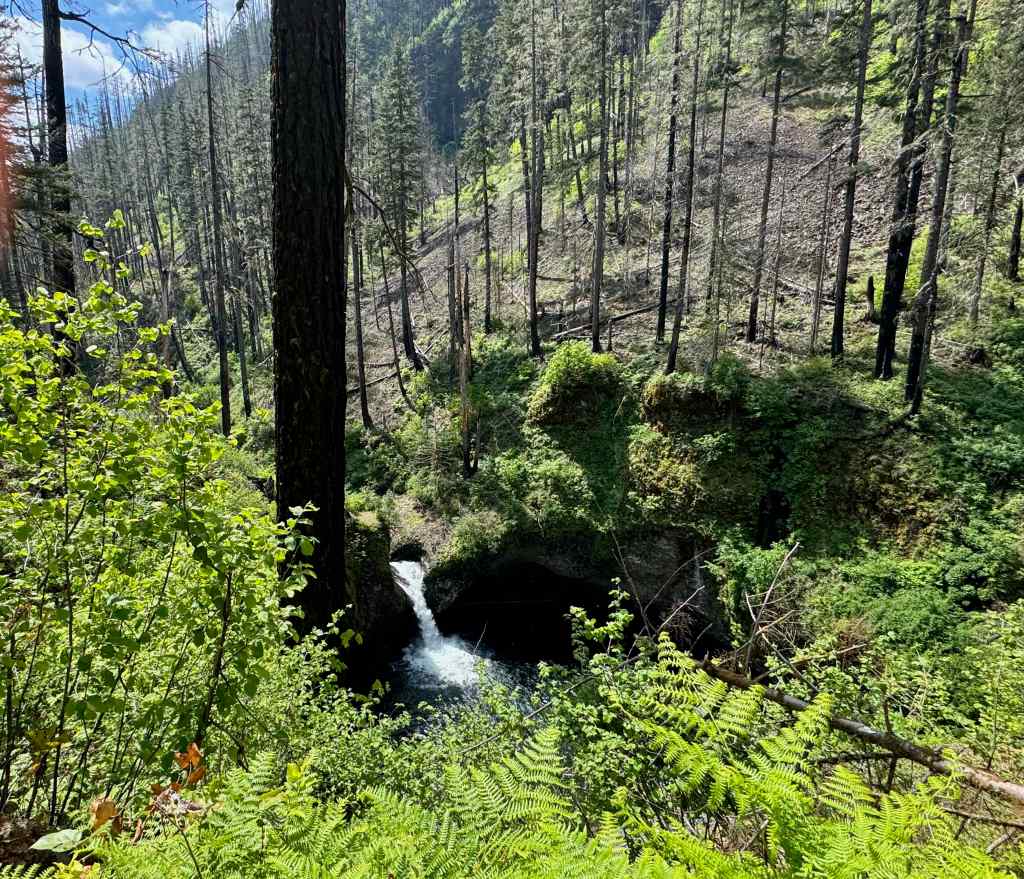
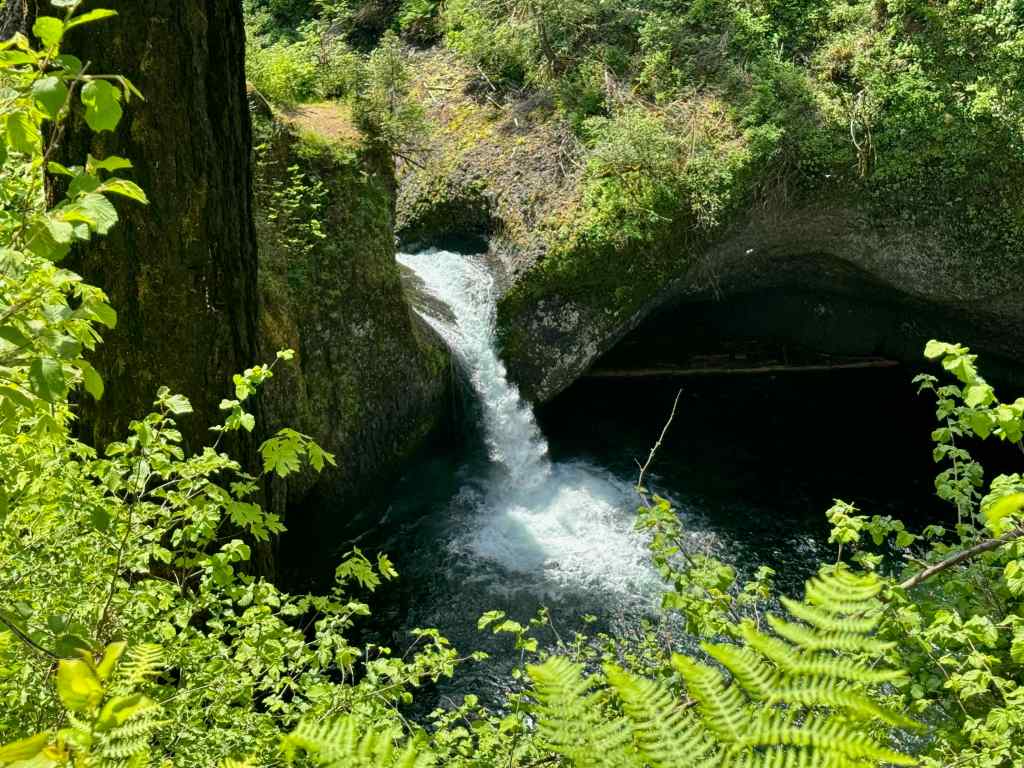
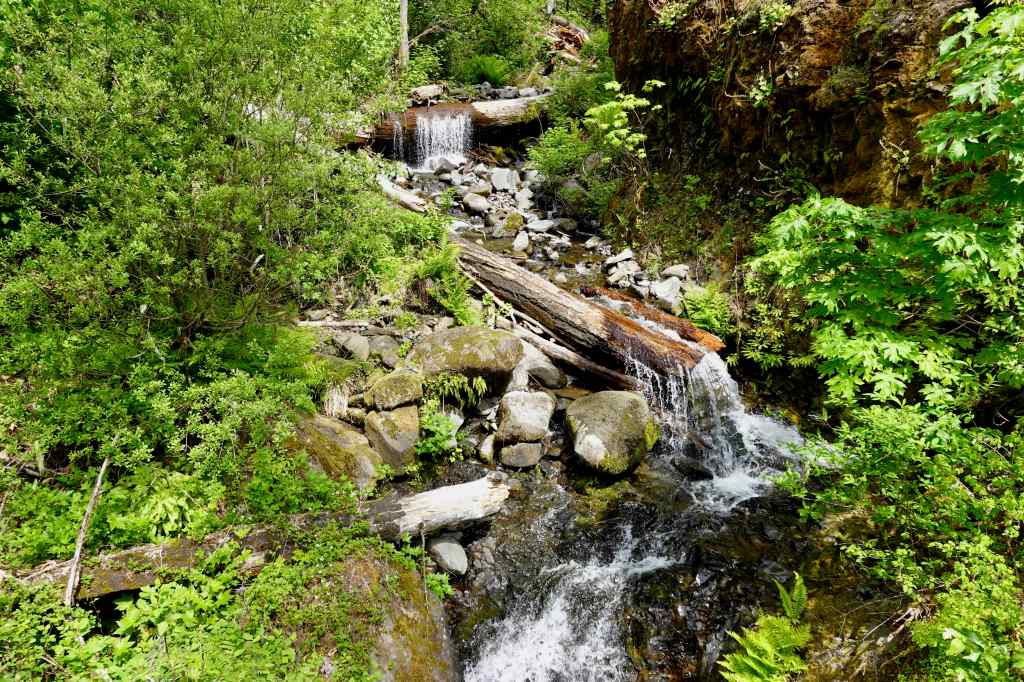
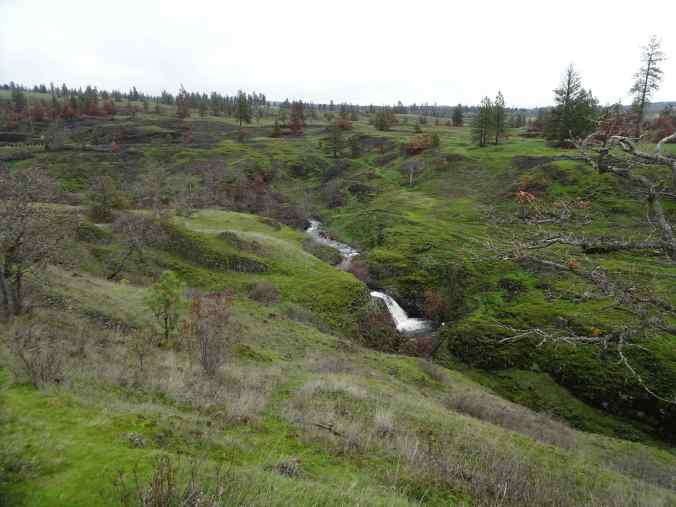
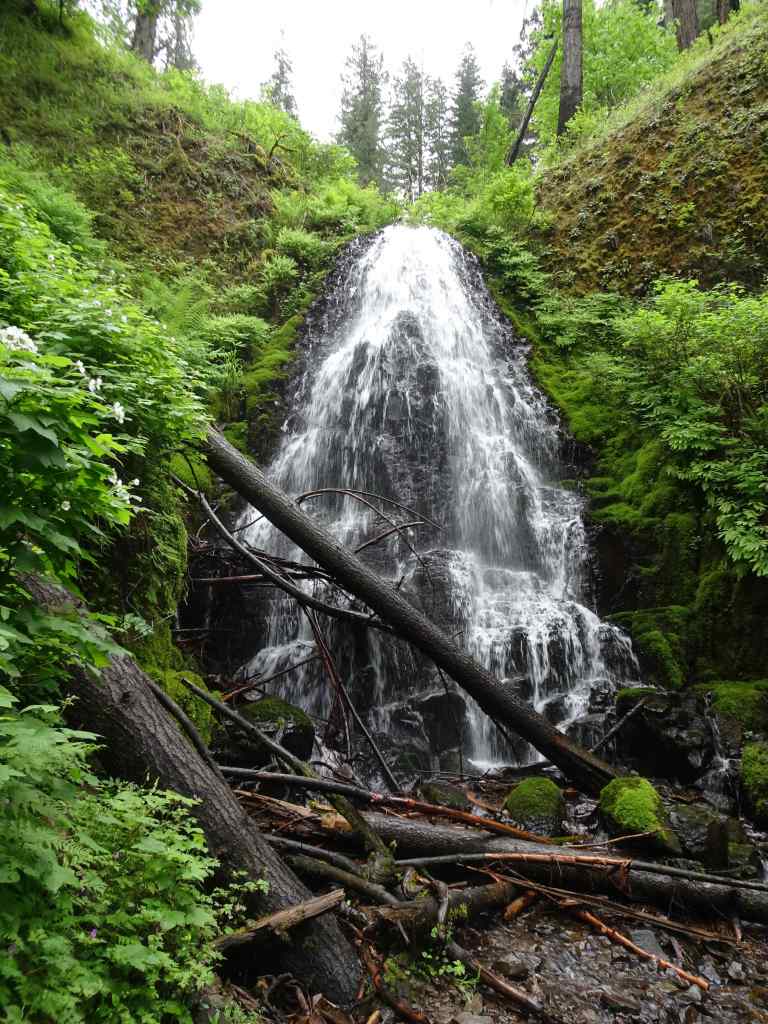
Eagle Creek near the trailhead – the water has a distinctive beautiful green color.The trail rises gently above the canyon. Here the rocky slopes are covered with manroot and fringe cup blooms.In places, the trail is cut into the cliff edge, as the gorge deepens.Farther along, the cliff edge is more of a steep slope, in this case, covered with blue-eyed Mary meadows.From the trail edge, the view to Metlako Falls.Zooming in on Metlako Falls.Eventually, we could look down onto Punchbowl Falls, with the burned slopes from the 2017 fire beyond.Closer view of Punchbowl Falls.Cascades on Fern Creek, from a trail bridge across this side stream.
We had to get home for an appointment, so didn’t quite make it to High Bridge, about 3 miles in.
A few more of the many wildflowers we saw today:
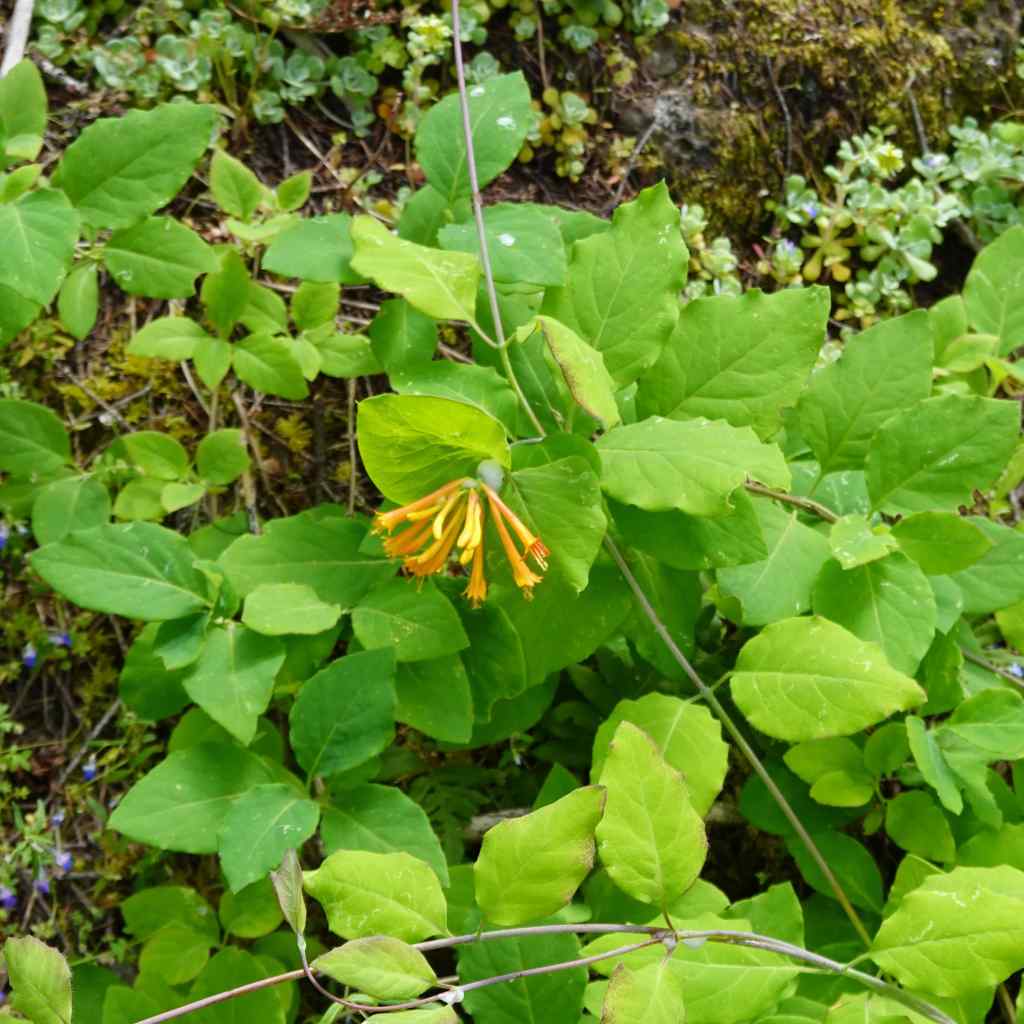
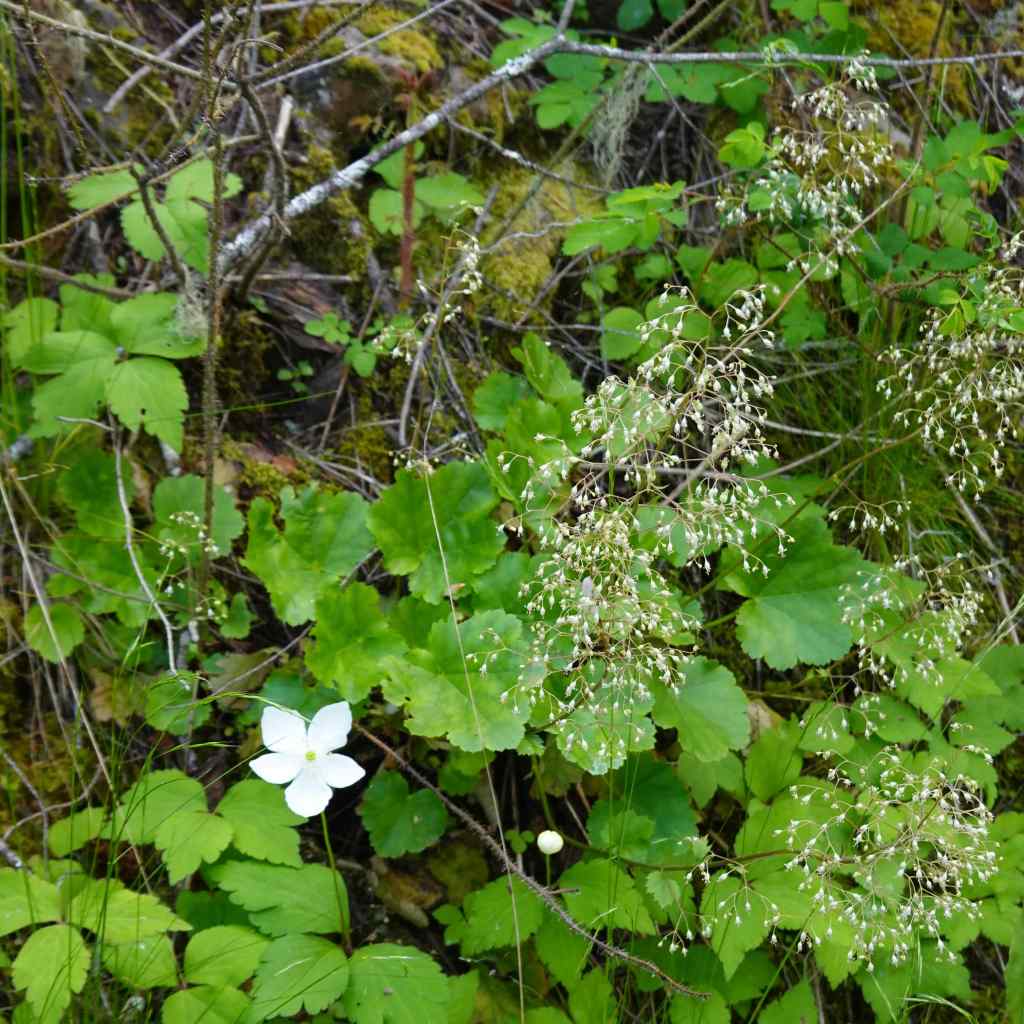
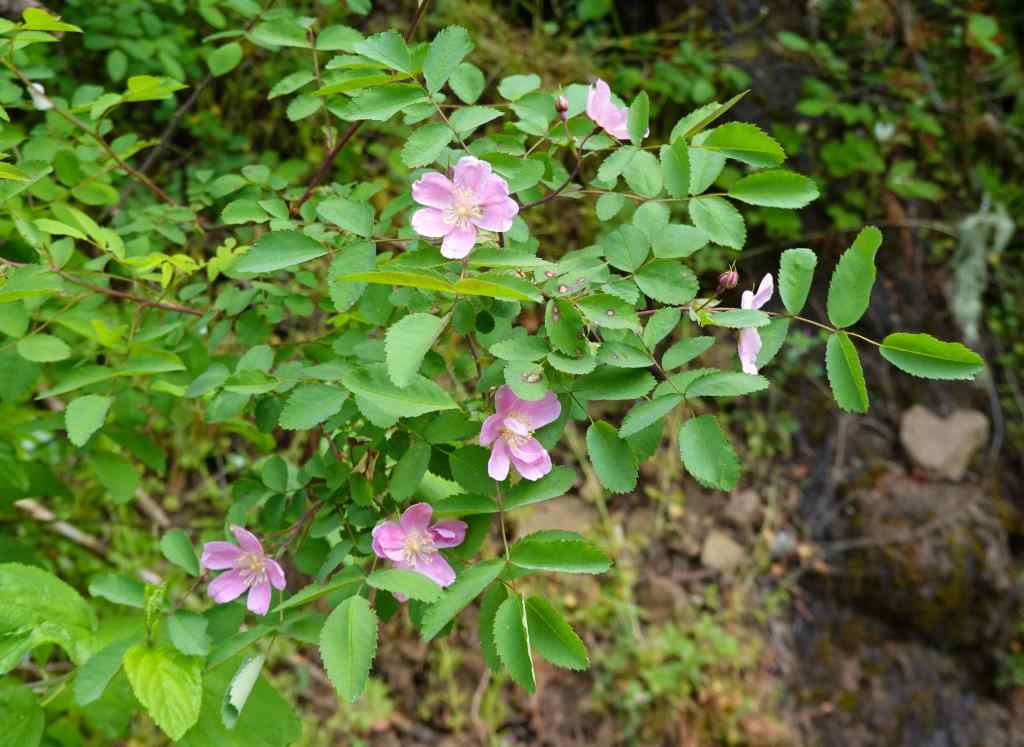
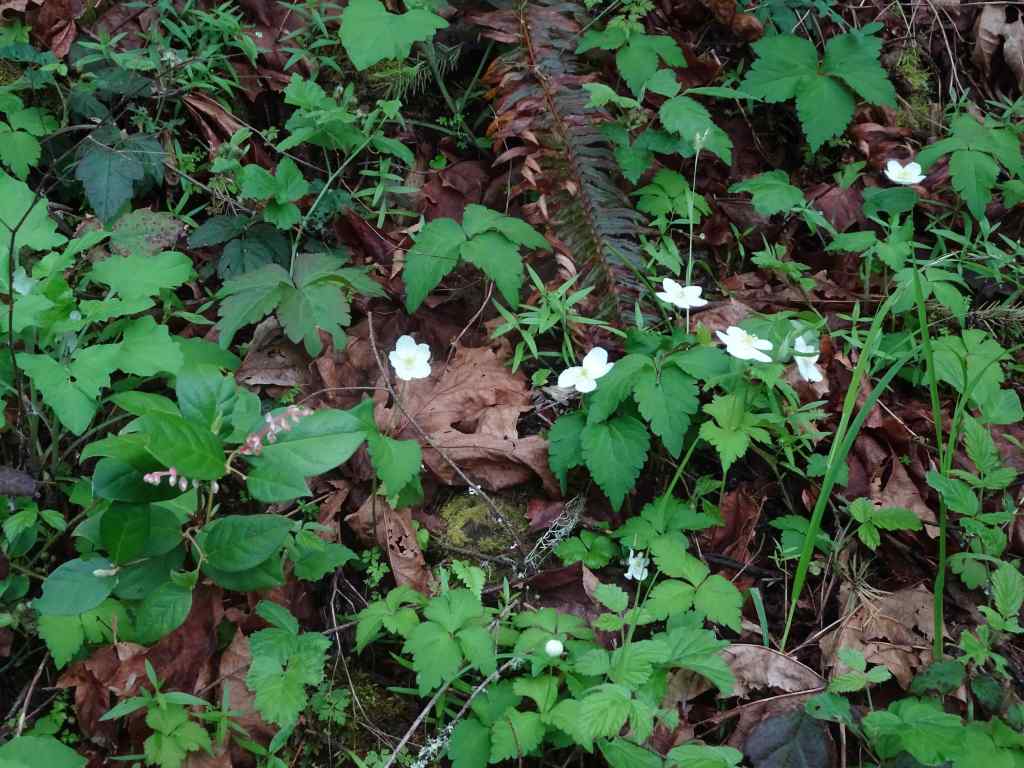
HoneysuckleAnemone and foamflowerRose
5/12 – Cape Horn, WA
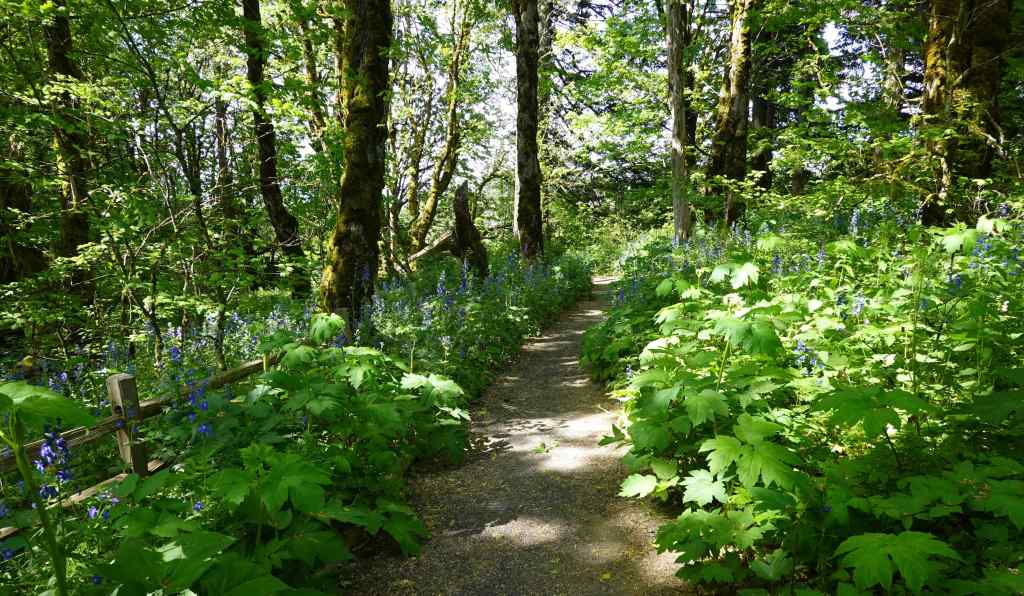
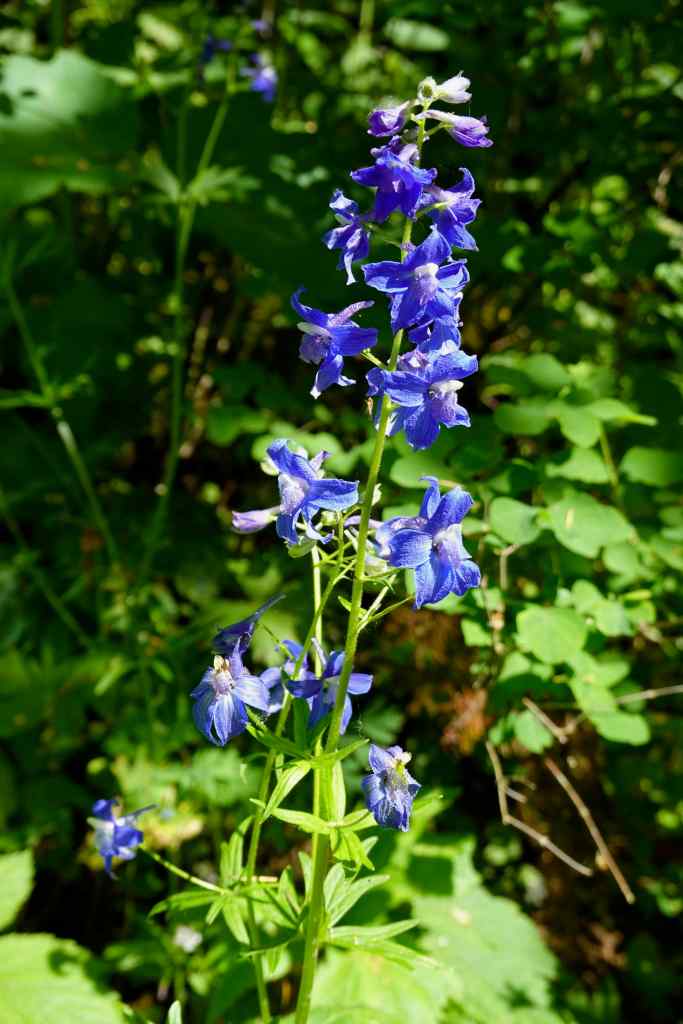
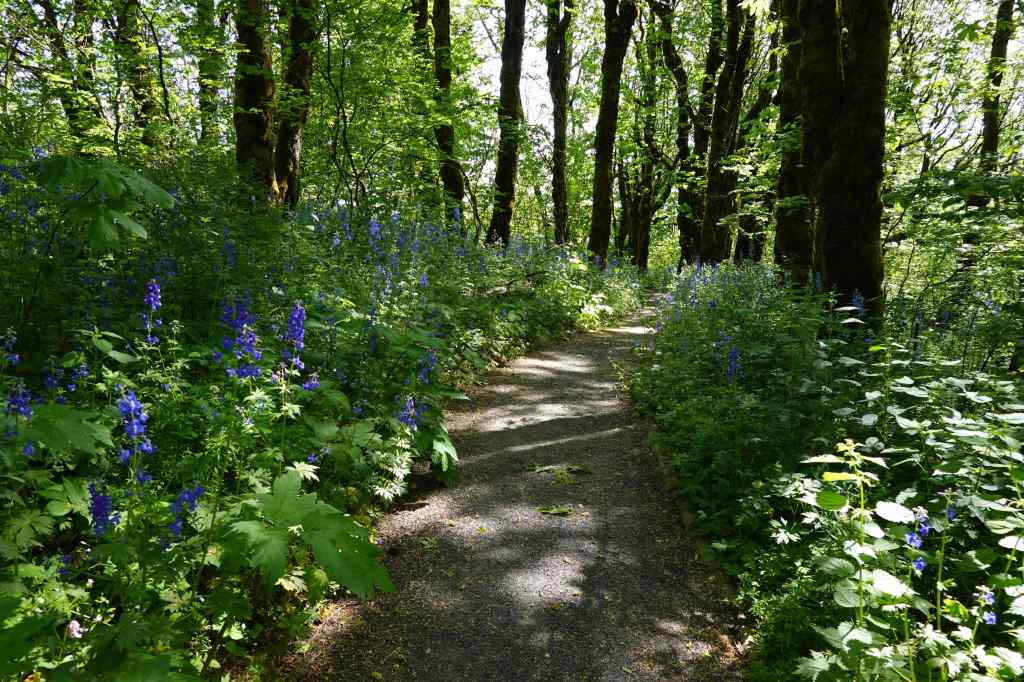
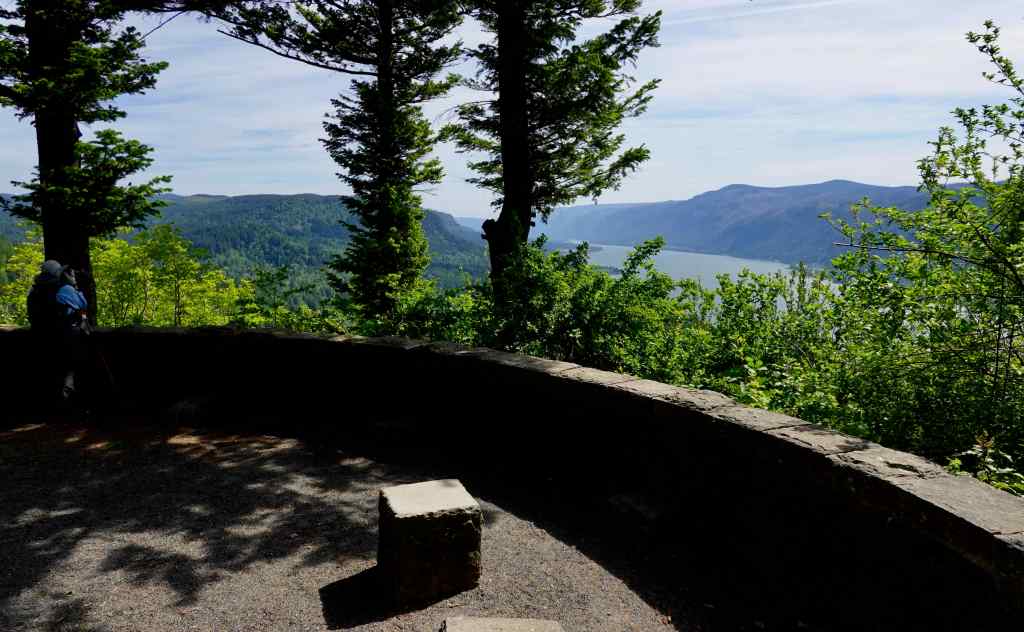
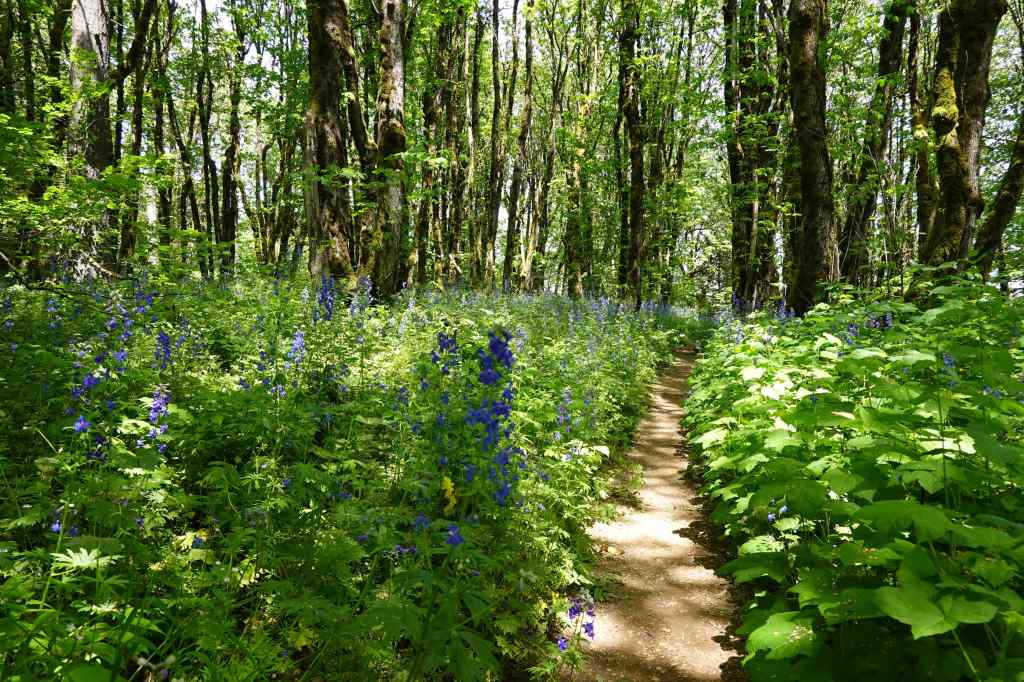
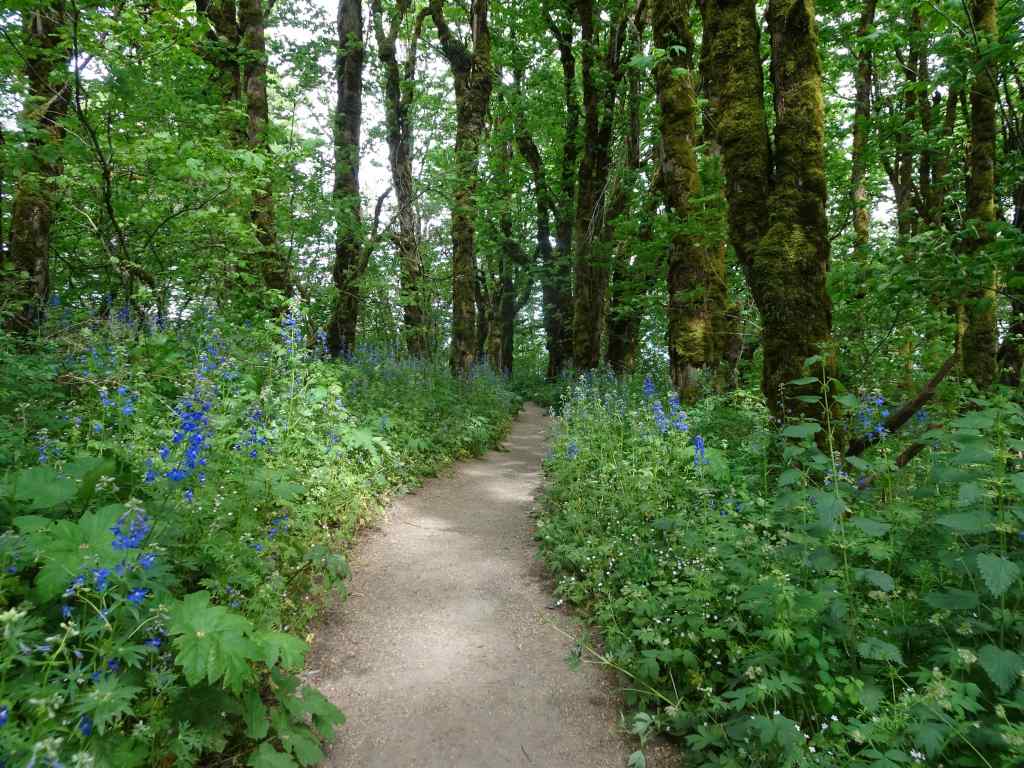
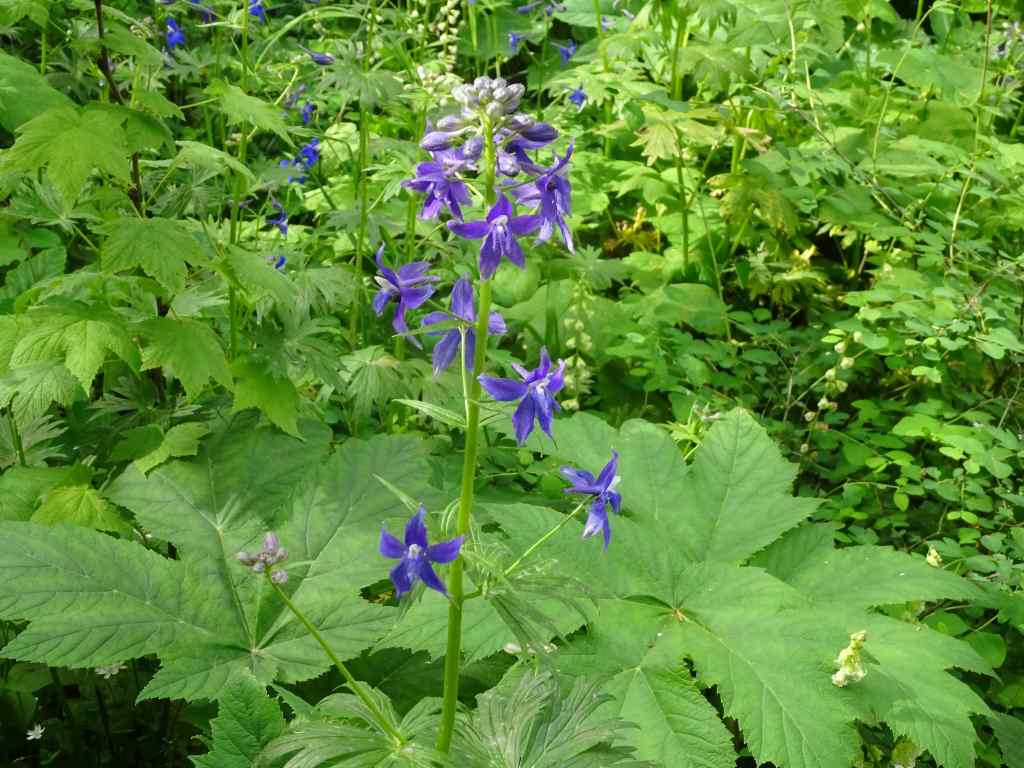
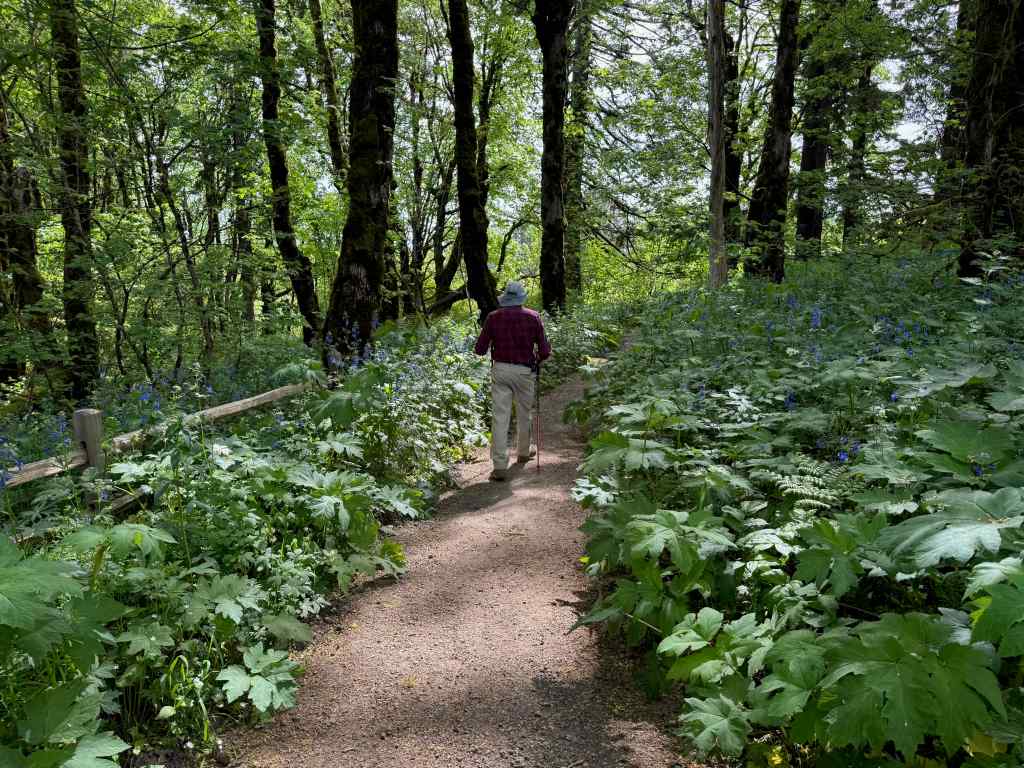
Return to this easy-ish forest bathing walk during tall delphinium bloom season, from Strunk Road down to the Waterfall Overlook, and then back up (3.5 miles, 620 feet).
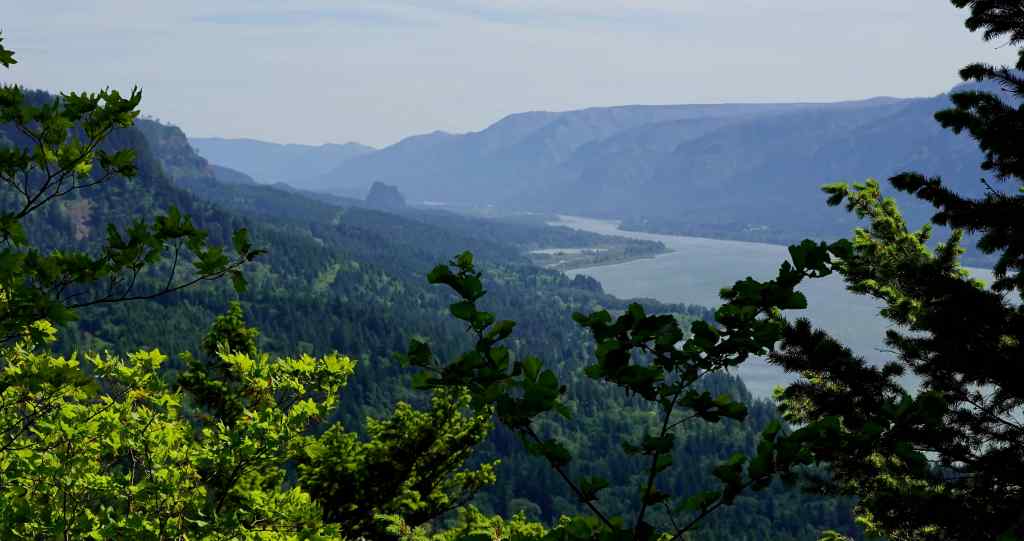
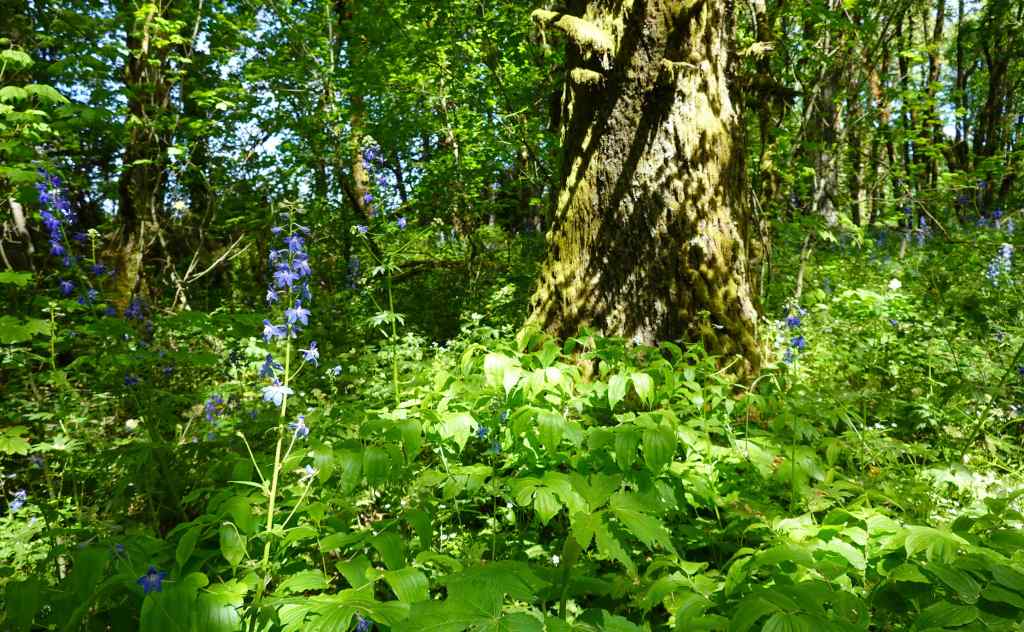
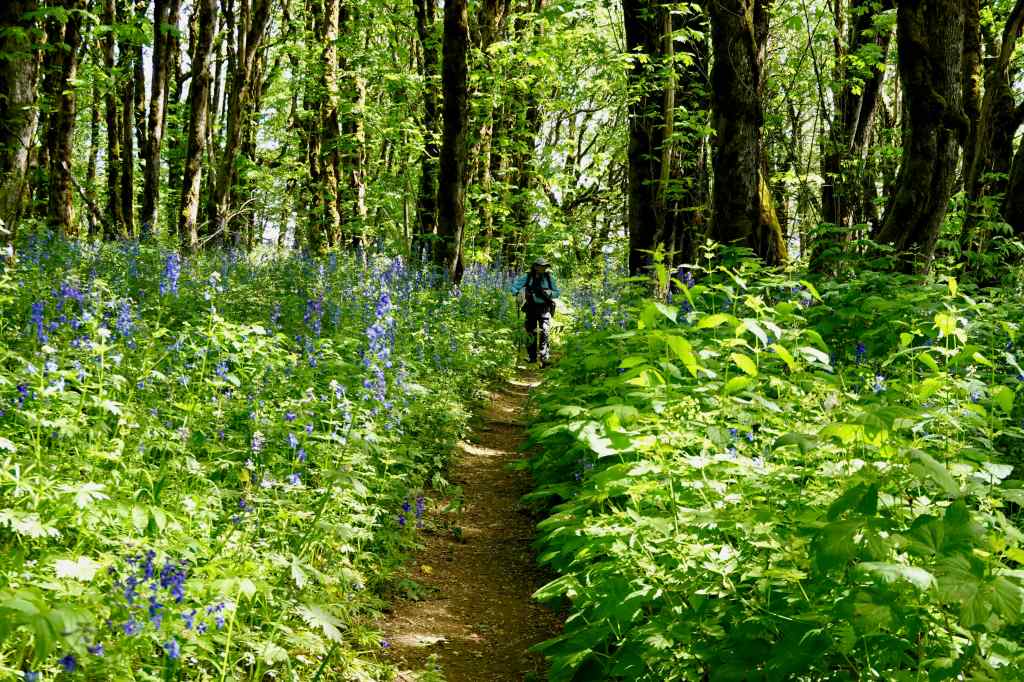
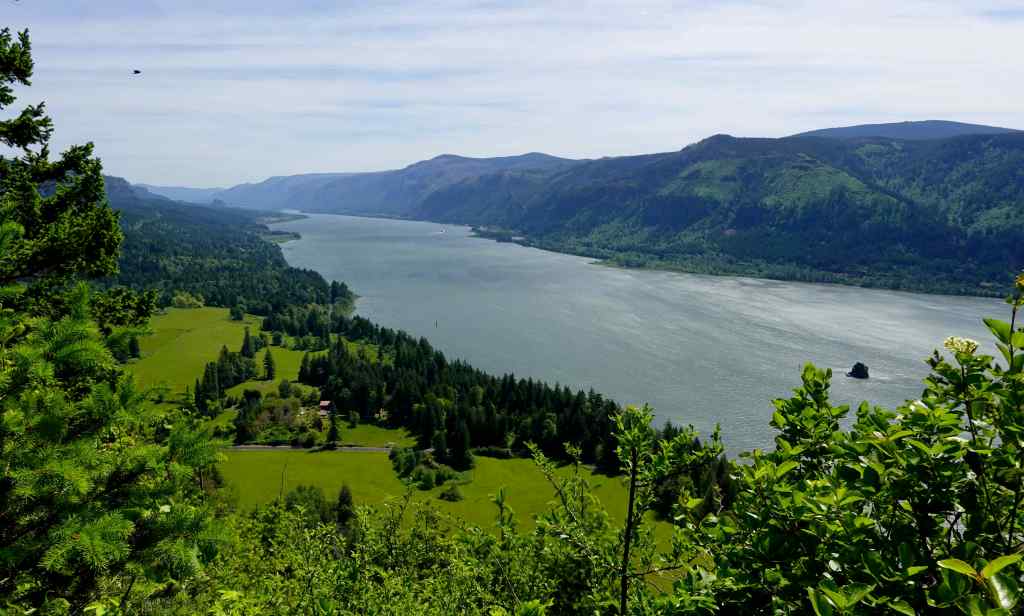
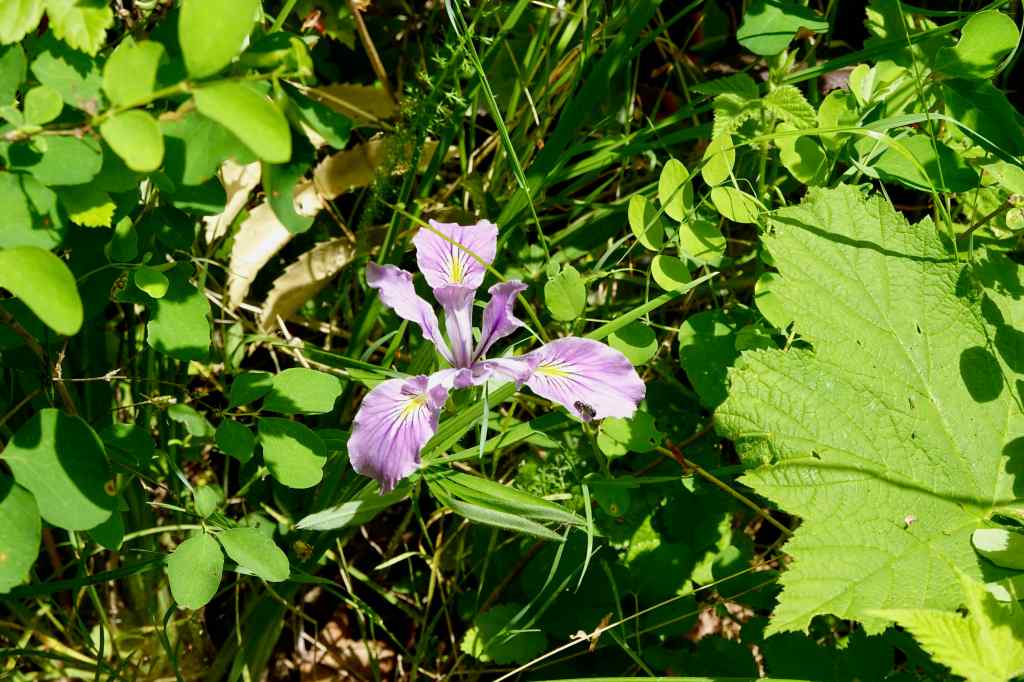
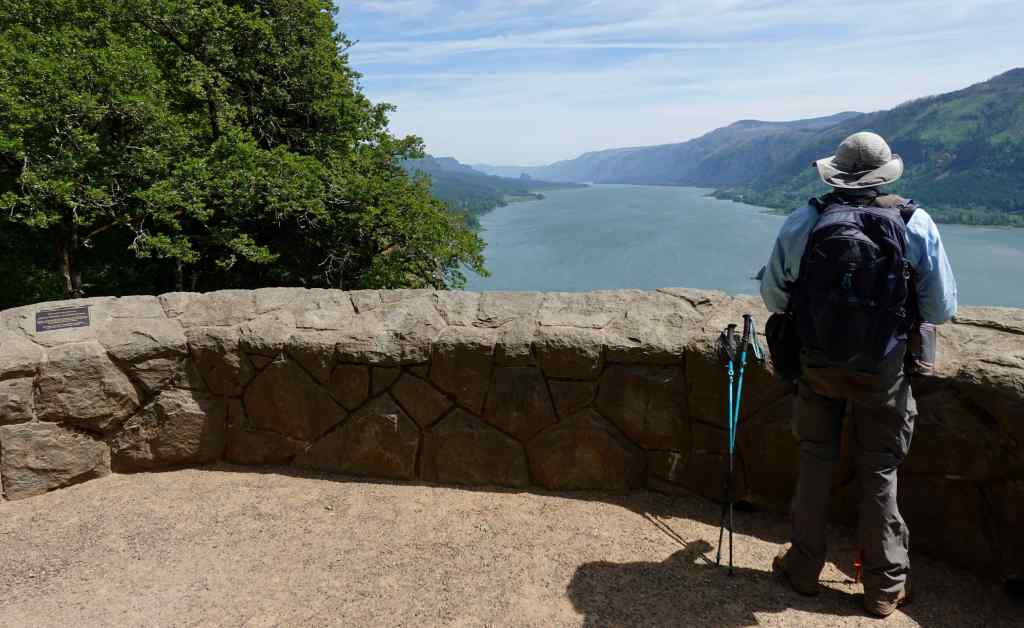
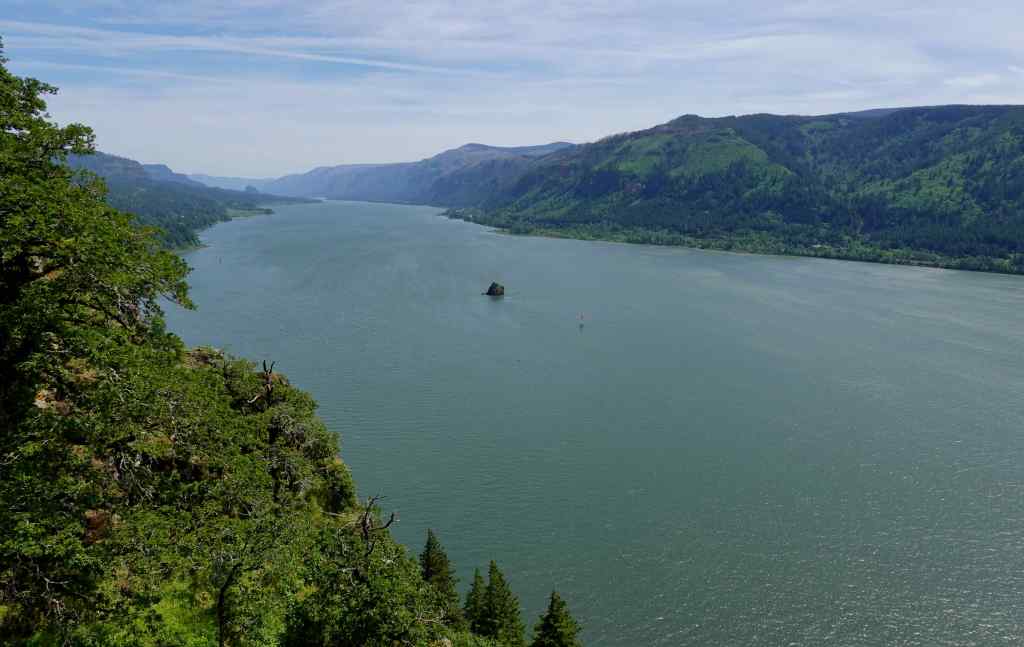
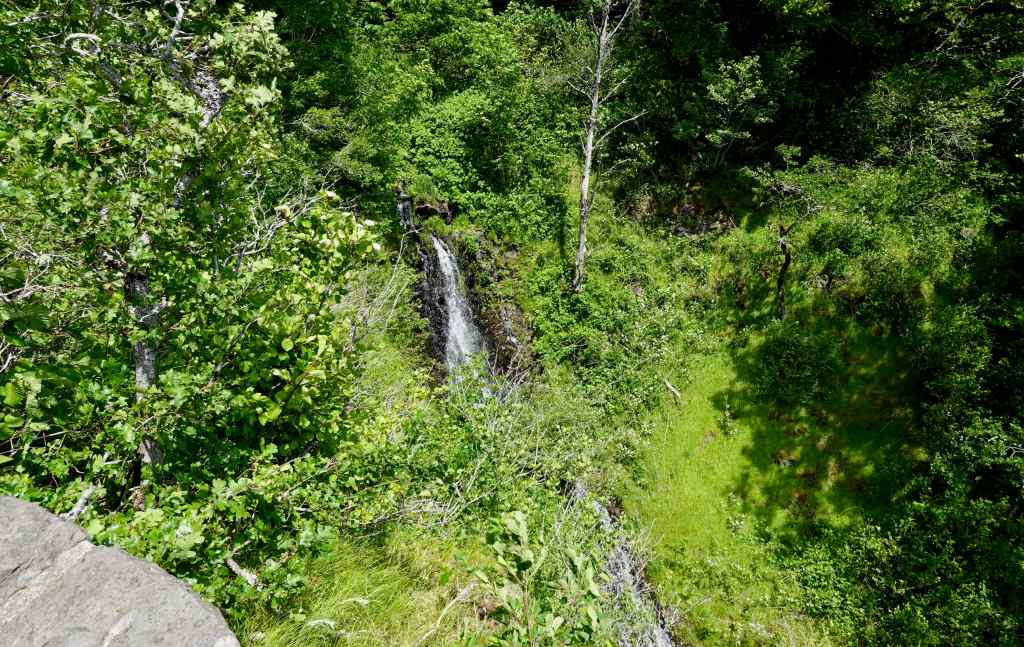
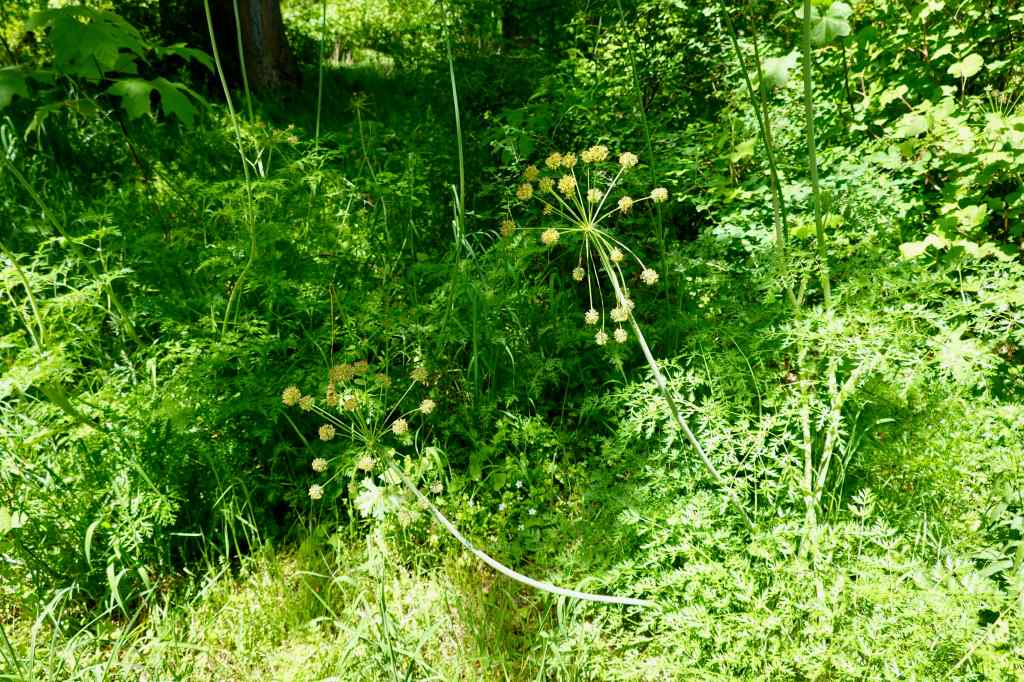
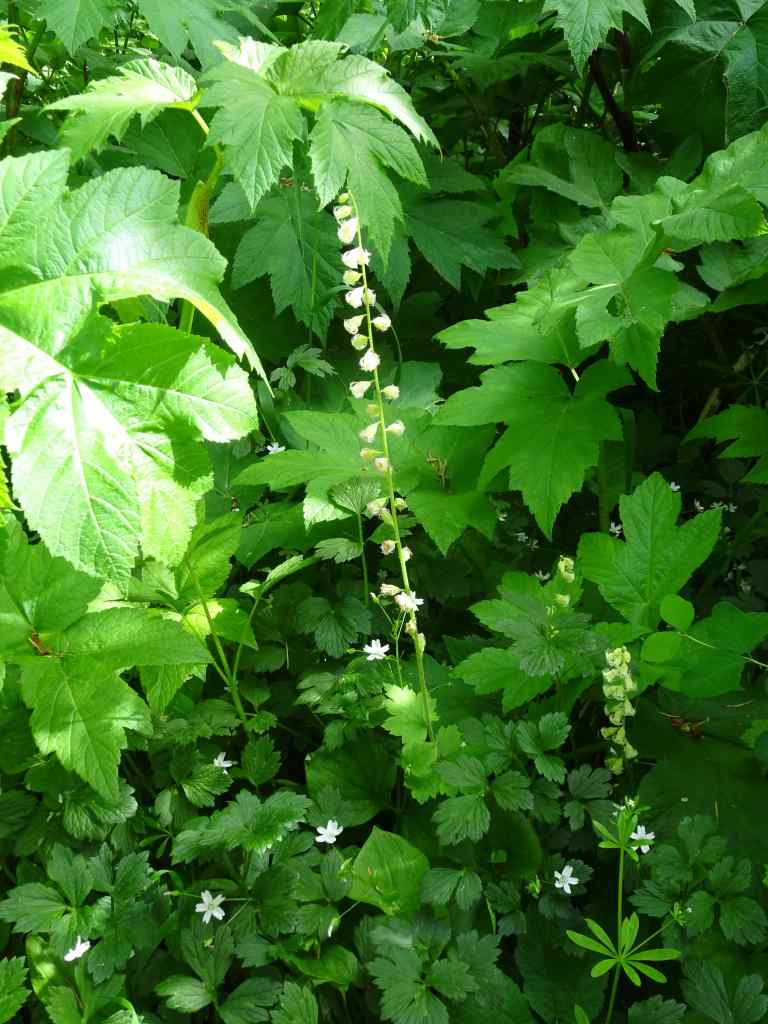
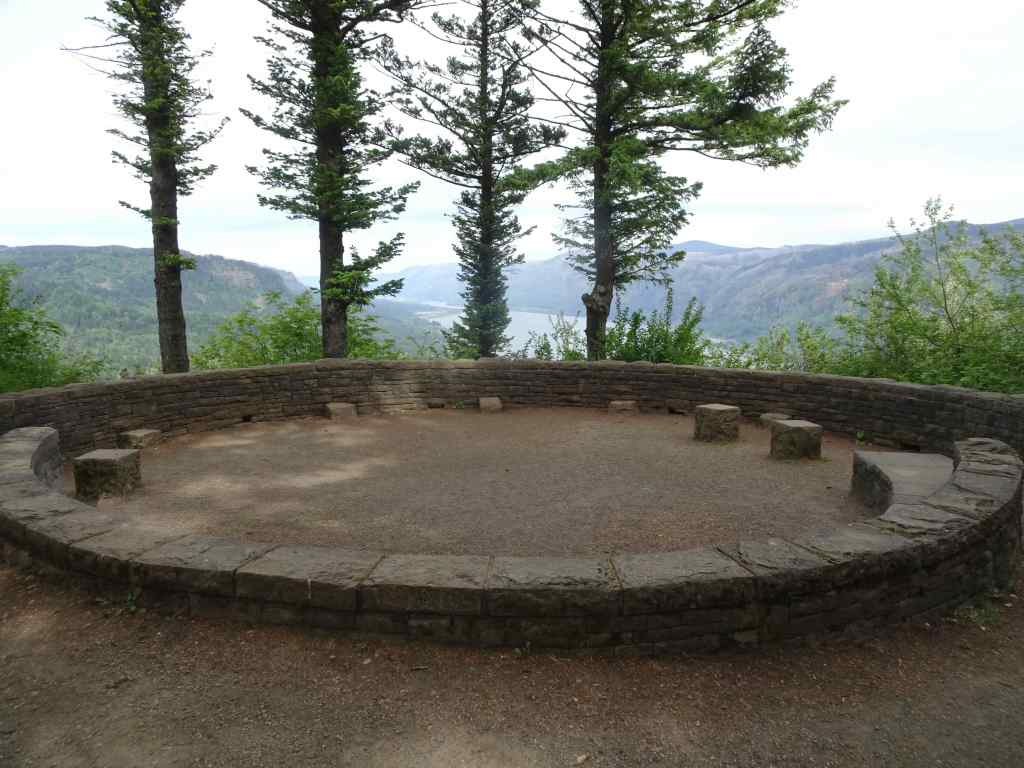
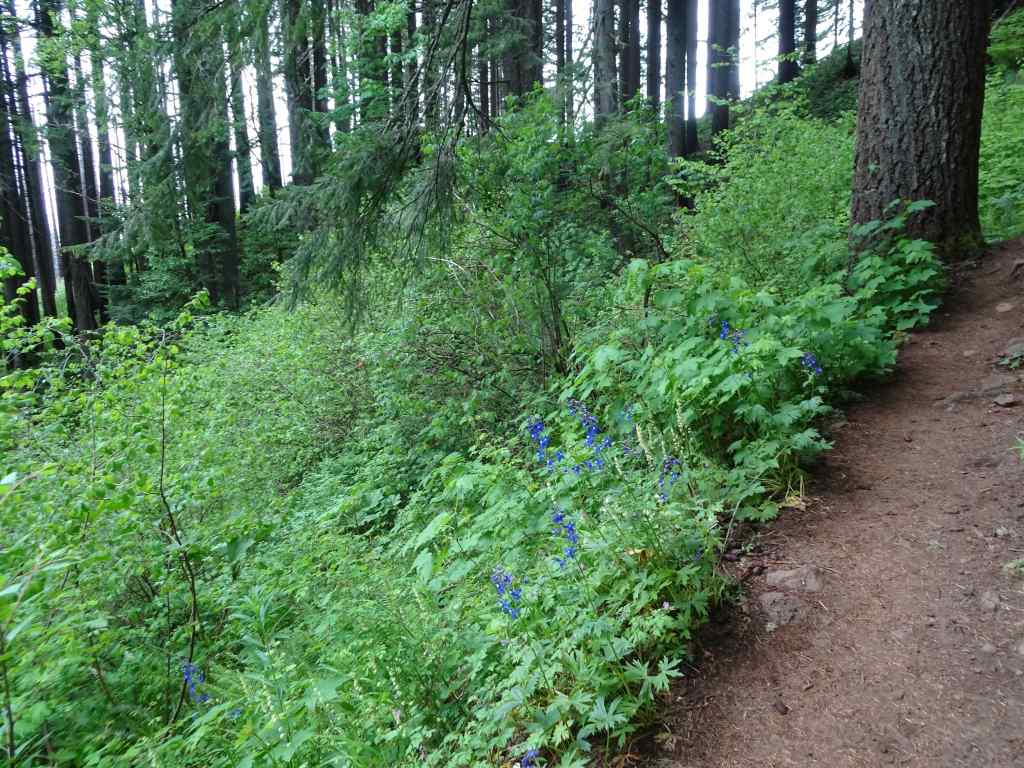
Once into the shady woods, the tall delphinium are blooming on both sides of the trail.DelphiniumAll the way down to the Nancy Russell Overlook…We always pause here to thank Nancy Russell for her lifetime of work preserving this trail area from development, and helping to create the Columbia River Gorge National Scenic Area. Thank you Nancy!The view to the eastern gorge from here.We continue down through more mossy woods,and delphinium-lined trail,to the next trailside overlook.A few irises were blooming in the sun here.We continued down, under the highway, to the Cape Horn Waterfall Overlook.A wide view up the eastern gorge to Beacon Rock.And a leaning over the edge view of the waterfall.Then back up, once again through delphinium blooms, to the trailhead.A fern leaf parsley, one of my favorites, near the end of the trail.
5/18 – Swaths of purple at The Labyrinth, WA
We visited this trail just slightly later in May last year (May 27, 2025). We saw similar flowers, but this year there were so many more. It was very purple there today (4 miles, 820 feet).
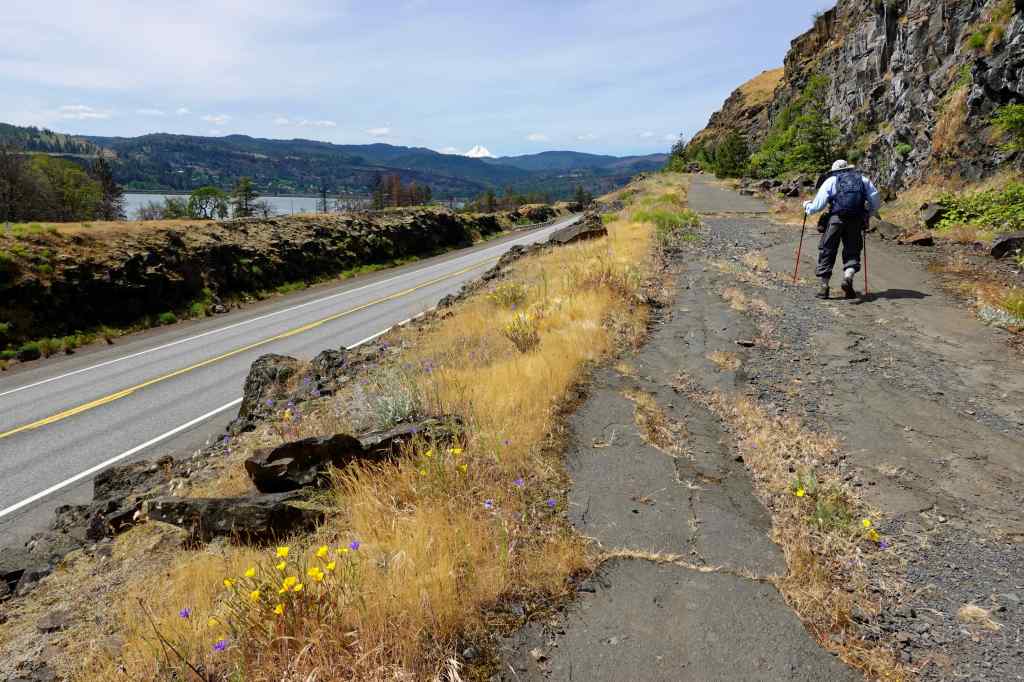
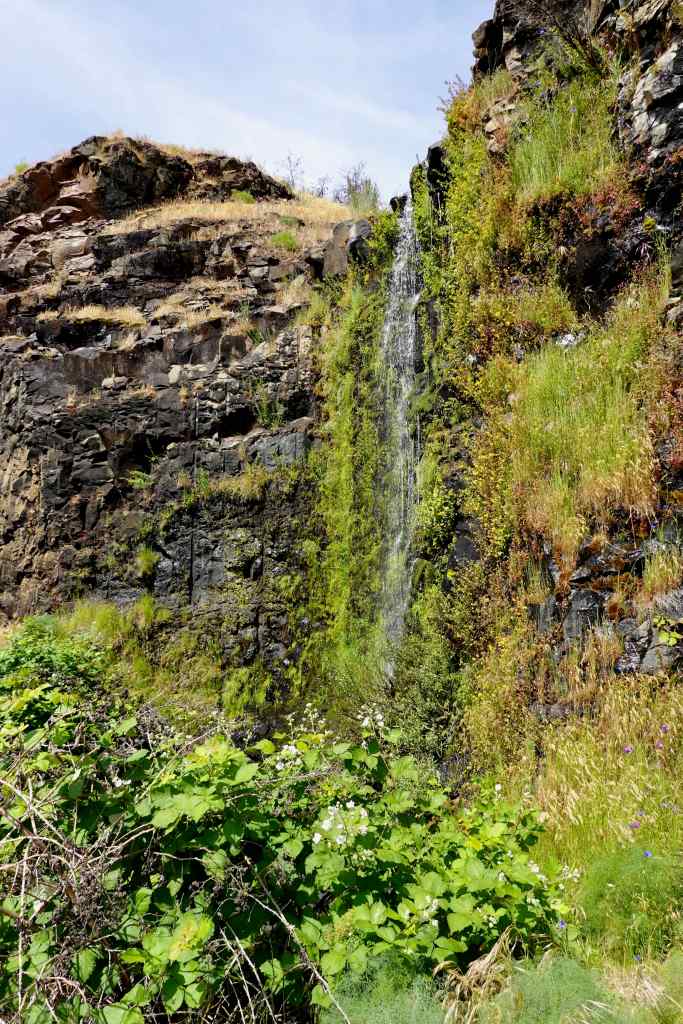
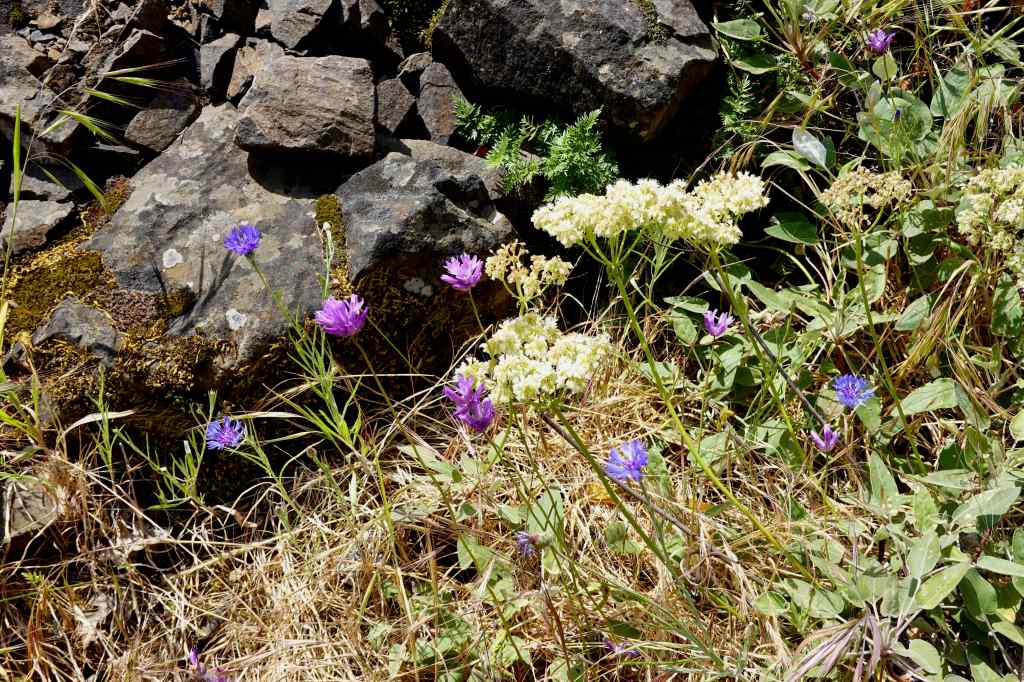
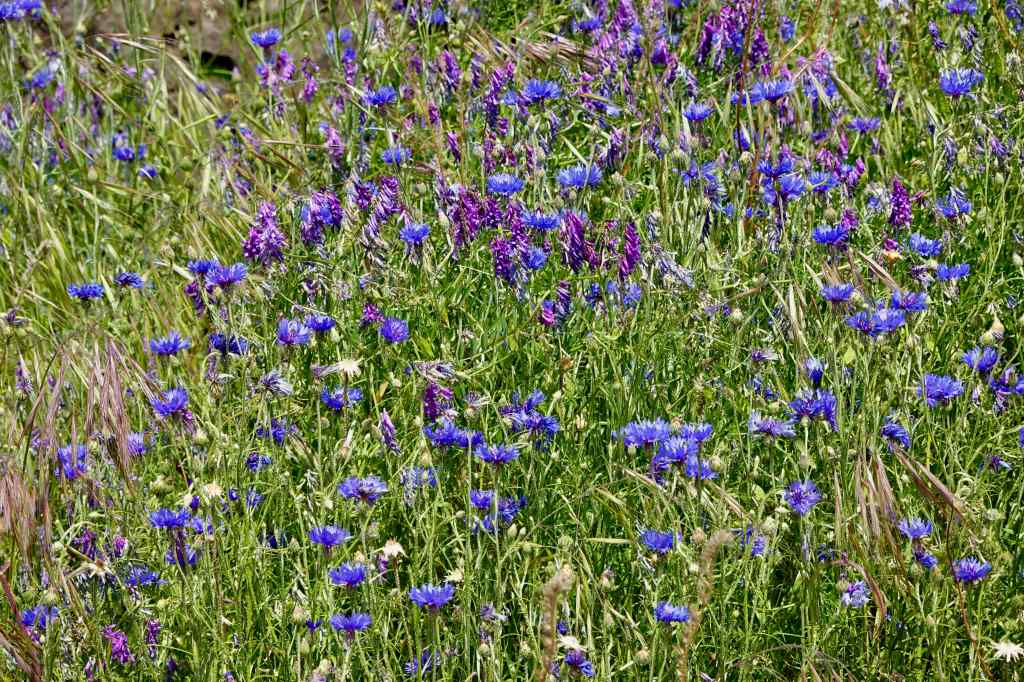
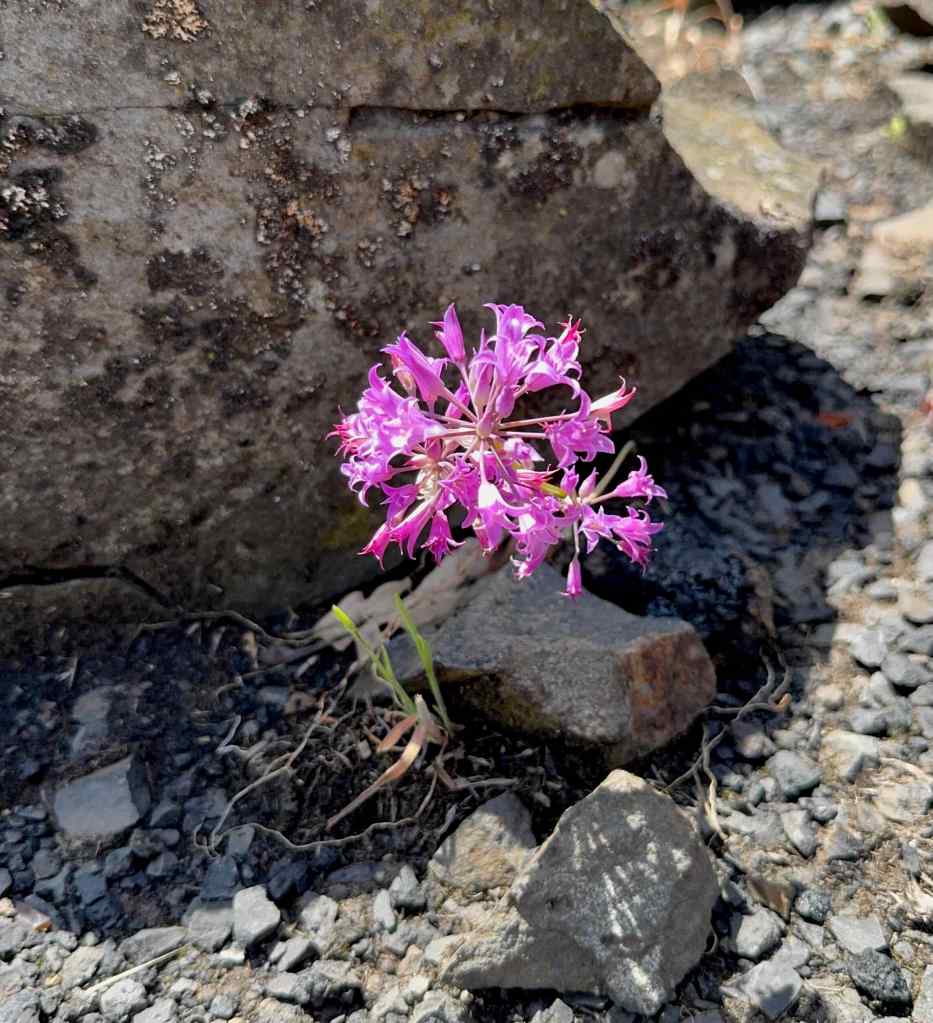
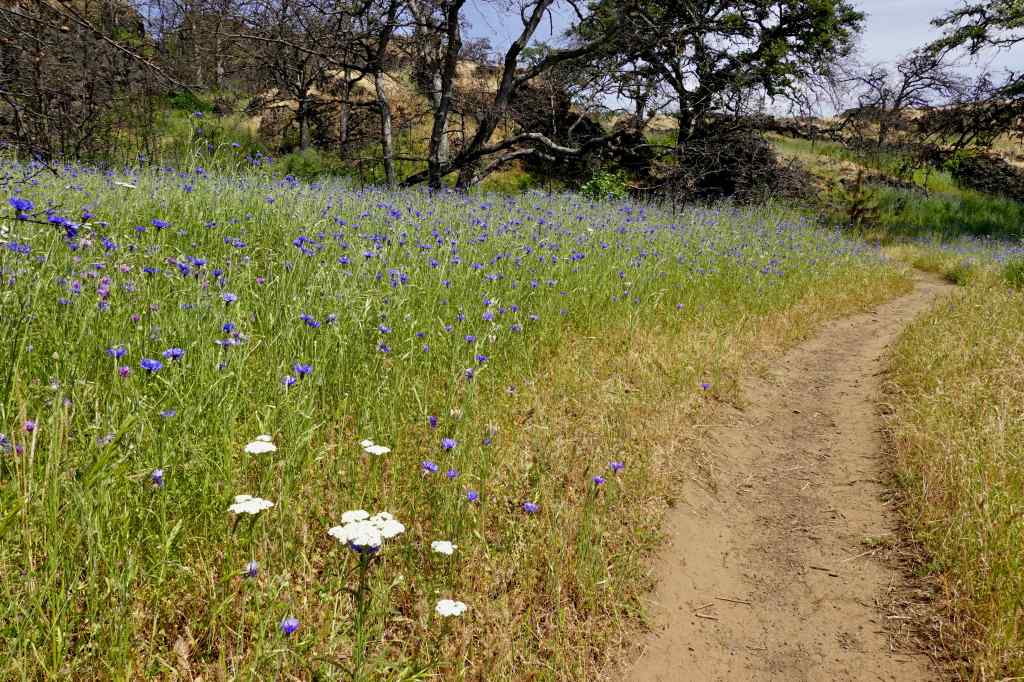
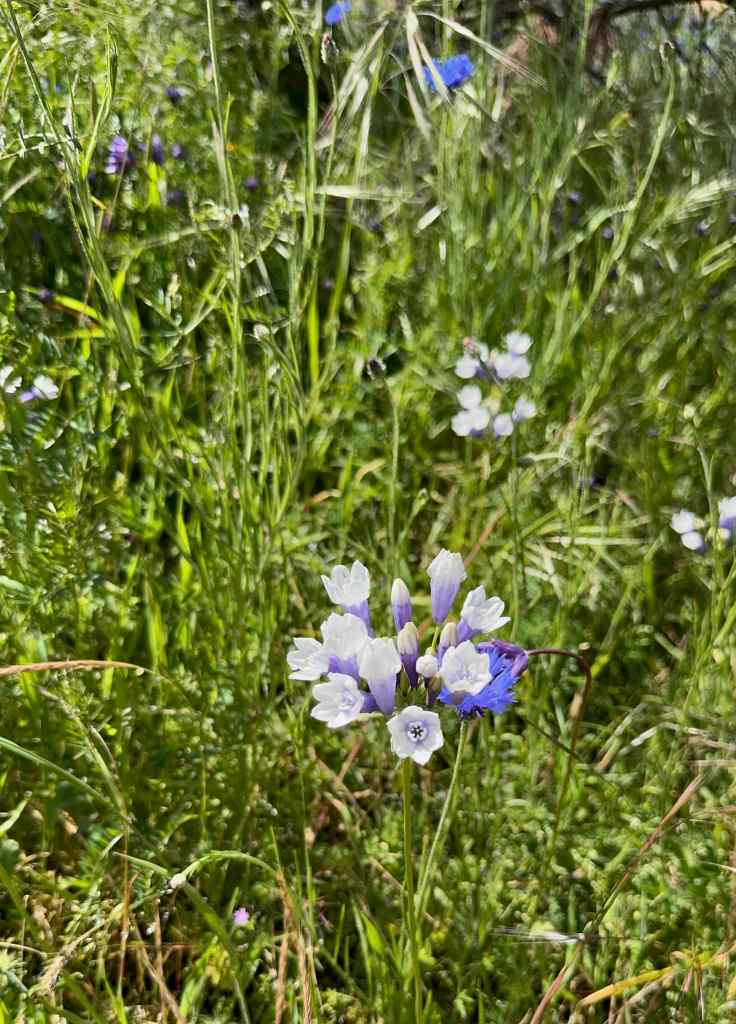
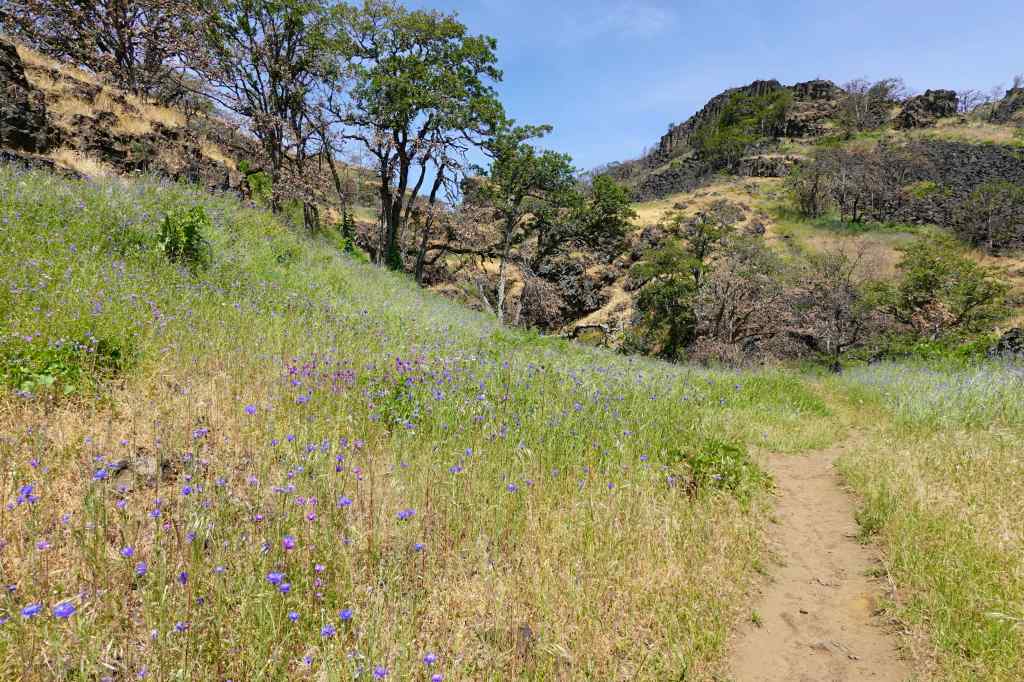
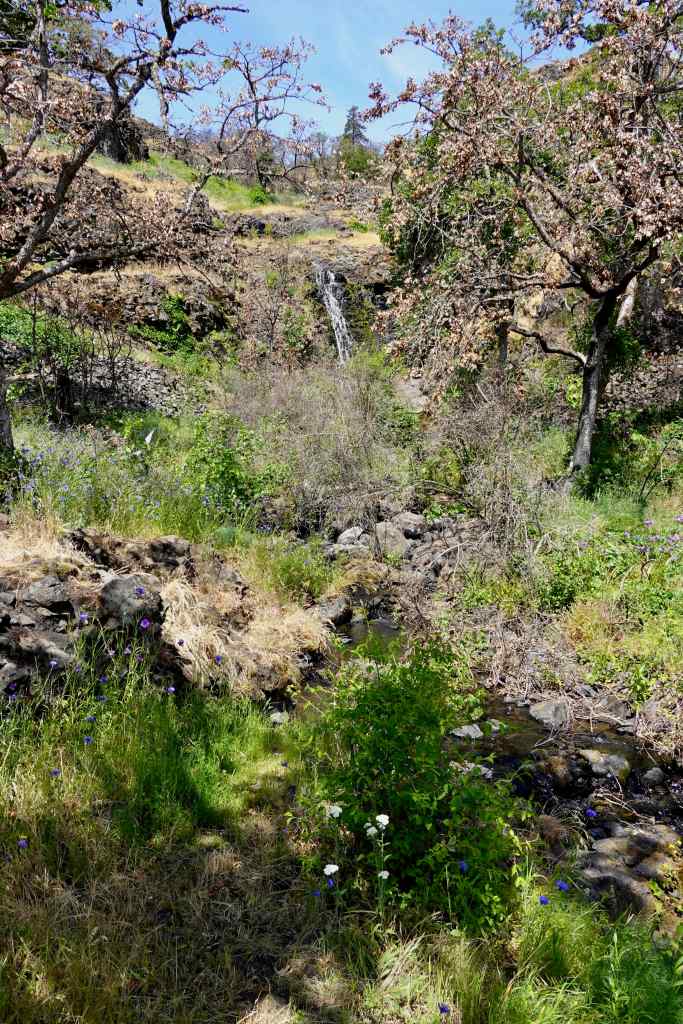
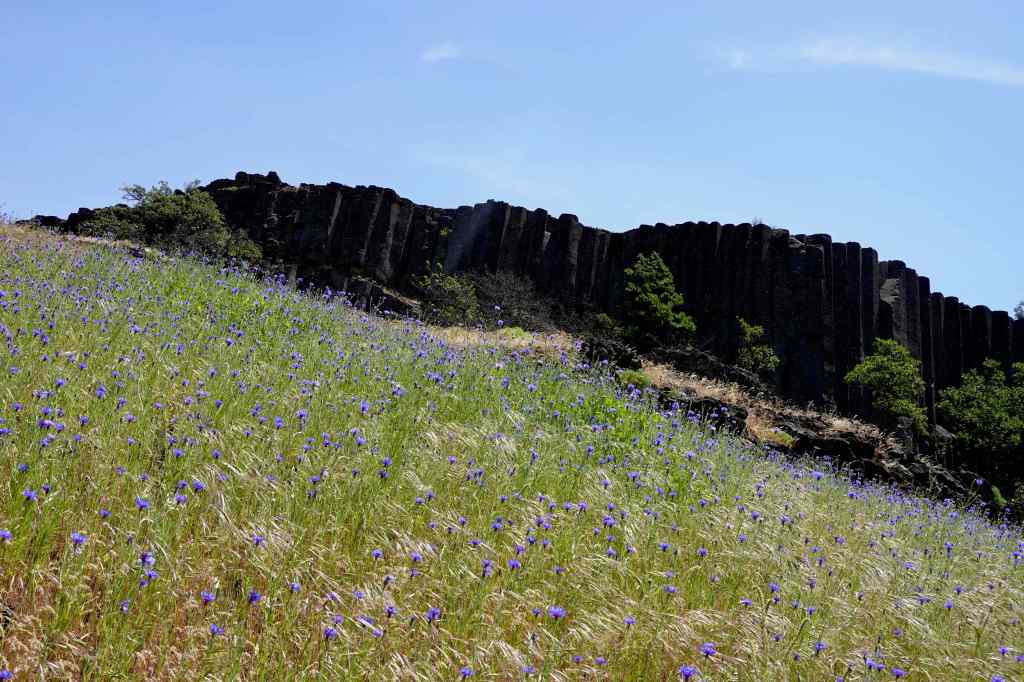
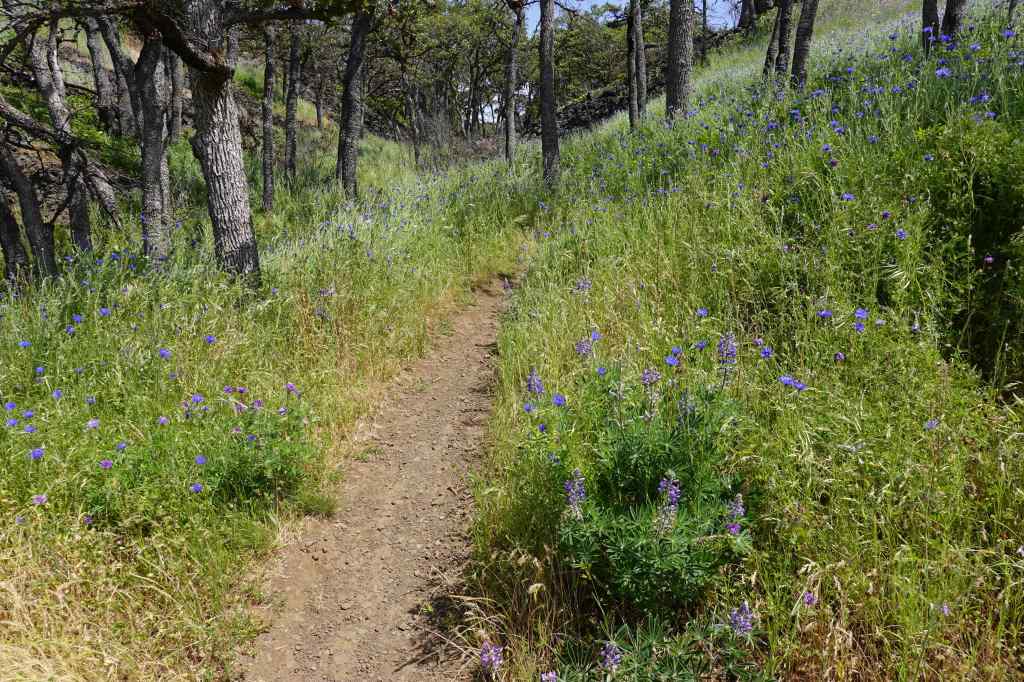
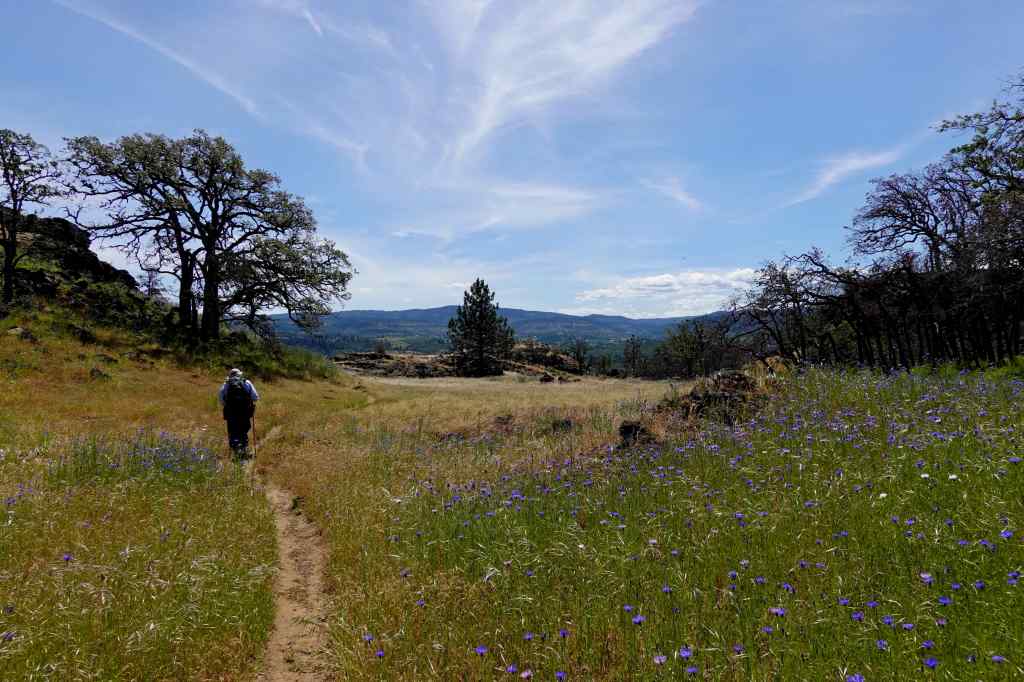
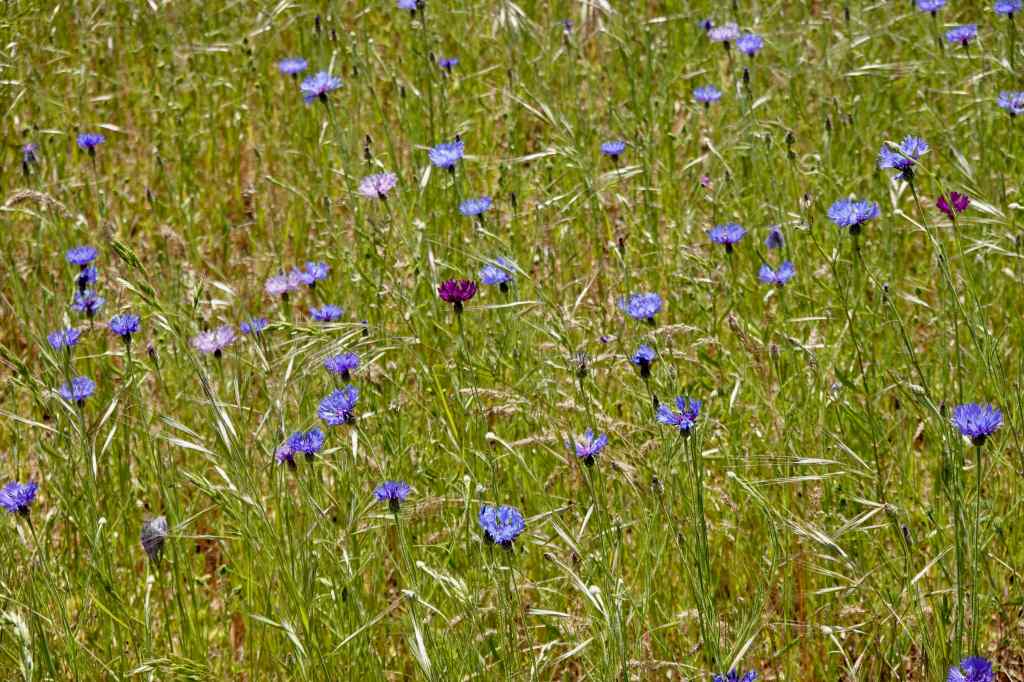
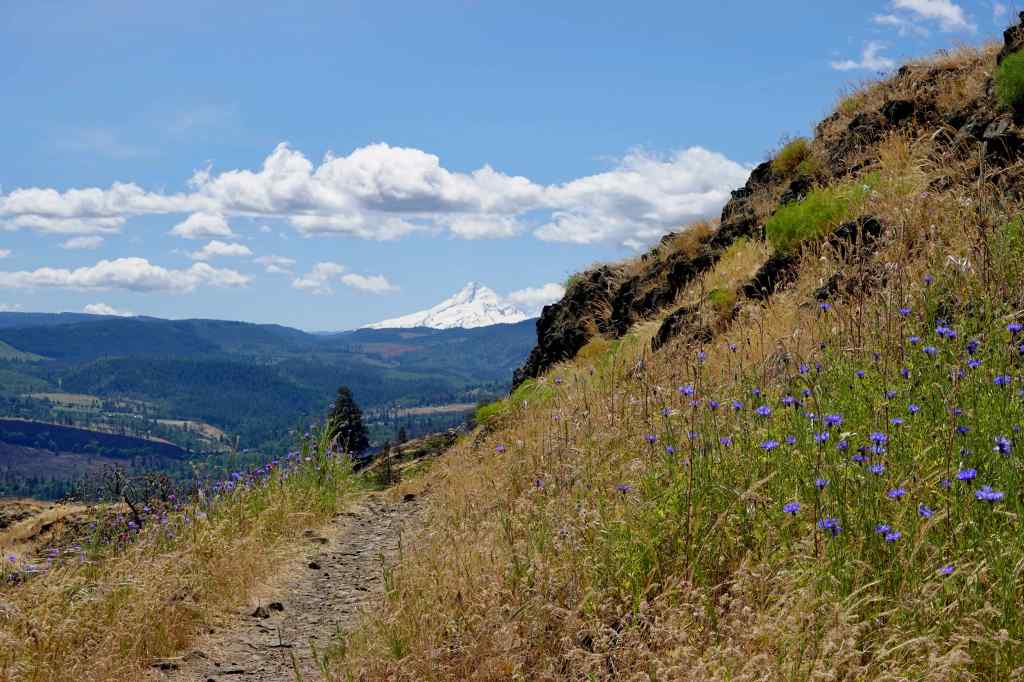
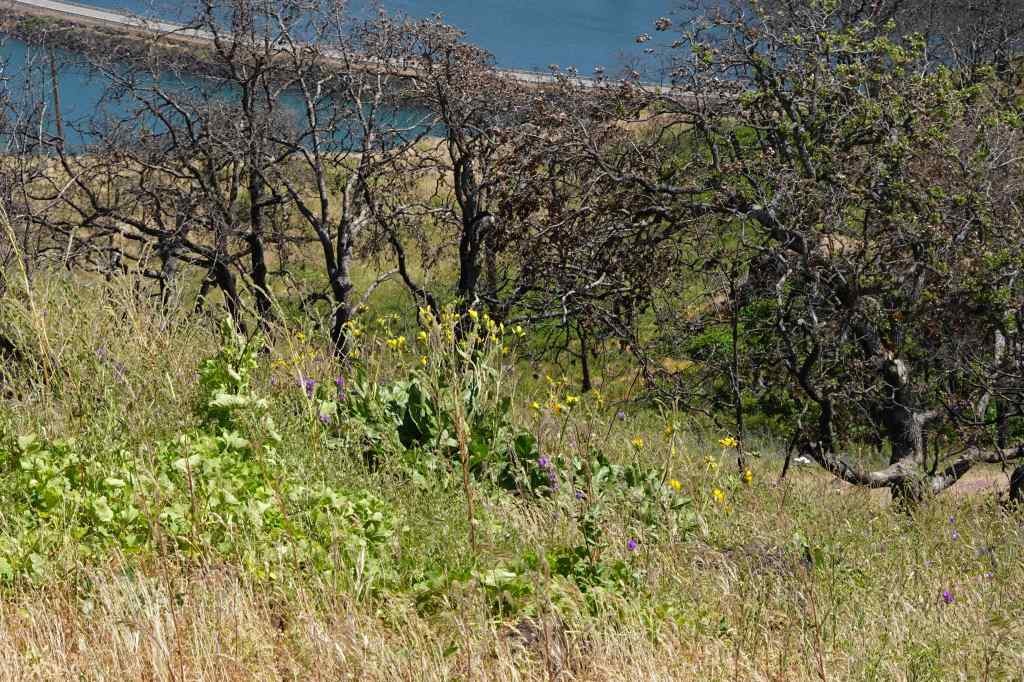
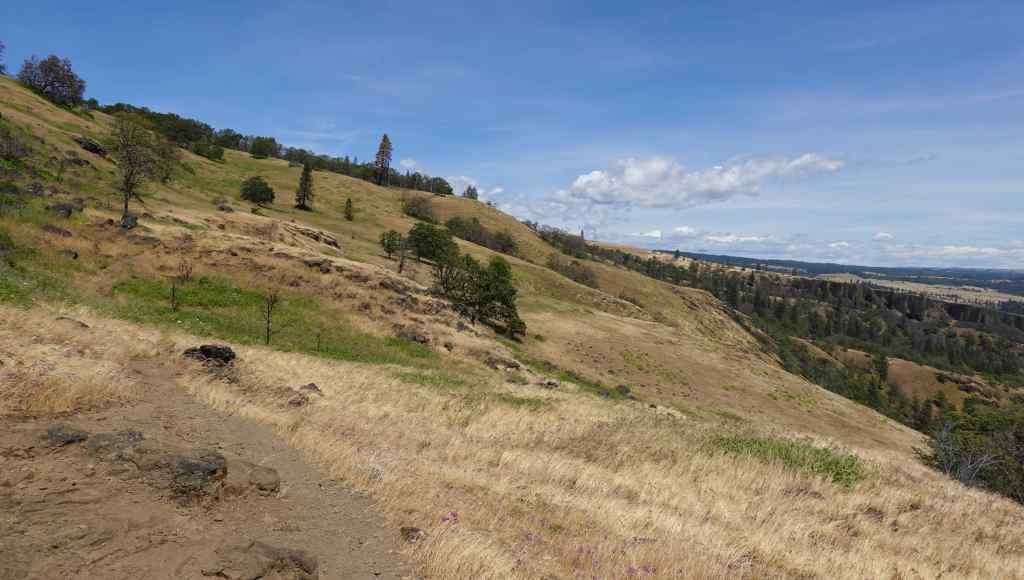
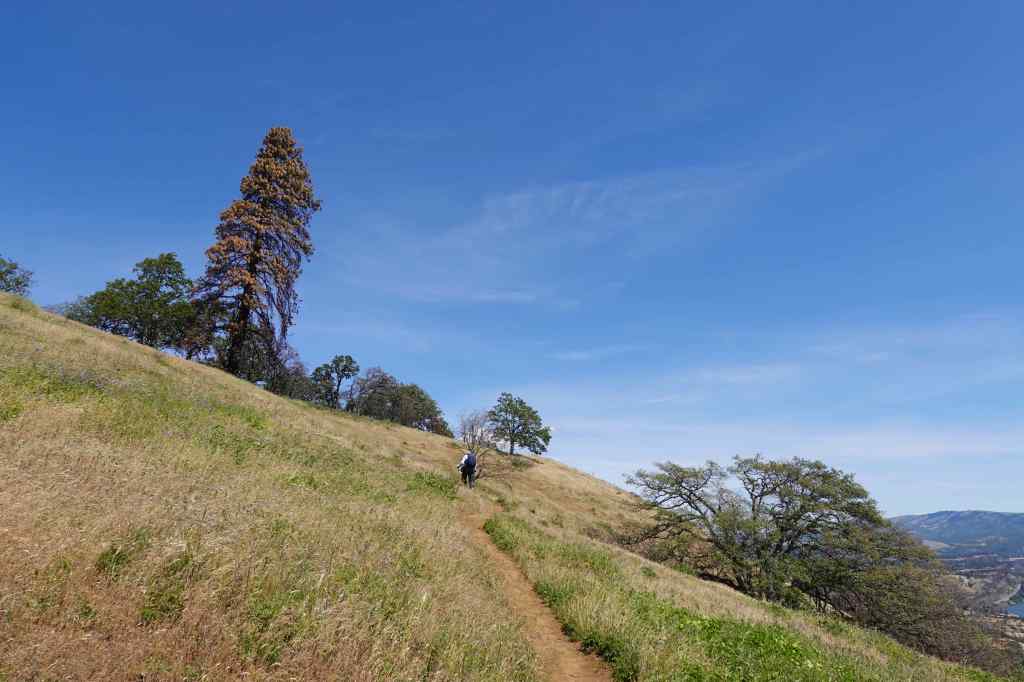
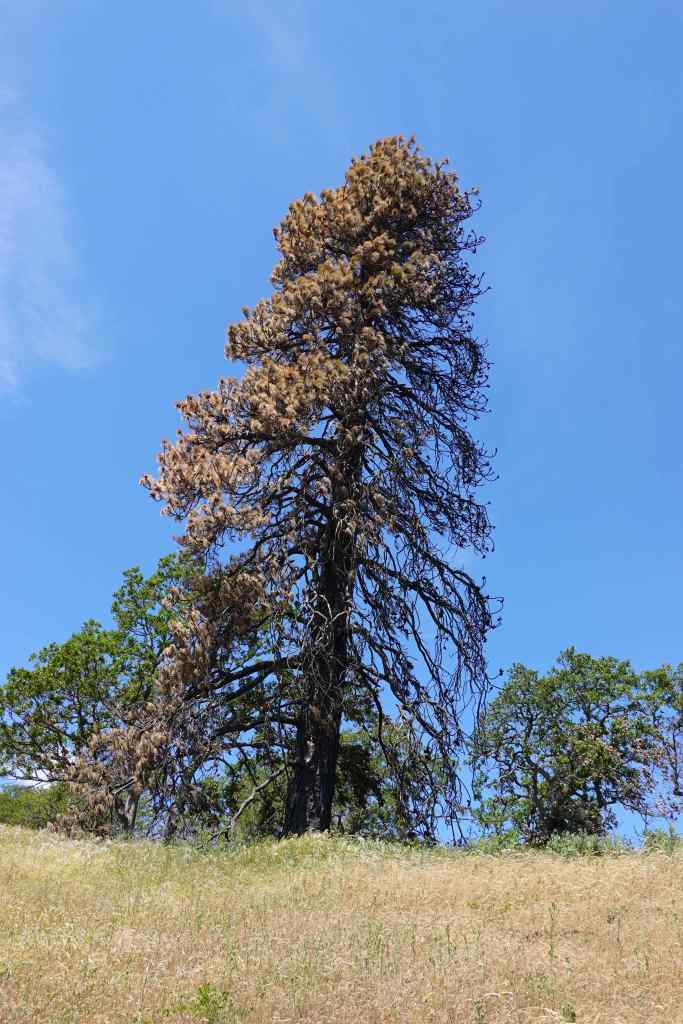
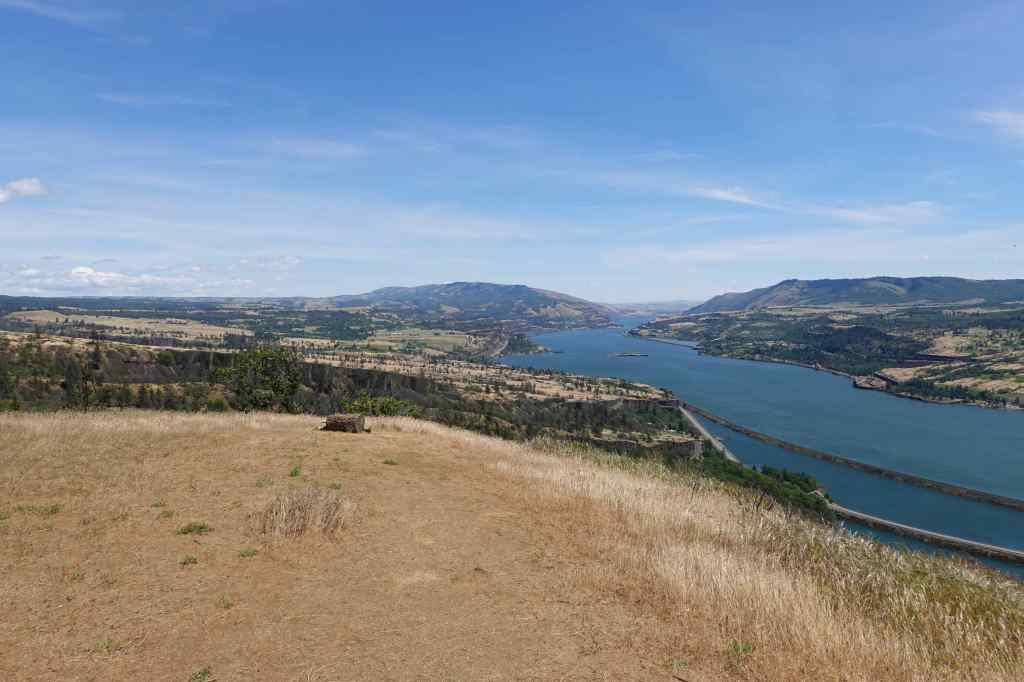
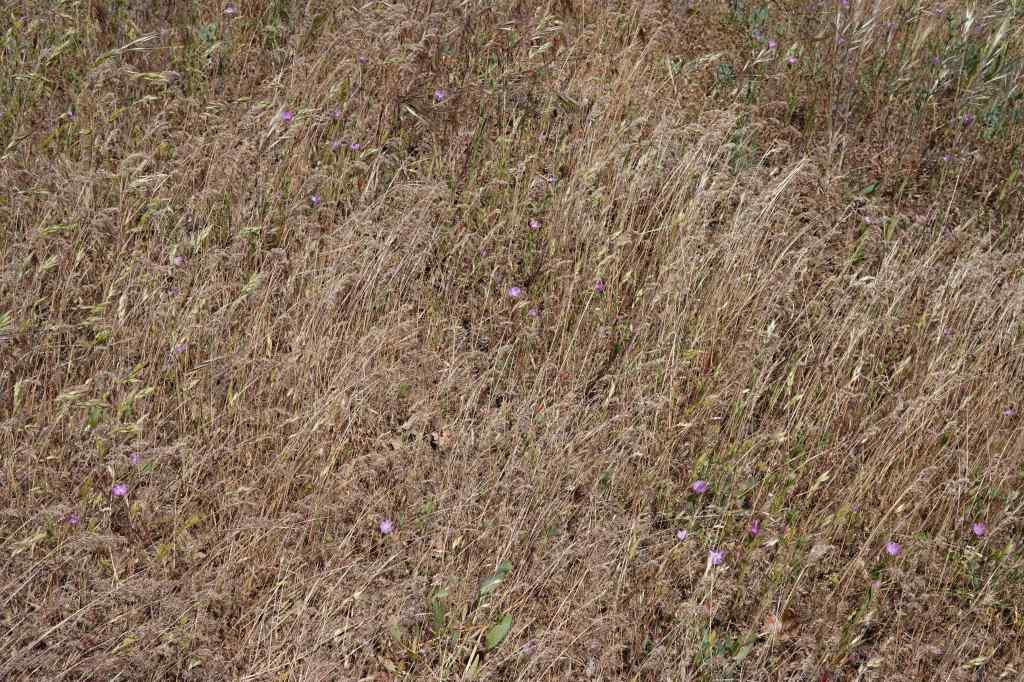
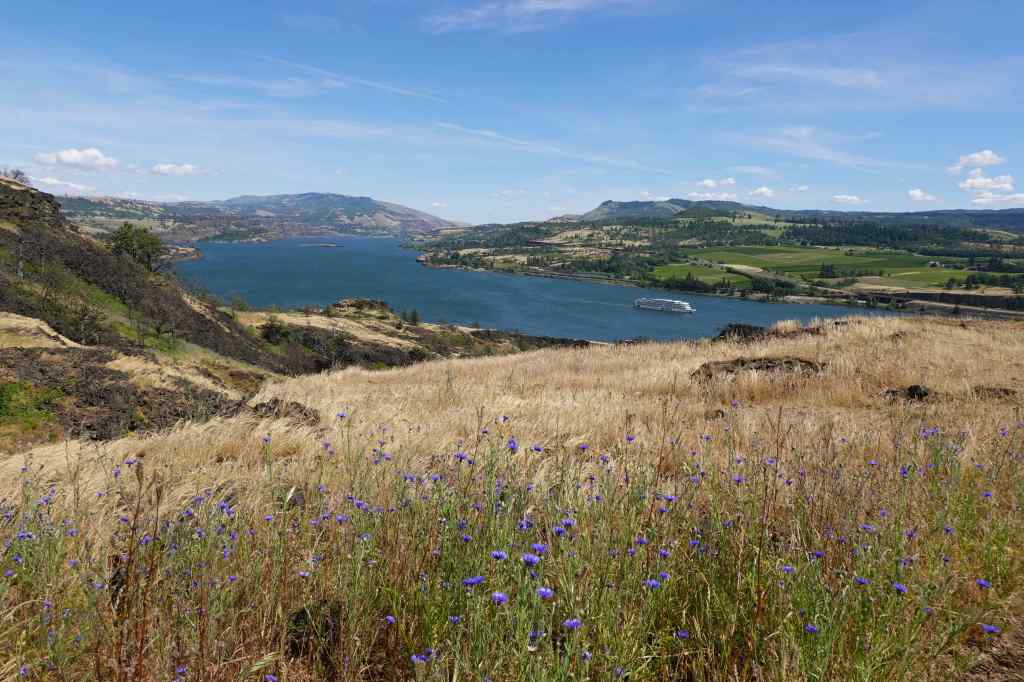
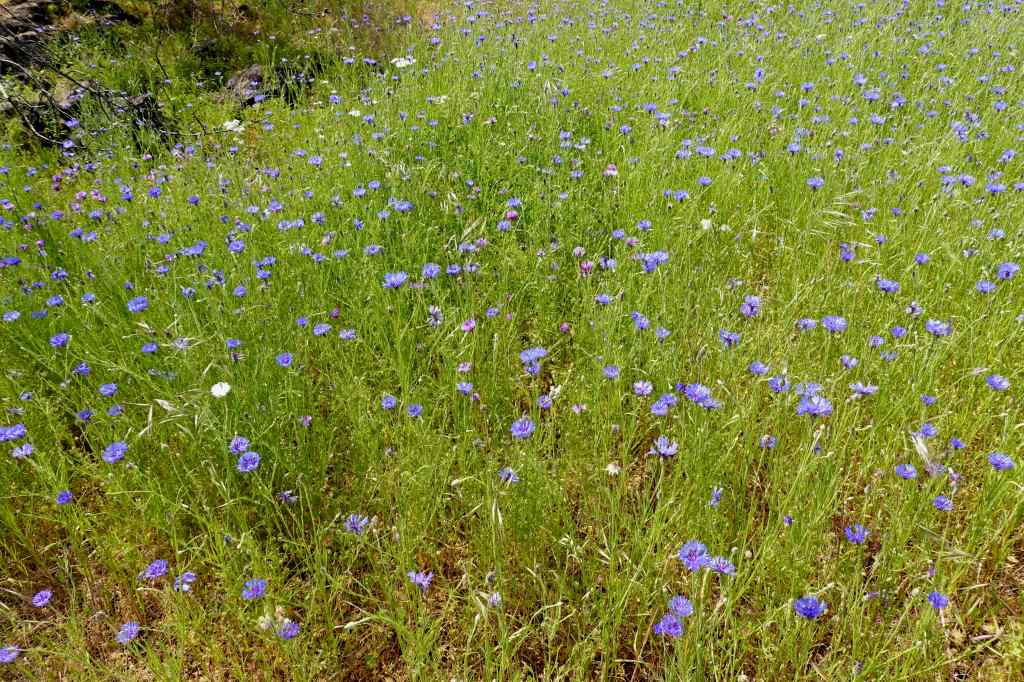
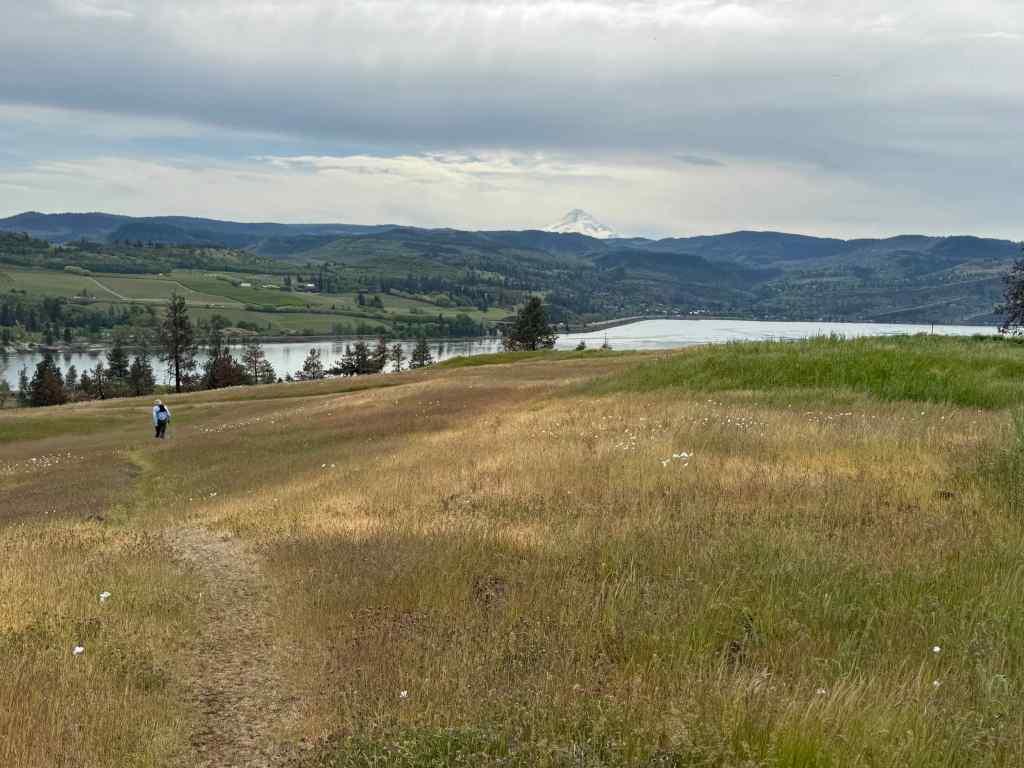
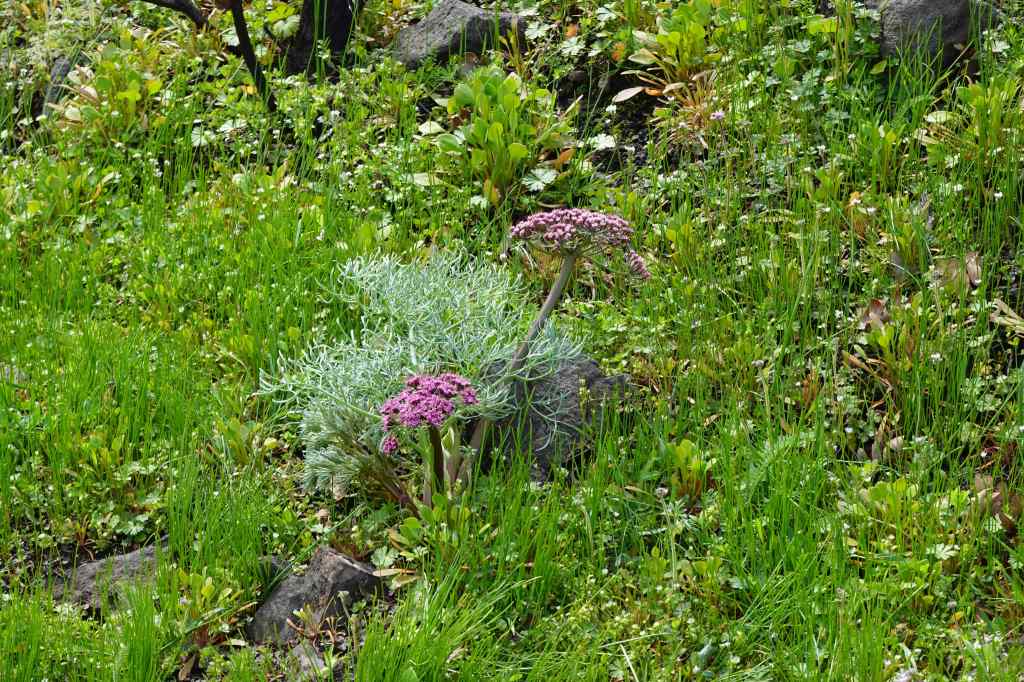
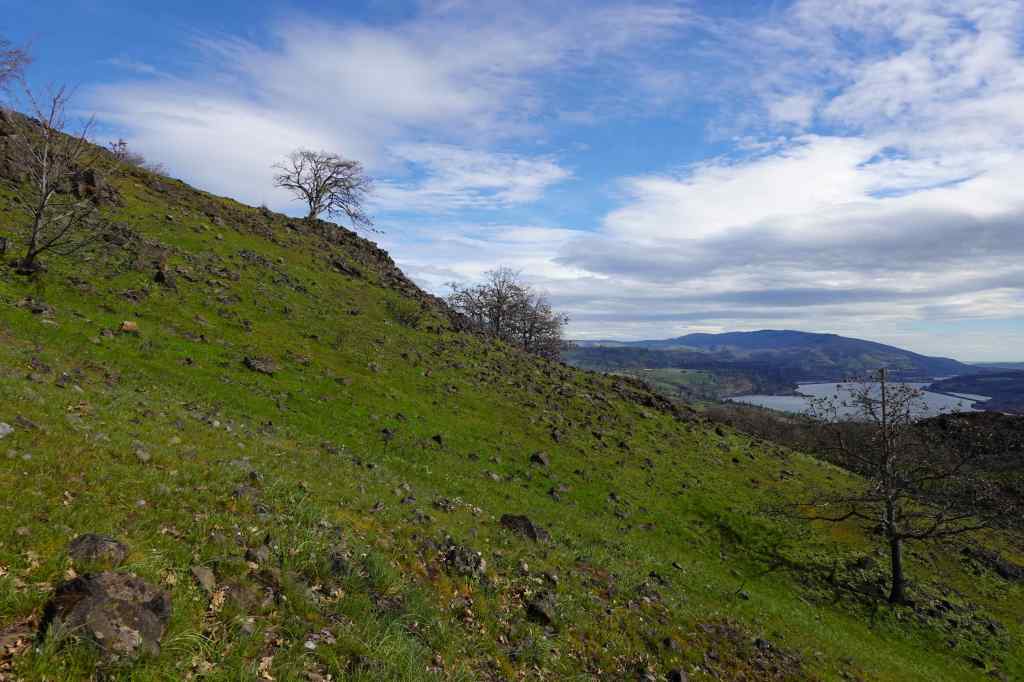
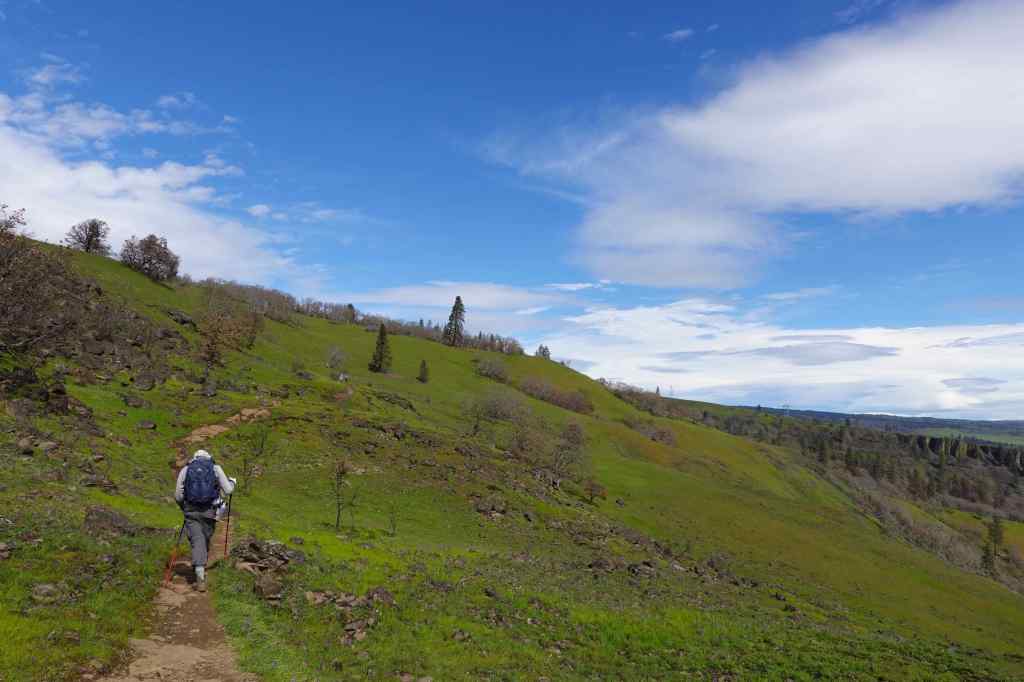
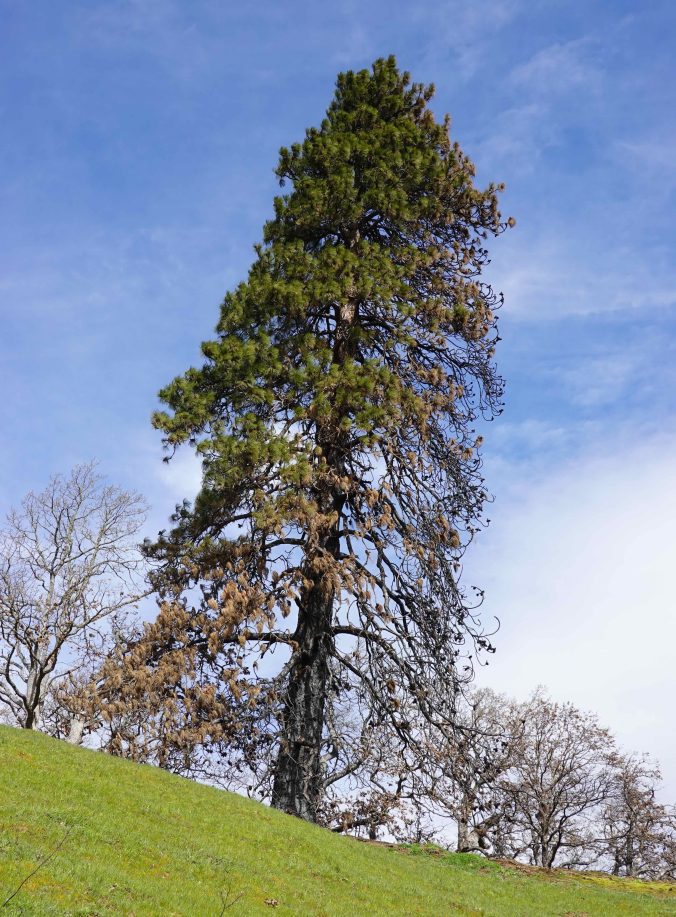
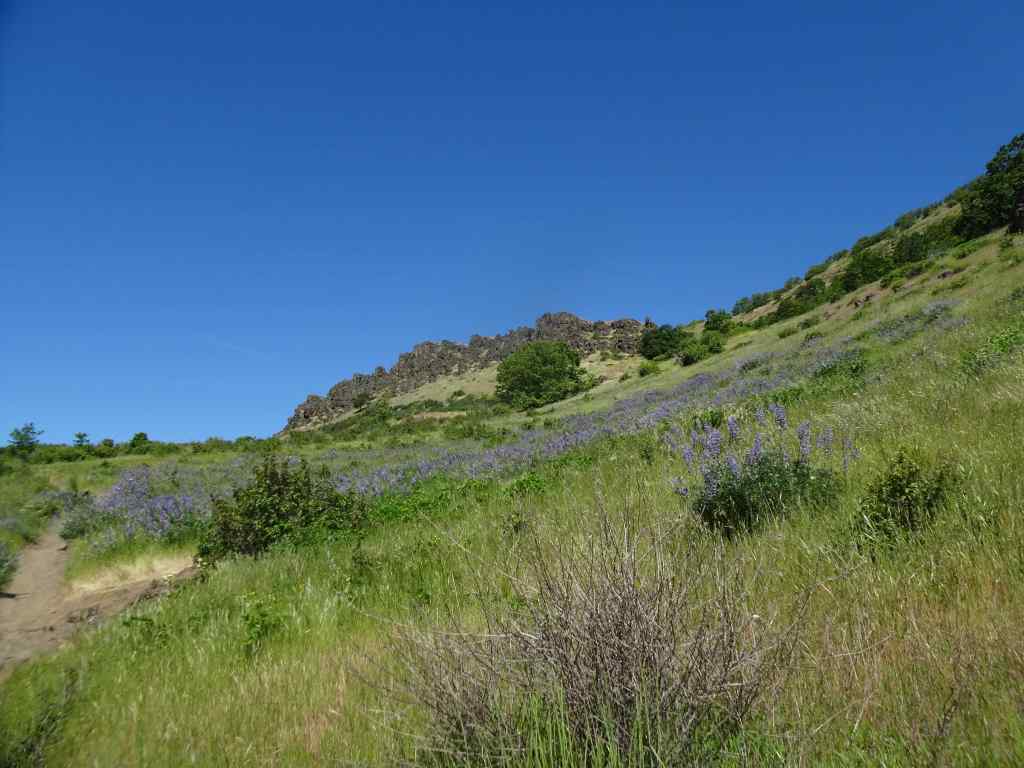
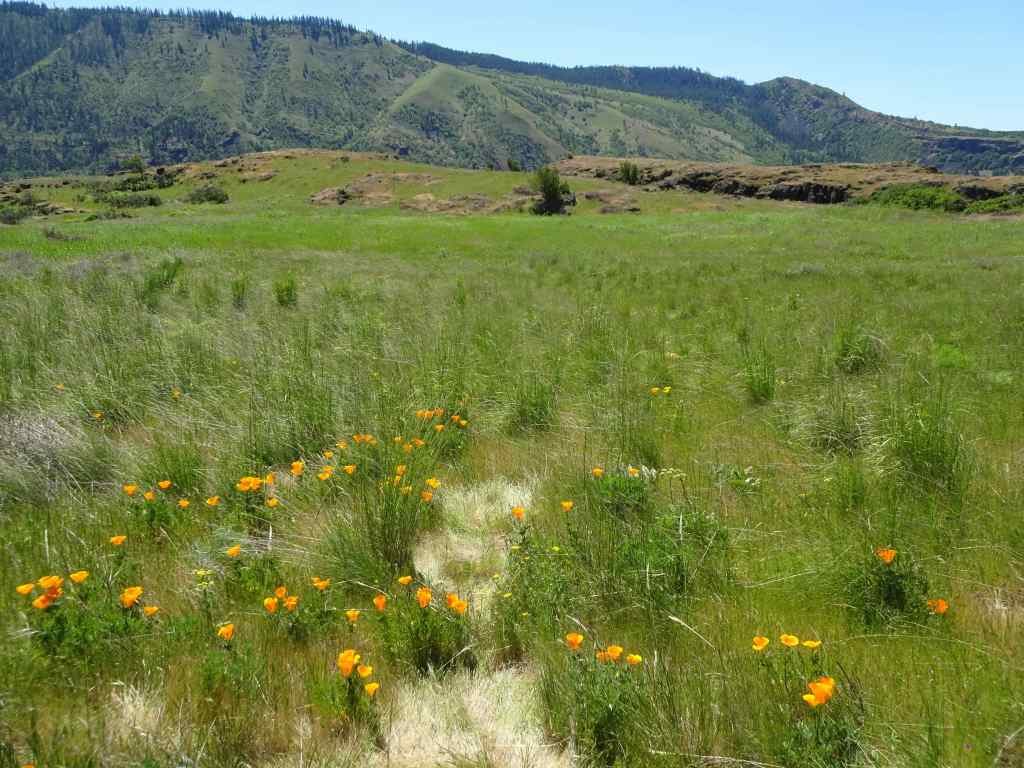
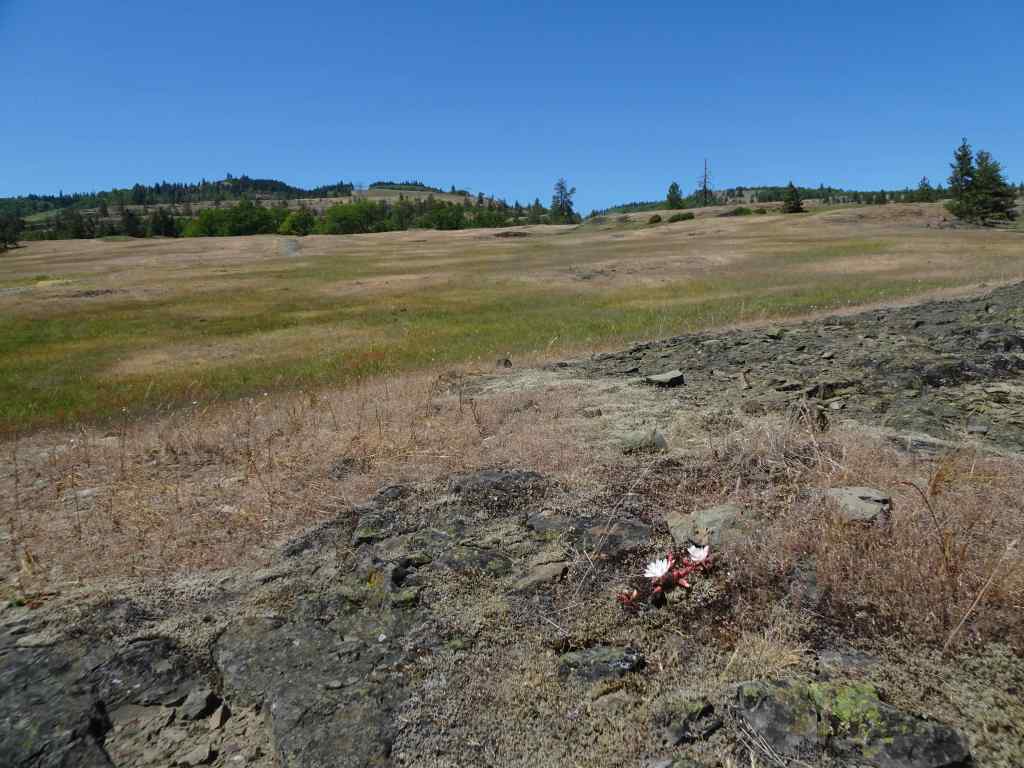
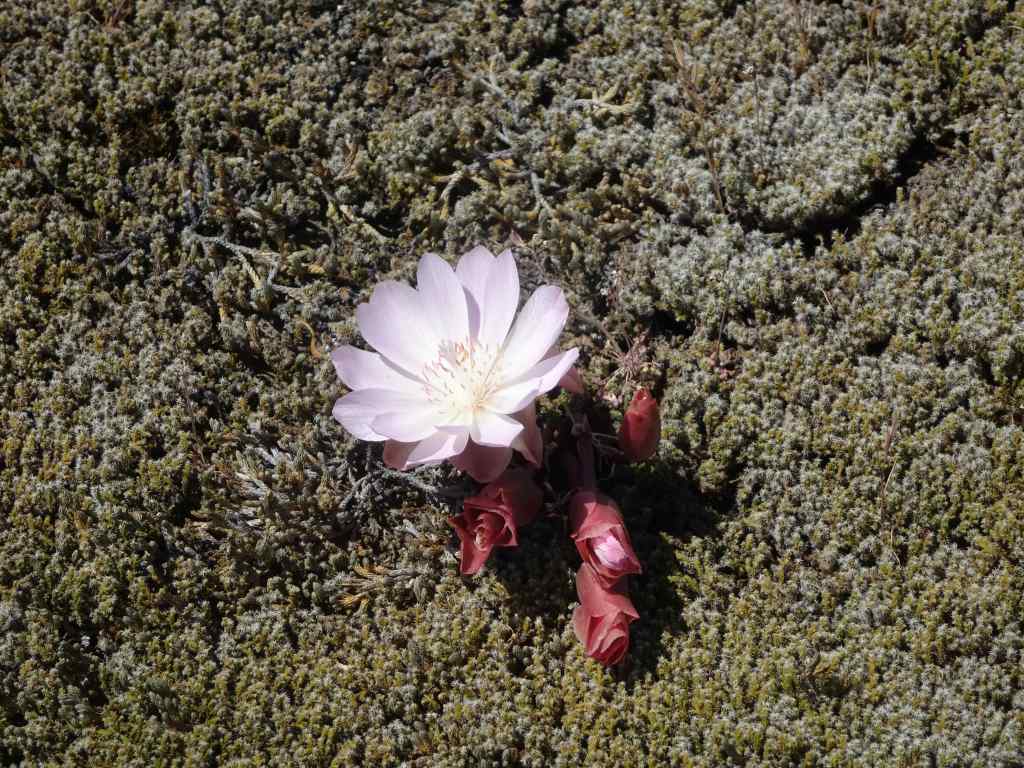
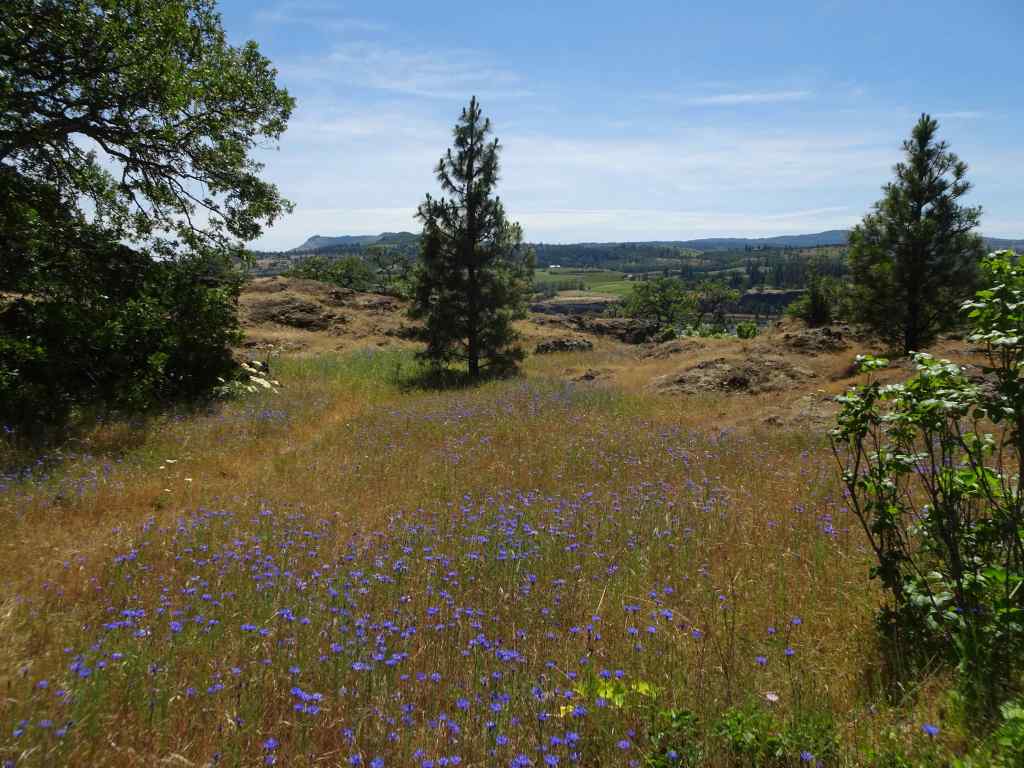
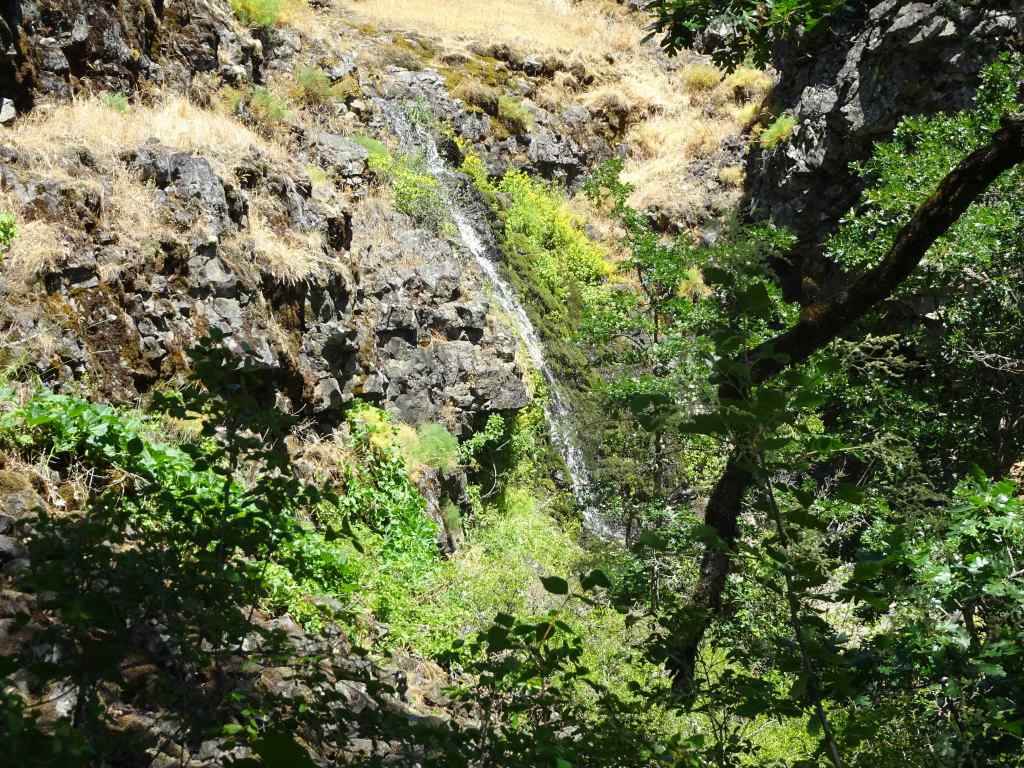
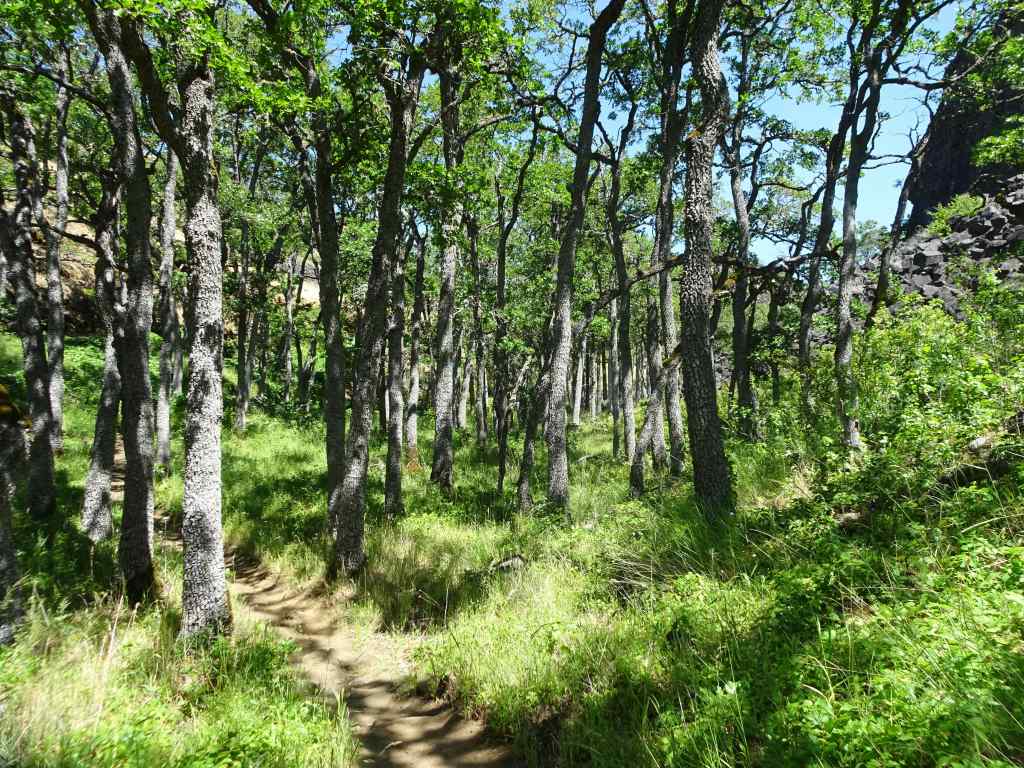
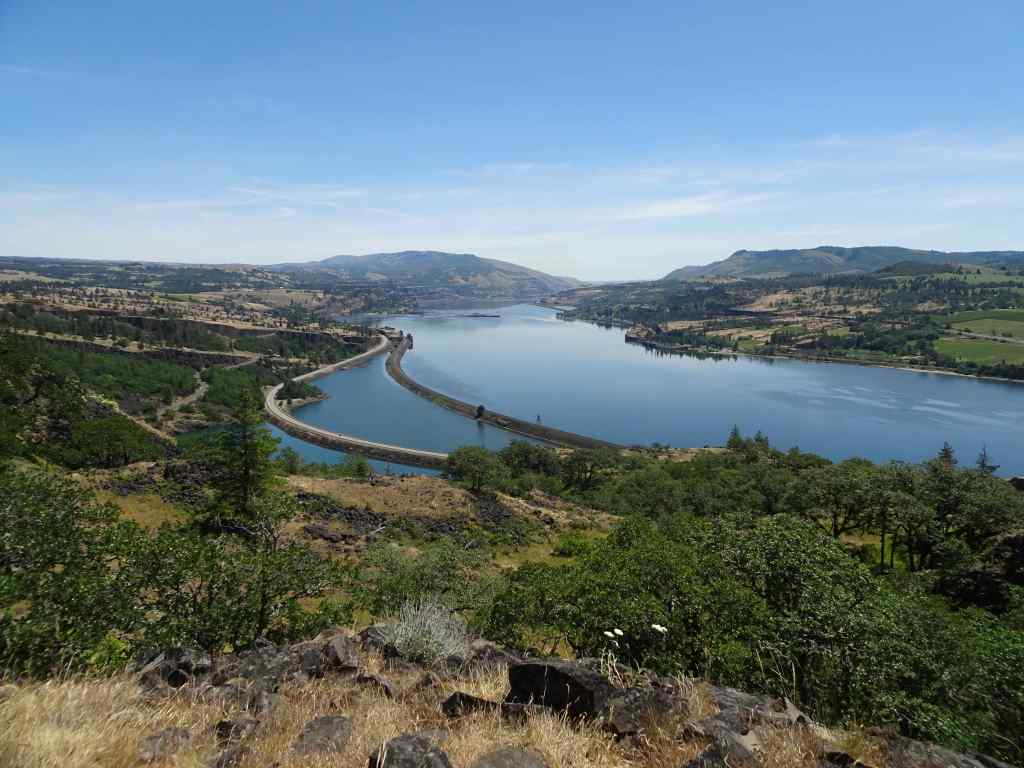
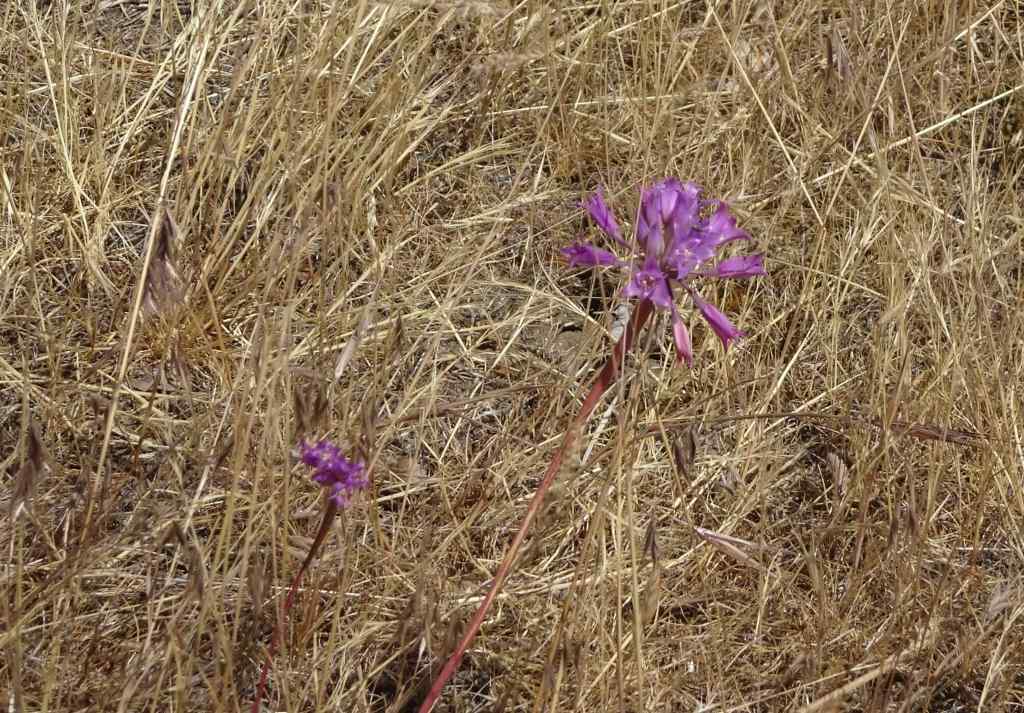
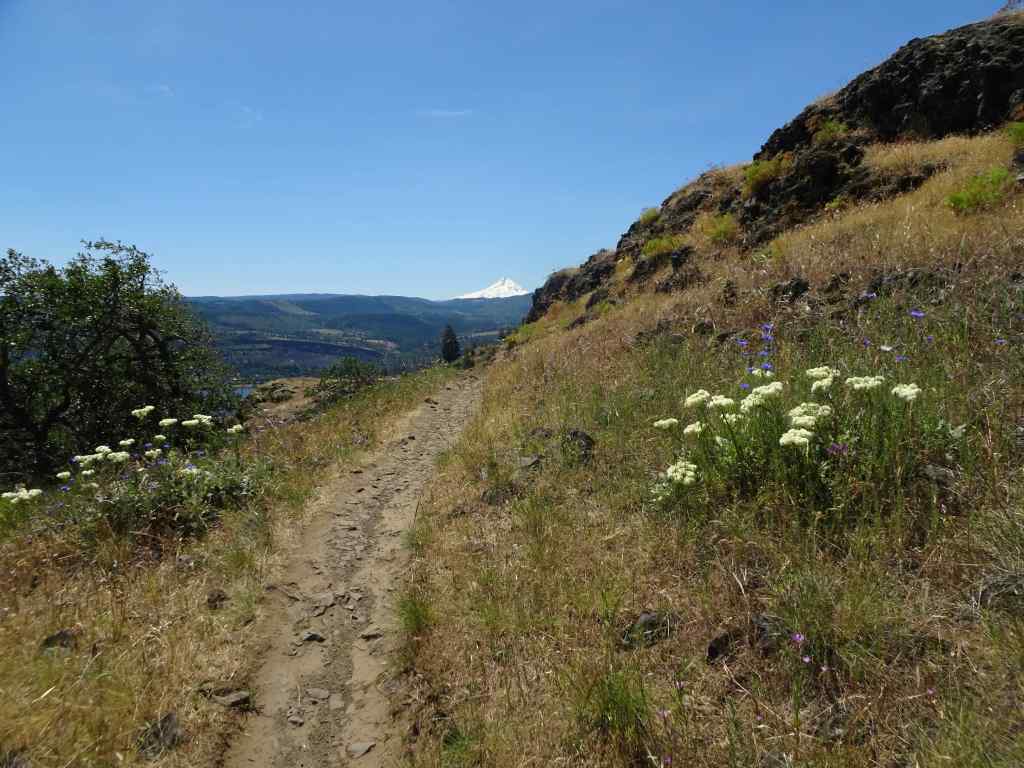
Approach trail along Hwy 8, with Mt Hood on the horizon. Poppies blooming in the verge.Near the lower waterfall, we began to see the flowers that would fill the slopes above.Cornflowers (or bachelor buttons), ookow, and creamy buckwheat.Purple vetch was intertwined with many of the flowers, adding another layer of color.Pink tapertip onions were also scattered along the way.Purple flowers filled the meadows all along the trail, with some white yarrow here.Bicolored cluster lilies also added a pale lavender clumps here and there.More purple fields as we approached the upper waterfall.Upper waterfall still tricking along.Purple fields below the columnar basalt butte.Purple flowers in the oak groves.Trail out to the lunch ledge – meadows that were filled with grass widows in March are now full of cornflowers.We noticed three hues of purple cornflowers.After lunch, we continued upward, still accompanied by the purple flowers, though the grasses are getting drier. Mt Hood ahead.I stopped to check for bitterroot on the rocky outcrop at the turn in the trail. I found the last bitterroot of spring.As we approached the ridgeline oak tree, we passed the last of the purple flowers Down the slope, the last yellow balsamroots of spring were fading.Our destination – the viewpoint near the tall ponderosa.As we got closer, I was hoping to see signs that it would recover from the Burdoin Fire of last summer. In March it still had green needles on this side, and I had a bit of hope that it would survive.As we got closer, I could see no green on the tree, despite the green oak trees all around. I hope it remains standing as a guide snag, at least for a while.From the viewpoint, the whole eastern gorge is on view.Pink winecup clarkia are hiding in the dry grass all over this hill.We hiked back down, through the meadows of purple. Down on the river, a cruise ship was passing through.Can they see the fields of purple from there?
5/26 – Falls Creek Falls, WA
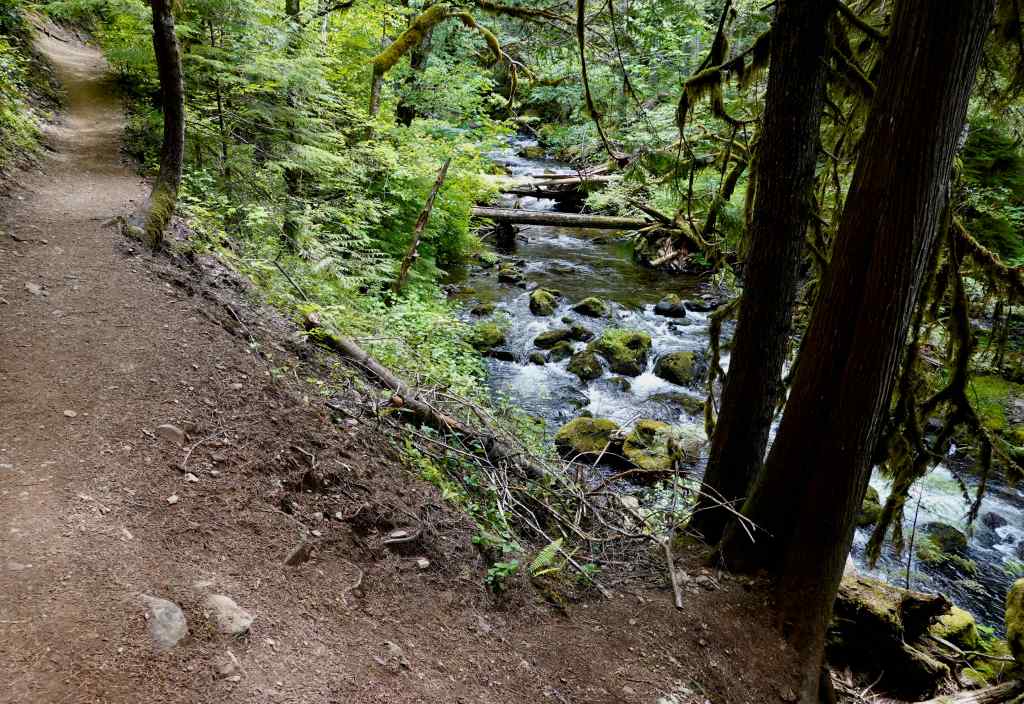
We enjoyed this relatively easy, mostly shaded hike on a warm day (3.4 miles, 620 feet). The last time I was here, in the fall of 2018, fall colors were on display. Today there were white flowers in the forest, a few colorful flowers in the sun, and the sound and glory of this enormous waterfall!!
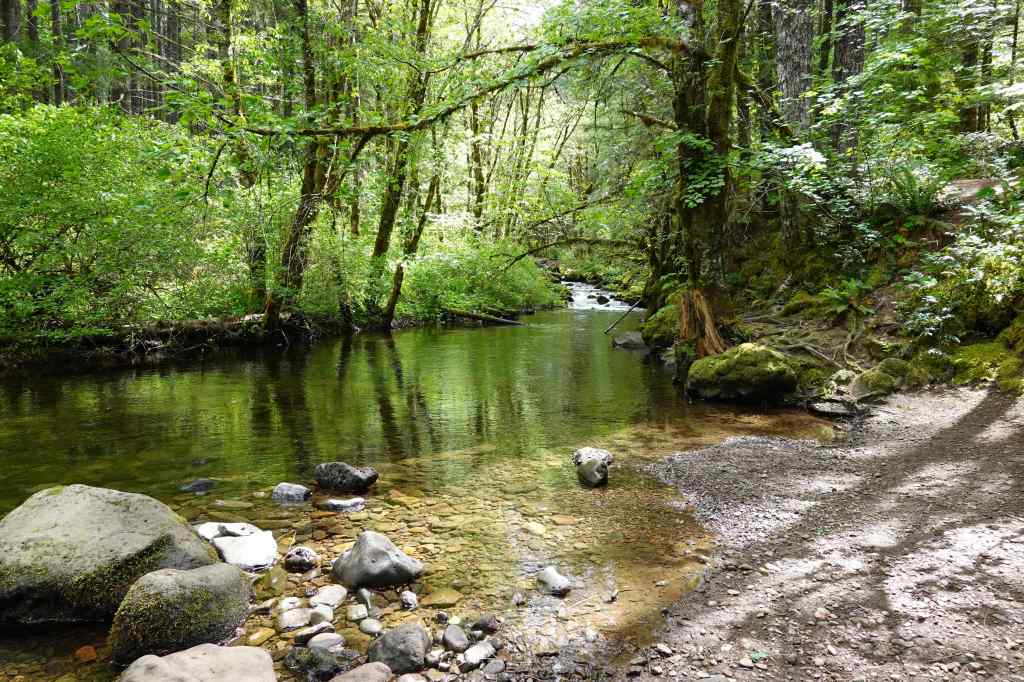
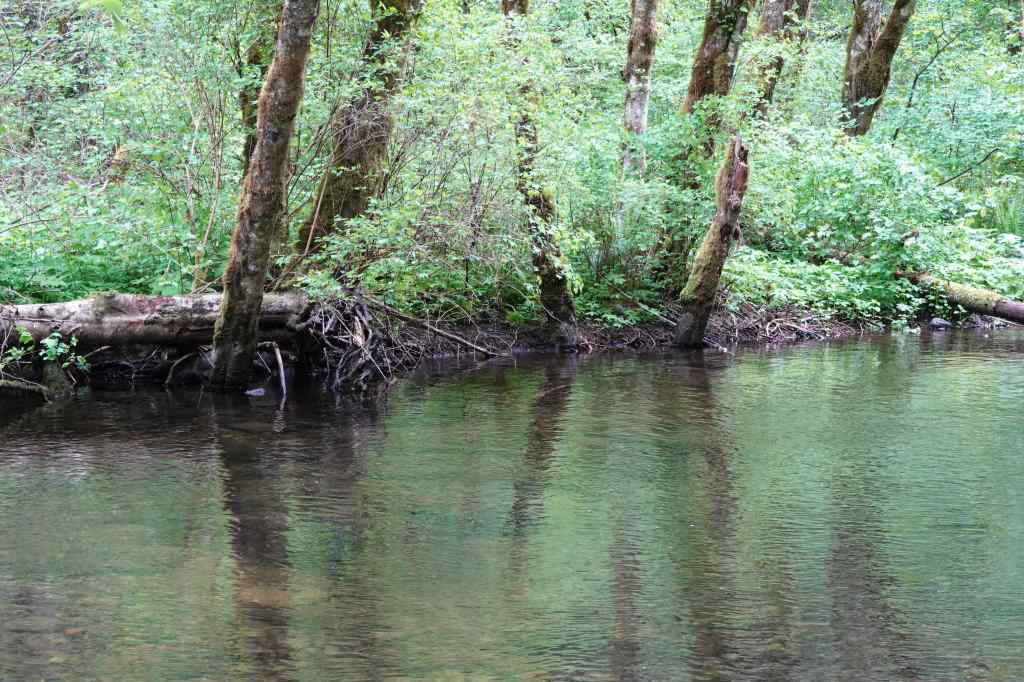
The trail follows Falls Creek for much of the way.The creek is tree lined and shady.Reflections of green and purple in the water.We passed a few cascading rapids, and crossed a bridge over a small gorge.
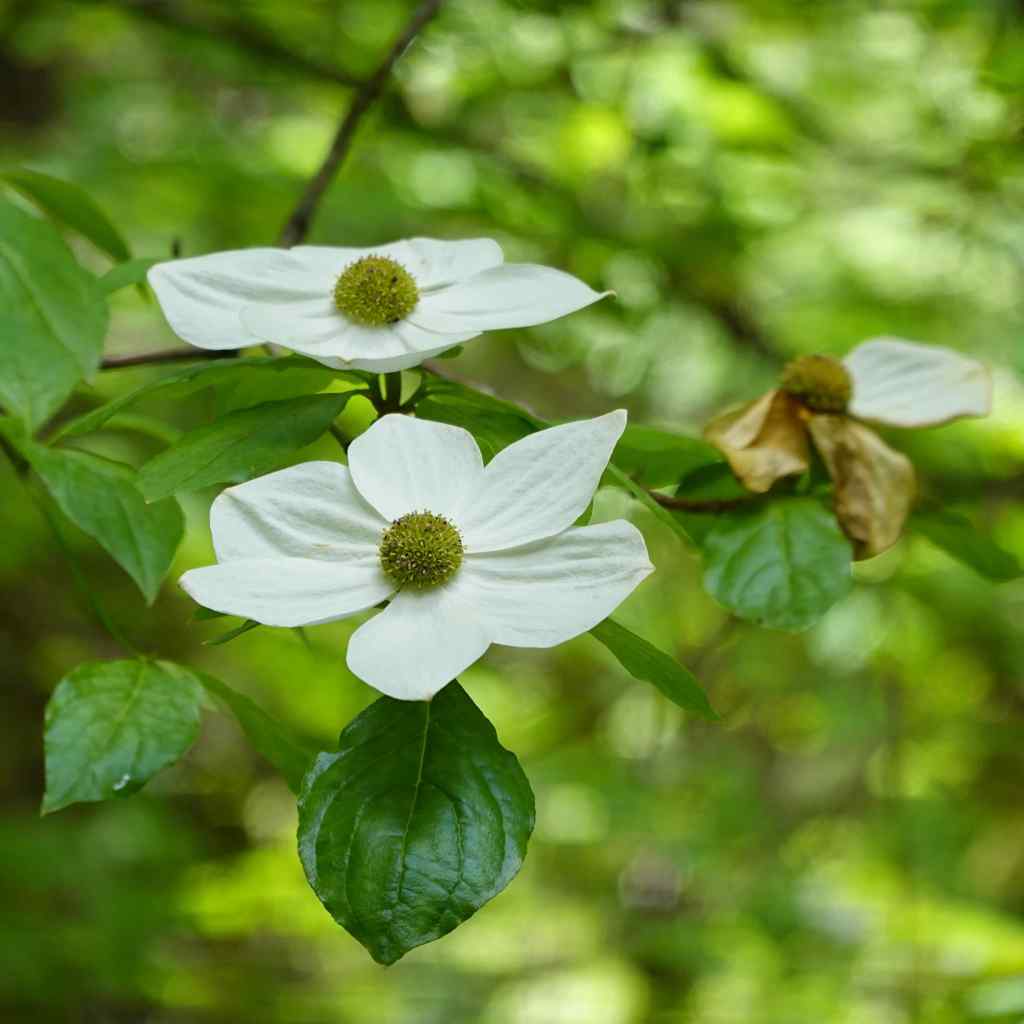
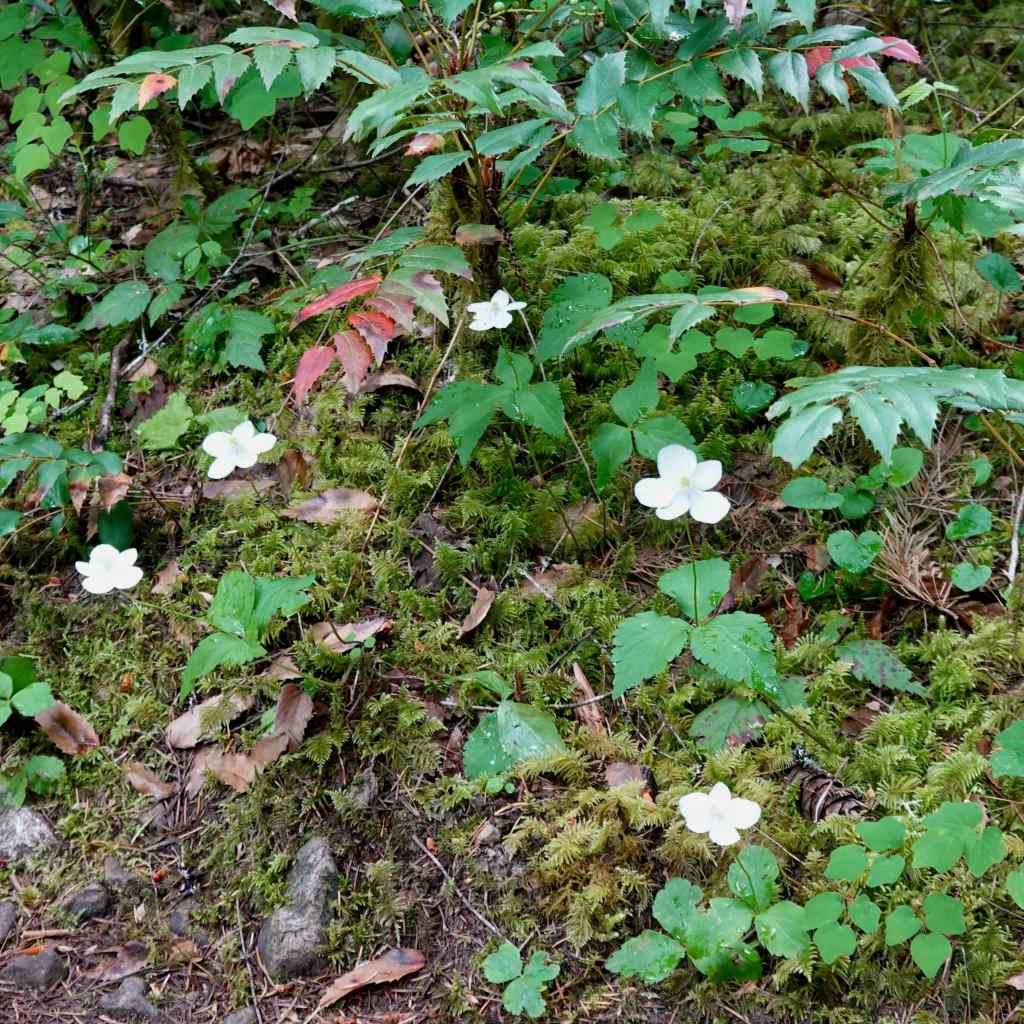
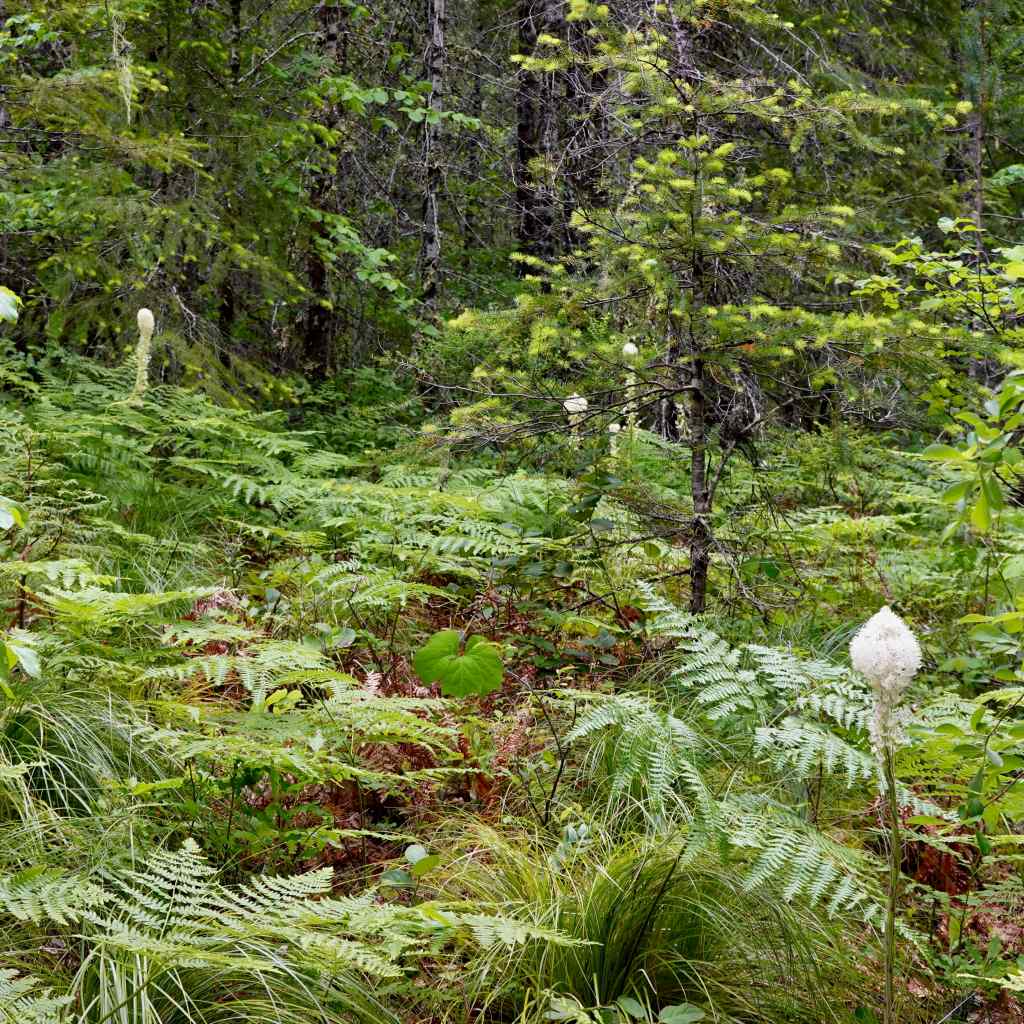
White flowers in the shady parts of the forest:
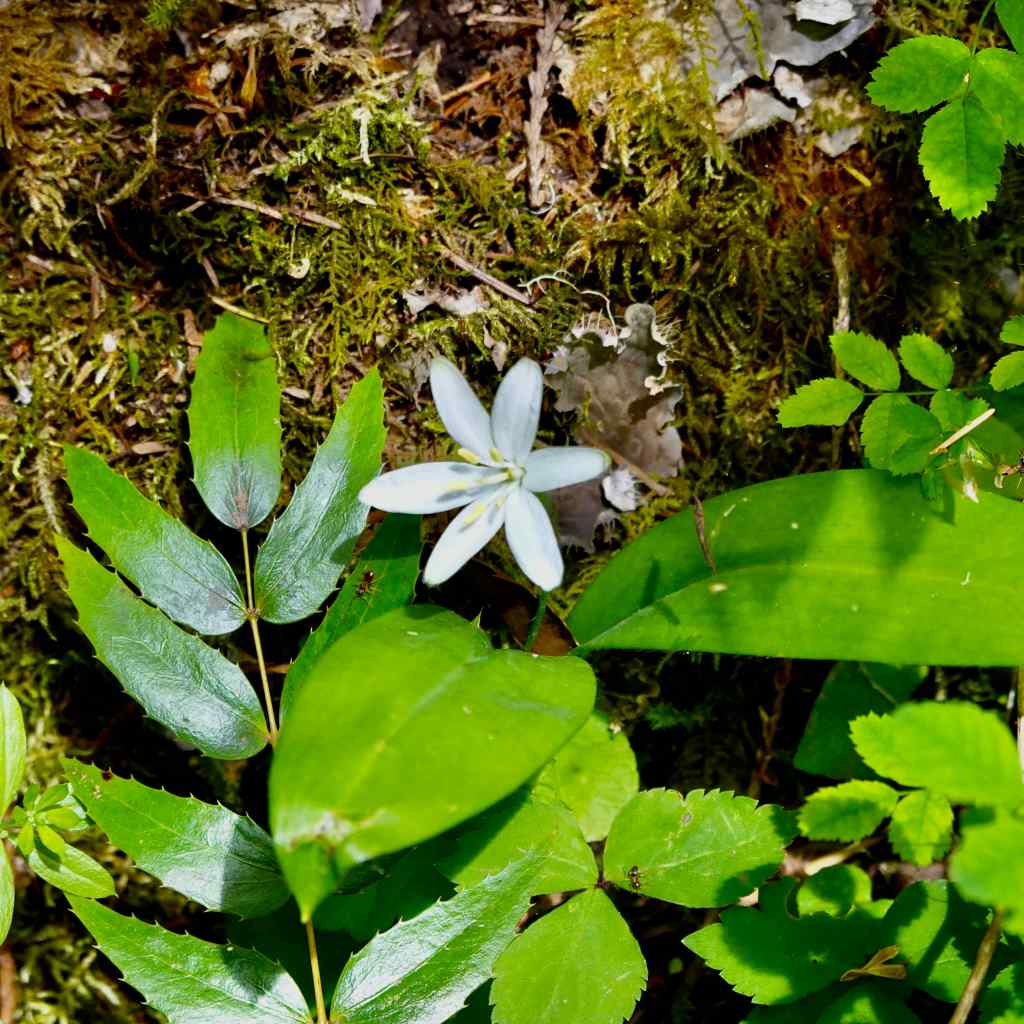
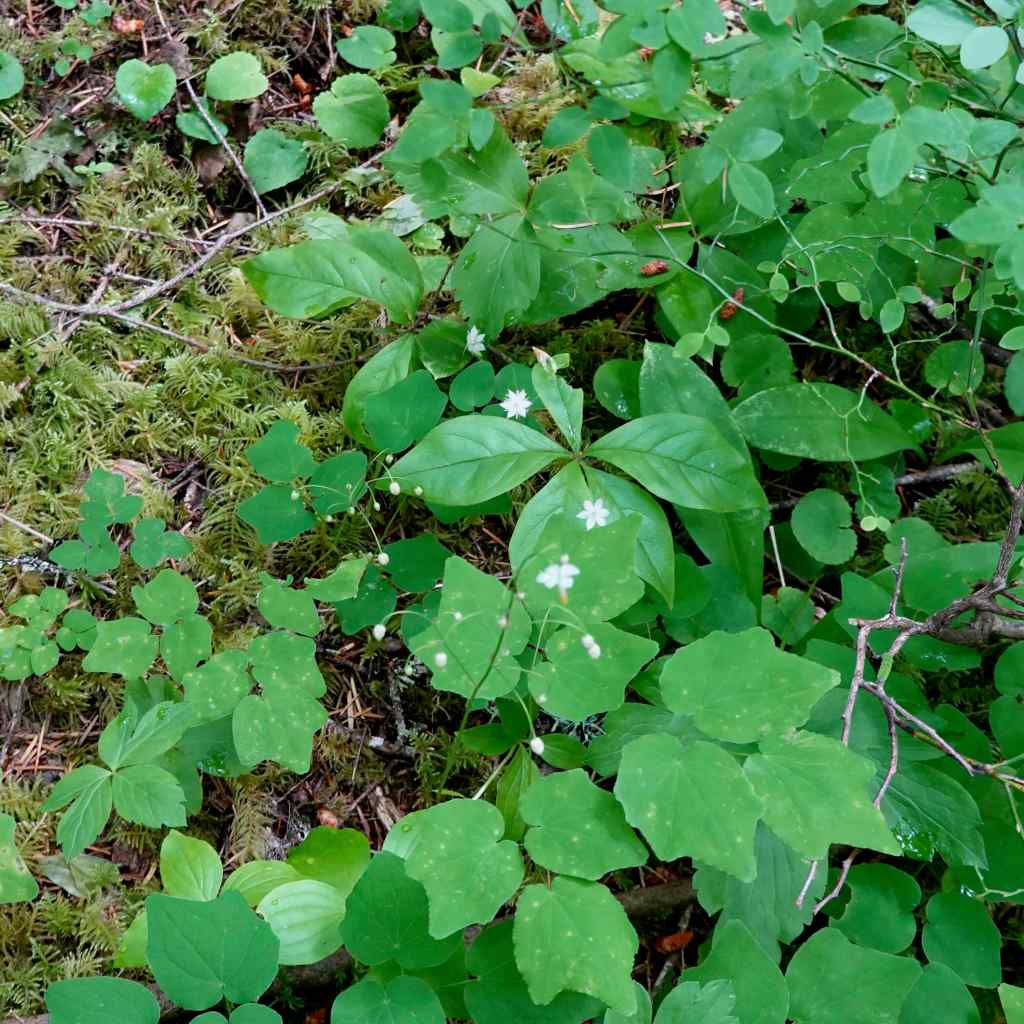
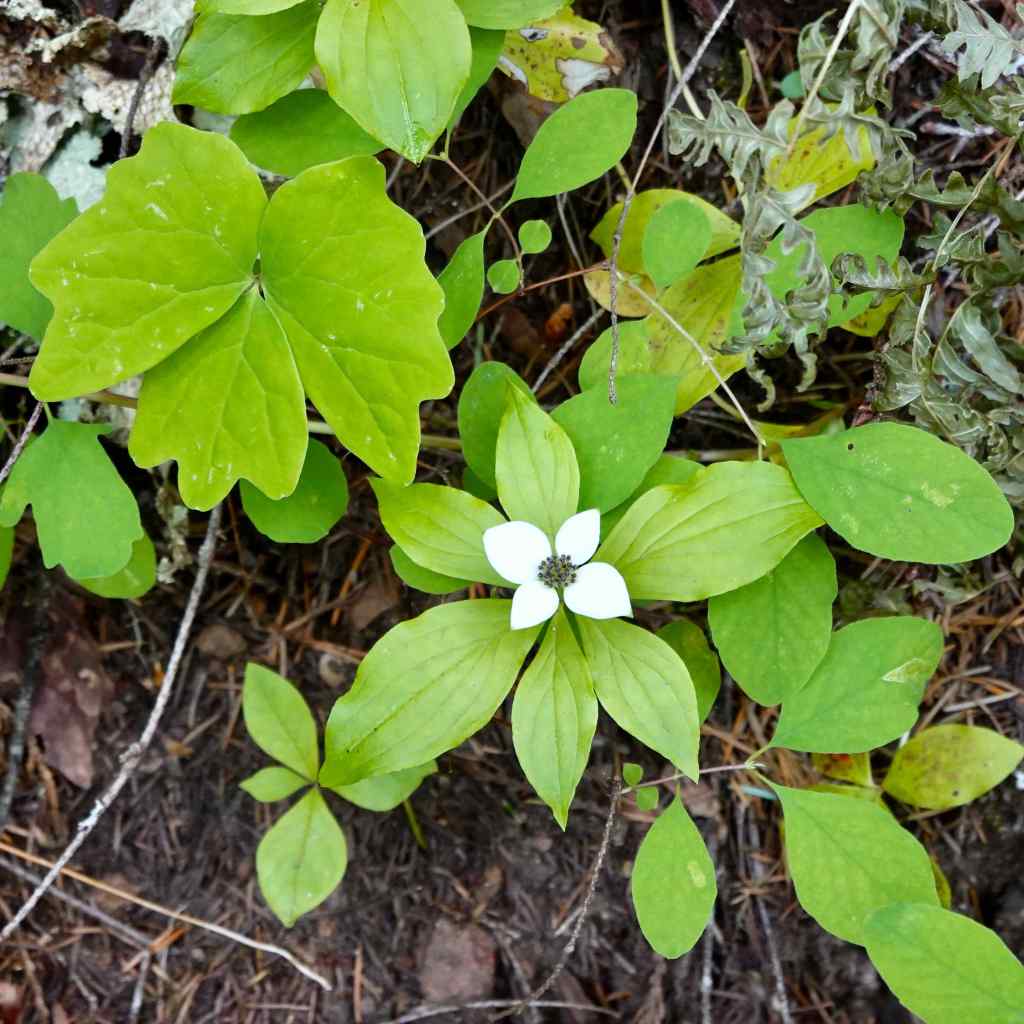
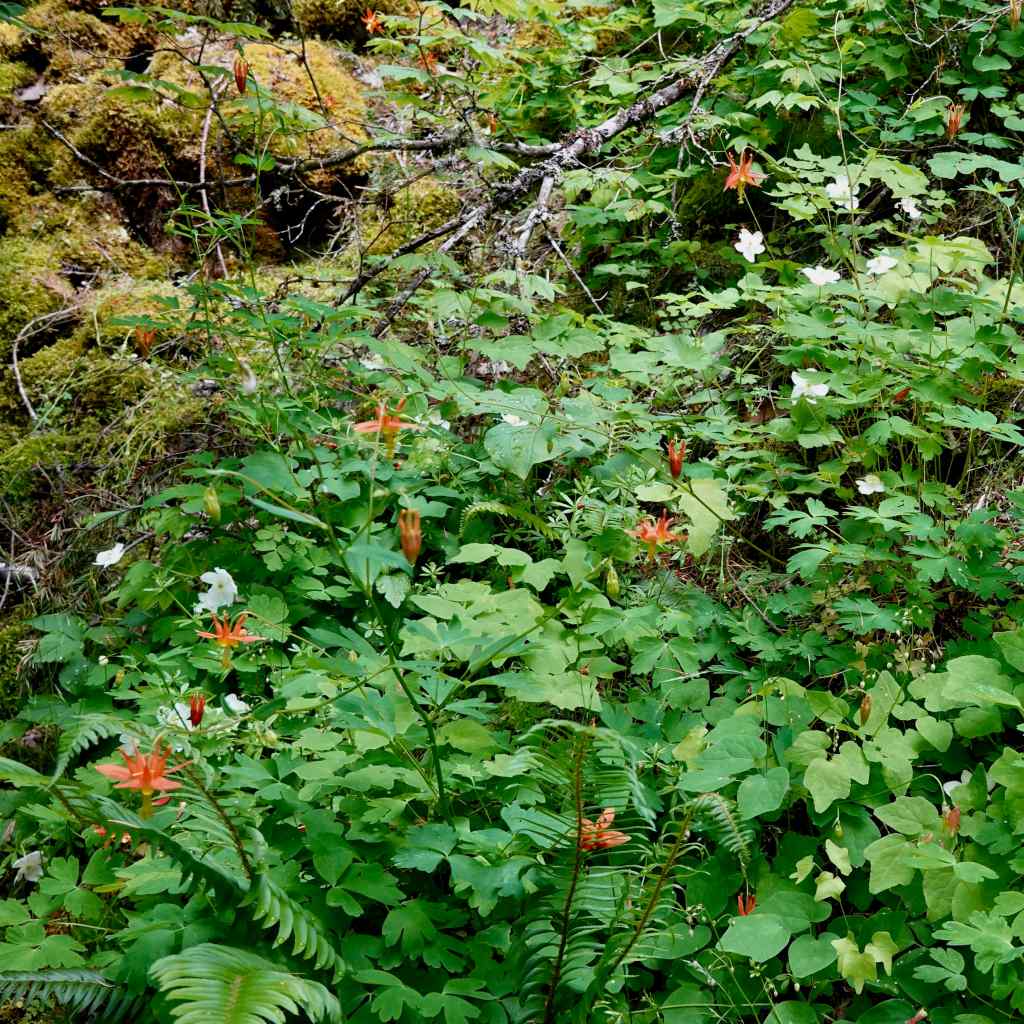
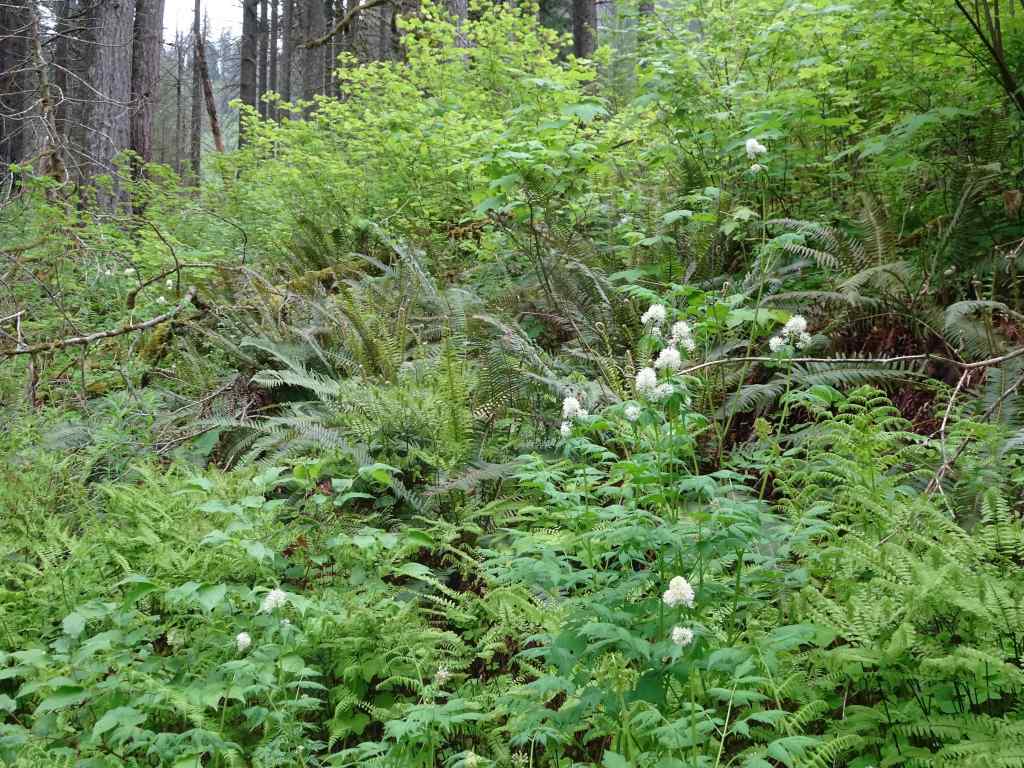
DogwoodAnemoneBeargrassBead liliesStar flowers and upside-down flowersBunch berries
A few more colorful flowers in the sunny spots:
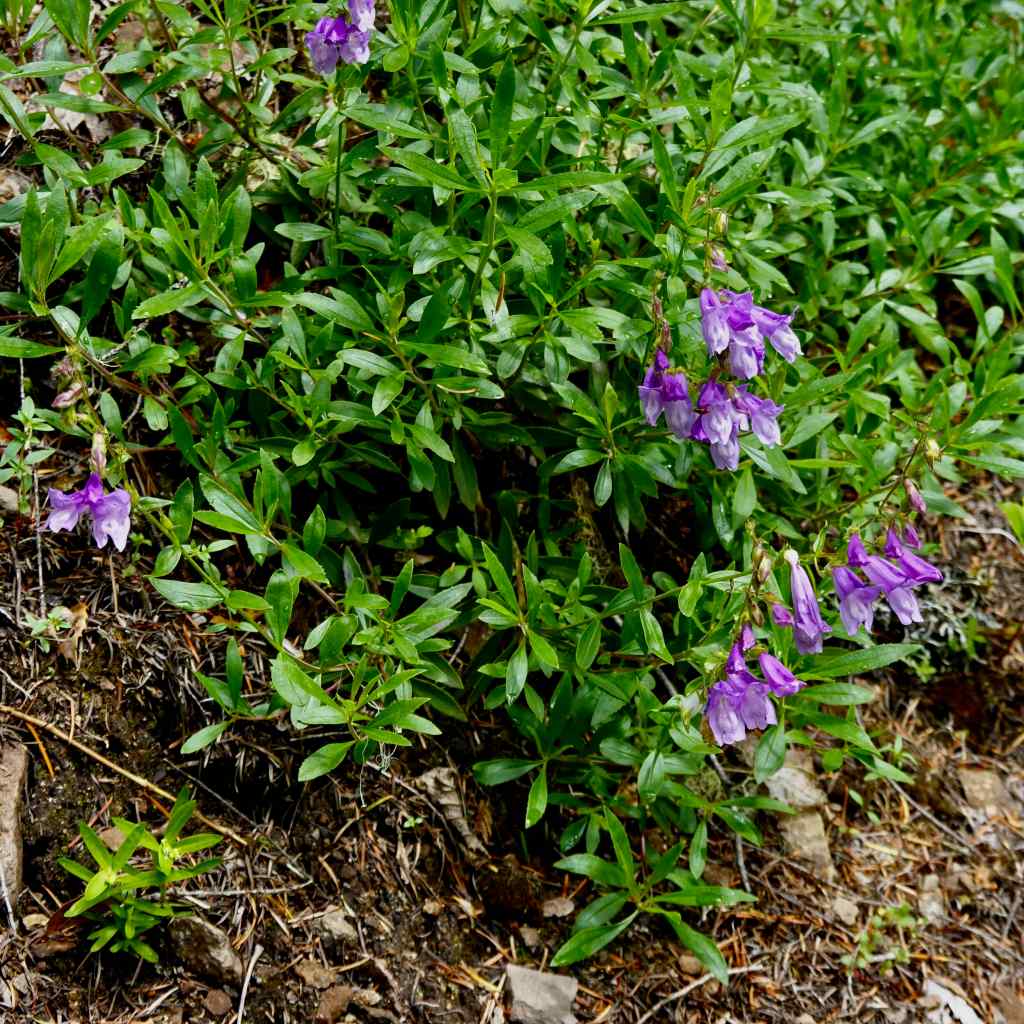
PenstemonColumbine and anemone
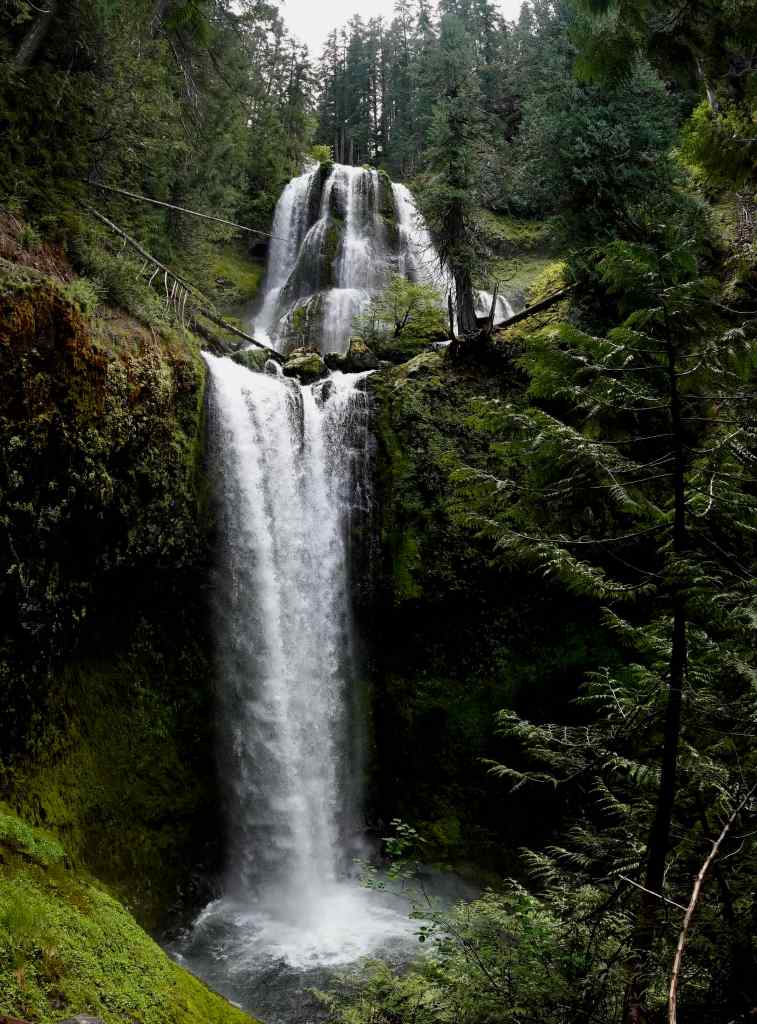
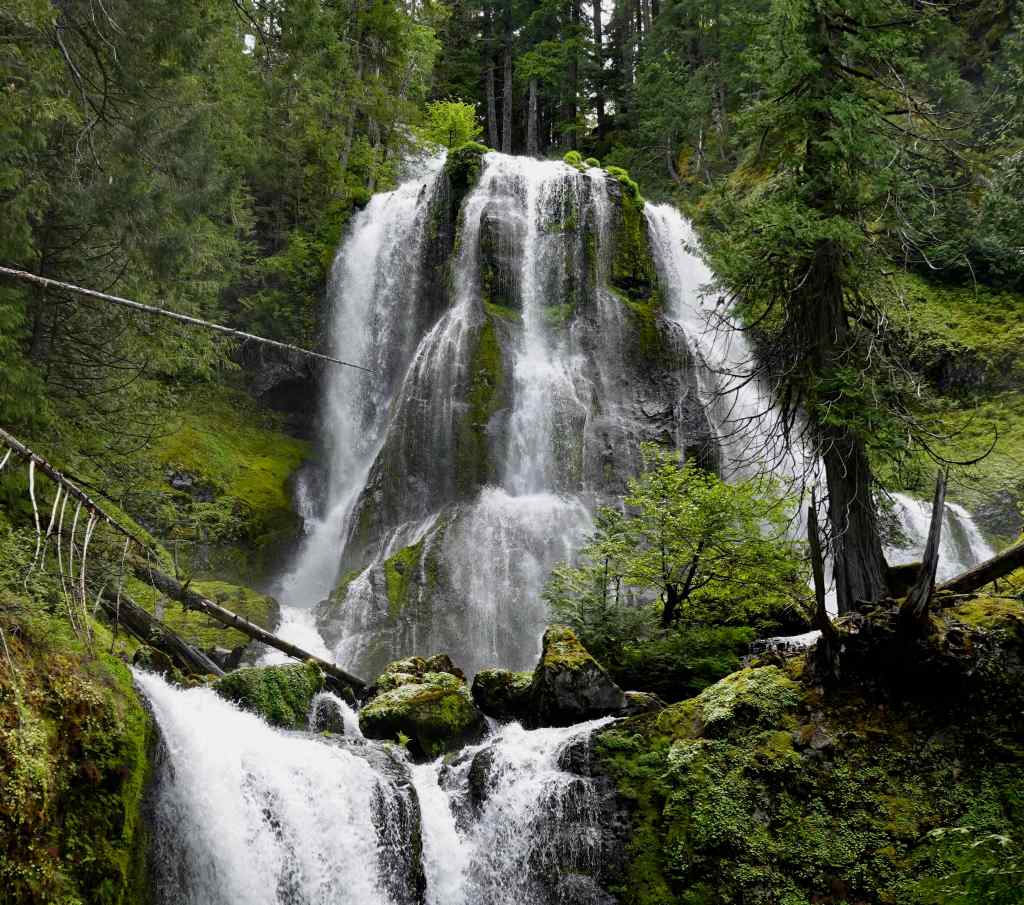
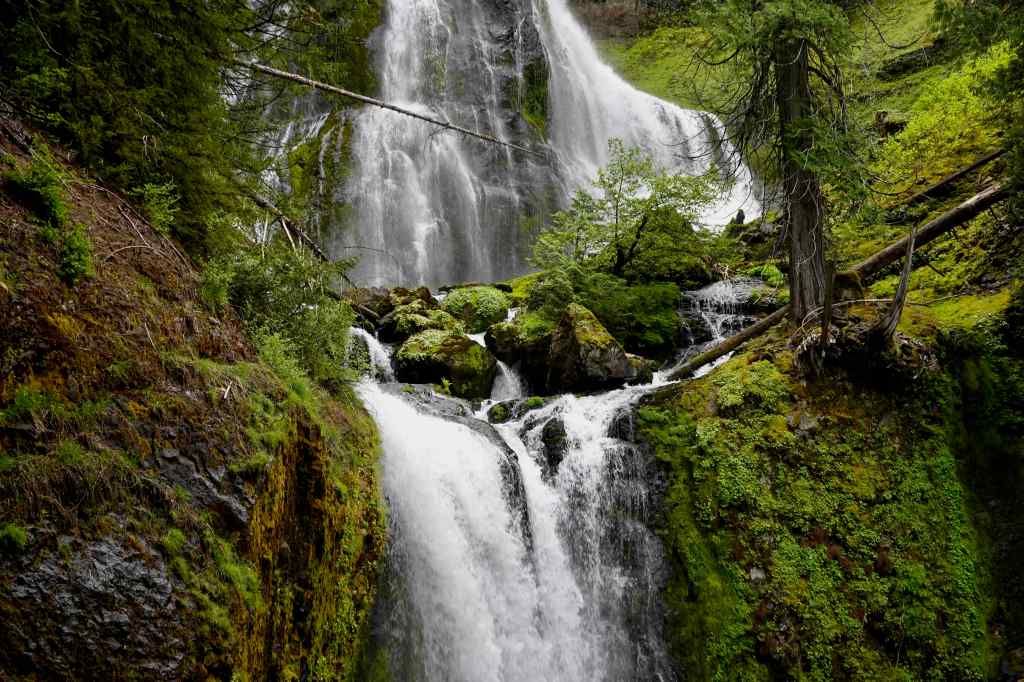
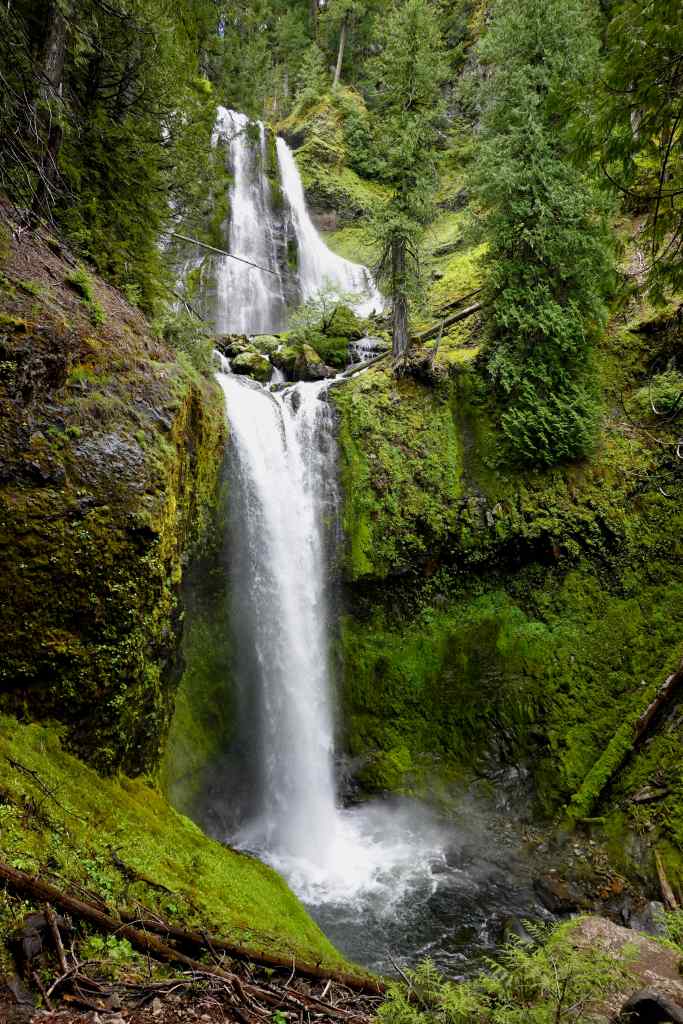
And Falls Creek Falls at the end of the trail:
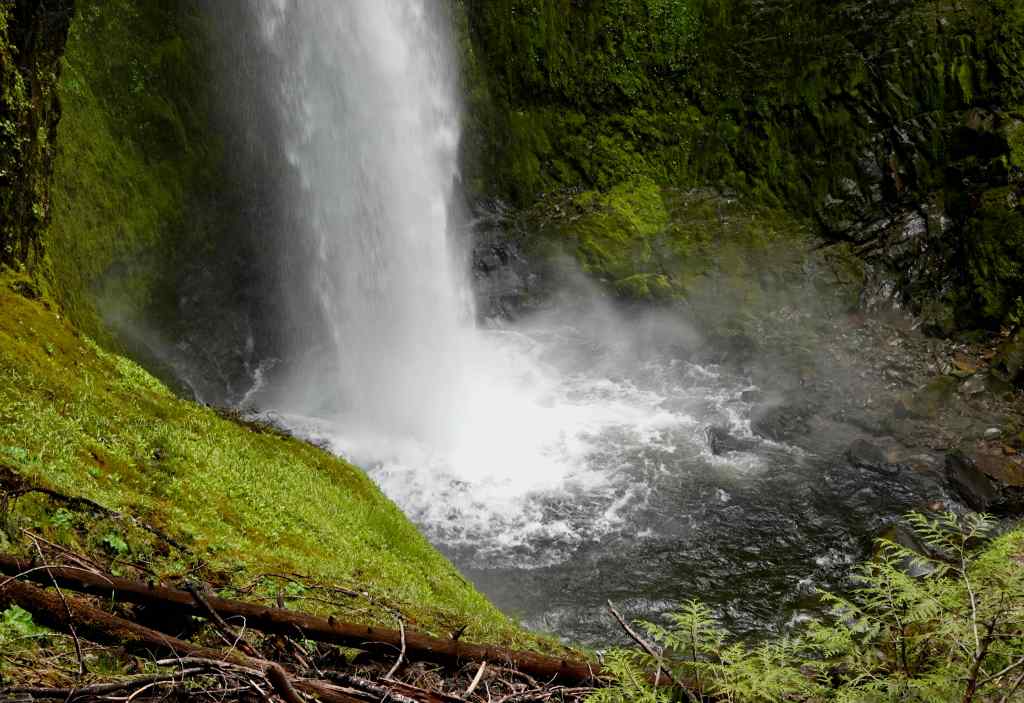
Falls Creek Falls – 335 feet total drop.Upper tierMiddle stepPlunge poolSlightly different view from our lunch perch.
And then a mostly easy downhill walk back along the creek to conclude this pleasant day in the forest.
I only went on two hikes in April. My husband and usual hiking partner was away on a photo trip to Patagonia. When he returned, we wanted to get out in the eastern Columbia River Gorge to see the spring wildflowers, especially the balsamroot, before it got too hot!
4/20 – Part 1 – Dalles Mountain Ranch, WA
I did an abbreviated version of this hike, as I was still regaining my stamina. After lunch, I returned to the trailhead via a dirt connecting road, while my hiking partner continued the loop. I saw a slightly different version of the usual views, and then had to climb a fence to get back to the main road – all part of the adventure! (2.6 miles, 220 feet)
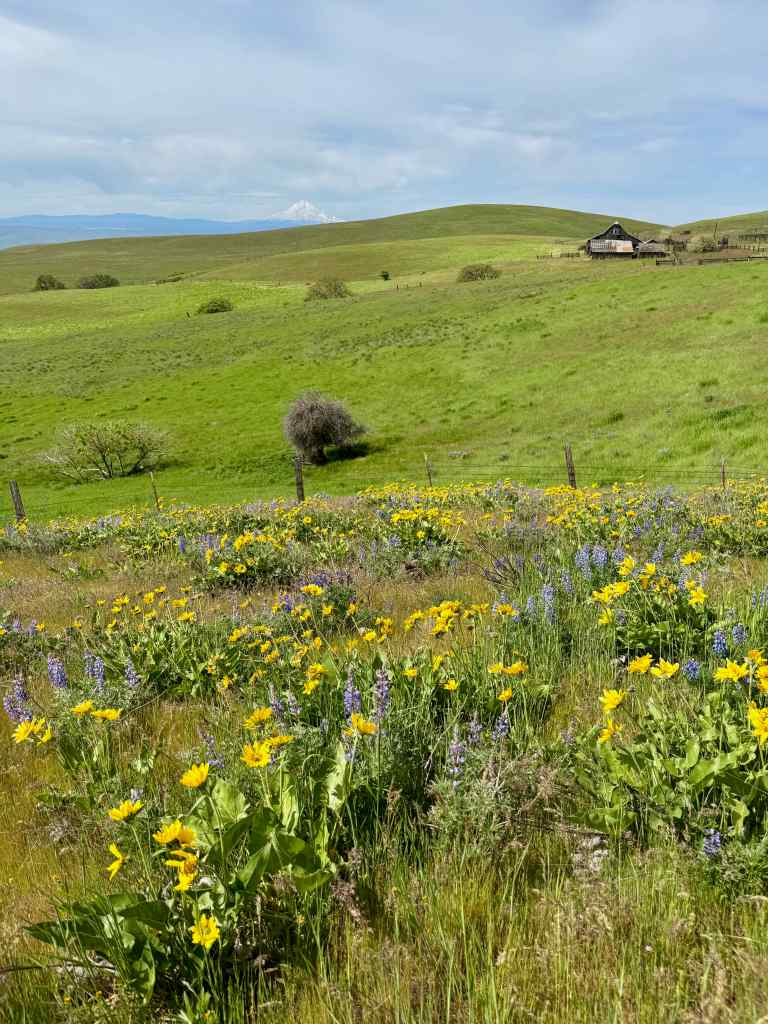
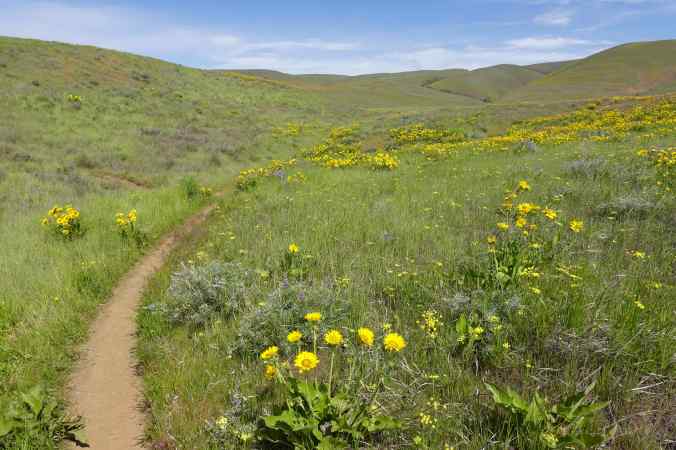
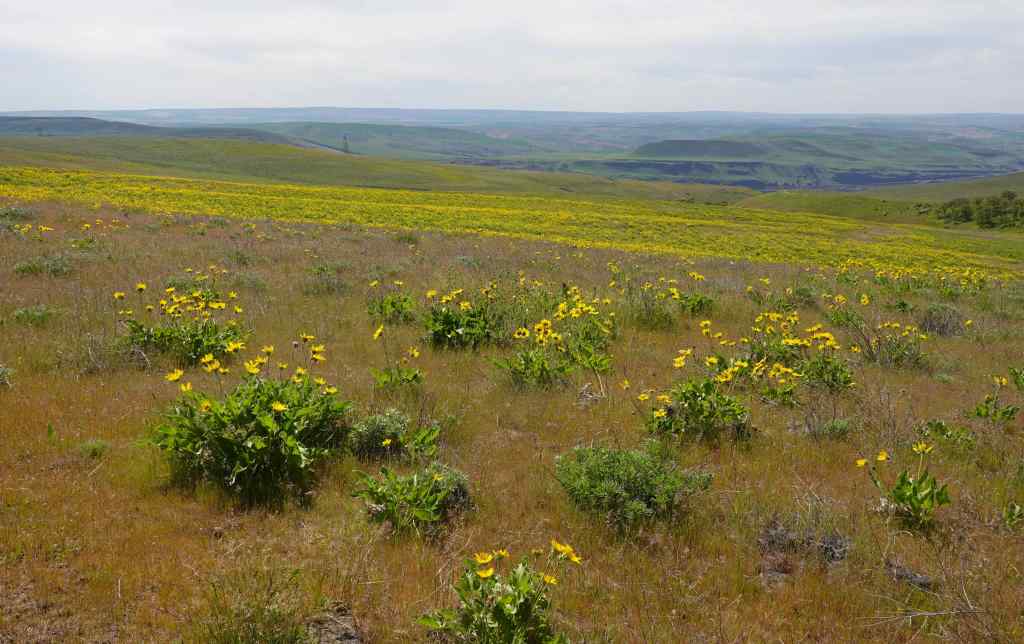
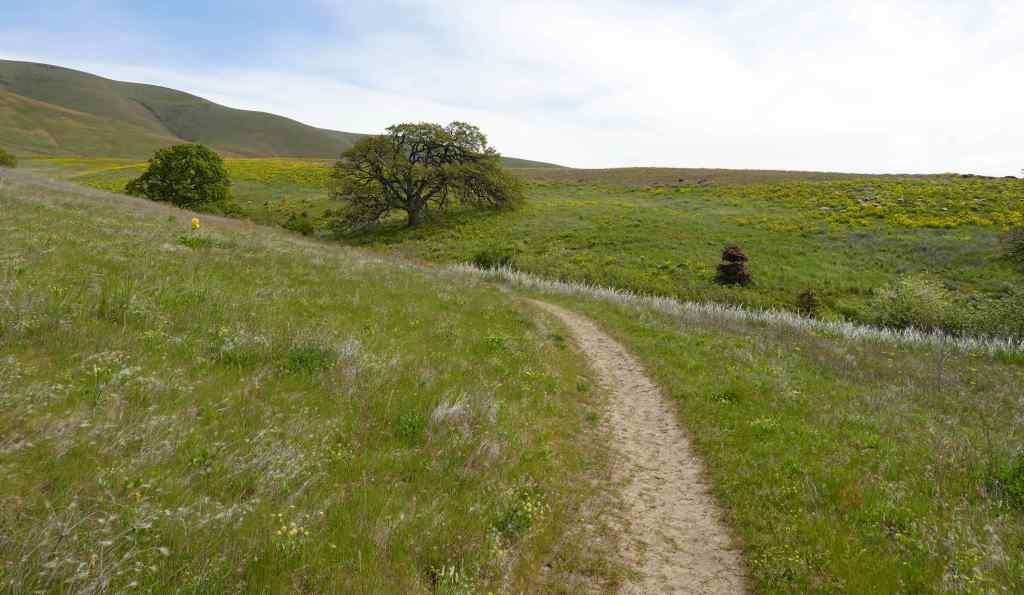
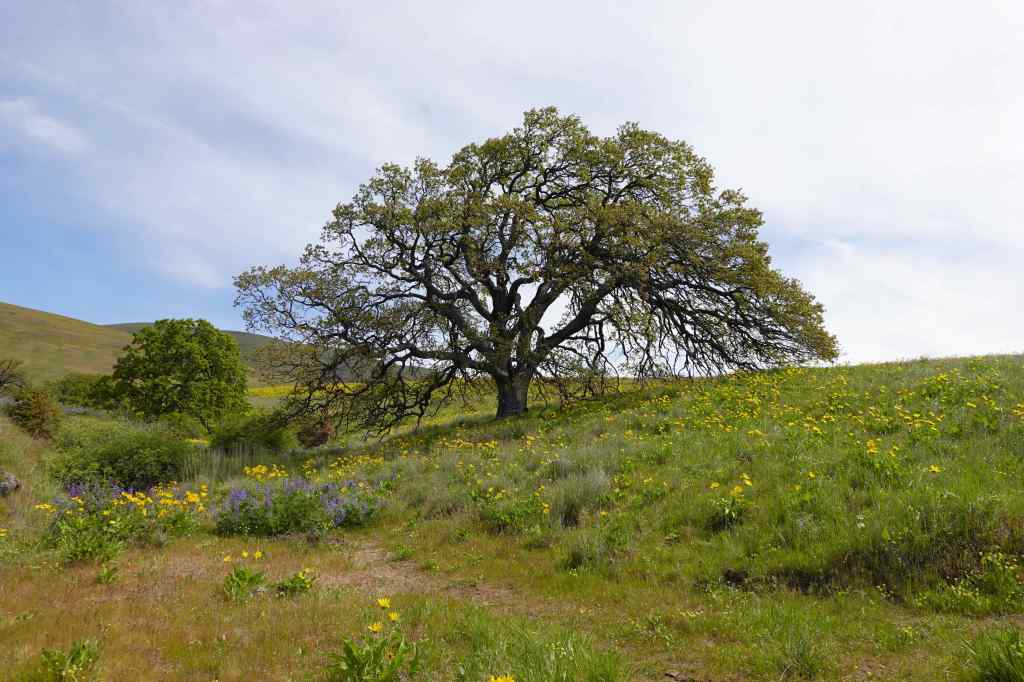
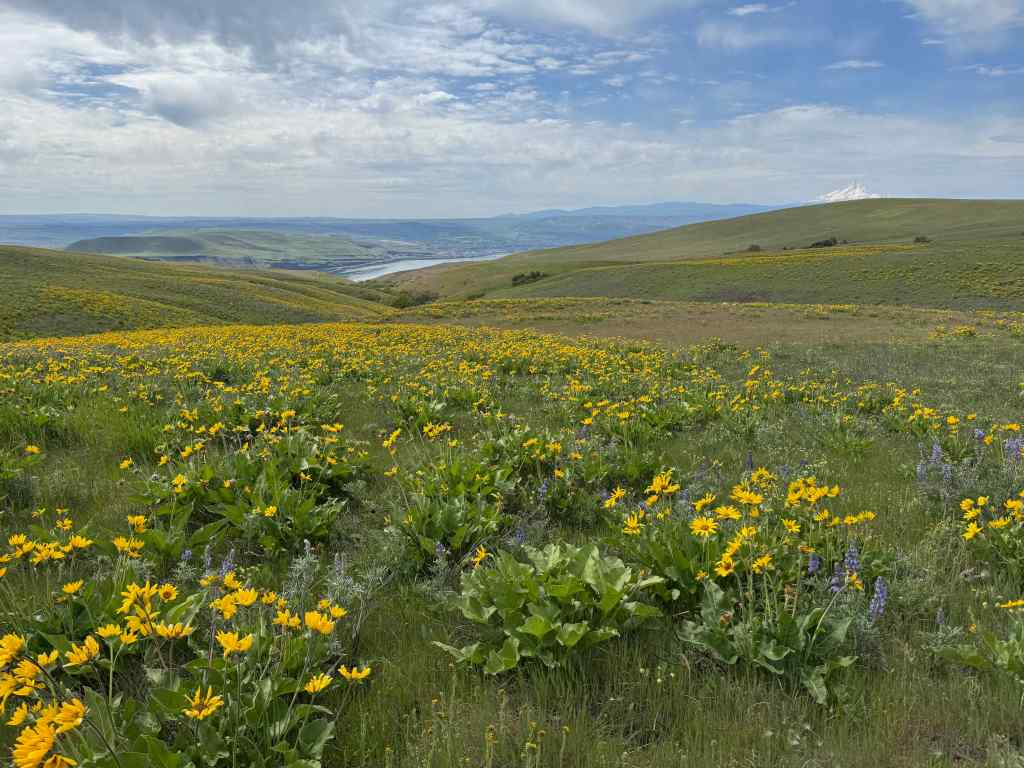
Approaching the the Columbia Hills, painted yellow with balsamroot.The classic view of Dalles Mountain Ranch and Mt Hood, with balsamroot.Trail viewBalsamroot all the way down to the river…We stopped for lunch at our favorite oak tree.Oak tree
There were other flowers among the yellow…
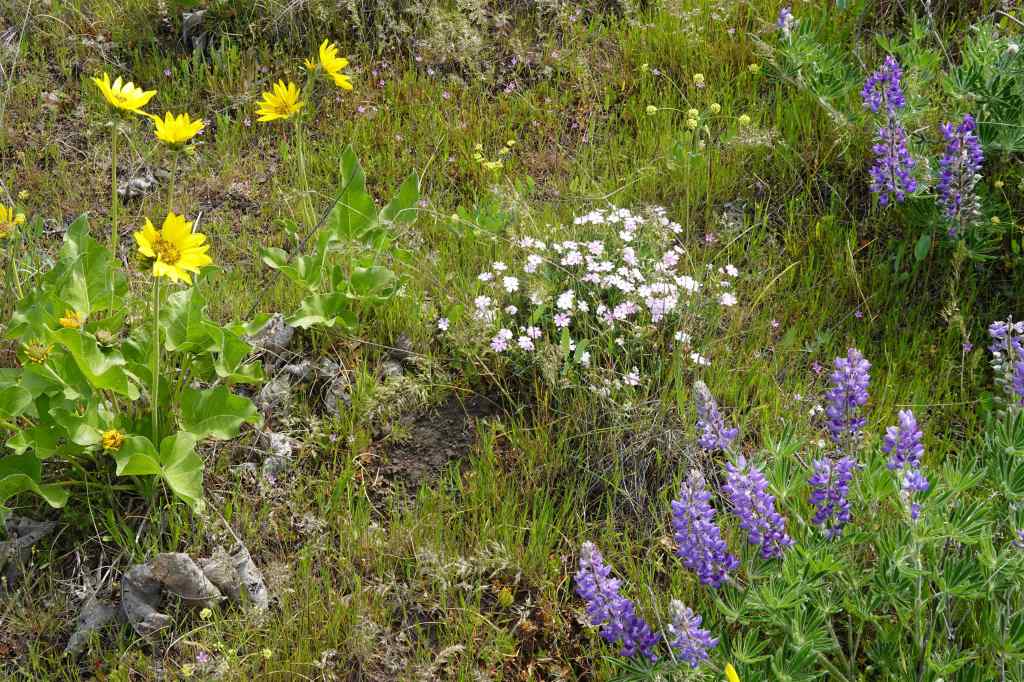
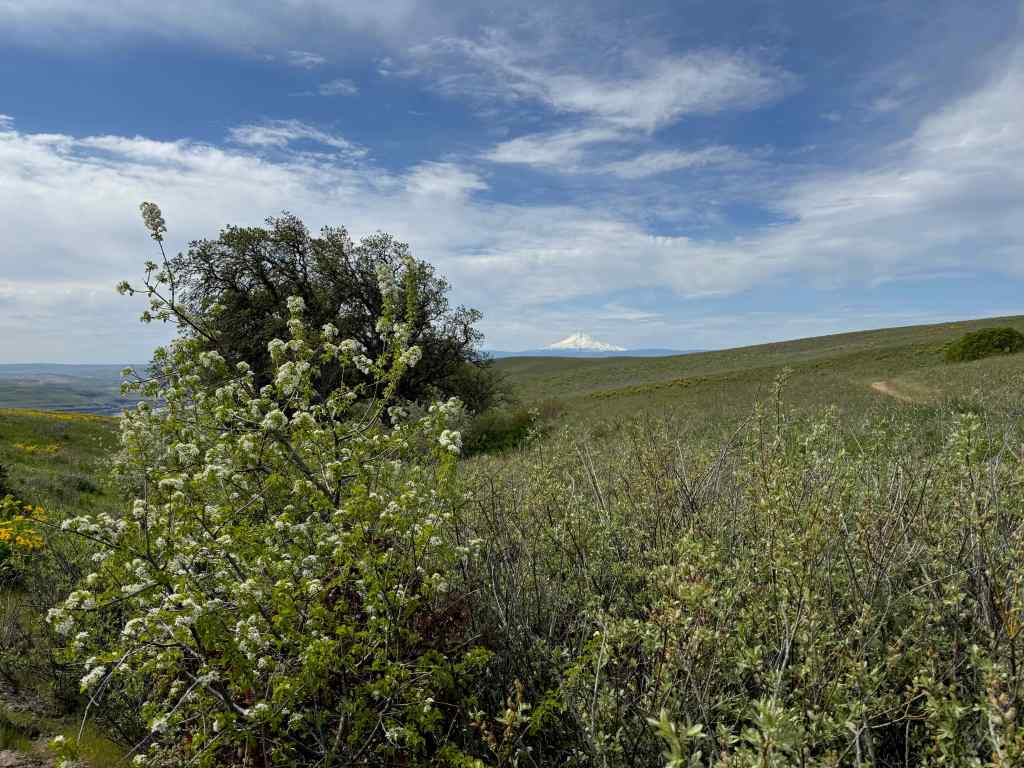
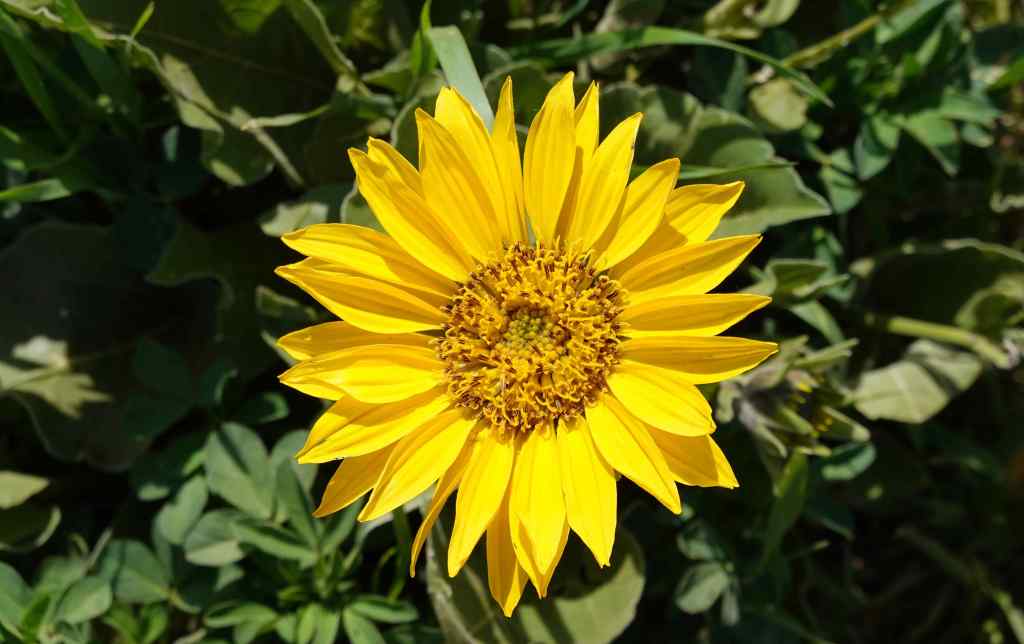
Phlox, lupine, and desert parsleyMilk vetchBitter cherry, with Mt HoodBalsamroot closeup
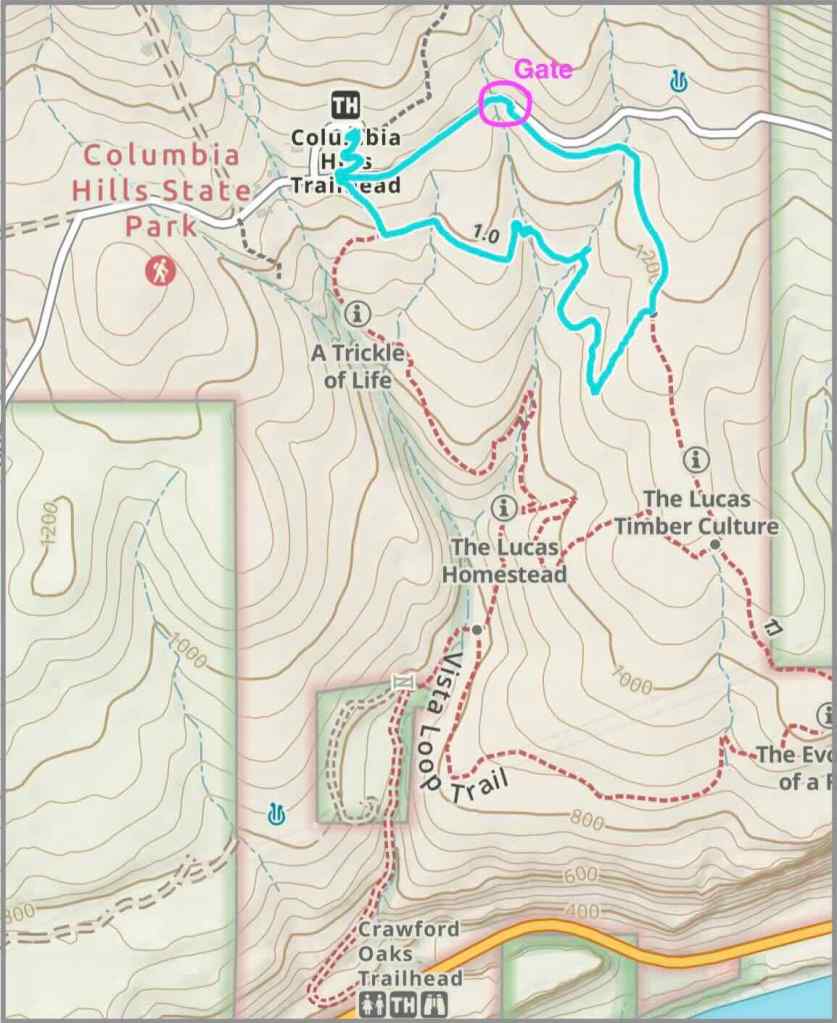
After lunch, I made my way back up the hill along the old road, assuming from my map that it would connect to the Dalles Mountain Road…
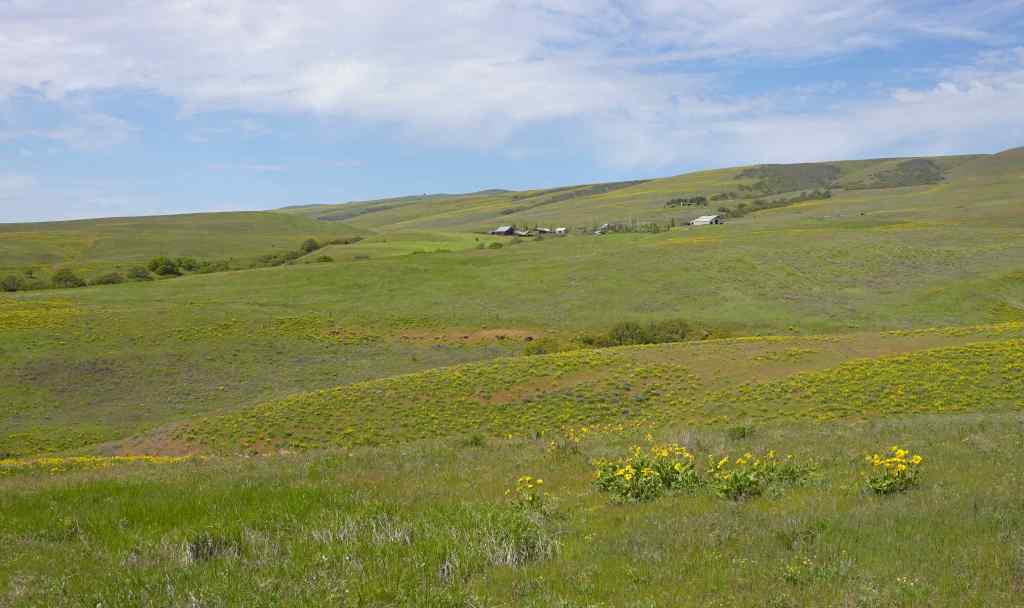
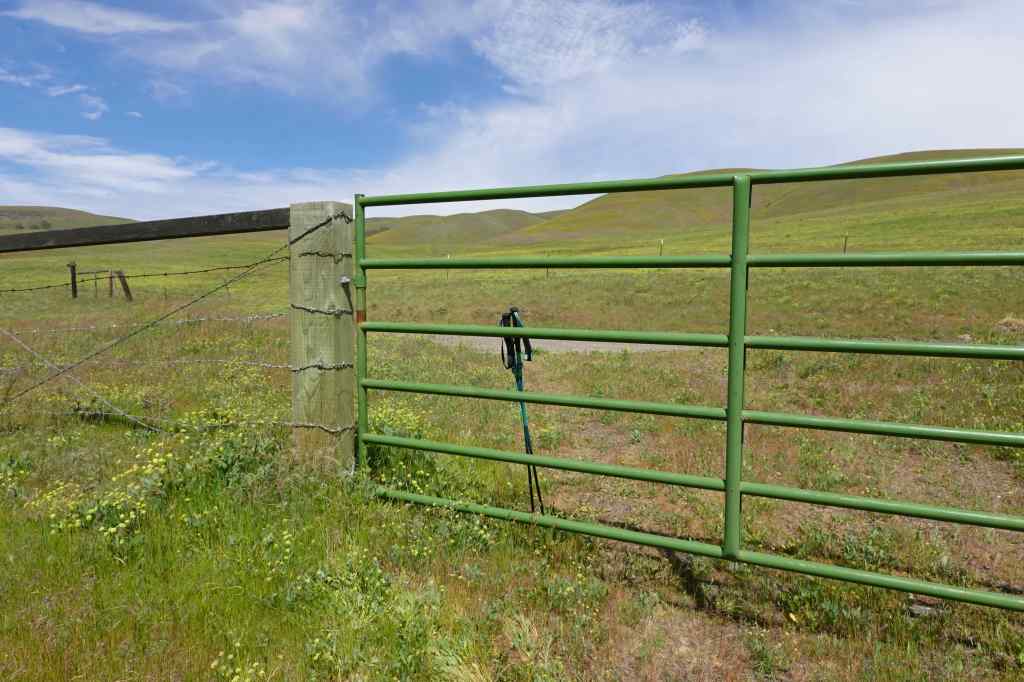
Wide view down to the Columbia River, with Mt Hood.And over to the ranch, from the east.My route in blue. It rejoins the road at the gate.The unexpected gate was actually pretty easy to climb, and I was back at the trailhead after a short roadwalk.
4/20 – Part 2 – Bitterroot at Catherine Creek, WA
We stopped on the way home for a short hike up to the Fairy Ponds at Catherine Creek – I thought the bitterroot might be blooming, and I did not want to miss them!
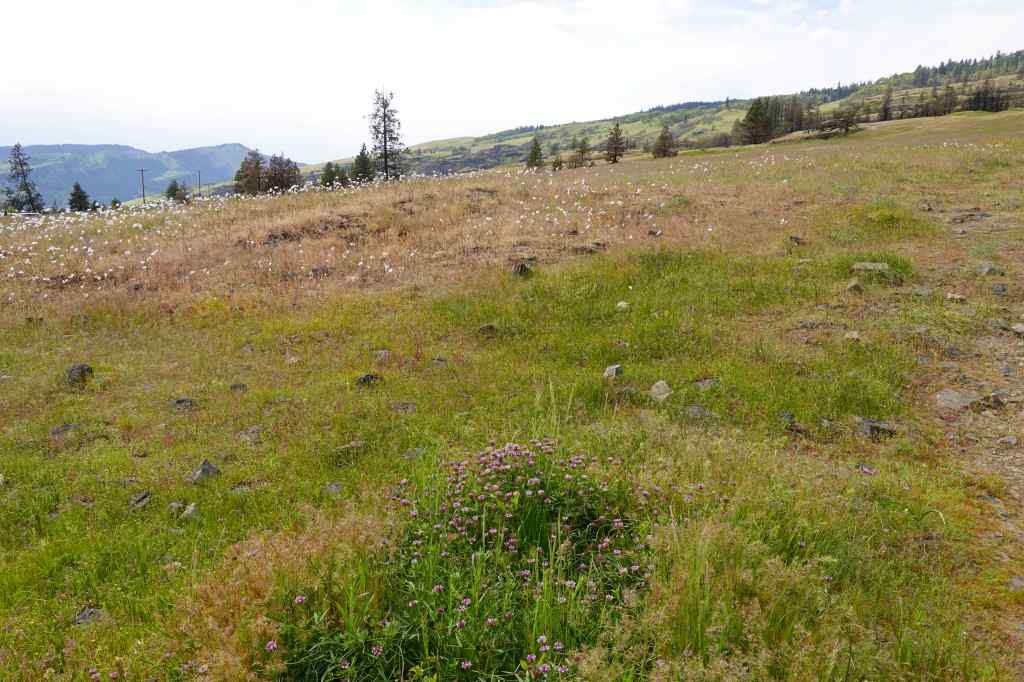
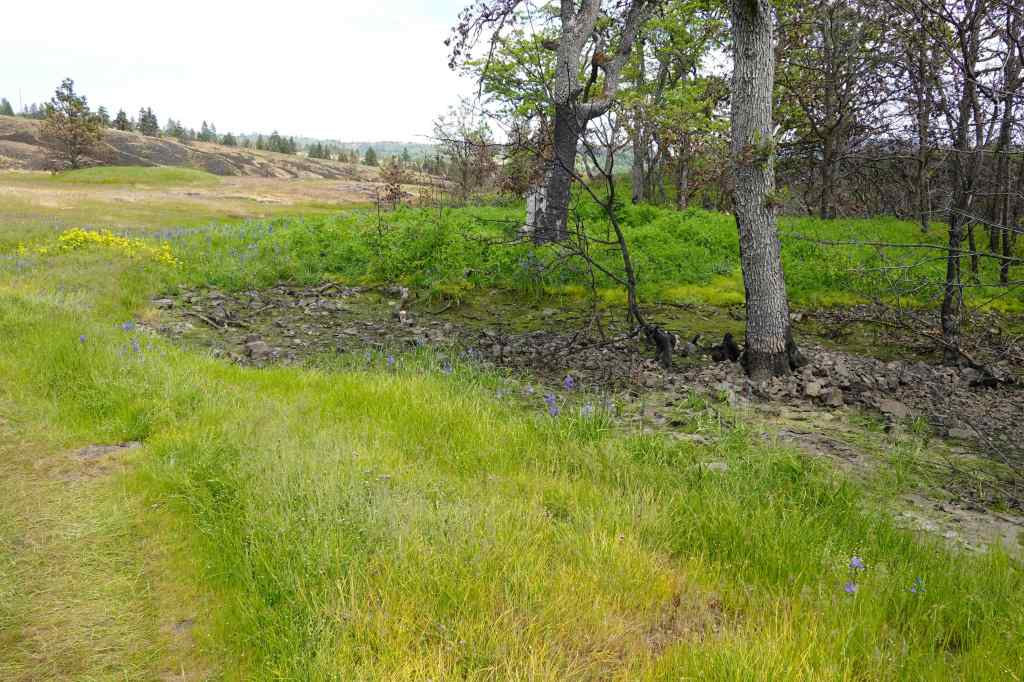
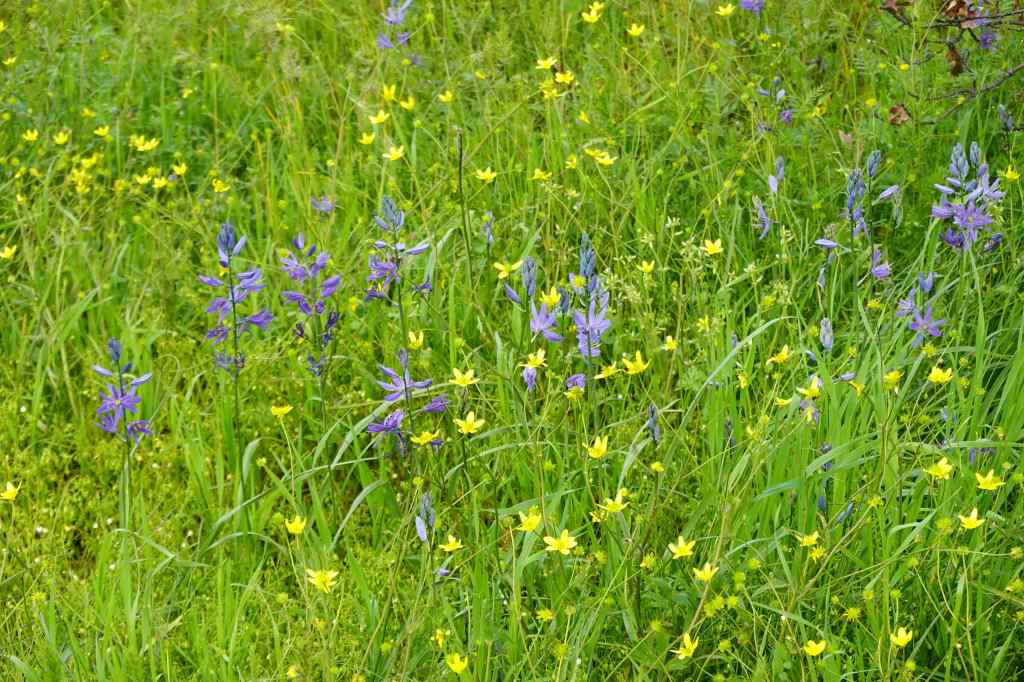
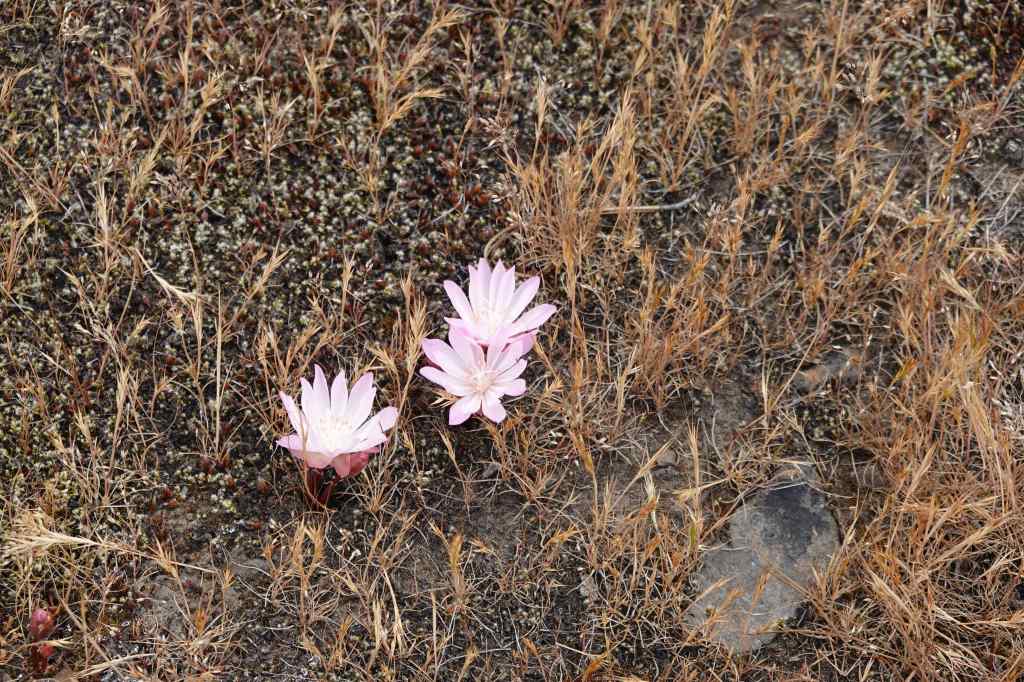
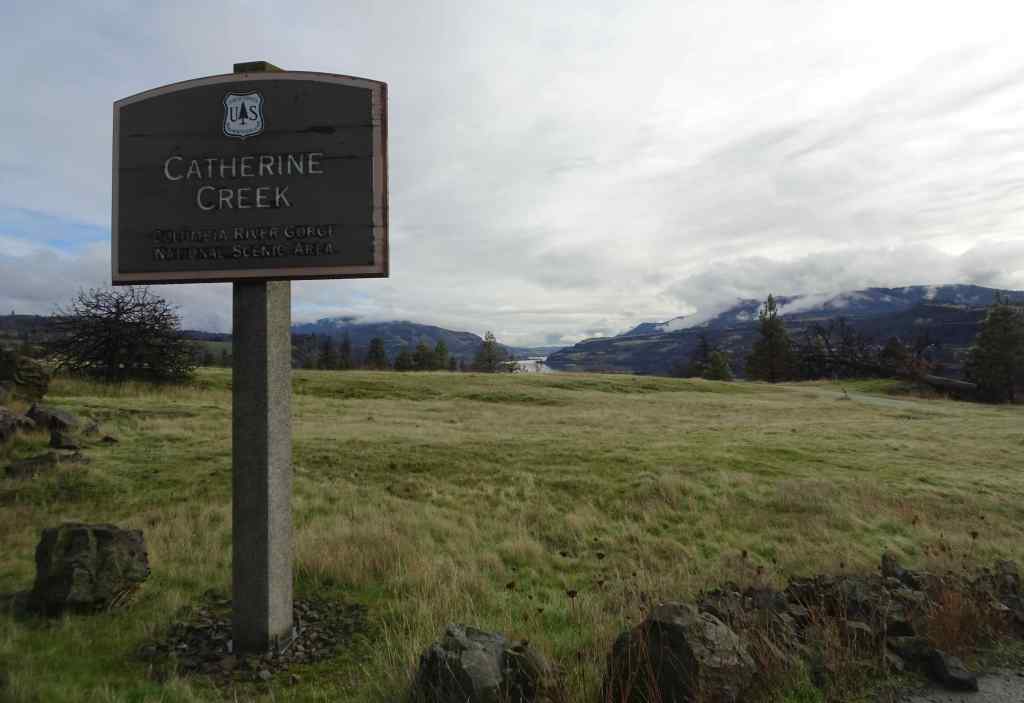
From the trailhead, the wide open meadows are turning brown, with late season flowers – purple tomcat clover and white cluster lilies.The fairy pools under the oak trees are dried up, with monkey flowers and camas blooming in the shade.Buttercups and camasWe found bitterroot blooming on the nearby rocky outcrops.Bitterroot, Catherine Creek Arch in the distance.A large clump of bitterroot.Heading down – eastward view. Westward view, with Mt Hood.
4/28 – Weldon Wagon Road, WA
This is another place we go to see huge swaths of balsamroot in bloom, and once again, it was a beautiful hike, with a side view of Mt Adams from the lunch stop. It is steadily uphill, but never too steep, as it was originally a wagon road. (4 miles, 1100 feet)
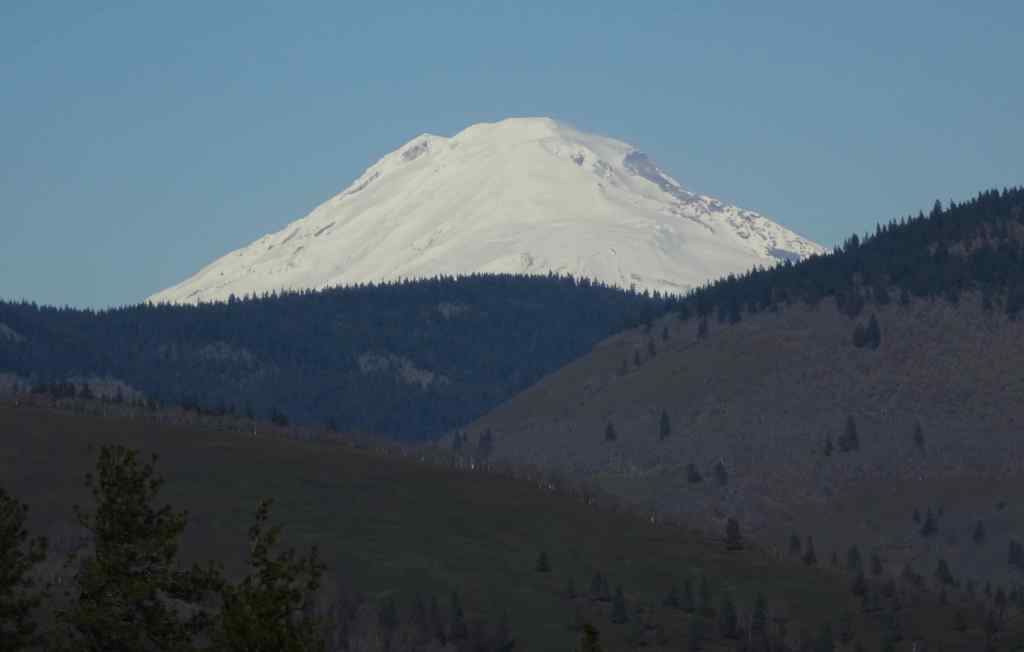
The lower slopes are shady oak woodland, with meadows full of buttercups, vetch and other tiny flowers – very colorful!Bicolored lupines and barestem biscuitrootA few clumps of lupine in the shade, and lots of poison oak everywhere off trail.Eventually, the view opens up to the balsamroot slopes…Before continuing, we popped over the ridge on a side trail to our lunch stop – with views to Mt Adams.Mt Adams
After lunch we continued upward along the main trail…
Upward on Weldon Wagon Road – clouds covering Mt Hood.Looking down the slope.In the upper woods, tall western groundsel,Large-head clover, and Pacific waterleafEventually Mt Hood started to emerge from the clouds.Hiking back down, noticing the fern leaf desert parsley among the yellow blooms.Fernleaf desert parsleyAnd back down through the painterly lower meadows and oak trees. Another good visit to this trail.
Four hikes in the eastern Columbia River Gorge, with wildflowers and fire recovery notes; and two urban walks.
3/3 – Crawford Oaks, WA
On a calm day, we walked the Vista Loop from Crawford Oaks (5 miles, 750 feet). We saw the earliest spring flowers, and the Columbia River reflecting the landscape like a mirror.
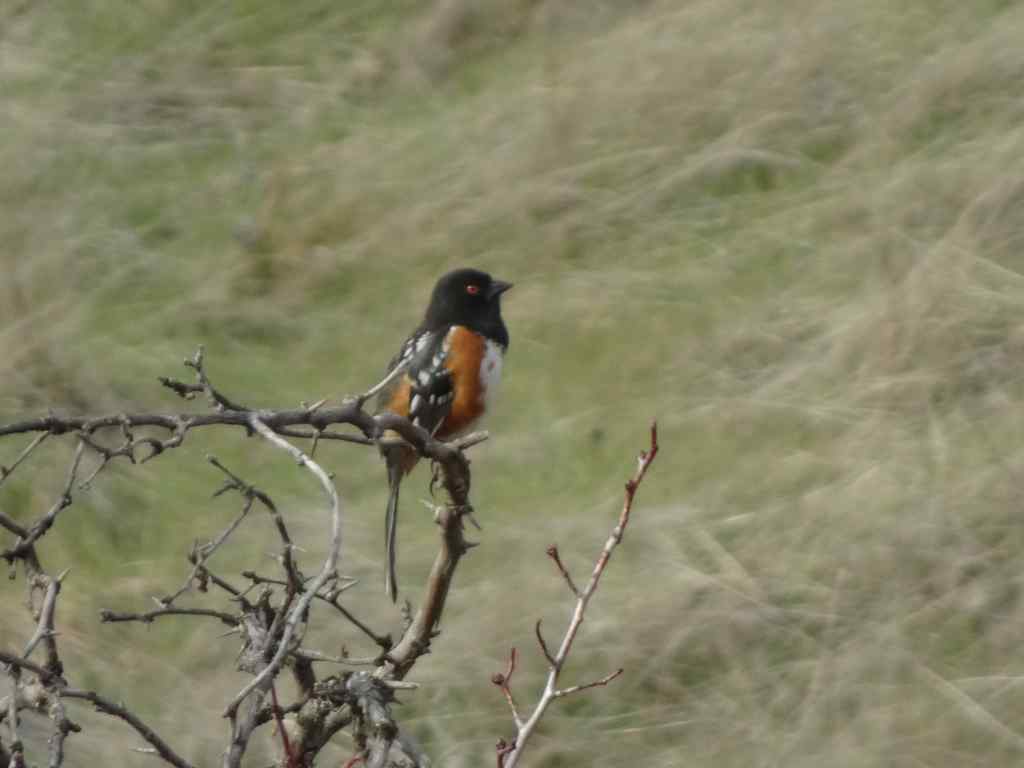
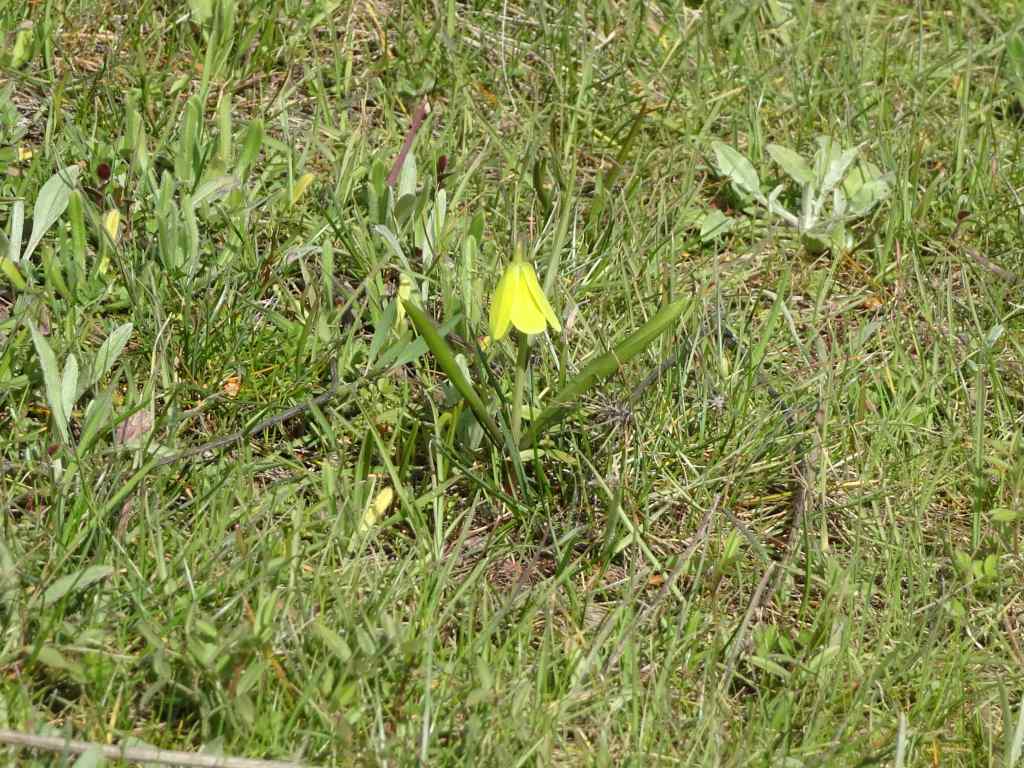
Eight Mile FallsGold Stars blooming along the trail.Grass widows and salt and pepper parsley blooming at our lunch stop, looking toward The Dalles.Dalles Mountain Ranch. We saw a few yellow bells blooming in the dry grass.Emerging balsam root bloomsEastward view up the Columbia River toward Celilo.Spotted towhee
3/17 – The Labyrinth, WA
I finally made it all the way up to the guide Ponderosa pine, for the first time since the Burdoin Fire last summer. There was evidence of fire damage along the way, and extremely lush meadows full of flowers. (4 miles, 900 feet)
Starting up, green meadows with blooming popcorn flowers and filaree.Swales of white cress flowersGold stars and grass widows near Hidden Falls.Lots of water in the creek, with buttercups.Grass widows, and the orchards of Mosier across the Columbia River.Fire damage in my favorite oak grove.More fields of glowing grass widows as we approach the lunch ledge,And a view of Mt Hood with lenticular cloud.Columbia desert parsleyThe ridgeline oak treeContinuing upward toward the ‘guide’ ponderosa at the turnaround/viewpoint,On closer view, I can see the burn damage, but there is still a lot of green. I’m hoping it will survive.View eastward from near the ponderosa.Saying goodbye to the trail guardian oak on the way down – also still here, and undamaged.
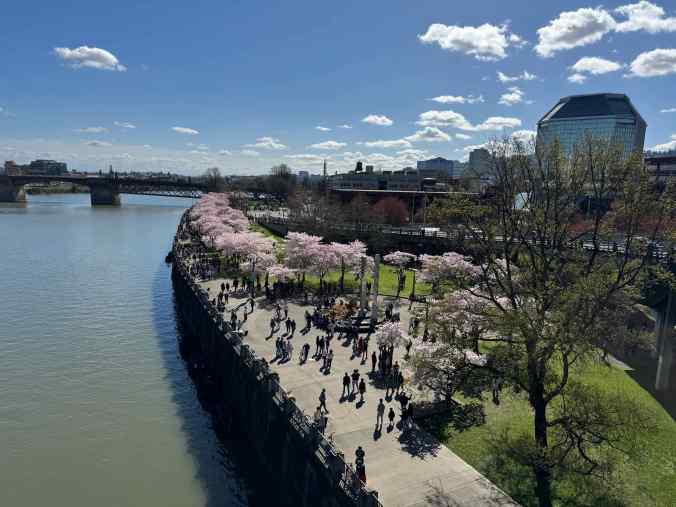
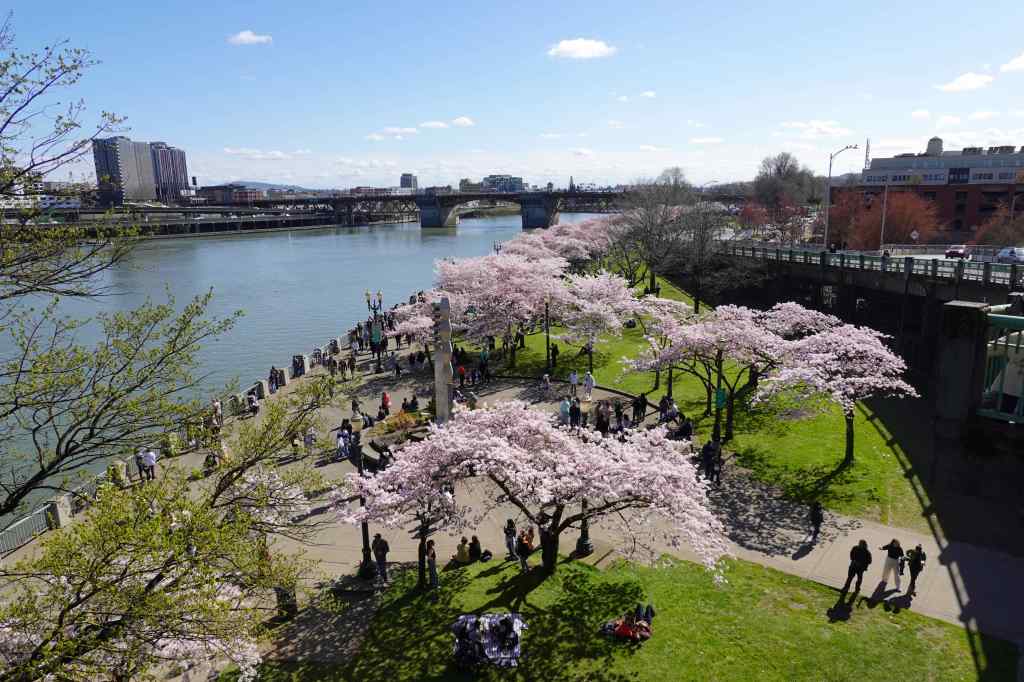
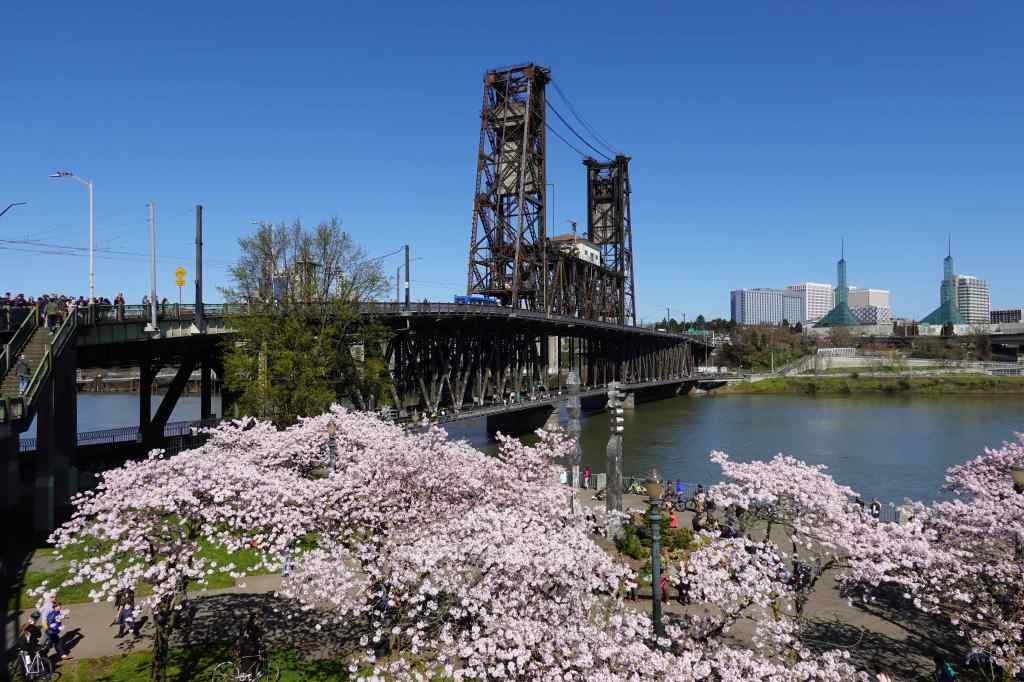
3/21 – Portland Waterfront Cherry Blossoms
We took quick walk, along with thousands of others, to see the blooming cherry trees along the Portland waterfront, on a sunny day. Given all the usual protest vibes we live with, this day was a refreshing break. We were all enjoying the sunshine and the blossoms!
Looking down on the Willamette River waterfront from the Steel Bridge.Cherry trees and the Burnside BridgeLooking back to the Steel BridgeCherry blossoms, Convention Center tower beyondCherry blossoms
3/25 – Mosier Plateau, OR
We hiked with friends on this windy day, out to the Mosier Plateau, where we could see the first balsam root flowers blooming, and great views across the Columbia River. (3.2 miles, 650 feet)
Walking uphill along Mosier Creek, past Mosier Falls.A few switchbacks and stairs, still protected from the wind; with Columbia desert parsley.Now walking north toward the exposed plateau, balsamroot blooming along the trail.Windy view across the Columbia River, with balsam rootFreshly blooming balsamrootWestward view, down the Columbia RiverNorthward view, directly toward Coyote Wall; Labyrinth to the right. All burned by last summer’s Burdoin Fire, and now all green.Upriver view, toward the Catherine Creek area.
3/30 – Catherine Creek, WA
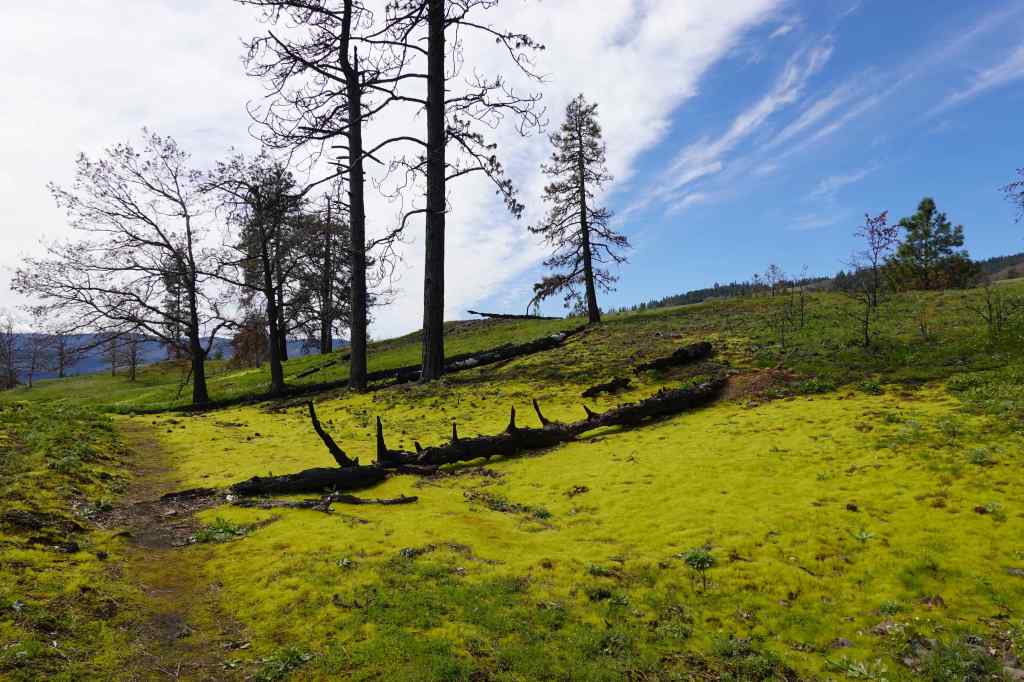
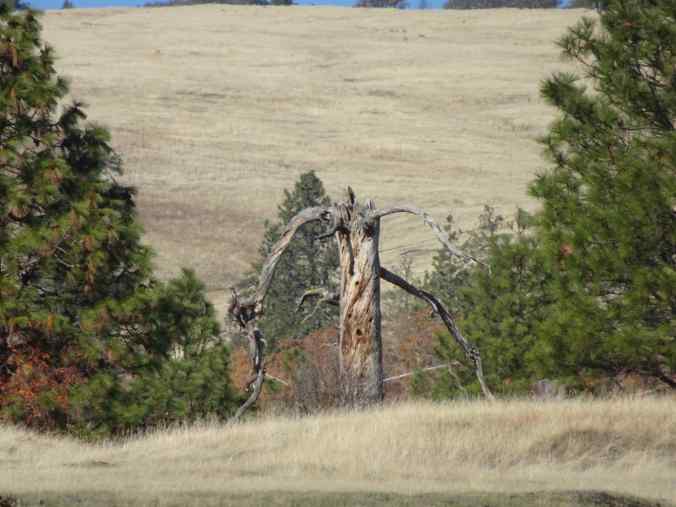
Our first time doing this eastern loop since the Burdoin Fire. The meadows were full of blooming flowers. There were many remnants of burned trees, and I learned about bonfire moss, a neon green variety that marks the fire areas. I didn’t see my ‘ent’, a snag that I greet every time we hike here. It seems to have vanished in the fire…though if it were a true ent, it would have moved away from the fire. (3 miles, 500 feet)
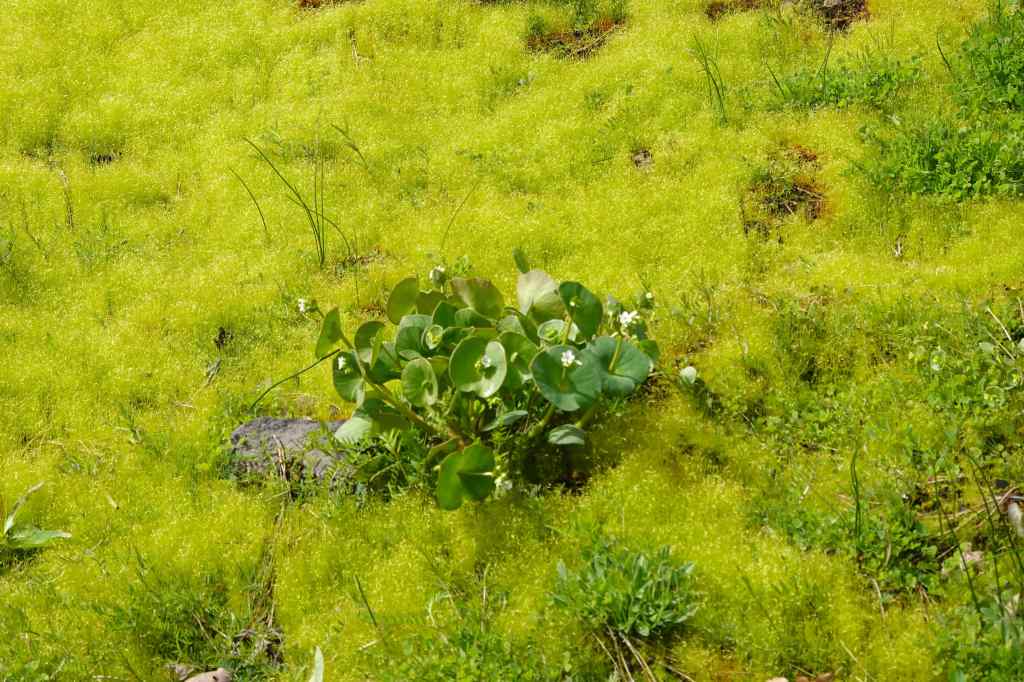
Meadow full of death camas at the trailhead.Gold stars near the bridge.Rosy plectritis in abundance.Camas, shooting stars and saxifrage.View back to Mt Hood across the Columbia River.Walking uphill along the eastern trail. I don’t see my ent, but it should be somewhere in this view…I did see many remnants of burned trees – blackened logs, surrounded by bonfire moss.Miners lettuce and bonfire moss.We passed many burned logs, each with their bonfire moss halo.View from the cliff edge across Catherine Creek, as we return down the trail. The yellow patches are monkey flowers.RIP to my old ent… perhaps he is wandering out there somewhere. Photo from 2024.
3/31 – Fort Vancouver Land Bridge, WA
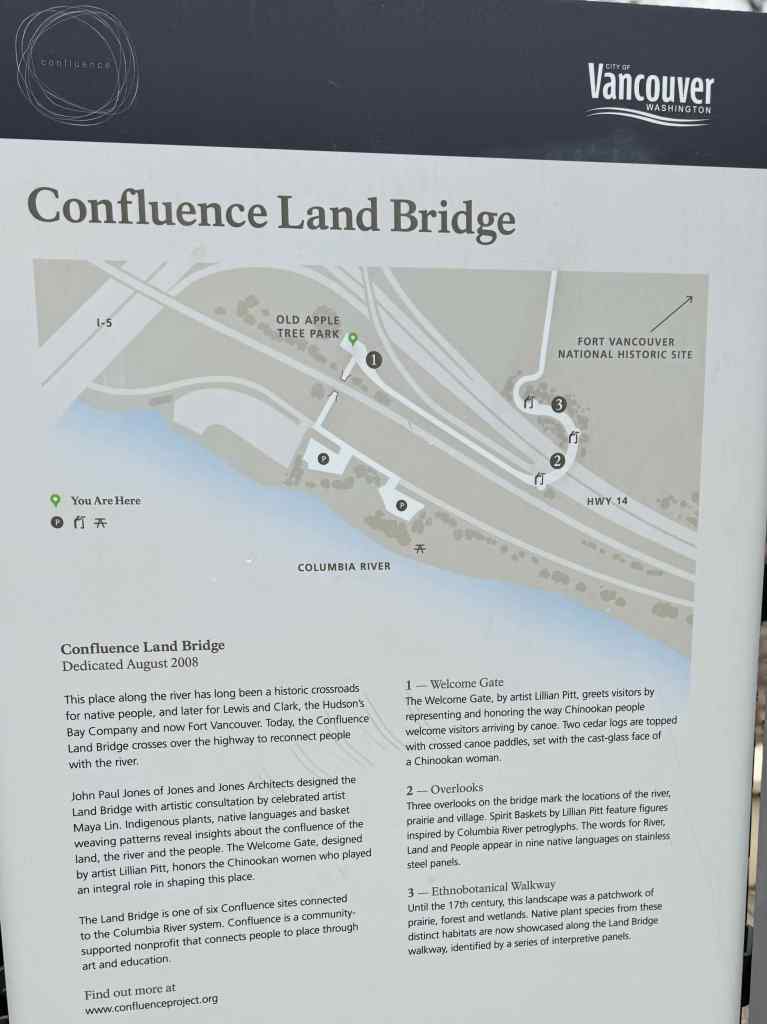
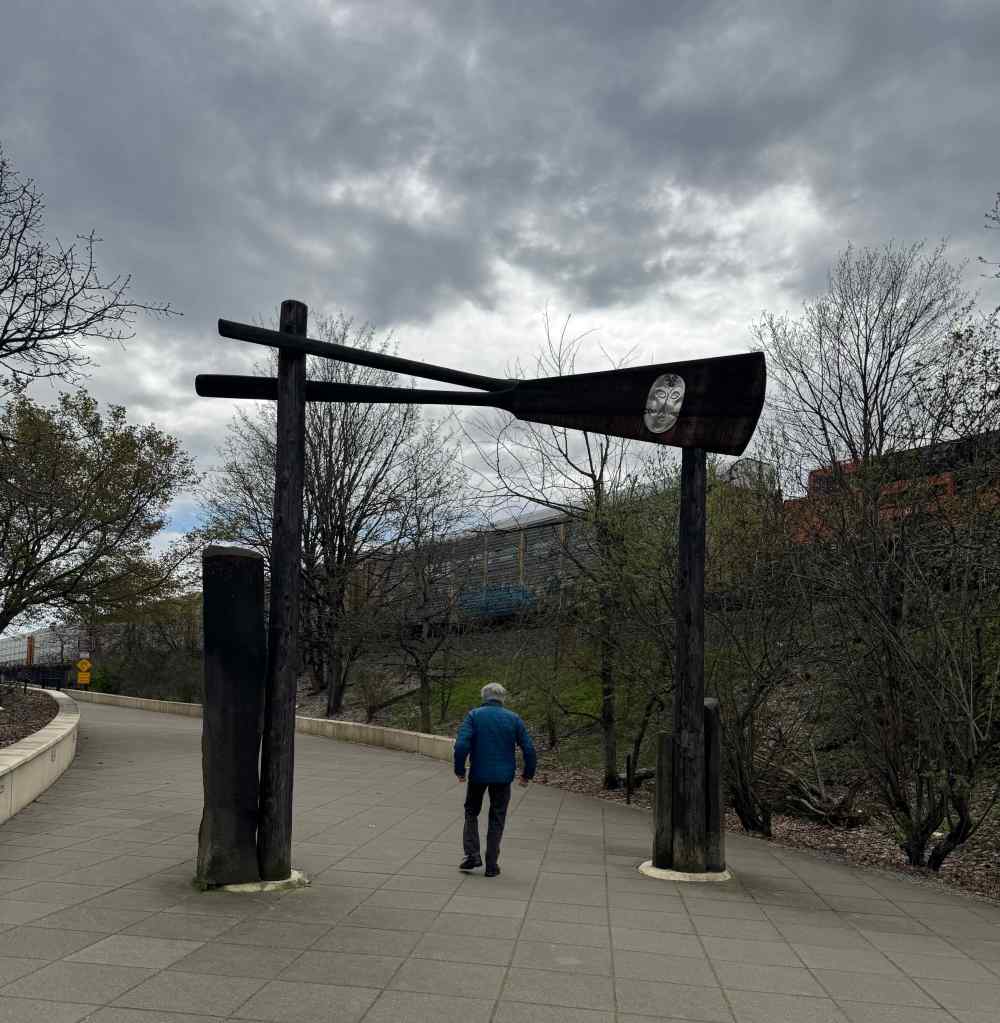
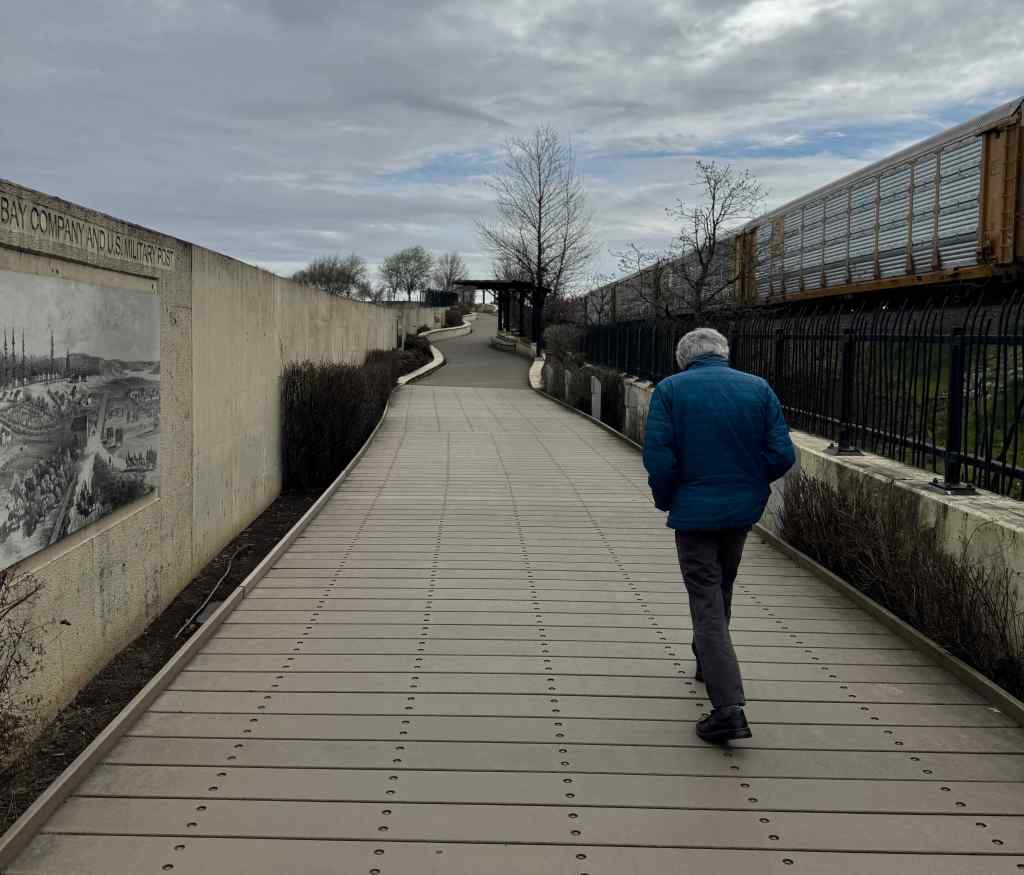
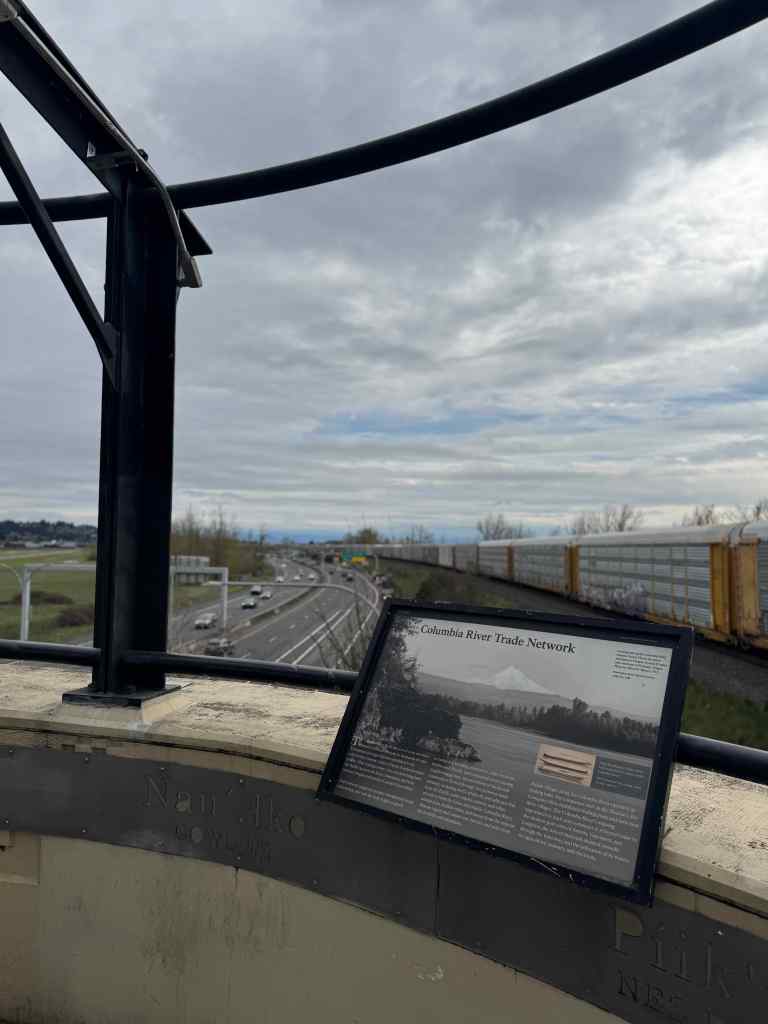
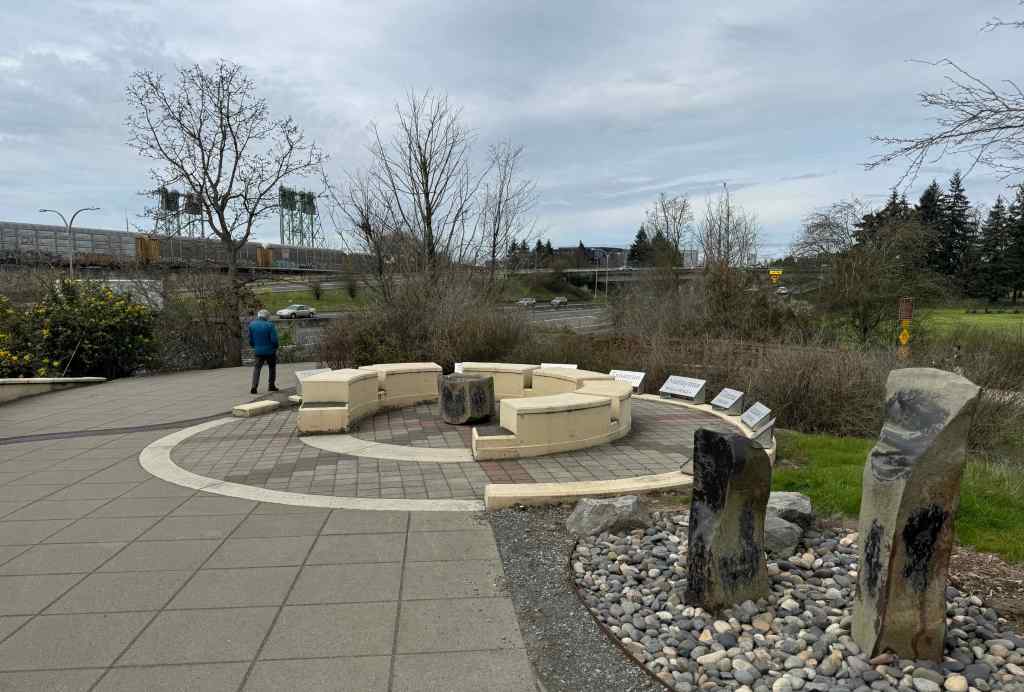
We took a brisk two mile walk over the Confluence Land Bridge near downtown Vancouver, Washington. The bridge and trail trail connect historic Fort Vancouver to the Columbia Riverfront, over the freeway. Art and signage explain historical and natural history. Although it was very noisy near the freeway, and on this day, the view of the river was blocked by a parked train, the bridge does provides a creative and protected way to cross the freeway and the train tracks, and we saw many bikes and people making use of it.
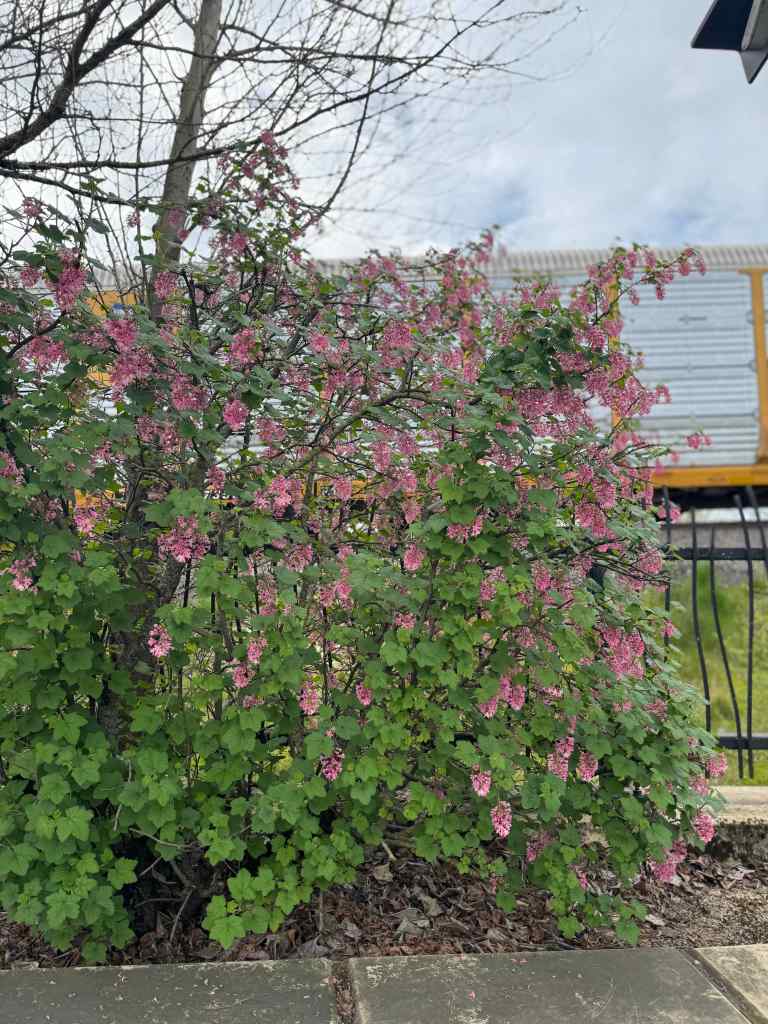
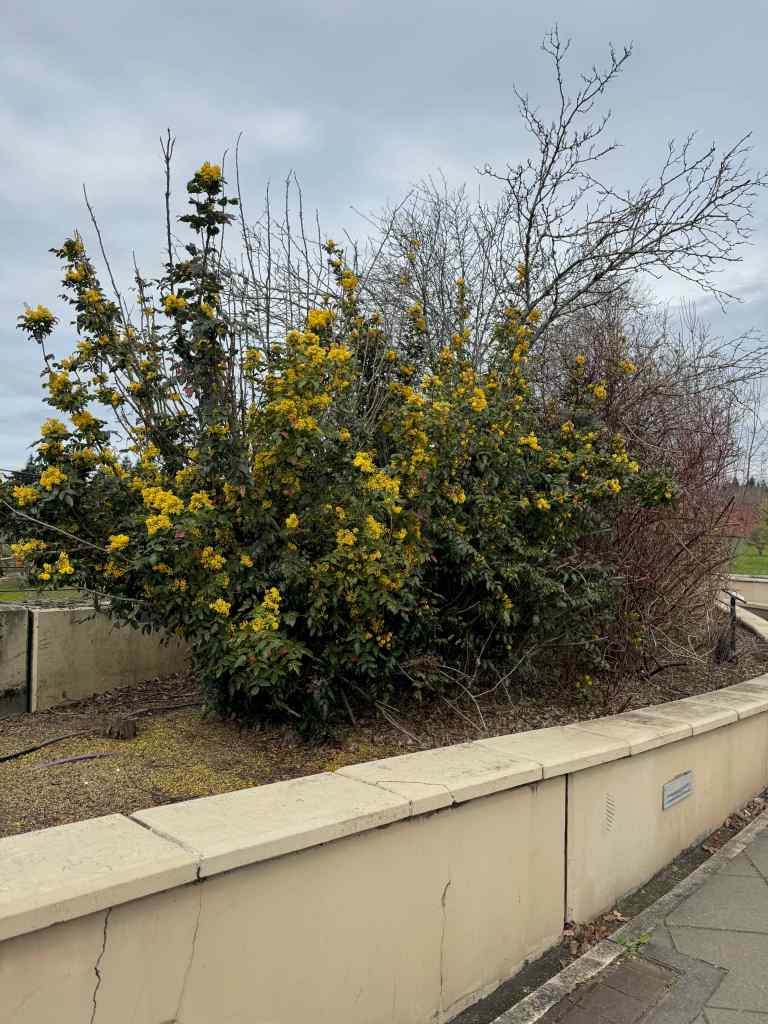
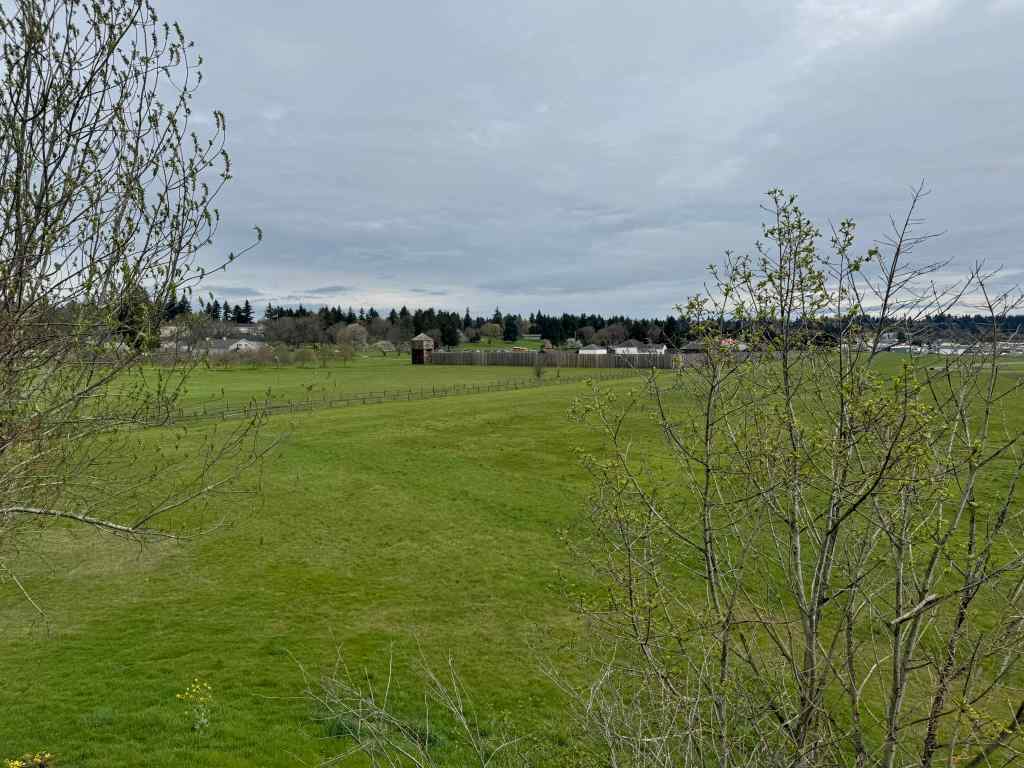
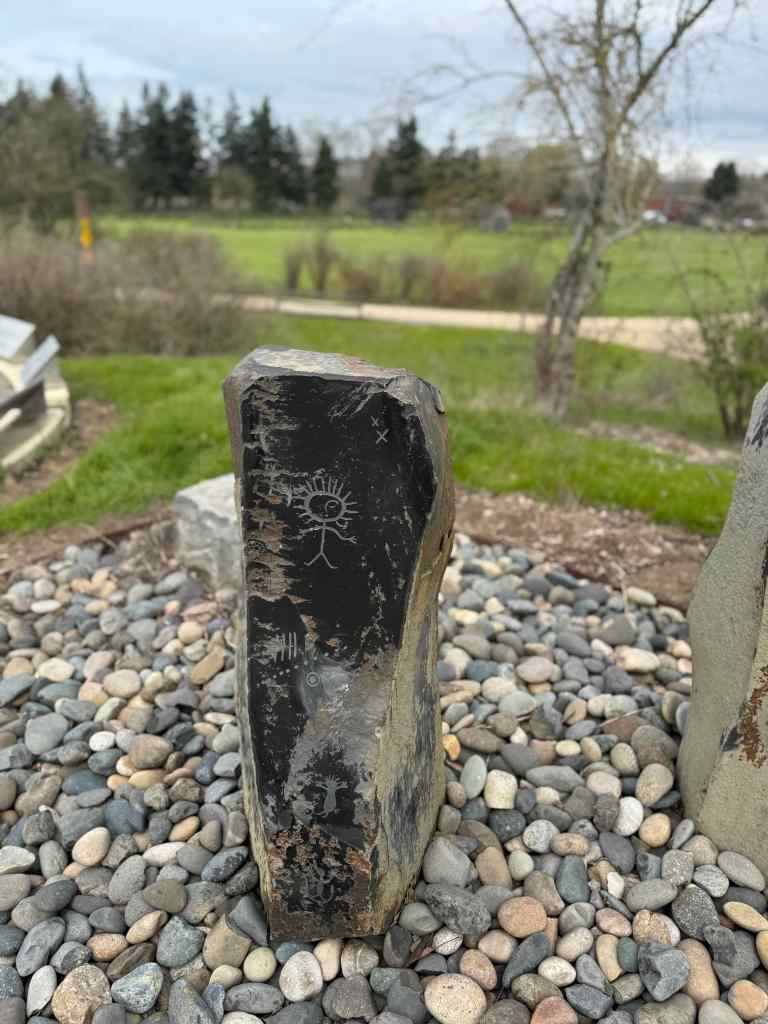
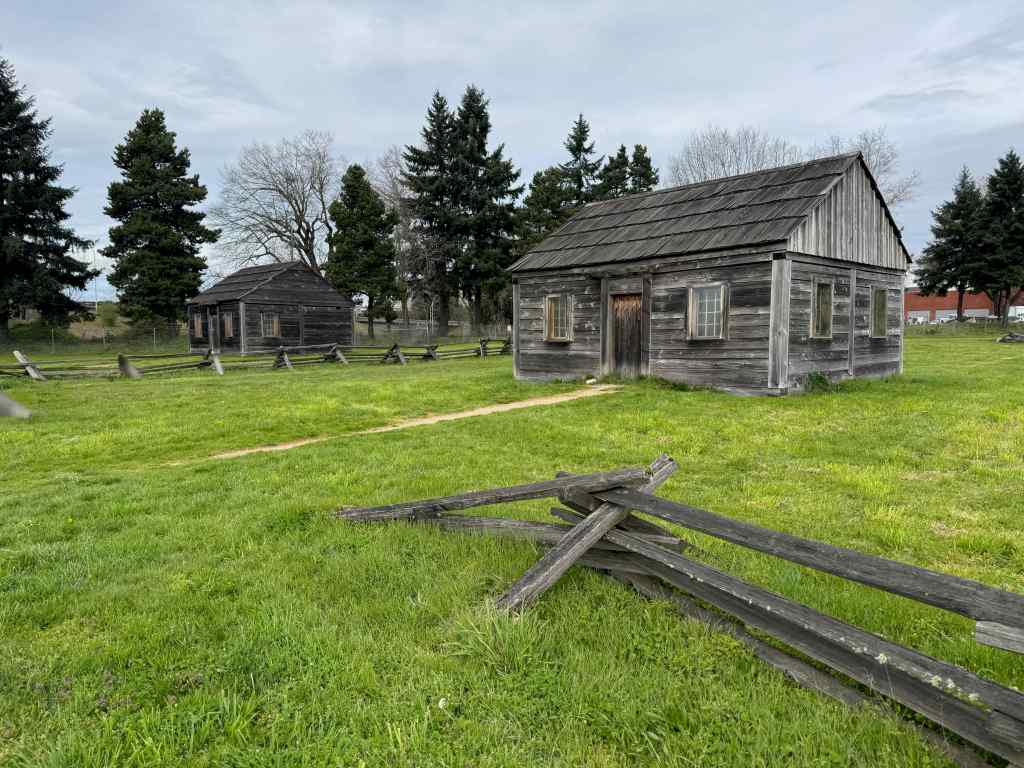
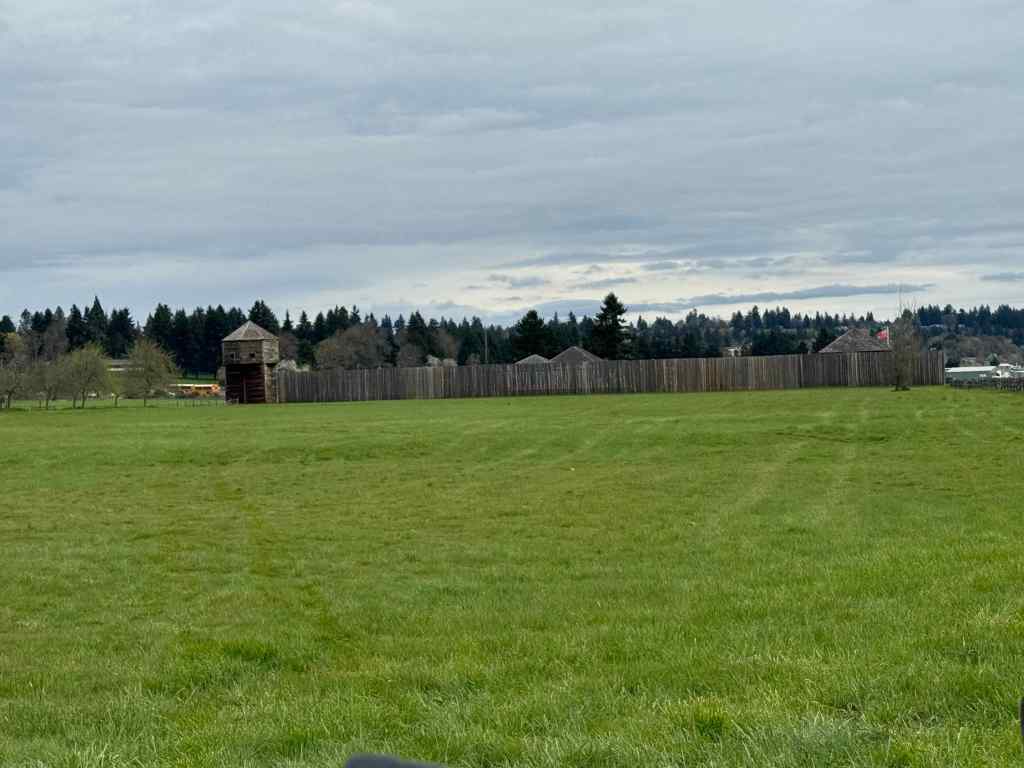
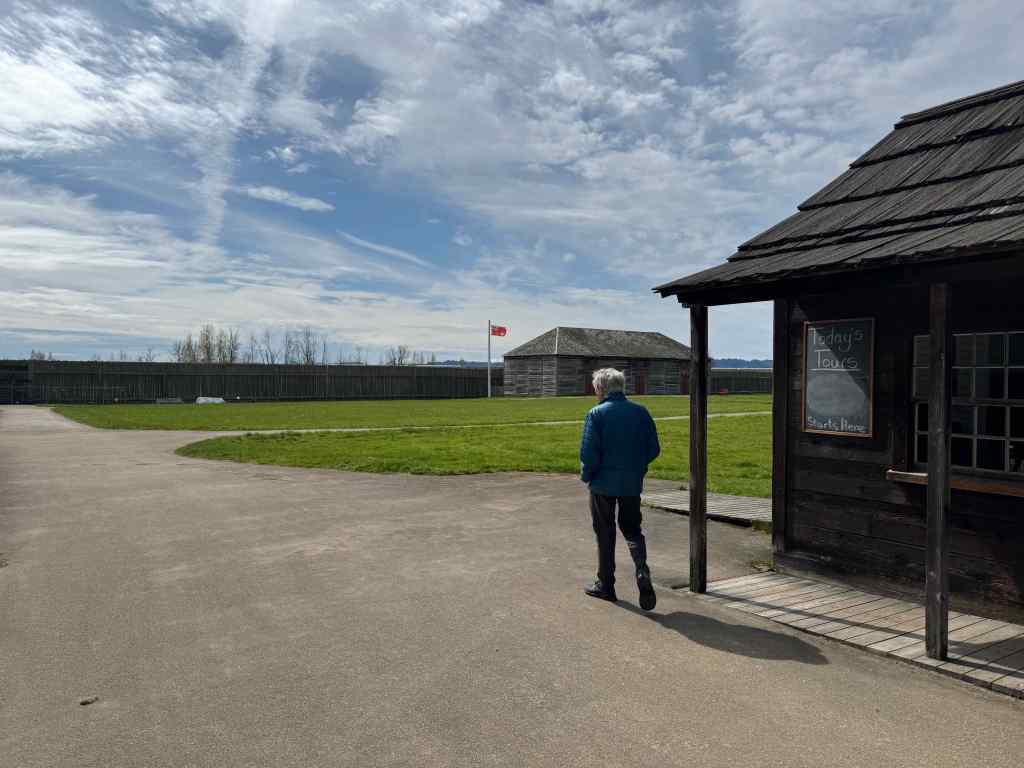
Sign explaining the Confluence Project and this Land Bridge.Entrance to the bridge.Historic placards and native plants along the way.Red currantOregon GrapeA lovely view of Hwy. 14 to the east, and that train blocking the river view.View of Fort Vancouver.Going down the north side – more artwork. Note the towers of the Interstate Bridge and the freeway interchange in the distance.Indigenous art.We walked near these reproduction cabins at the Fort Vancouver site,and then walked over to the Fort.It was quieter here. We had another appointment to get to, so didn’t have time to explore.We attended living history demonstrations here with our kids many years ago, but haven’t been for a long time. Despite being so close to freeways, the interstate bridge, train tracks and a lot of traffic, we appreciated having a green place to walk between appointments on this busy day.
I went on only three hikes in February. We had some down time while my husband recovered from a sudden illness. He is well now. The later walks were in easy, recovery mode.
2/5 – White River snow hike, Mt Hood, Oregon
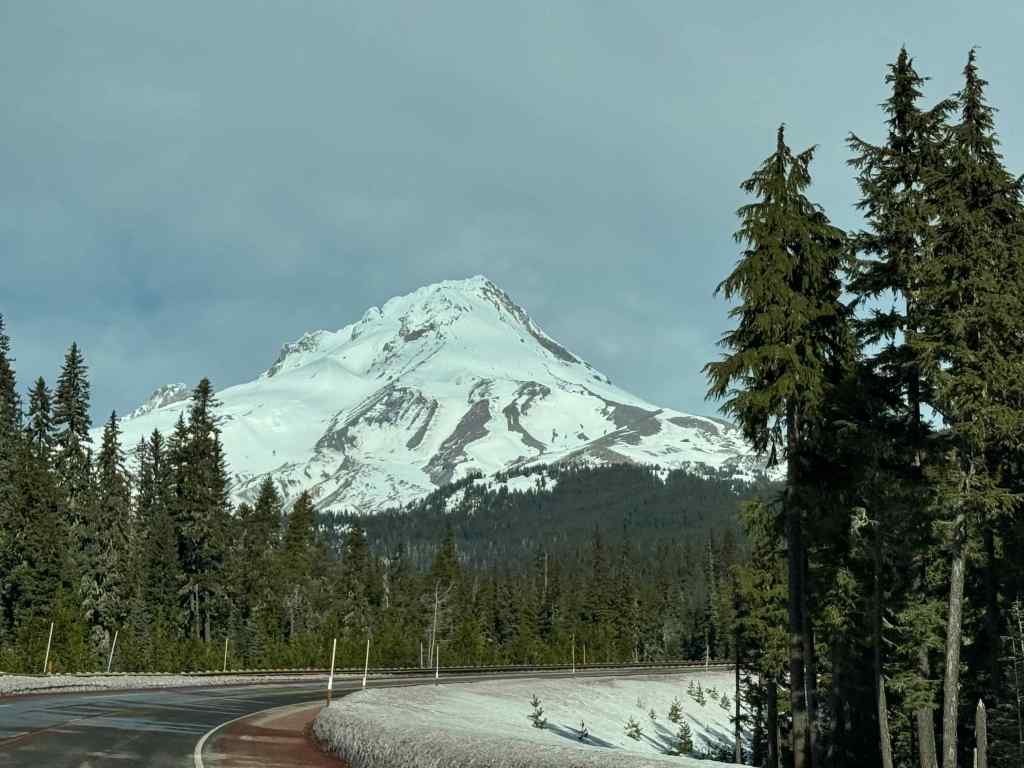
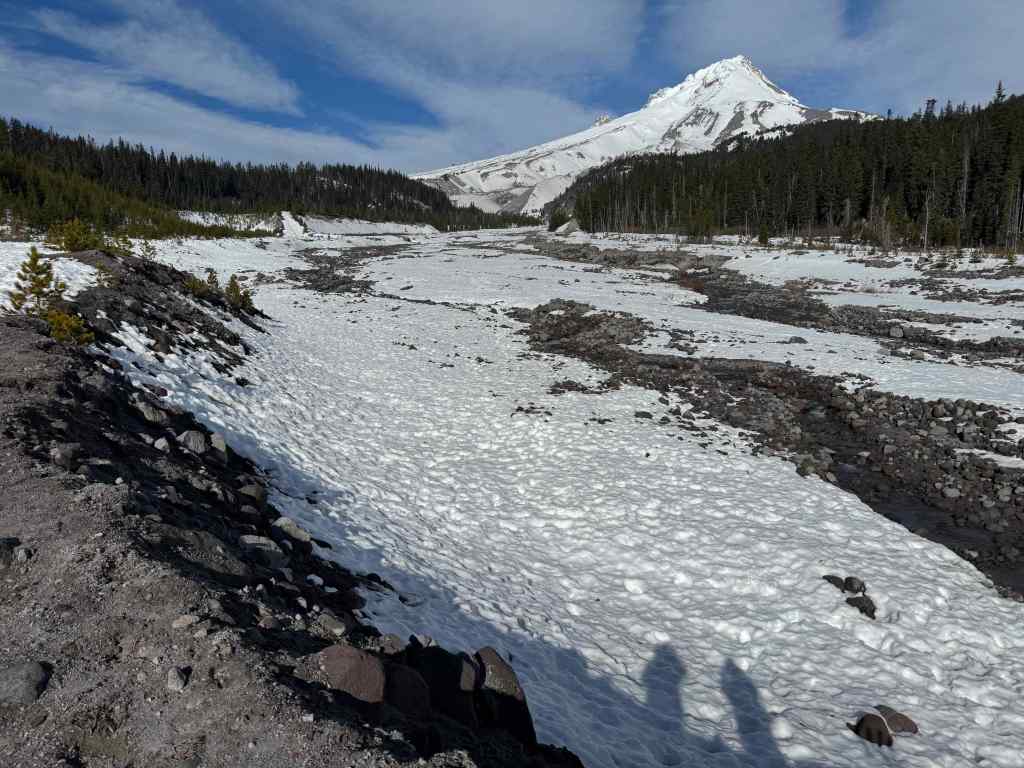
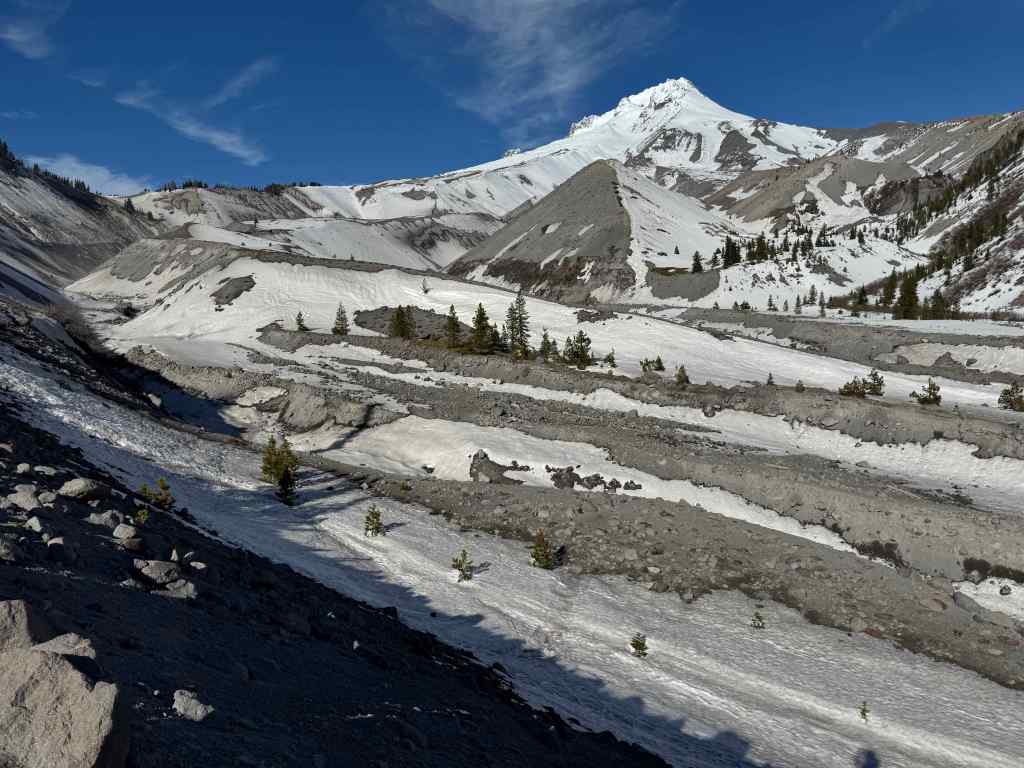
With snow levels still very low, we were able to hike this out-and-back trail, a long time favorite, with just micro spikes on our boots. There was a small amount of post-holing, but it was mostly fine.
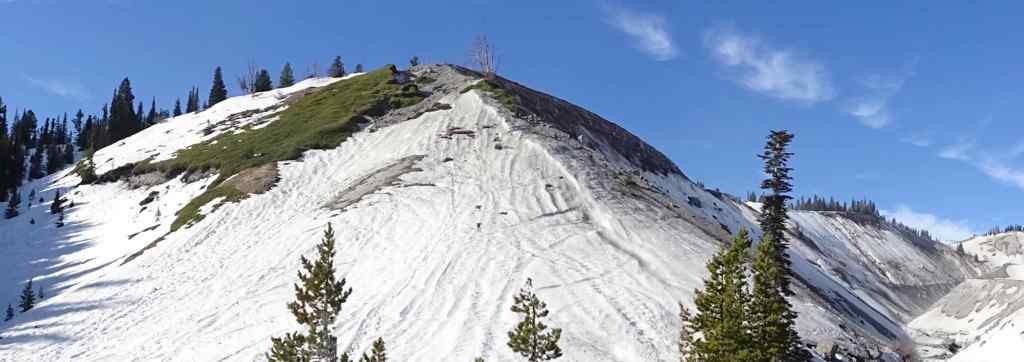
Mt Hood from the HighwayHiking uphill along the White River moraine – lots of exposed earth.Our usual lunch spot, about a mile and a half up river, near the Timberline Trail crossing.Boy Scout Ridge, which we sometimes avoid due to avalanche danger, has exposed plants on the surface today.Glamour shot of the top of Mt Hood.
Luckily we had more snow by the middle of the month. There is more snow at this location now than there was in the beginning of February.
2/15 – Leach Botanical Garden, Portland
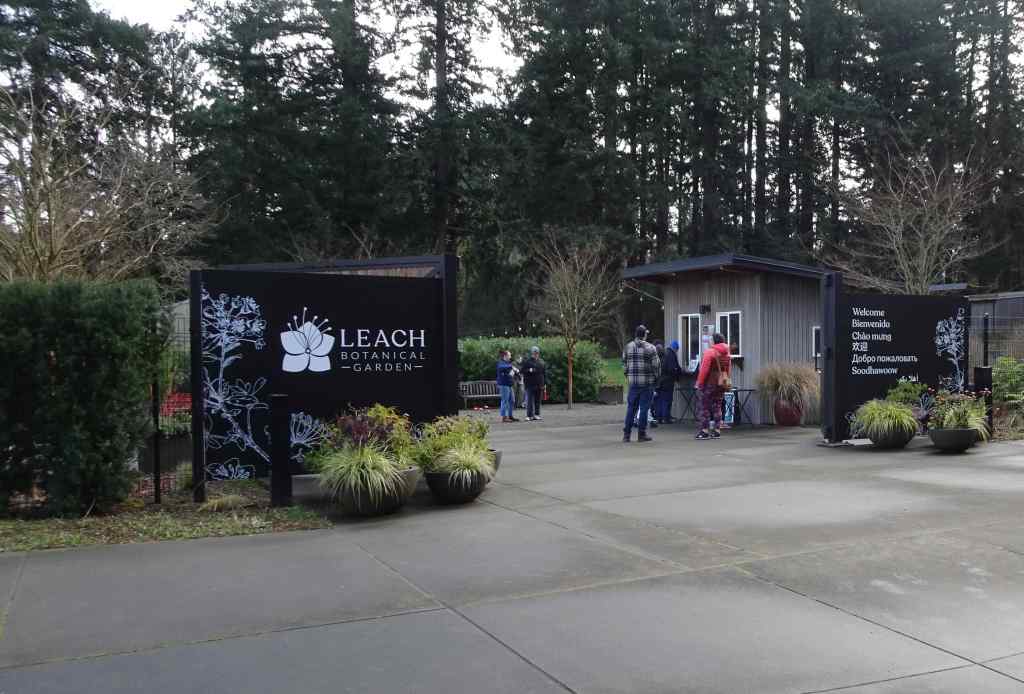
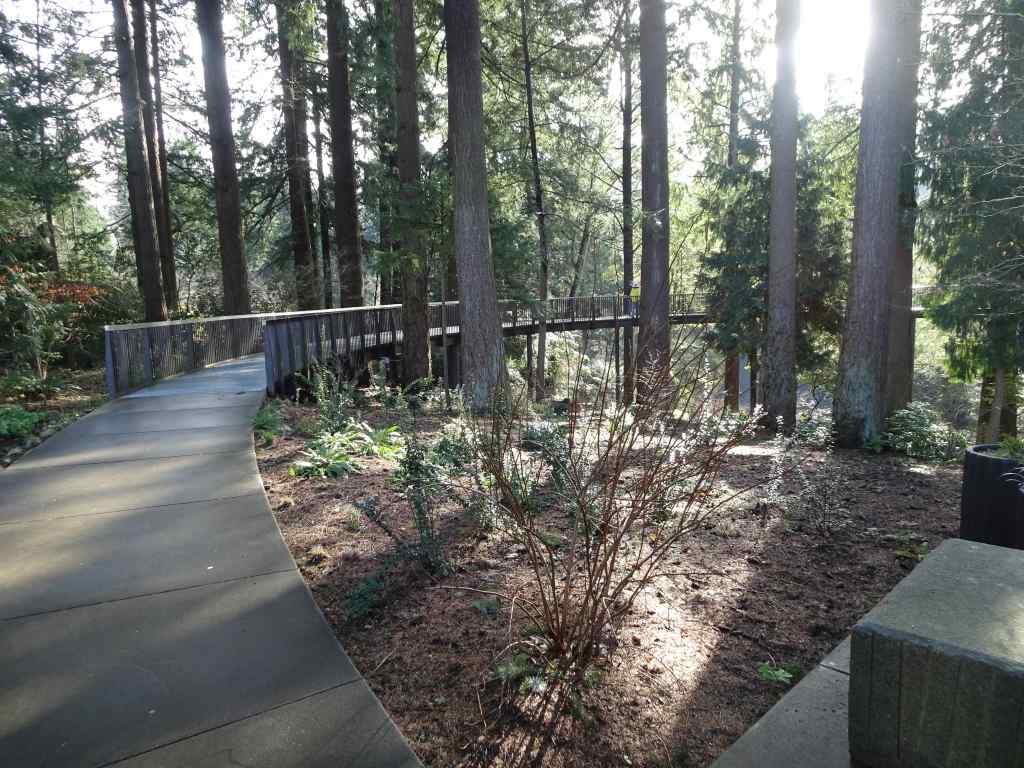
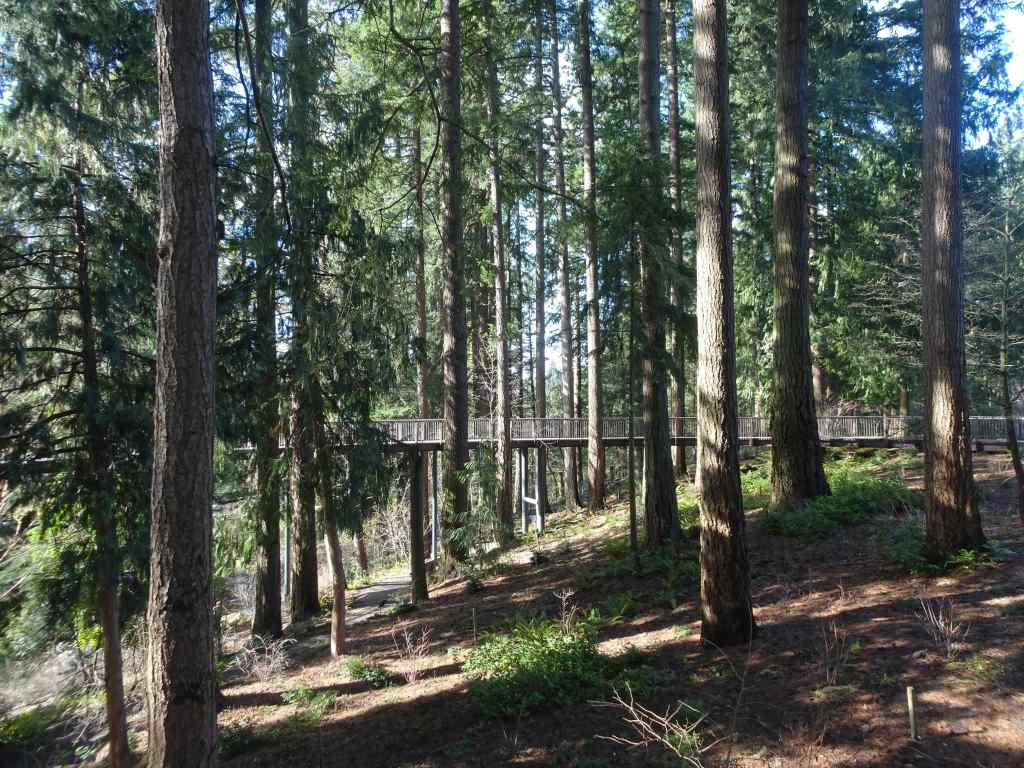
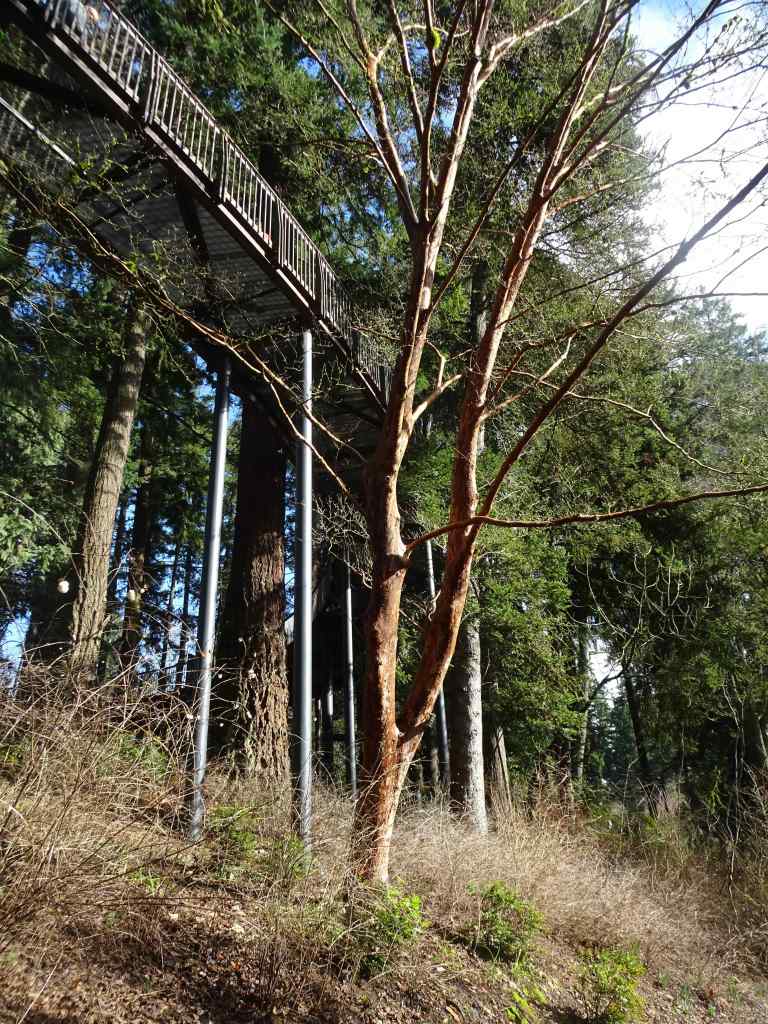
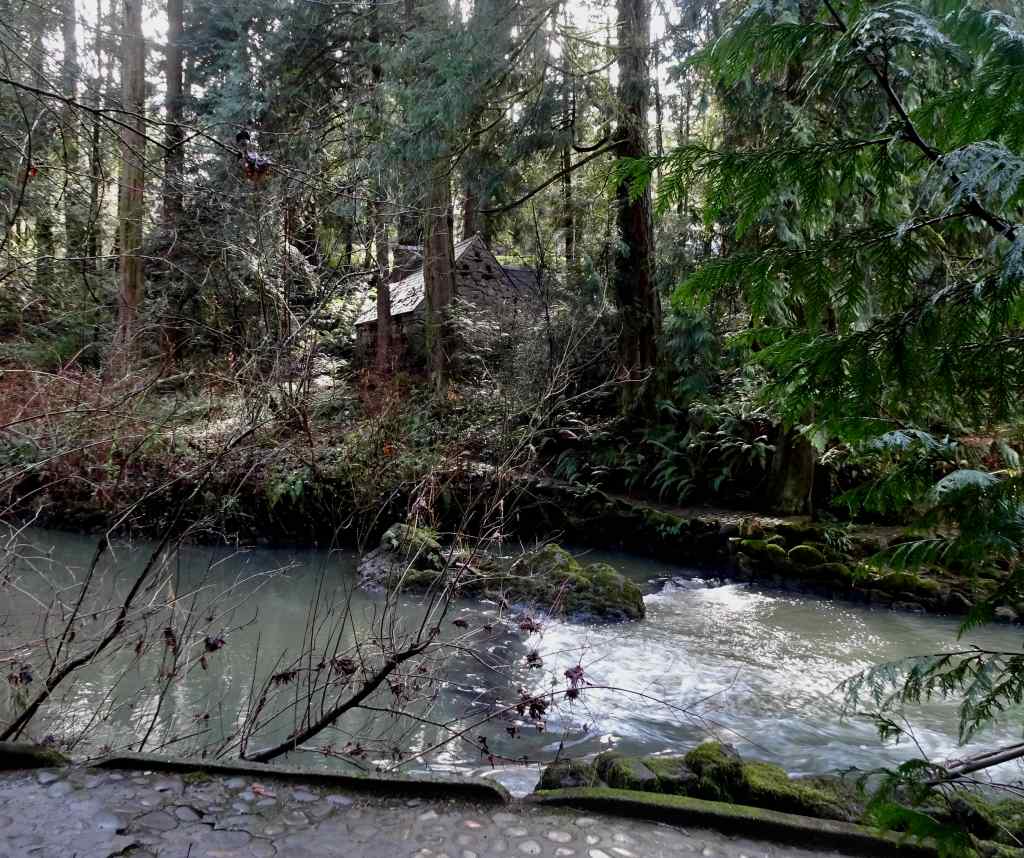
This public garden was gifted to the city of Portland by the estate of John and Lilla Leach. We hadn’t been in many years, but I remember taking my children here when they were young, and walking the stony paths between the plants. There was a bit of a Secret Garden feel to the park. I was aware that there had been a huge remodel and accessibility initiative. There is now a lovely Aerial Walkway that floats through the woodland. Today was our first time to try it. We walked less than a mile in total, as we had a time constraint, and also, my husband was still in recovery mode. Spring flowers were popping in a few beds, with more to come. I hope to return later in the spring to see more flowers.
Entry to Leach GardenAerial walkwayFloating through the forestSome trails pass below the walkway.Trails continue down to Johnson Creek, and to the original stone cottage across the creek.
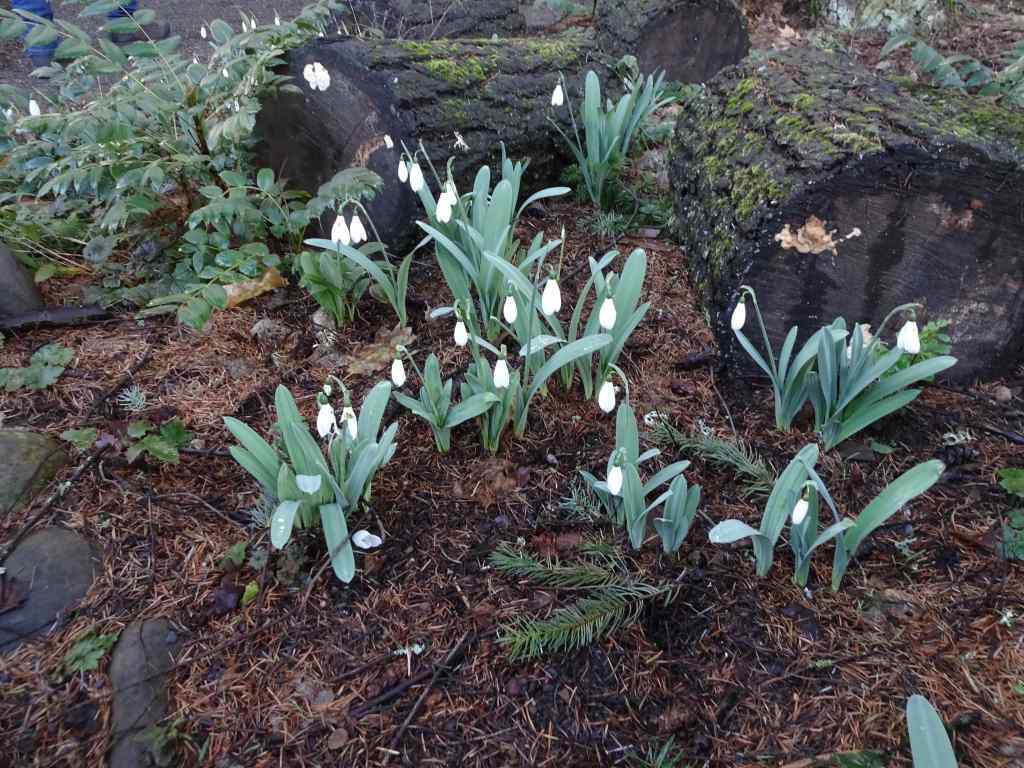
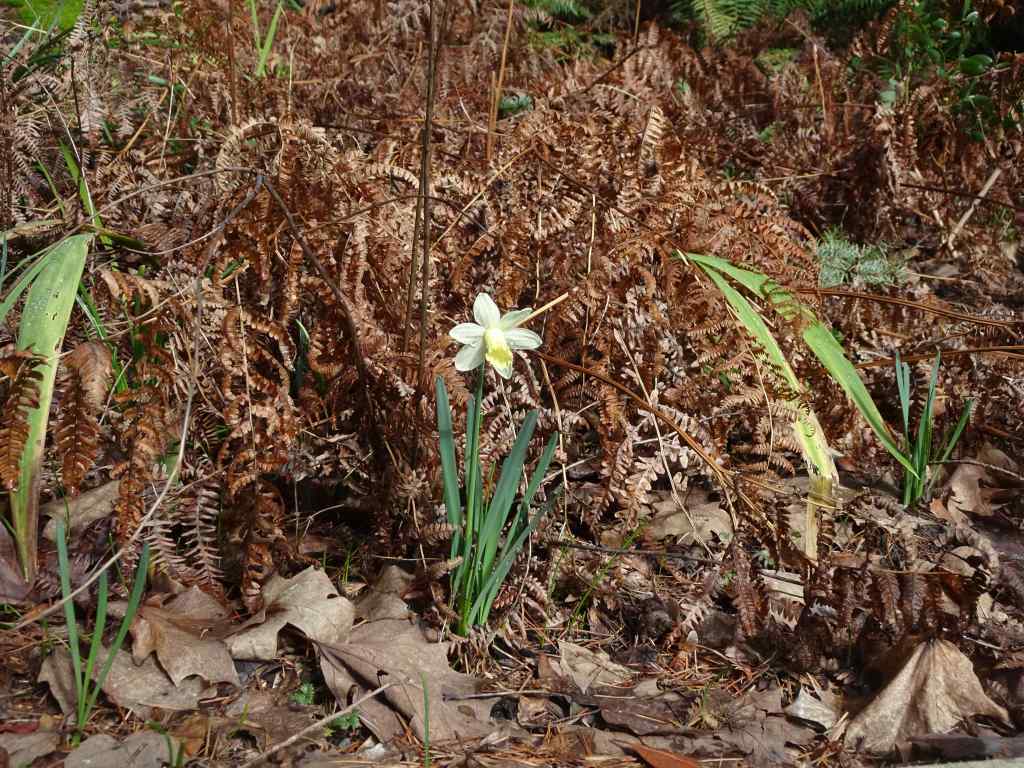
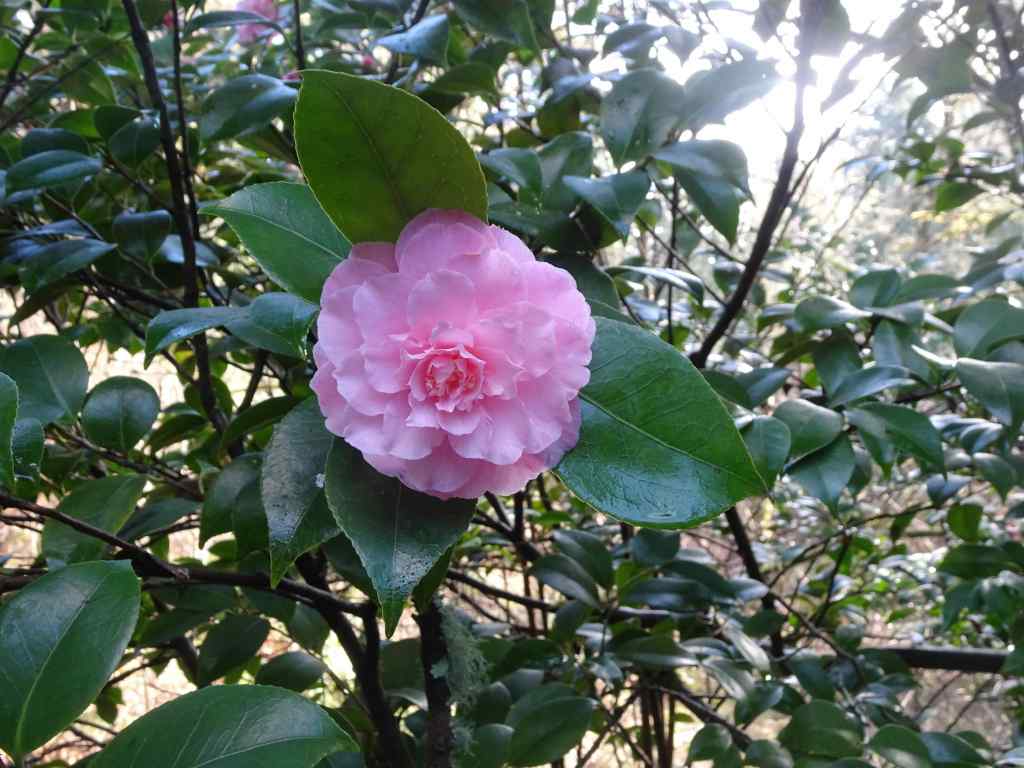
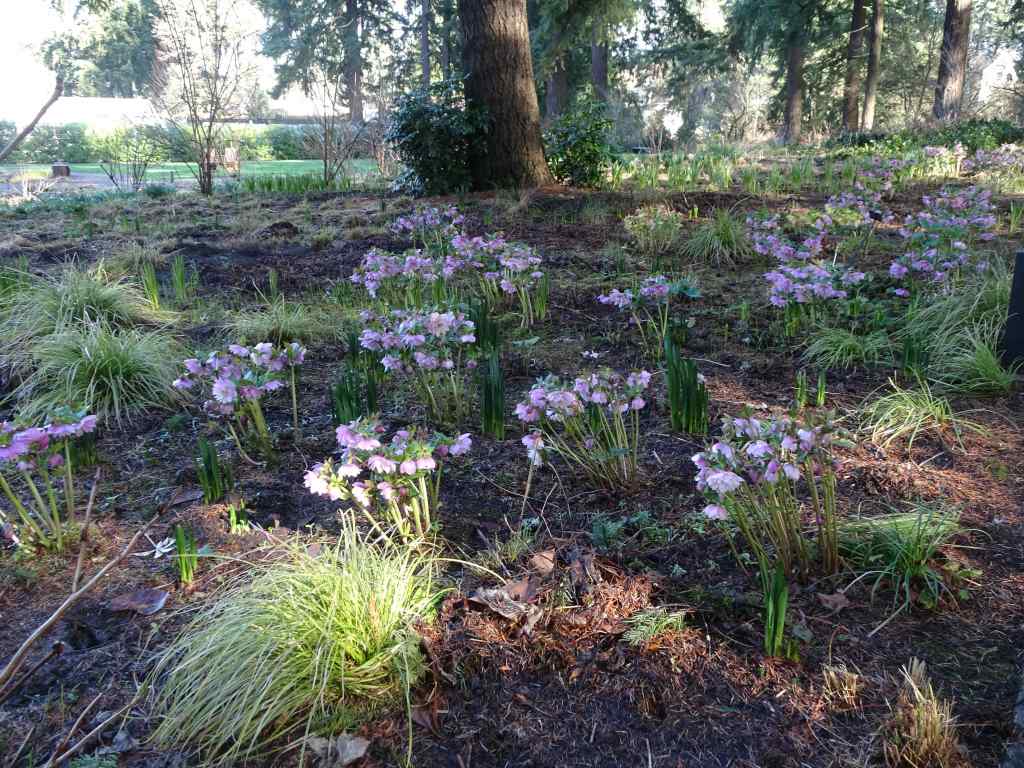
Some flowers in bloom today…
SnowdropsNarcissusCamelliaHellebores
2/26 – Memaloose Hills, Oregon
A windy day in the gorge. Most of this trail is protected from the strongest blasts, and it is a good conditioning hike (3 miles, 550 feet), as we work on our stamina…
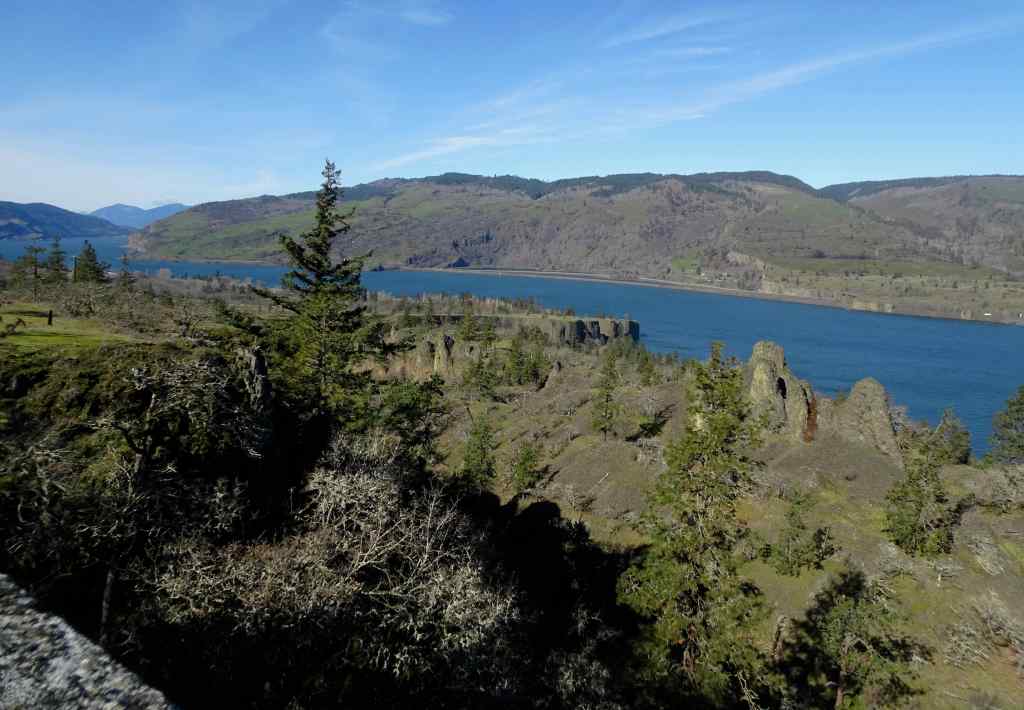
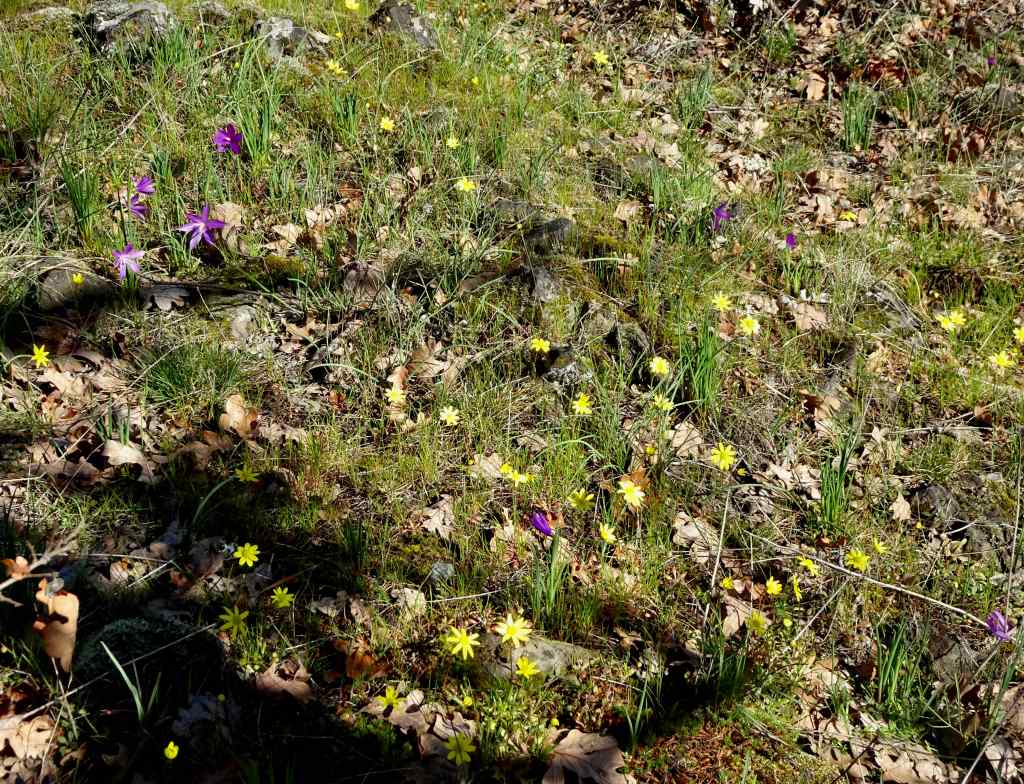
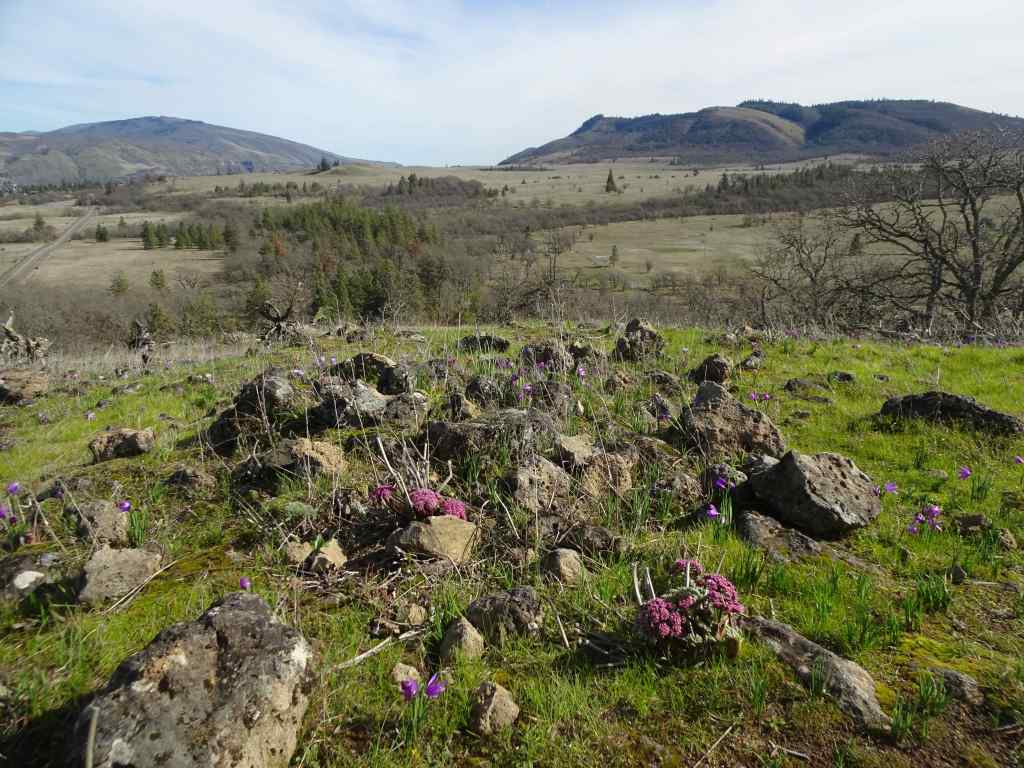
Trailhead view across the Columbia RiverGold stars and grass widows on the upward slopesGrass widowSalt and pepper parsleyYellow bellView of the gorge and Mt Adams from the top of Chatfield HillMt Adams
We continued the loop that circles over the top of Marsh Hill…
Nearing the top of Marsh HillView eastward from the top of Marsh Hill toward Tom McCall Point, with Columbia Desert parsley and grass widows among the rocks.Swales of grass widows just beginning to bloom.Grass widows
On the drive back toward Mosier, we stopped for a view to the north, to look at the greening slopes of the Coyote Wall and Catherine Creek areas, all burned last summer by the Burdoin Fire.
Coyote Wall, Little MauiThe Labyrinth
The good news is that, despite all the chaos in the political world, the flowers of spring are blooming again this year in the Columbia River Gorge!
1/5 – Balfour/Klickitat Eagles, and Labyrinth Trail, WA
Our annual visit to this eagle nesting area near Lyle, Washington…
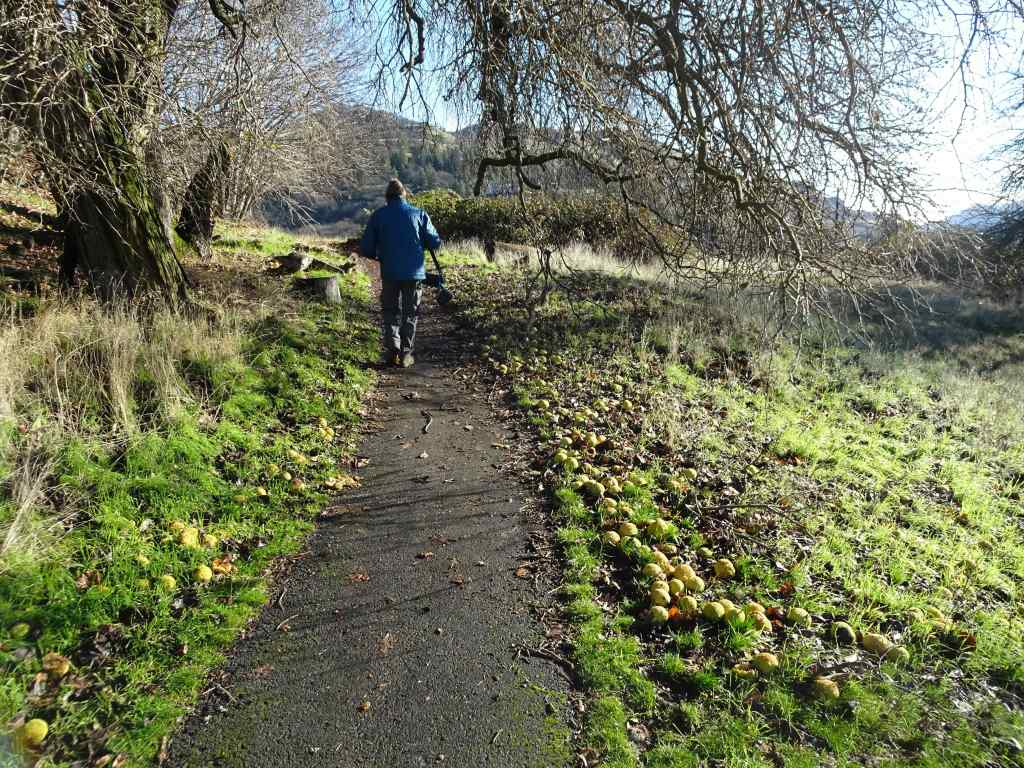
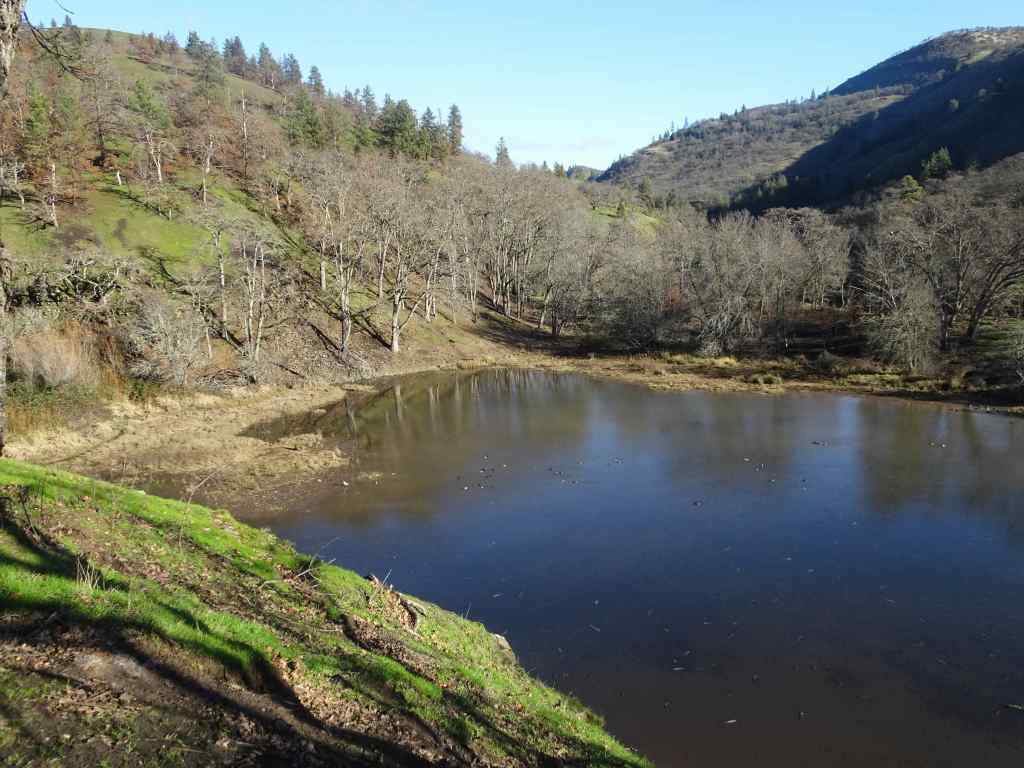
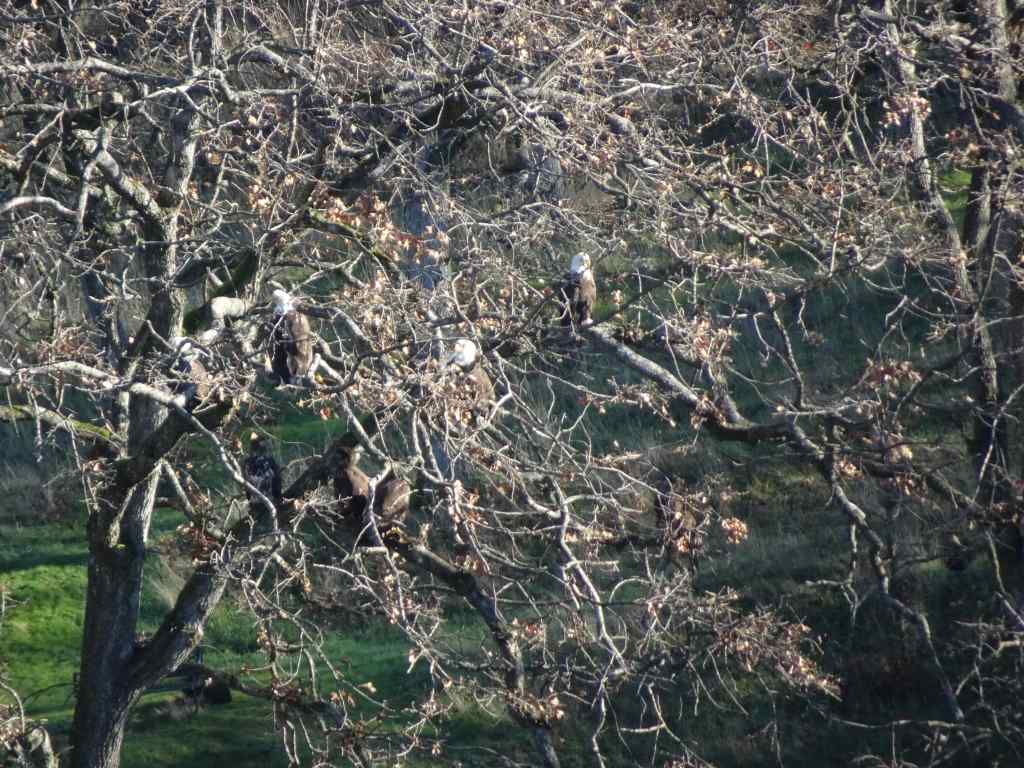
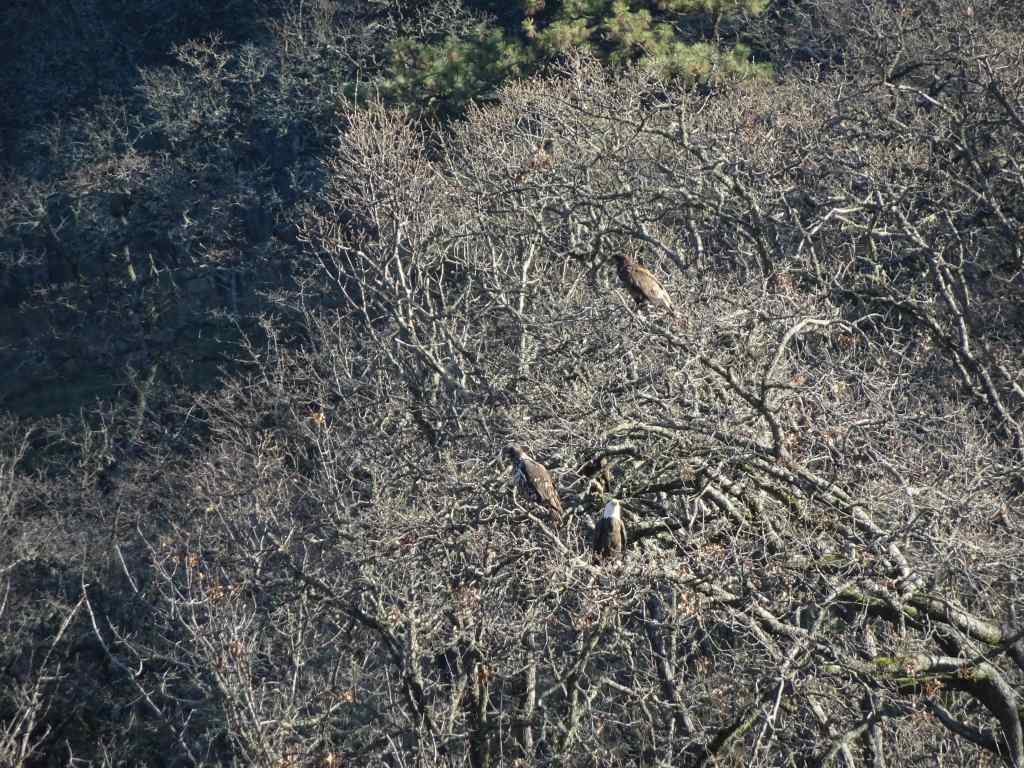
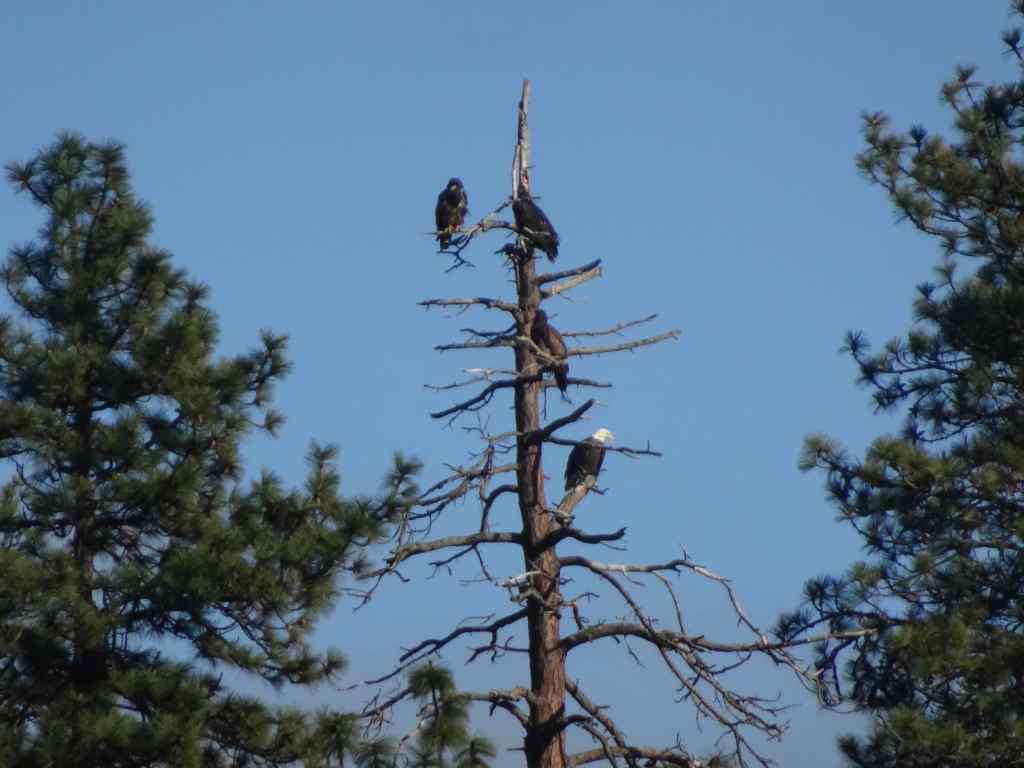
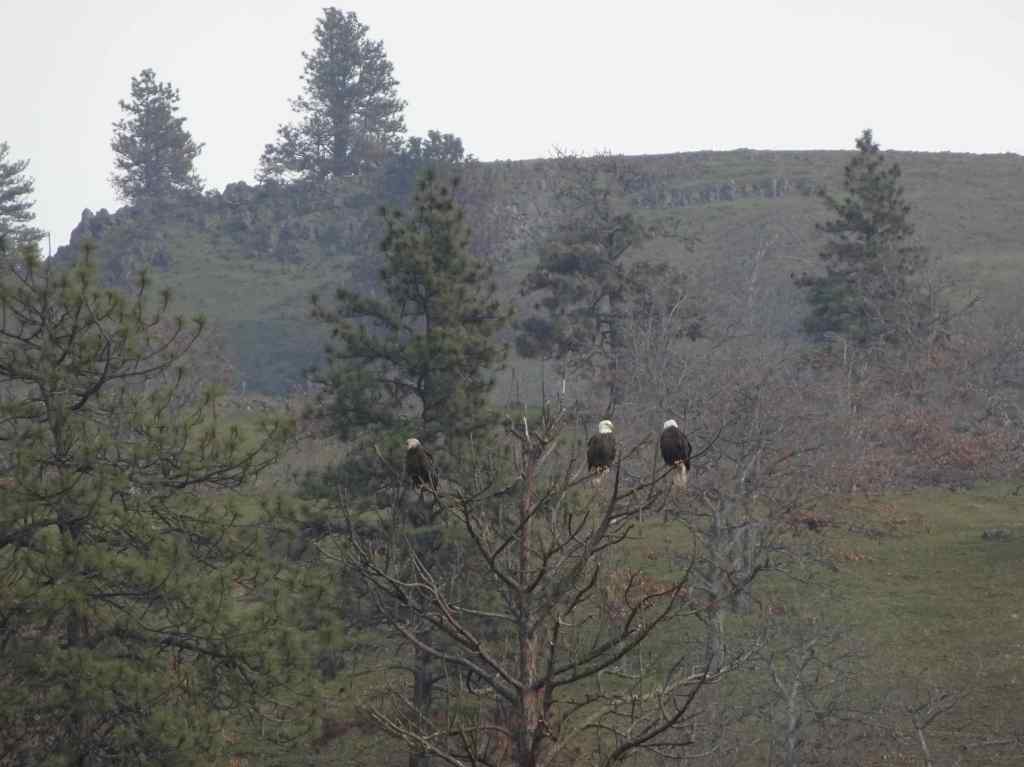
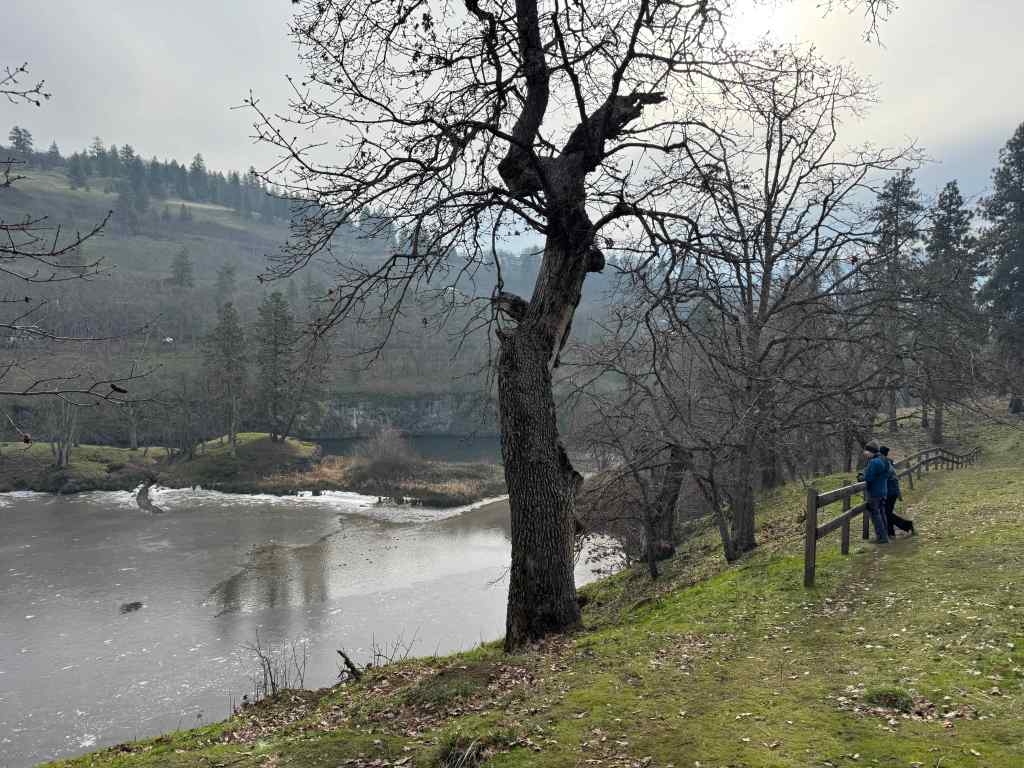
Osage oranges on the trail to the eagle overlook,Lagoon with salmon, ducks, and eagles hiding in the trees. We saw about 20 while watching for a half hour.EaglesEaglesZooming in on the snag in the distance – more eagles.
Next we went to the Labyrinth Trail, our first time here since the fires last summer…
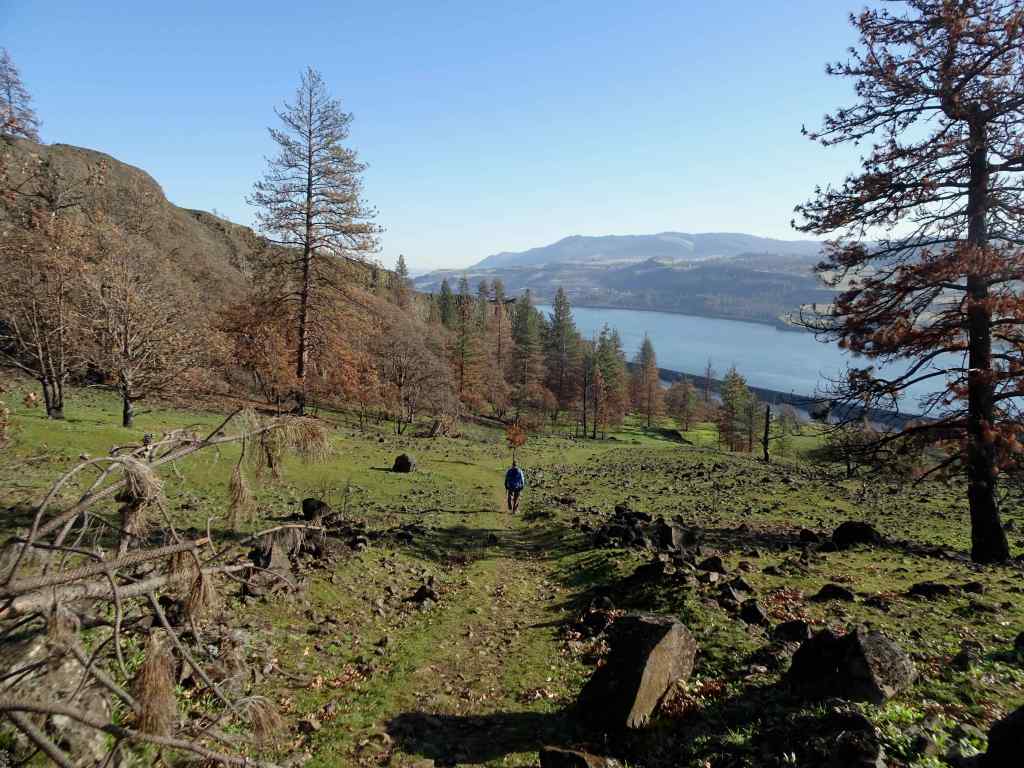
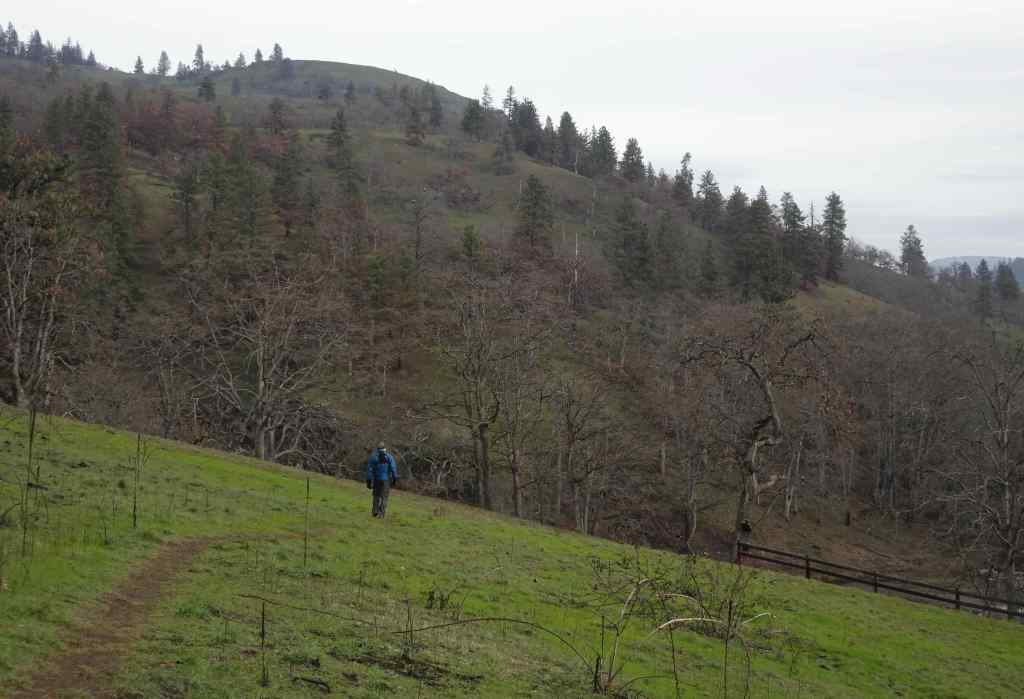
Looking up to the guide Ponderosa Pine tree above the Rowland Lake Trailhead.Zooming in, I can see it is partially burned.The waterfall – quite full this time of year.Hiking upward through the mosaic burn…The burned areas are sprouting new grass.My favorite oak grove is scarred, but trees are still standing.View upriver from our lunch ledge.The ridgeline oak tree is intact.We didn’t get all the way to the guide tree on this day, but zooming in, I can see it is less burned on the west side.
1/14 – Catherine Creek and Rowland Basin, WA
Another rainy day in Portland, but nice and sunny in the eastern Columbia River Gorge…
First we walked the lower loop at Catherine Creek, looking for the first grass widows, which we had seen reports of…
Trailhead. The burned slope here is turning green.We found a few clumps of early grass widows along the ADA trail south of the road. This area did not burn.Catherine Creek waterfall viewpoint.
Next, we walked up the trail that starts at the base of Rowland Wall, and walked about a mile up into Rowland Basin, having never started our hike from this point before, just to see what we would see.
TrailheadUphill, again, plenty of burned landscape, all in recovery mode…And we can see the guide tree from here.Another zoom in on my favorite ponderosa.All the usual undergrowth is gone under the oak treesLooking back eastward toward Rowland WallWe found a few clumps of grass widows out hereAnother view of Rowland Basin, before we start back.Hiking back down.
1/20 – Hummocks and Boundary Trails, Mt St Helens, WA
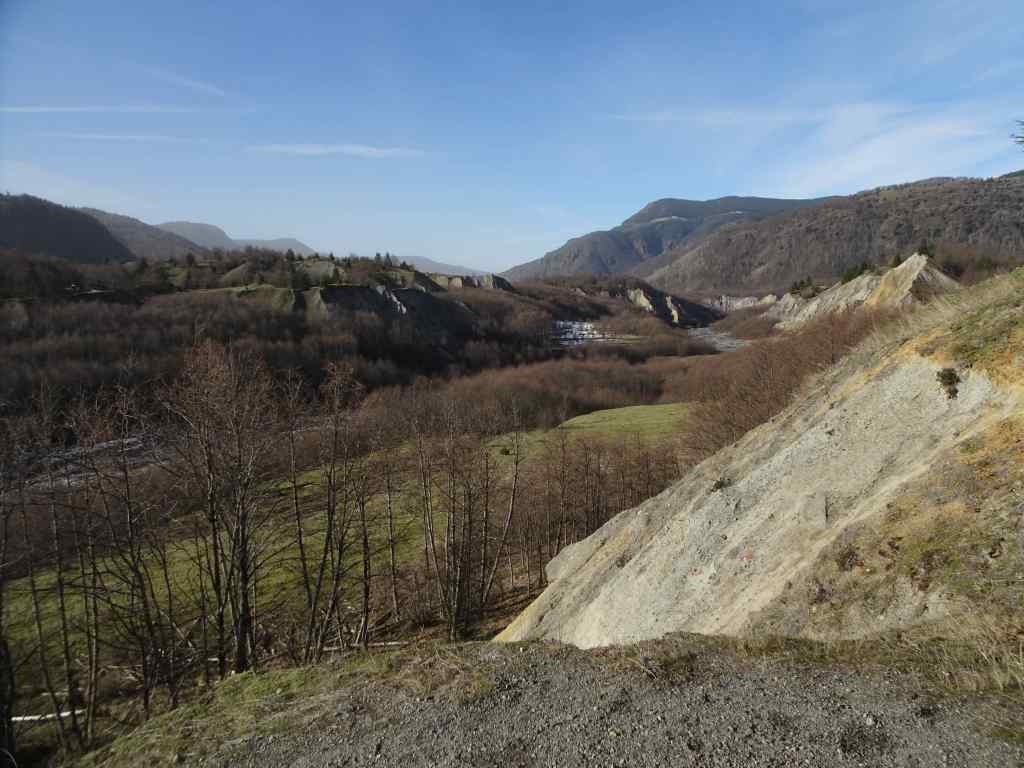
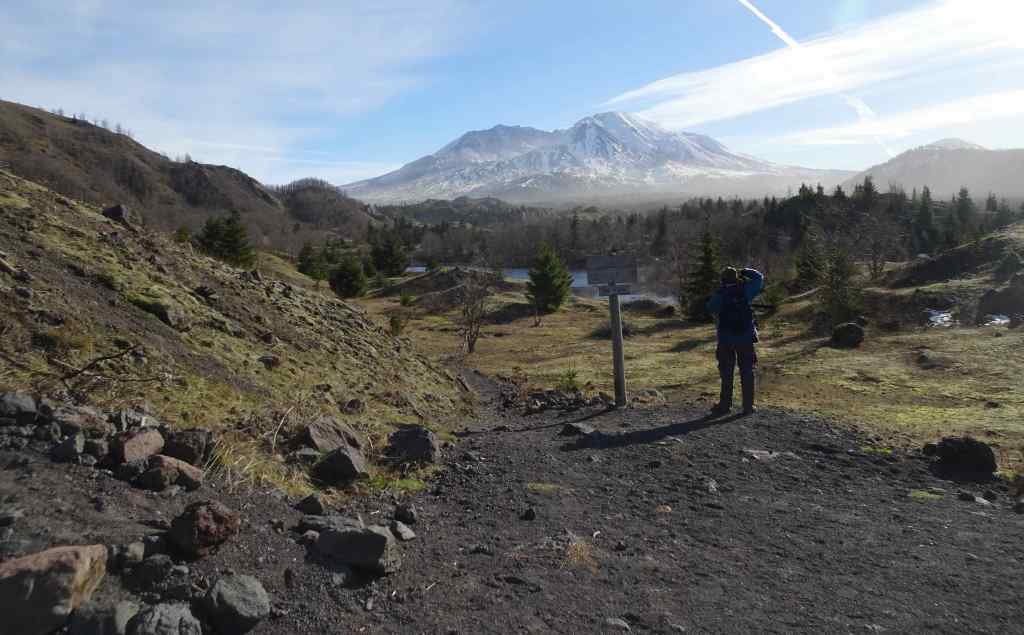
And now for something different – It had been a low snow January, so we drove up to Mt St Helens to try the Hummocks and Boundary Trails. As long as we stayed among the hummocks, we could enjoy the day. There was a cold wind blowing along the Boundary Trail, so we only walked a short way up…but we had great views, and a real change of scenery from the Columbia River Gorge.
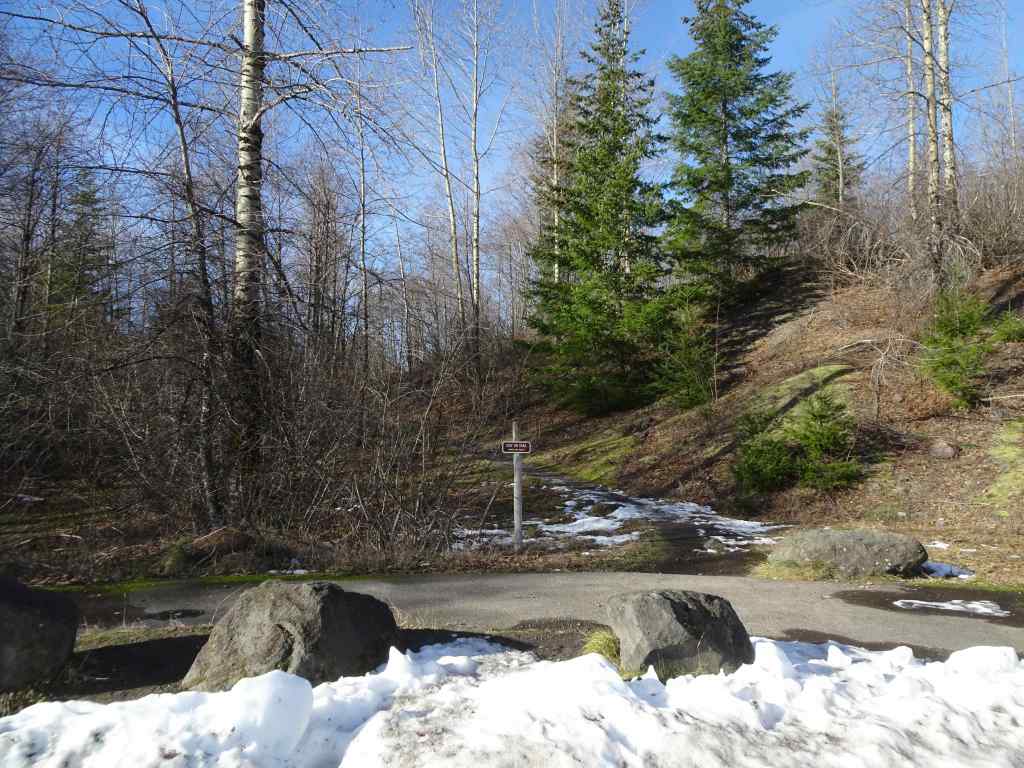
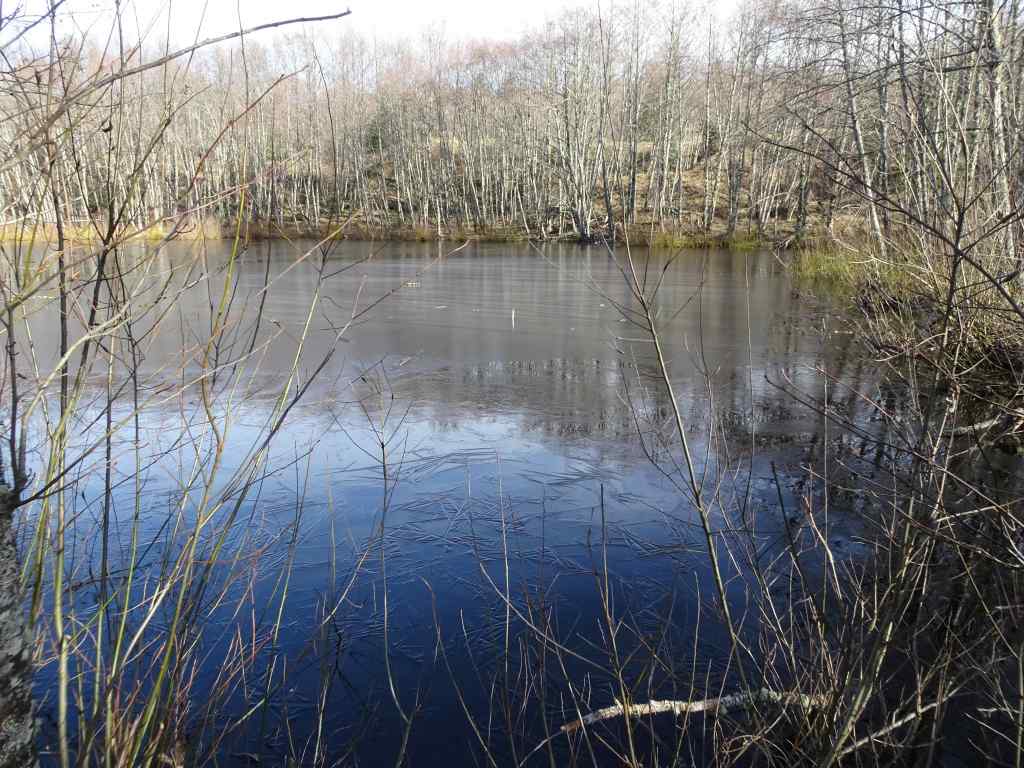
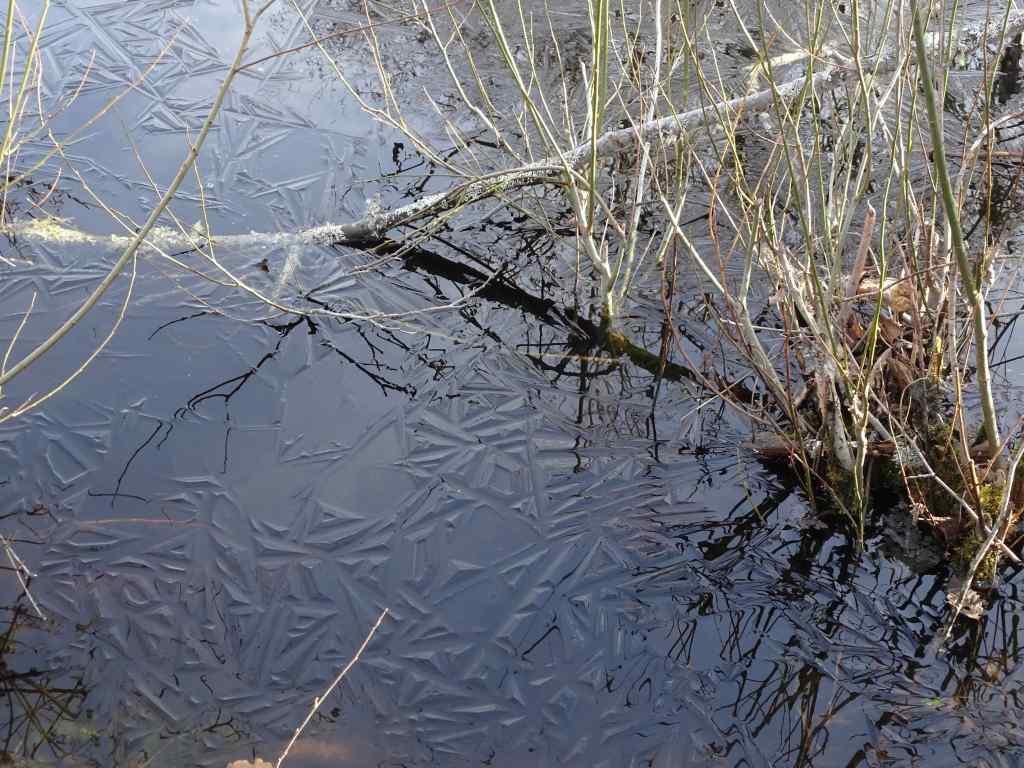
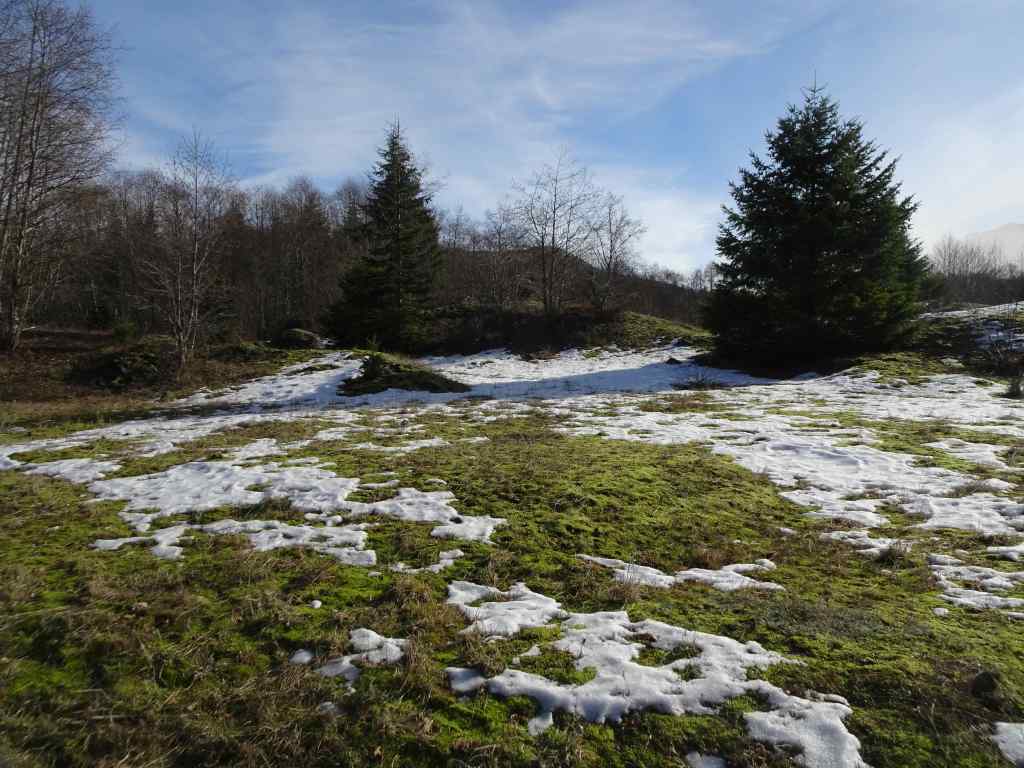
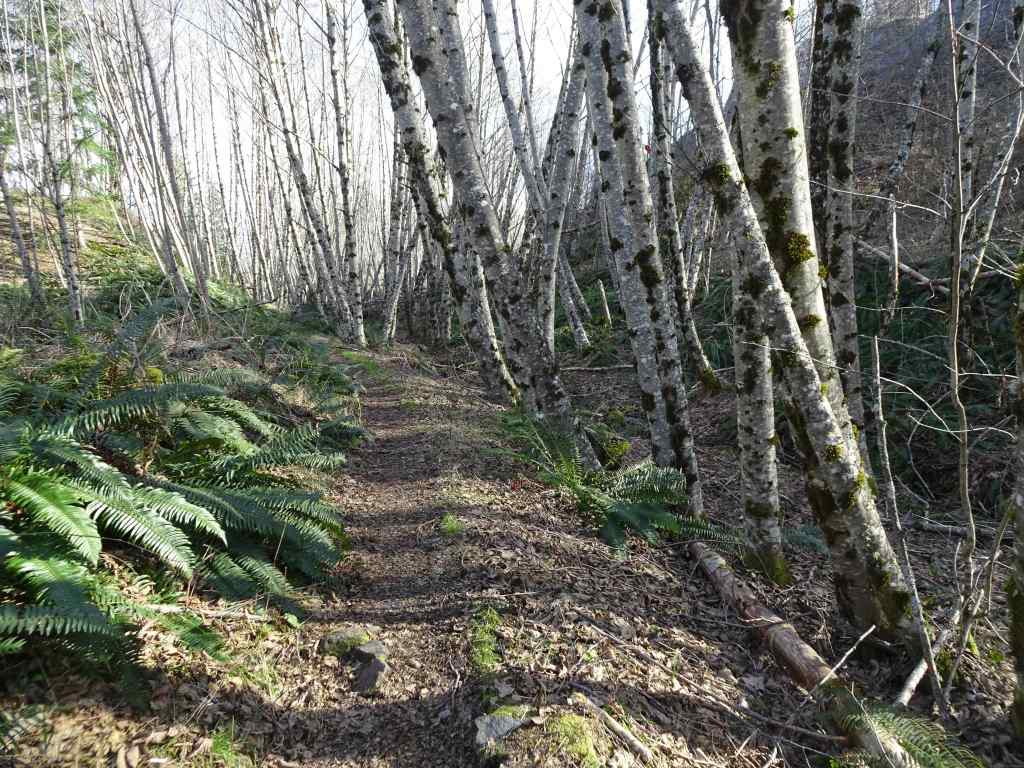
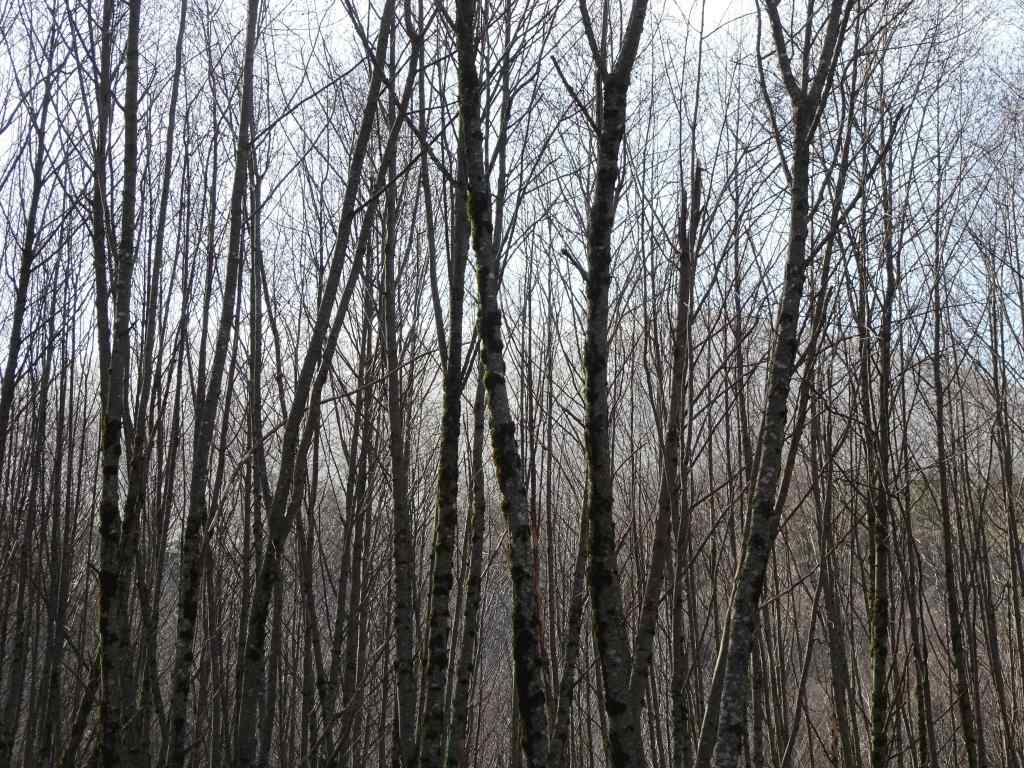
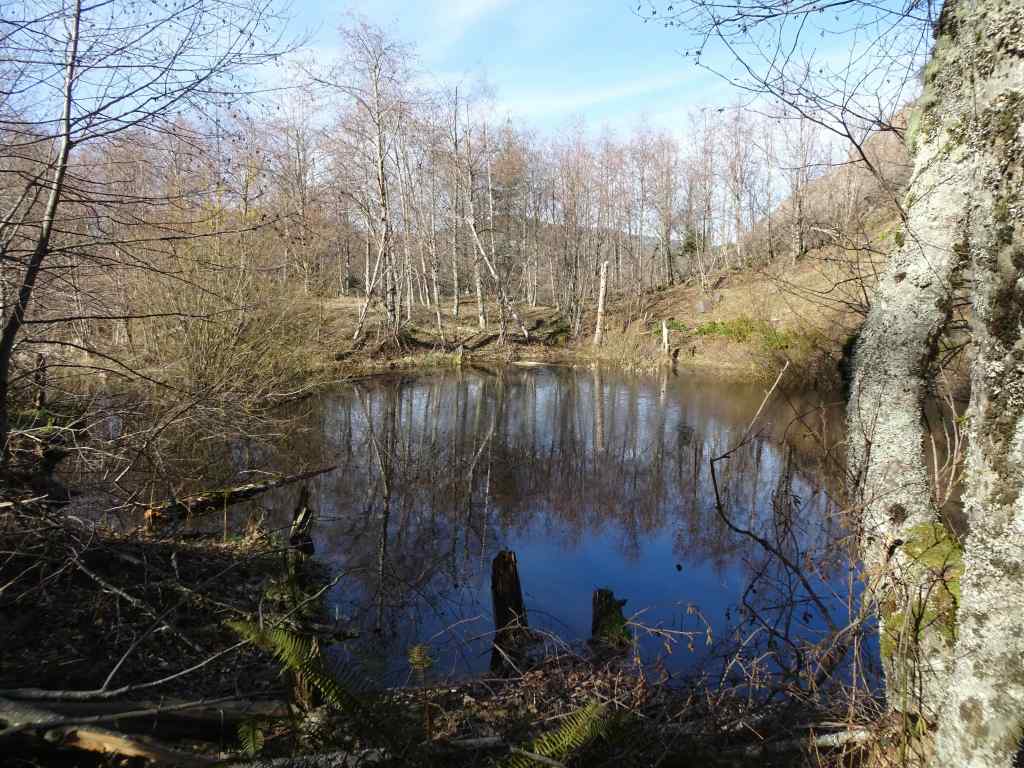
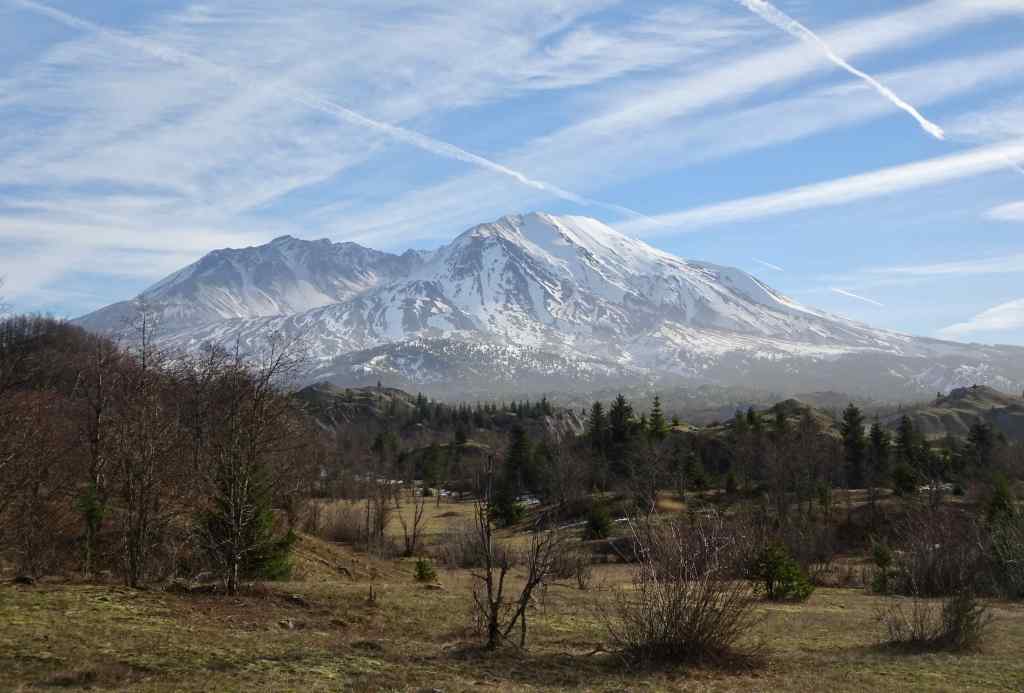
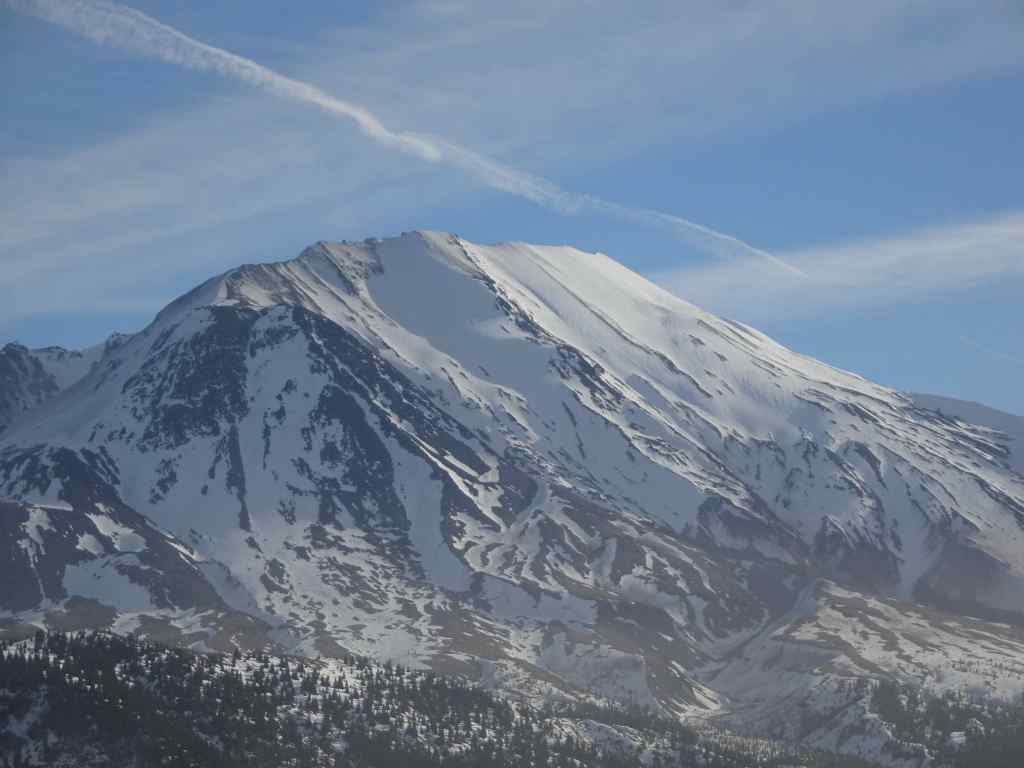
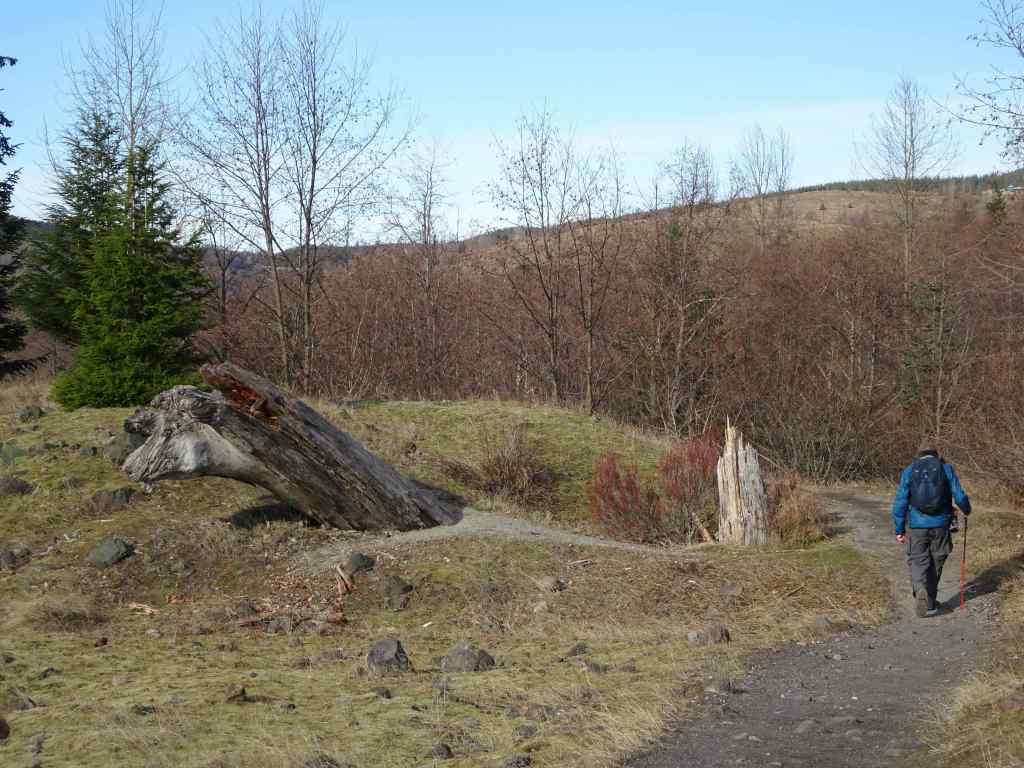
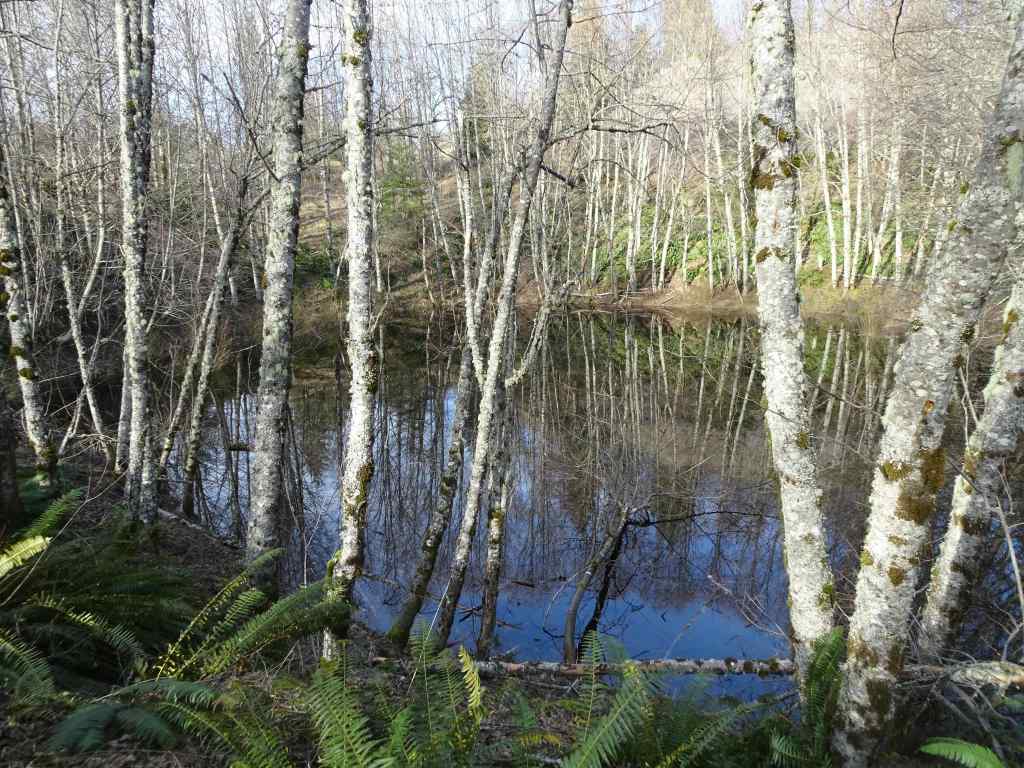
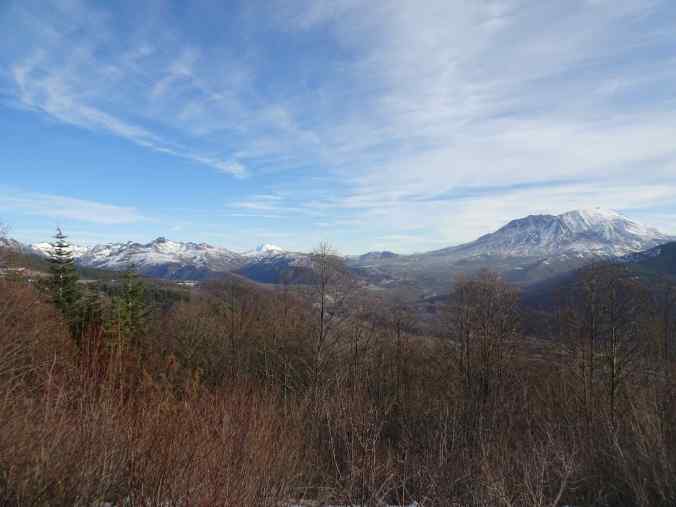
Mt St Helens, as seen from I-5 as we drove north.Snow in the parking lot. The trail was mostly clear. The trail winds around through hills of volcanic debris that were completely barren after the eruption in 1980. Forty five years later, the hummocks are covered with vegetation and there are many lakes and ponds throughout this landscape.On this day the lakes were partially frozen.I was fascinated by geometric patterns in the ice, apparently caused by differential melting due to plant shadows.More ice patternsSnow patches along the trail.Groves of alder trees have filled in much of the landscape.Alder treesToutle River Overlook – this downstream landscape is unstable and constantly changing.Another pond with tree reflections.Tree reflectionsJunction with the Boundary Trail, toward Johnston Ridge…into the wind we go.The trail switchbacks up onto the ridge on the left, toward Johnston Observatory, with great views of the northwest side of Mt St Helens.View from our turnaround point…the wind was getting stronger the further east we went.Closer view of the summit on this side.The return loop passes by this inverted tree, still buried where it landed in May, 1980.And one more reflective pond picture…
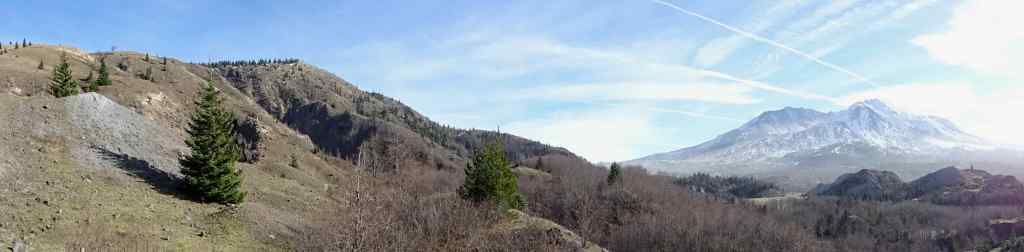
We stopped for a last look from the Elk Rock viewpoint on Hwy 504 on our drive home.
Panorama of the Mt Margaret backcountry, Mt Adams, and Mt St Helens.
1/28 – Eagles and Catherine Creek, WA, again; with a side of Multnomah Falls, OR
My sister was visiting, and interested in an easy hike, so we took her back to a couple of our favorite places in the Columbia River Gorge.
We could see a few bright white spots in the trees as we approached the overlook at the Balfour/Klickitat Reserve.Three bald eagles. We saw about a dozen this day.The pond is icier than it was earlier in the month.
Next we walked the lower ADA Trail at Catherine Creek, and found just a few of the early flowers.
Catherine Creek ADA trailGrass widowBudding Columbia Desert ParsleyWaterfall OverlookWe walked up to the fairy ponds, now frozen around the trunks of slightly burned oak trees,and looked over to the Arch.
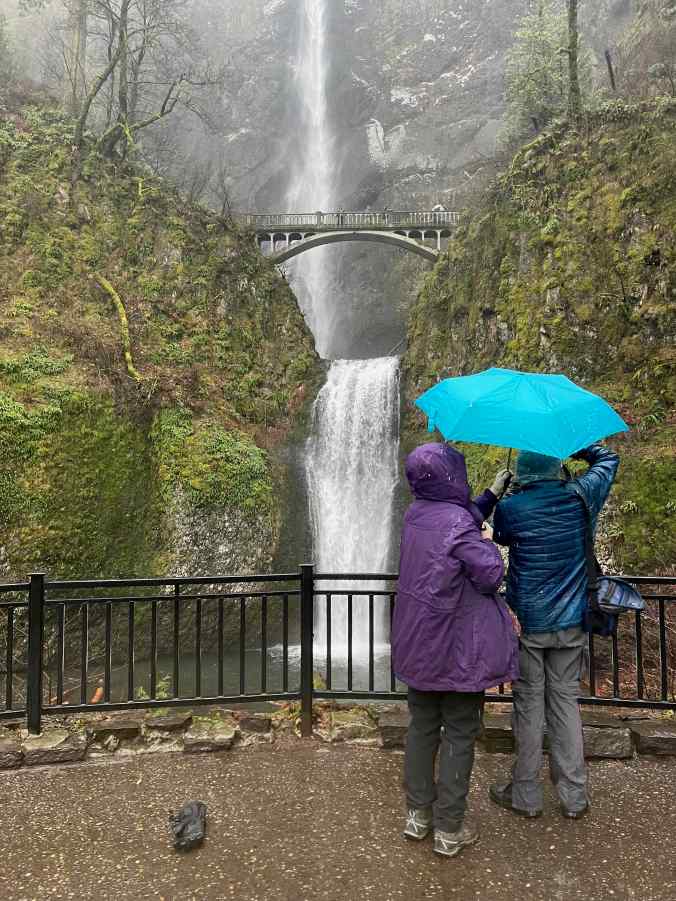
And finally, we drove back through the rainy Gorge, and made a quick stop at Multnomah Falls.
Multnomah Falls
I am gald to be back out on the trails, though I have some work to do to regain my stamina!
We only went on two hikes in December, one in town, and one out in the eastern gorge.
12/1/2025 – Mt Tabor, Portland
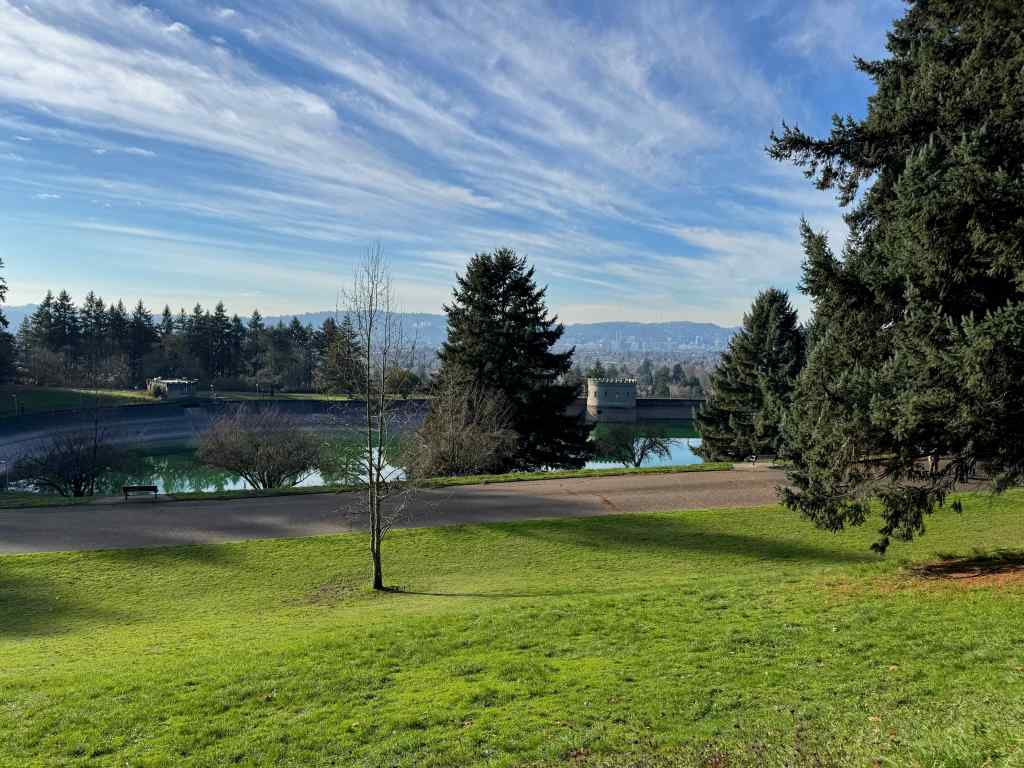
On a sunny day, we drove to our nearest extinct volcano, and walked around its circumference and up to the top, taking in views, and getting a good leg stretch (2 miles, 200 feet). There are many trails that circle around and through the park, and many users, running, walking, and stair climbing. It is a great public space on the east side of Portland.
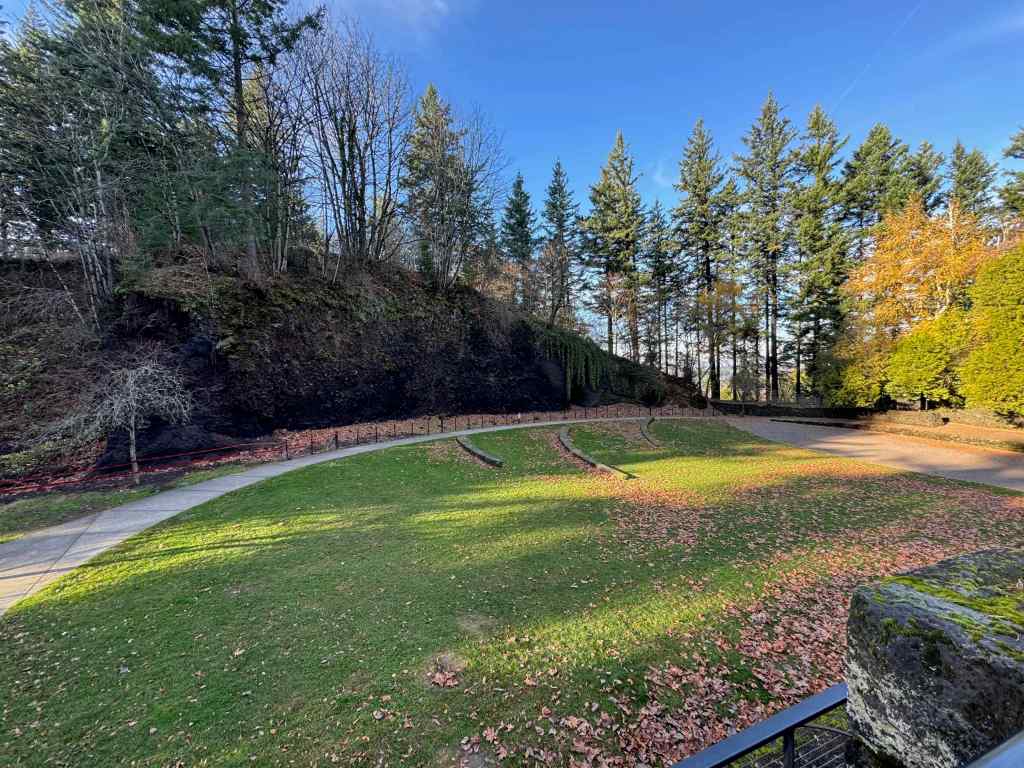
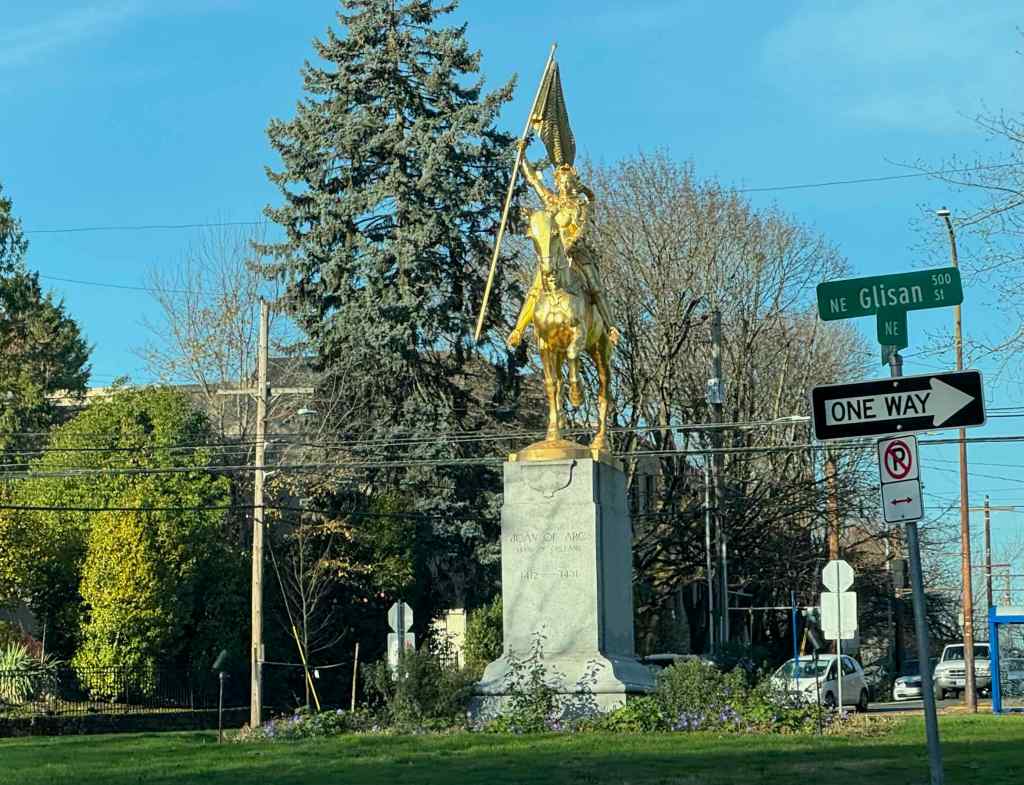
As we gained elevation, we got a western view toward downtown Portland across one of the reservoirs.We continued upward on one of the forested trail to the top.There is a view to Mt Hood through the trees near the summit.And another view toward downtown.We hiked down the northern slope, and got a peek at Mt St Helens.The amphitheater near the parking lot has an outcrop of the volcanic layers.We passed Joan of Arc, glittering defiantly in the sun, in her traffic circle, on the drive home.
12/23/2025 – Catherine Creek, WA
We went with our daughter to this favorite winter hiking spot. This is our second time here since the Burdoin Fire last July. This time, we walked the East Loop above the Arch, and also made a quick trip down to the waterfall viewpoint on the lower ADA trail. (3 miles, 450 feet).
At first we planned to walk the loop that returns by crossing the creek below the Arch, but we wanted to be sure the creek crossing was possible, so we went to look.
Catherine Creek crossing on the lower Arch trail. The waterfall-like step is actually the plank bridge, now broken and underwater. The road/trail was not accessible without serious wading. So we took the trail above the Arch, and then the eastern return loop.Walking across the burned slopes toward the lower bridge across Catherine Creek. This one survived the fire.Once we reached the slopes near the Arch, we could see across the Columbia River to the west,And to the east.Bitterroot foliage coming up through a rocky, mossy area that likely escaped burning. There were a few unburned areas within this mostly burned slope.View from the top of the Arch, new fence in place.We ate lunch on the rocky outcrop just north of the Arch, then continued our loop to the east, passing scorched pine trees.We returned back across the lower bridge.
Then we took a quick walk down the paved ADA trail south of the parking area, to see the waterfall.
Catherine Creek Waterfall. This side of the road has dead, dry grasses on the slopes because it didn’t burn along the paved trail. But it looks like it did burn across the river.
We enjoyed this hike on an overcast but not rainy day. It was nice to spend some outdoor time with our daughter. And it will be interesting to watch the land here as it recovers from the fire damage.
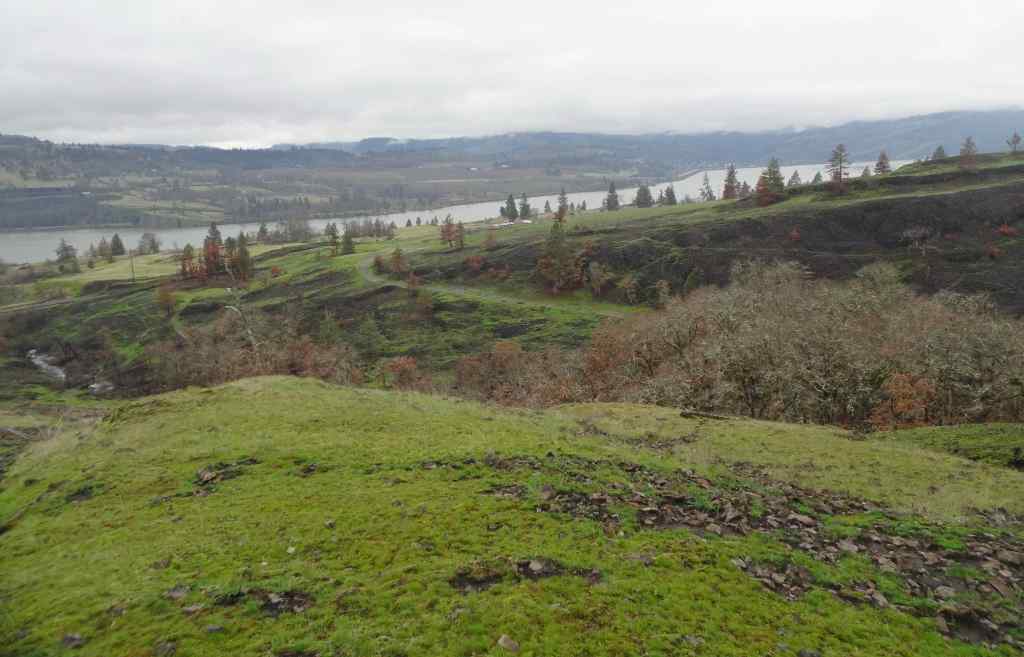
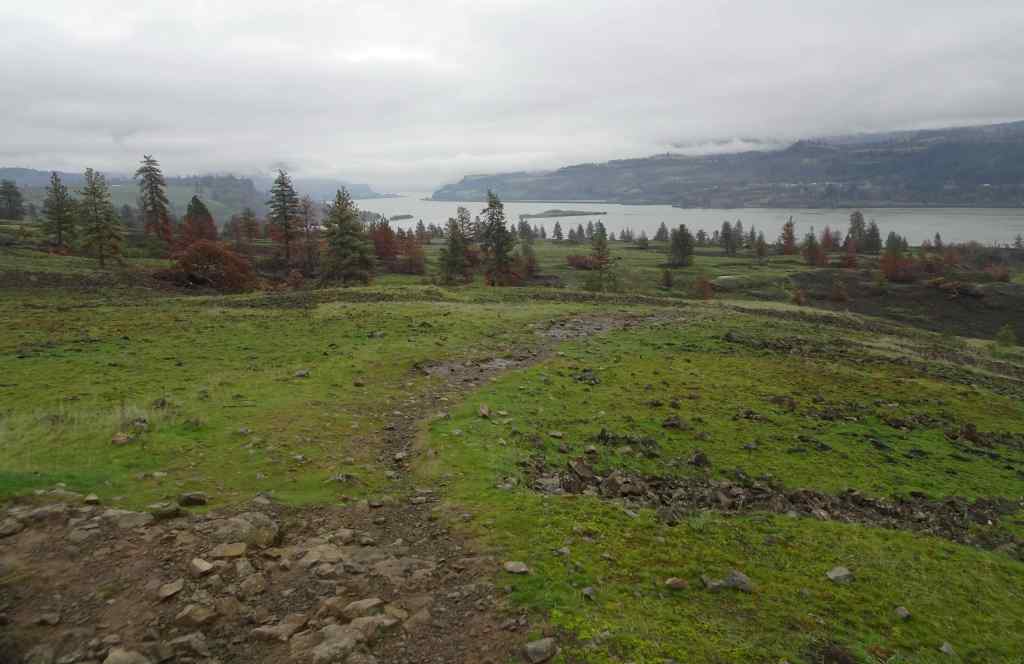
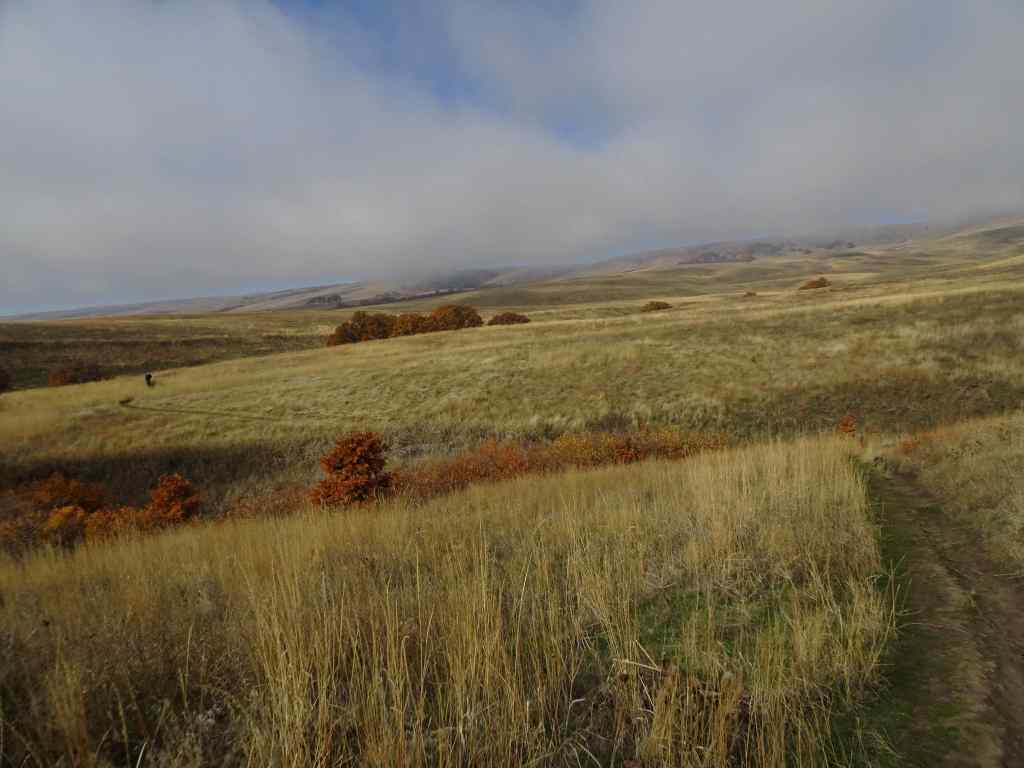
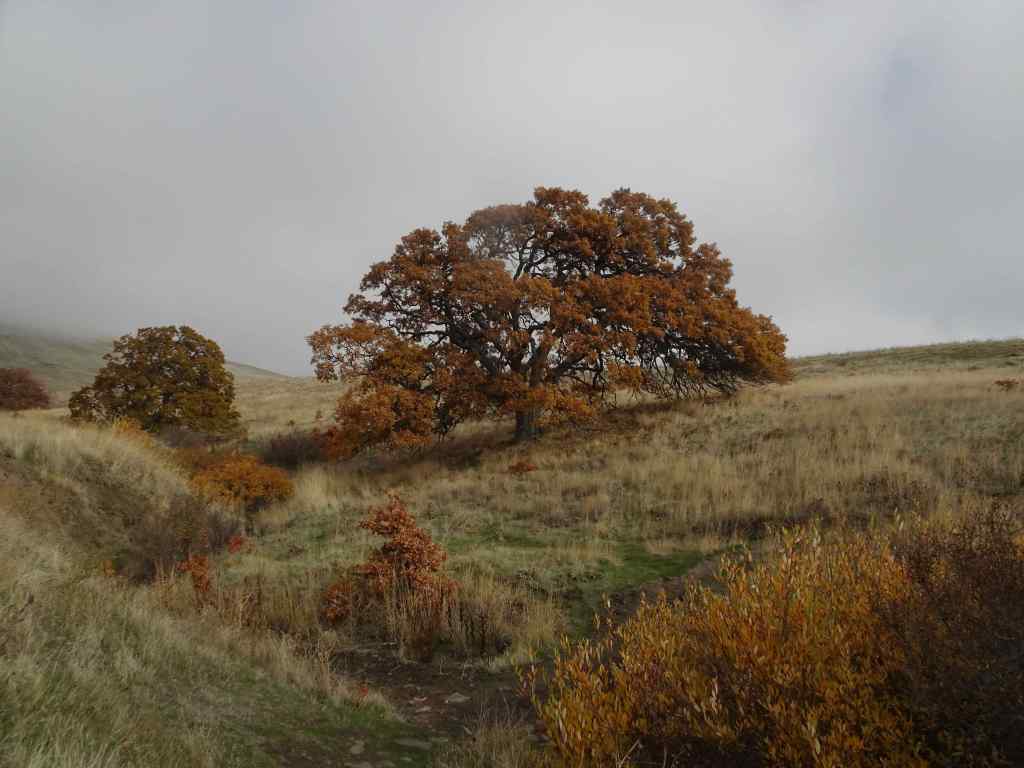
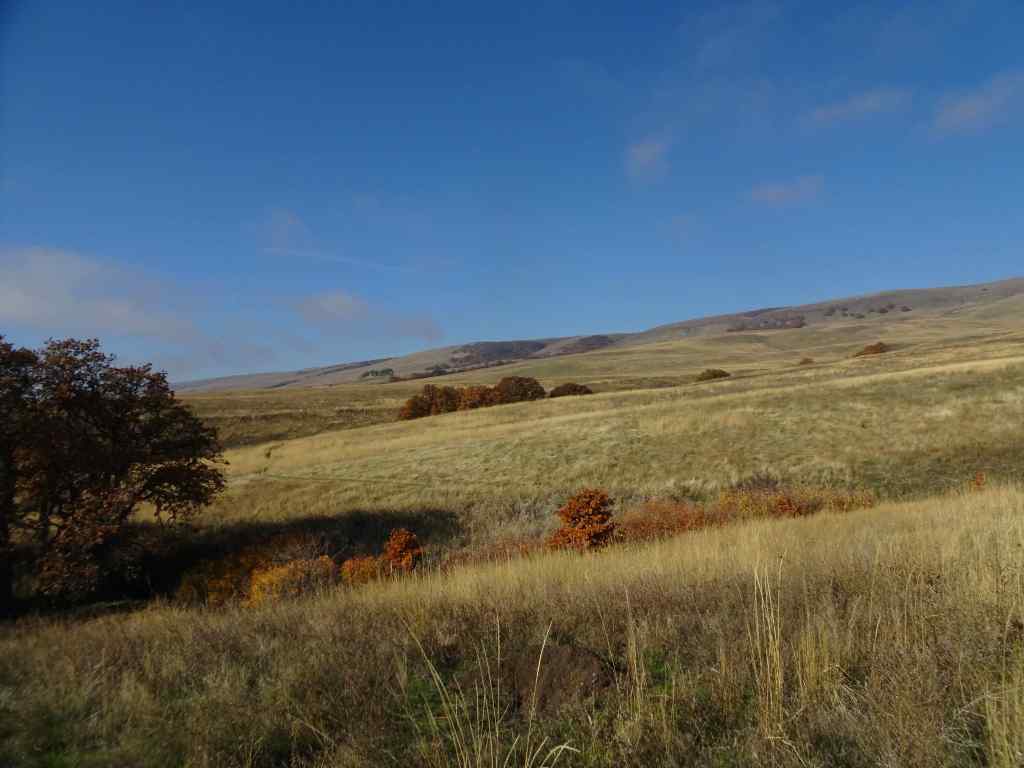
We hiked the upper loop from the ranch ( 4 miles, 450 feet). We began the day with fog and mist, which evaporated by lunch time, and we finished our hike under clear blue skies. We visited the ‘one tree’, and had a quiet day on the trail.
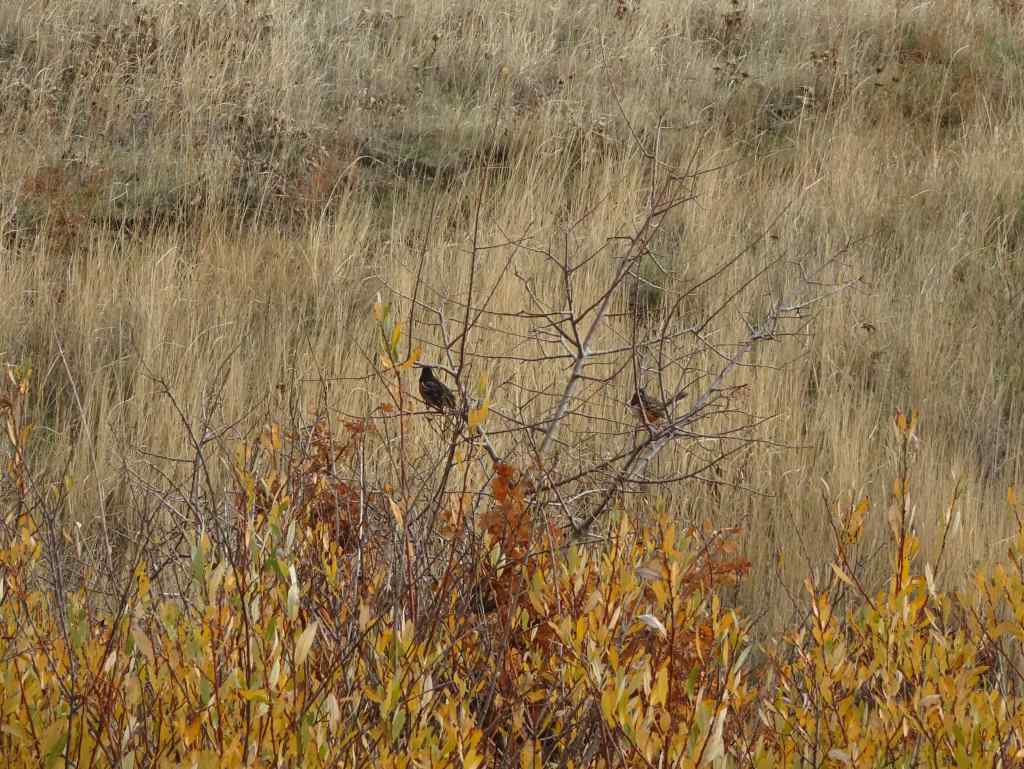
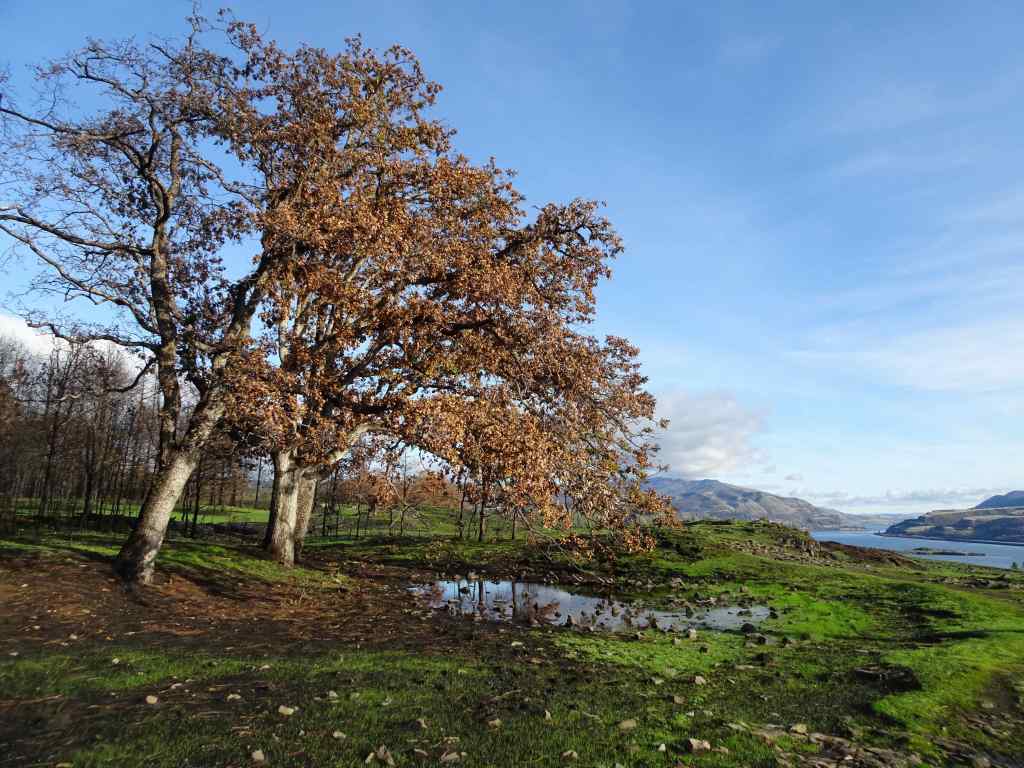
Looking up into the Columbia Hills at the start of the hike. Lots of dried balsam root foliage in the foreground.The hills were still misty when we sat down for our lunch break,right near my favorite oak tree.I watched a flock of towhees in the nearby bushes,By the time we finished our lunch, the mists had evaporated, and the oak tree was illuminated under a blue sky,its leaves glowing in the sun.After lunch, we continued our hiking loop, which circles down to a view of the Columbia River and The Dalles. The sun angle was wrong for photography, but we could see Mt Hood under its cloud cap on the far horizon.We hiked back up to the Ranch along Eight Mile Creek.A satisfying hike on an autumn day, with very few other trail users today.
11/25 Portland Arboretum
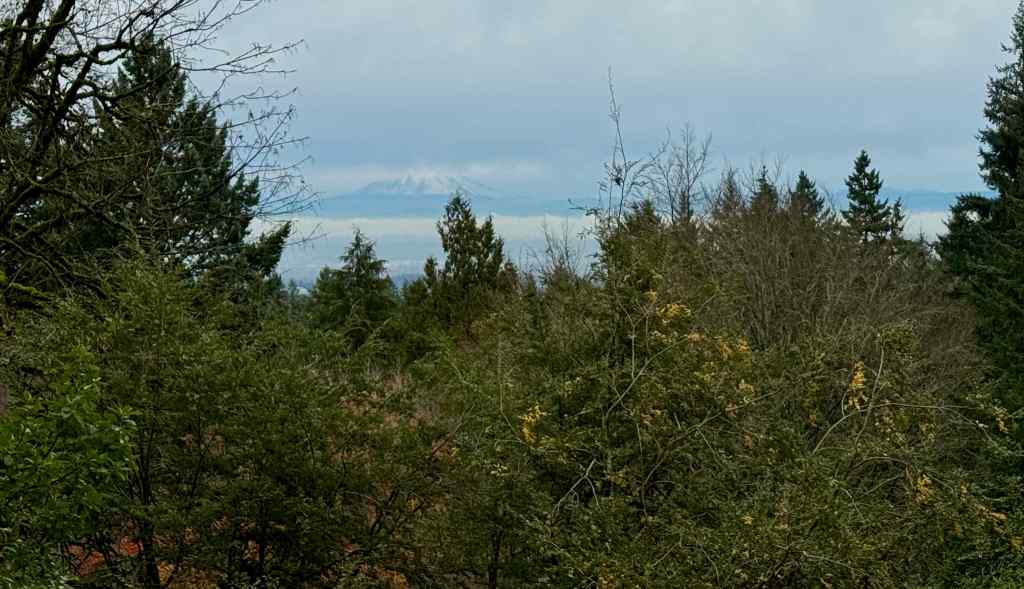
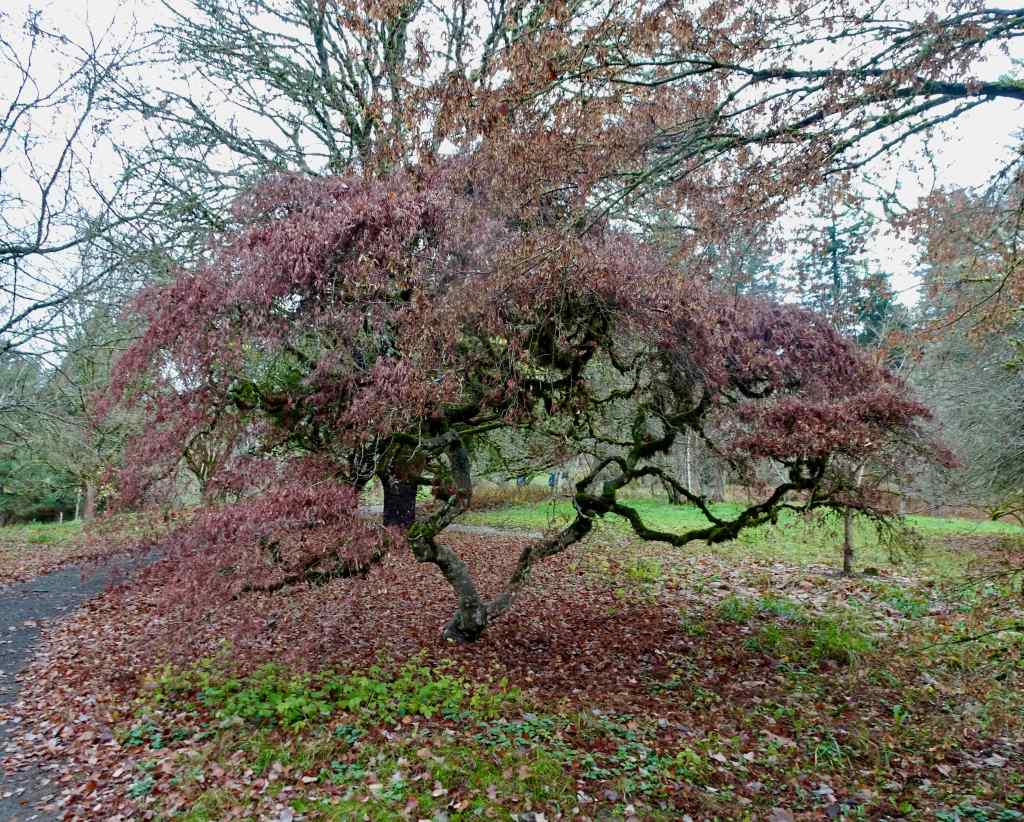
We hiked a short loop (2.5 miles, 200 feet), past the view of Mt St Helens and our favorite Japanese maple tree, through the Winter Garden, and then back up the Beech Trail.
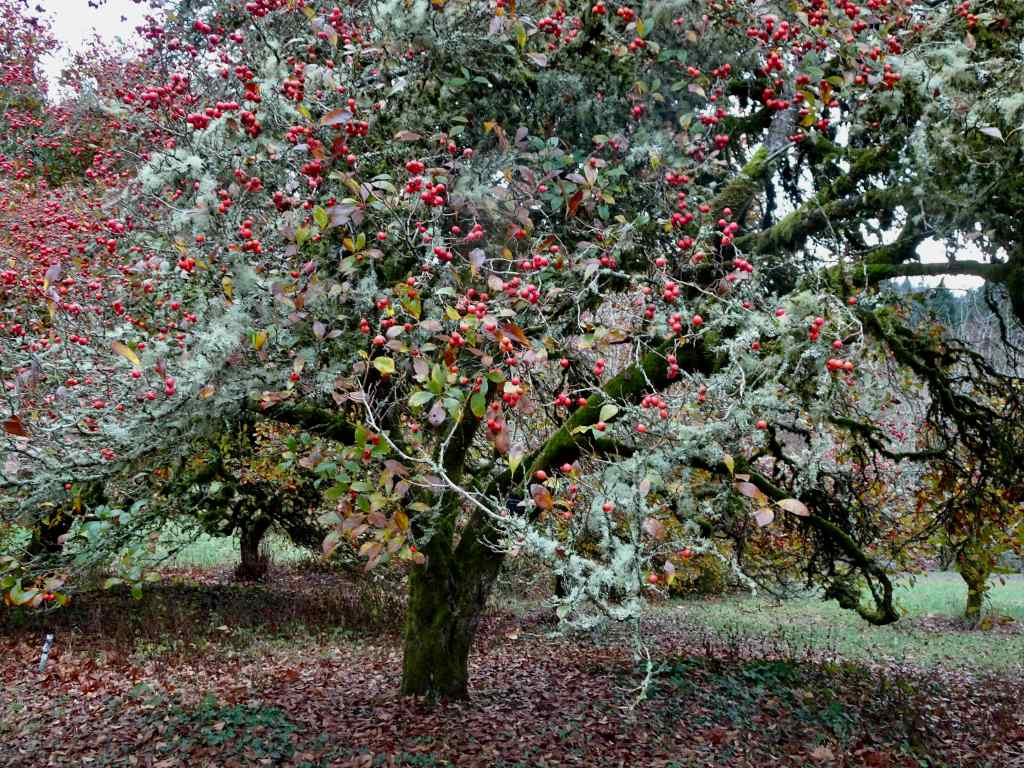
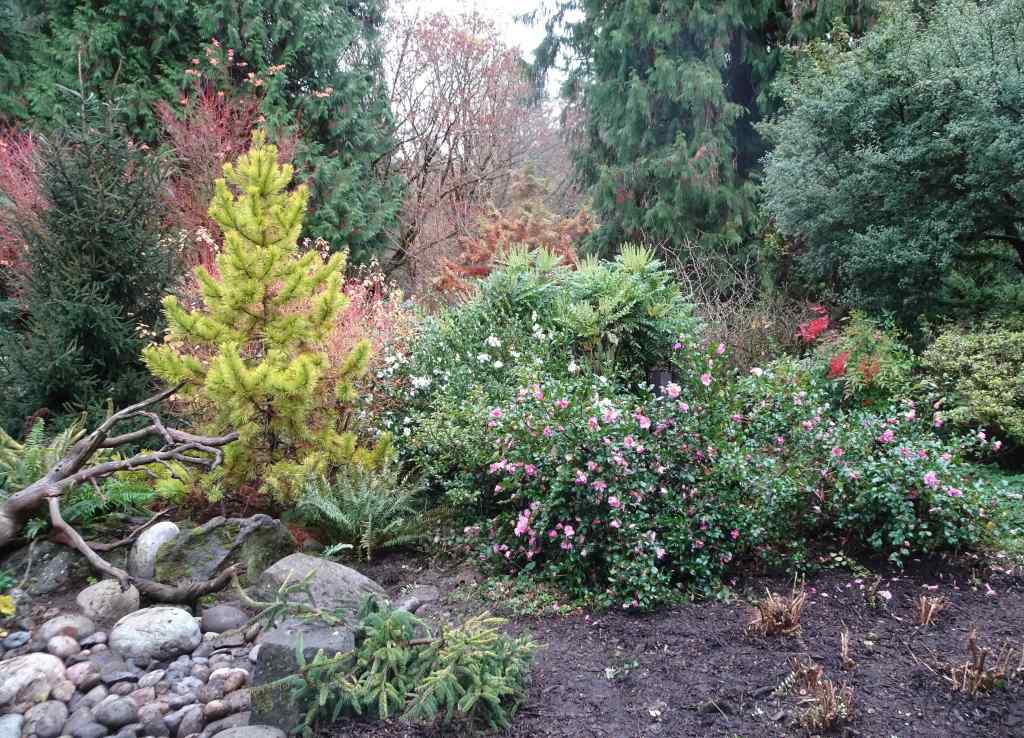
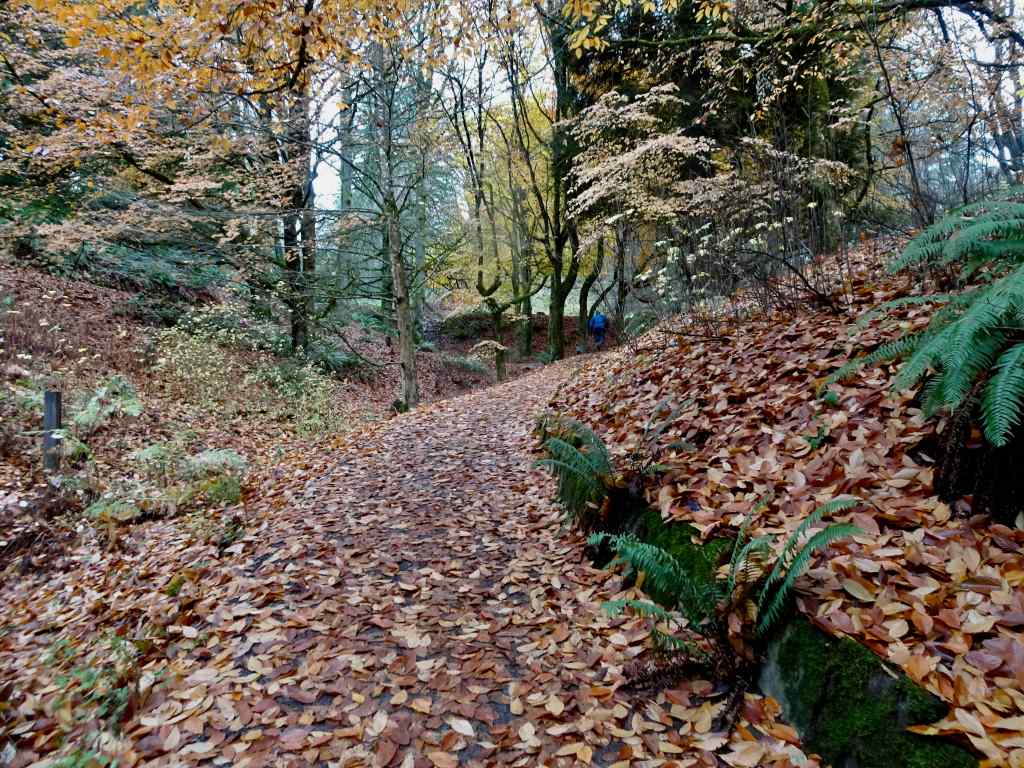
The snowy top of Mt St Helens was floating like a cream puff on the horizon.The maple tree was past its prime, color faded, but not yet leafless.Red hawthorne berries were glowing, as were the camellias and some of the foliage in the Winter Garden.Beech leaves lined our trail back to the start.
11/28 Catherine Creek/Rowland Wall
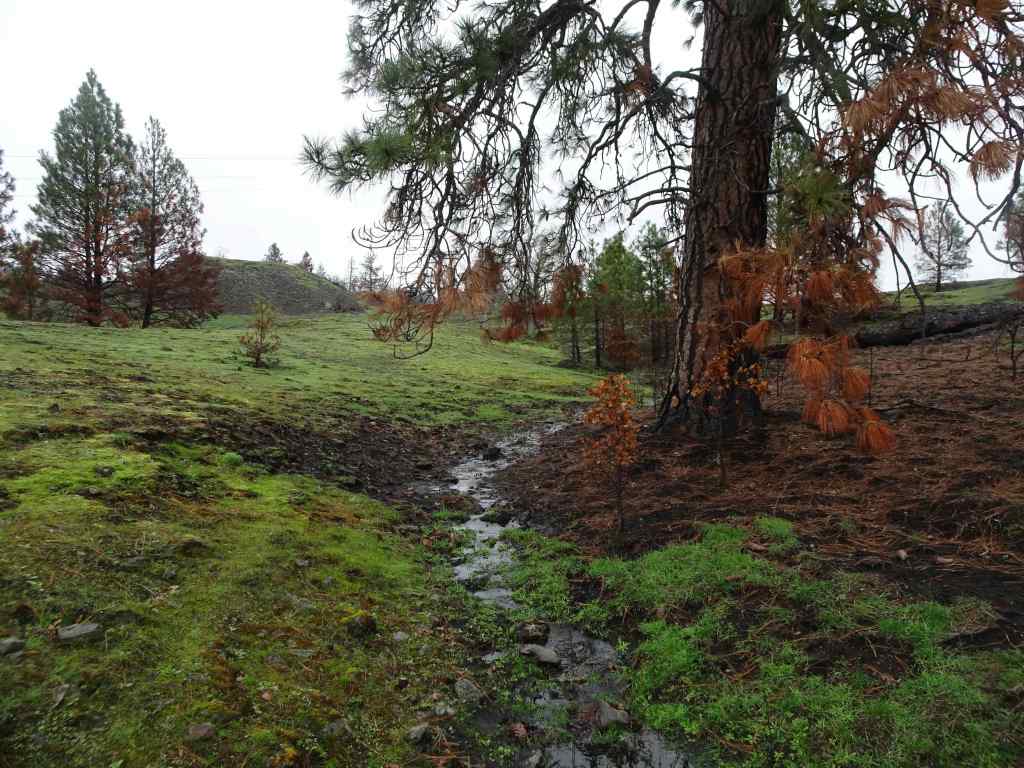
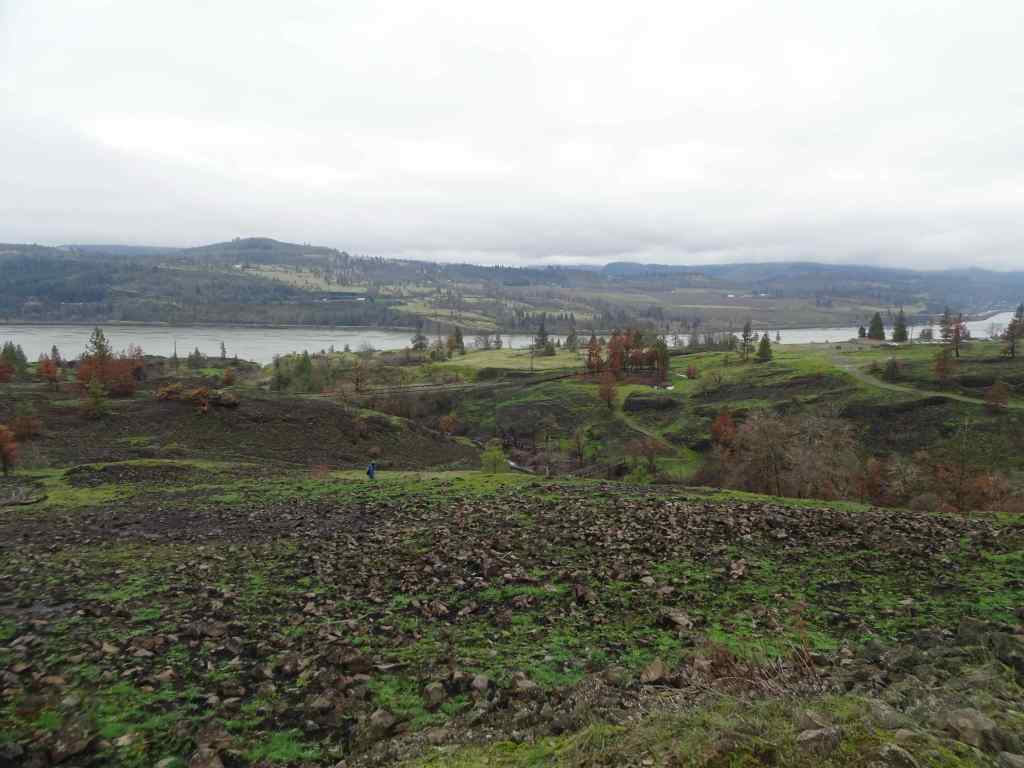
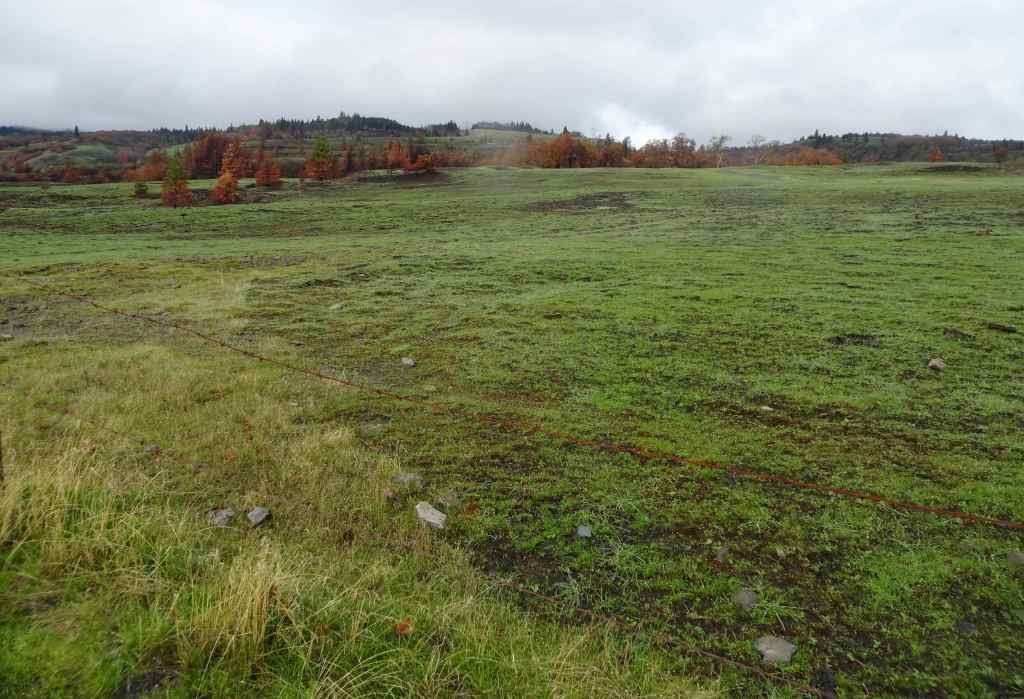
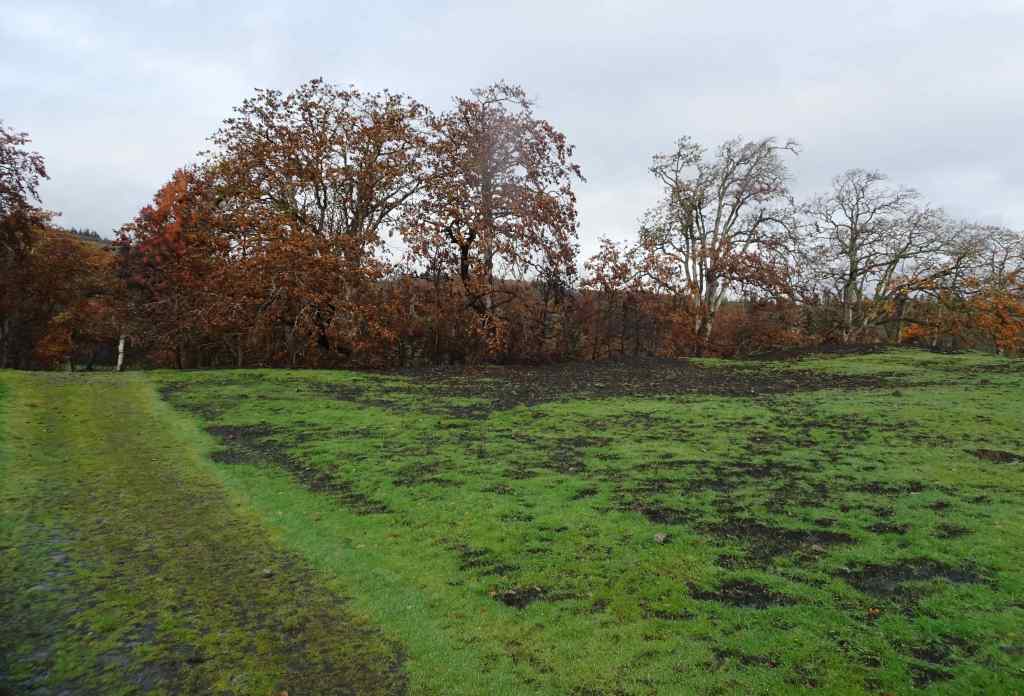
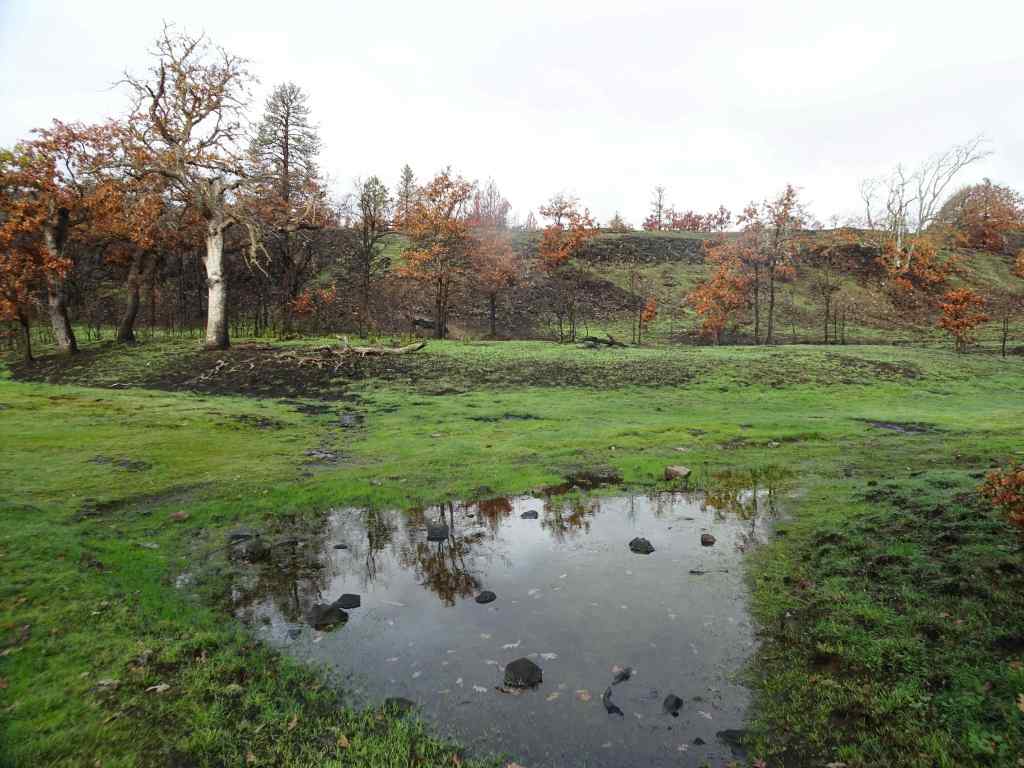
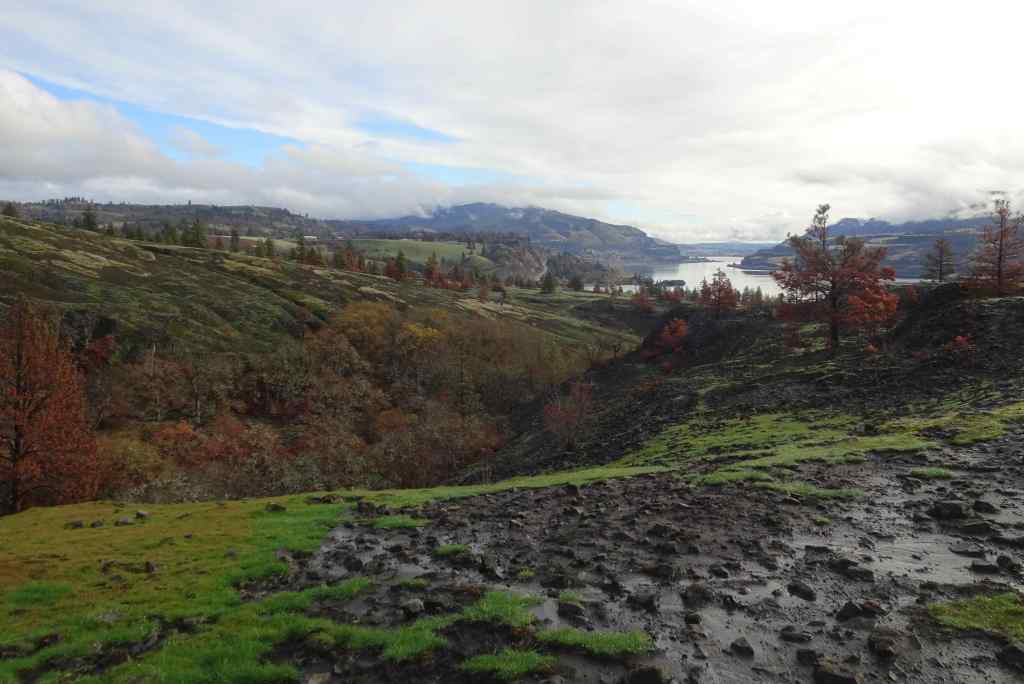
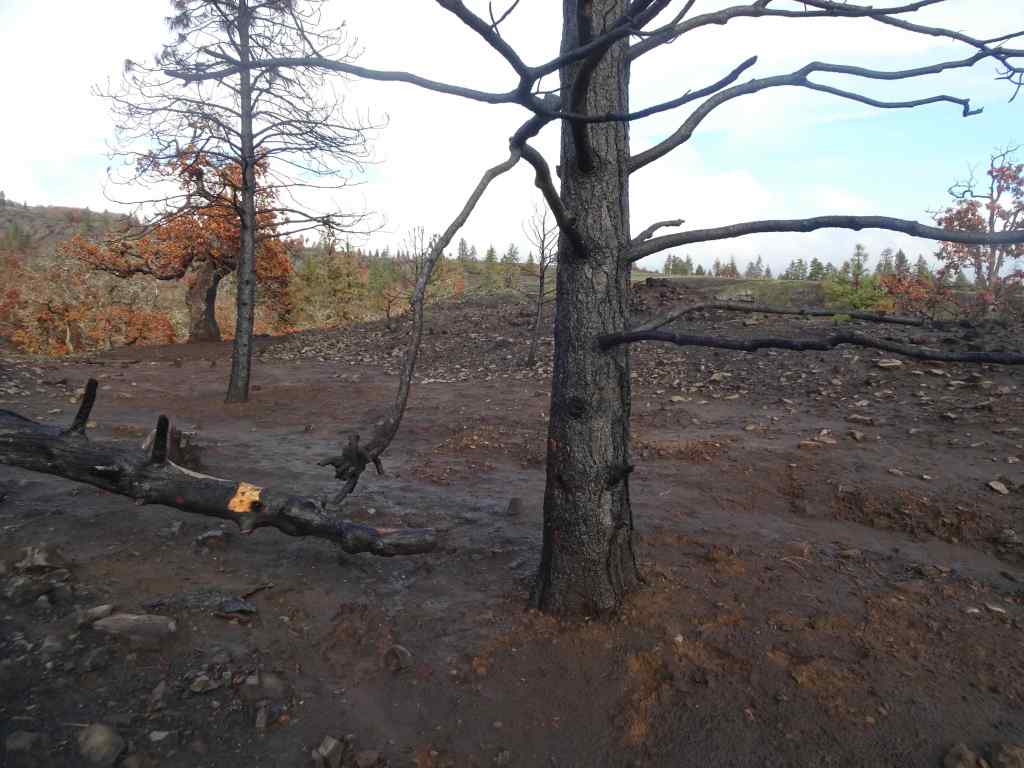
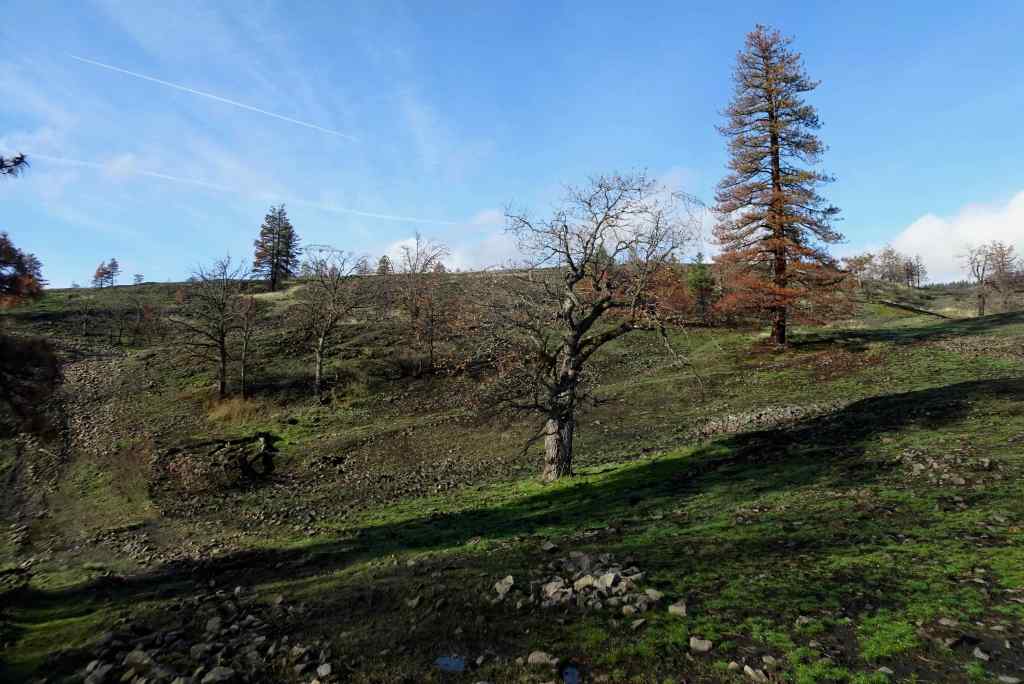
This was our first return to this favorite hike since the Burdoin Fire in July (2.7 miles, 720 feet). The blackened slopes have become green with newly sprouting grass. We passed many charred trees, and many that survived the conflagration.
The area of Lower Trail, south of Old Highway 8, did not burn, so looks same as it ever does in winter, with dried grasses fringing the landscape.
Unburned landscape south of the highway.
North of the highway, where the fires swept through, most of the golden grasses and shrubs were completely removed, and the landscape is covered with blackened earth and newly sprouted grasses.
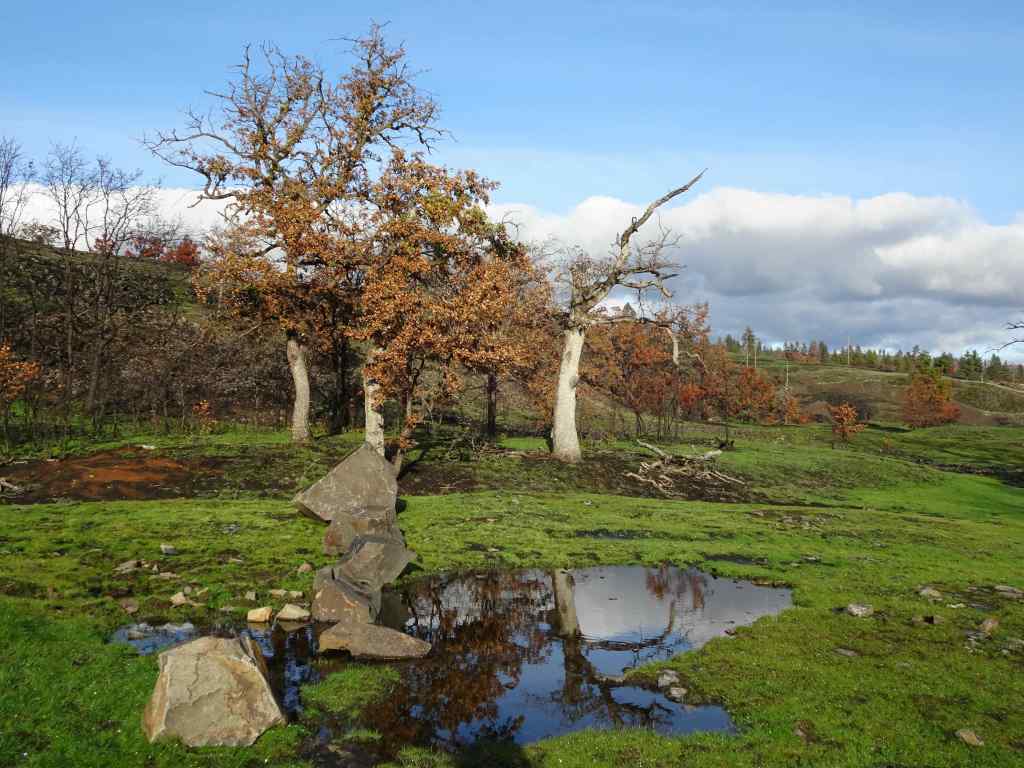
Looking north from the parking area across the burned slope.We began by walking up to the Fairy Ponds.Trees near the Fairy Ponds show fire damage.
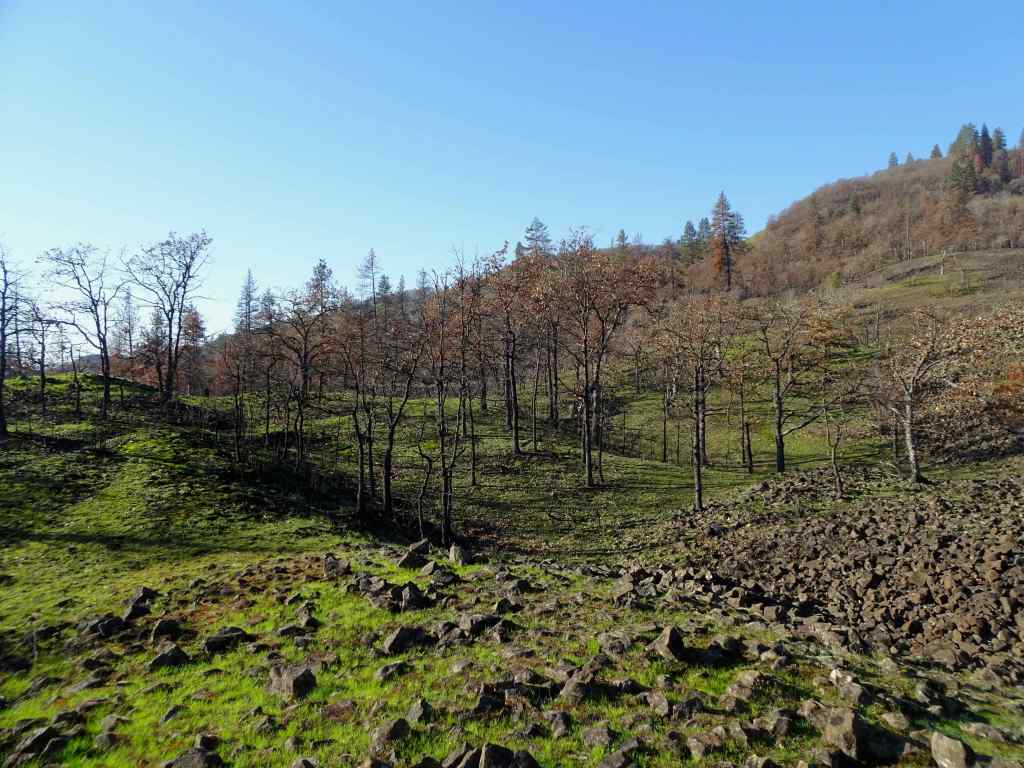
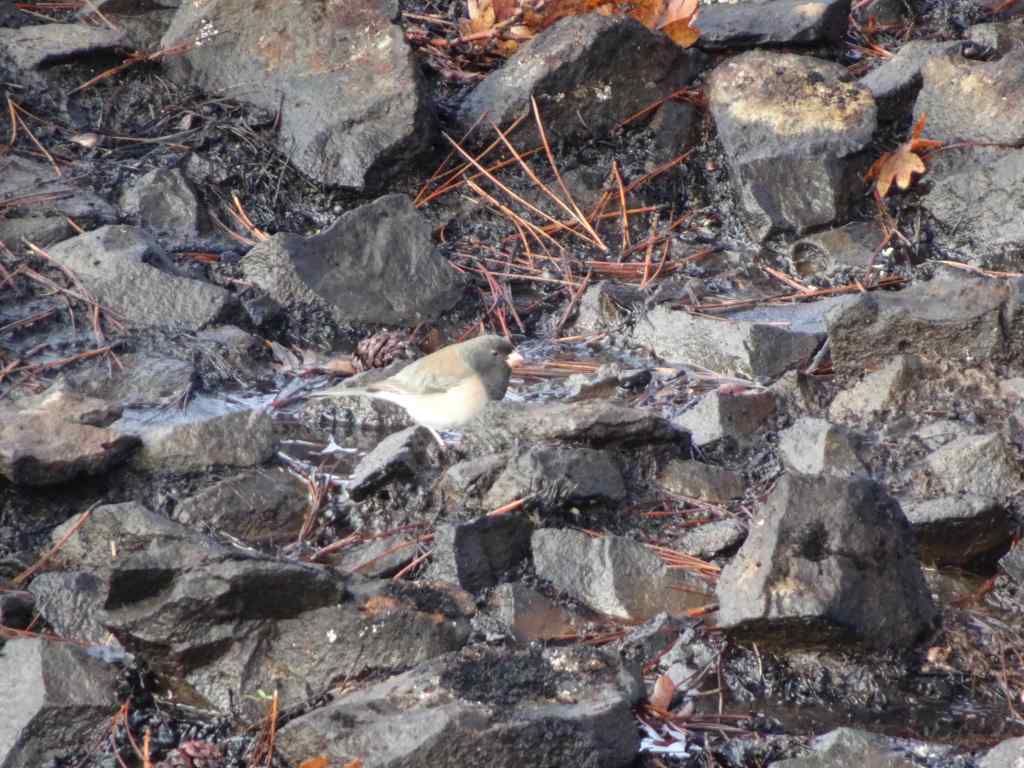
We continued walking up the Bitterroot Trail, to the ridge just west of Catherine Creek.Looking upriver from the ridge, all the way to the town of Lyle, where the fire stopped at the Klickitat River.Blackened soil and trees.Juncos were pecking around in the dirt here.Looking across to the Arch, which already has new fencing in place.Wider view of the Arch, and the lower trail in front of the Arch.
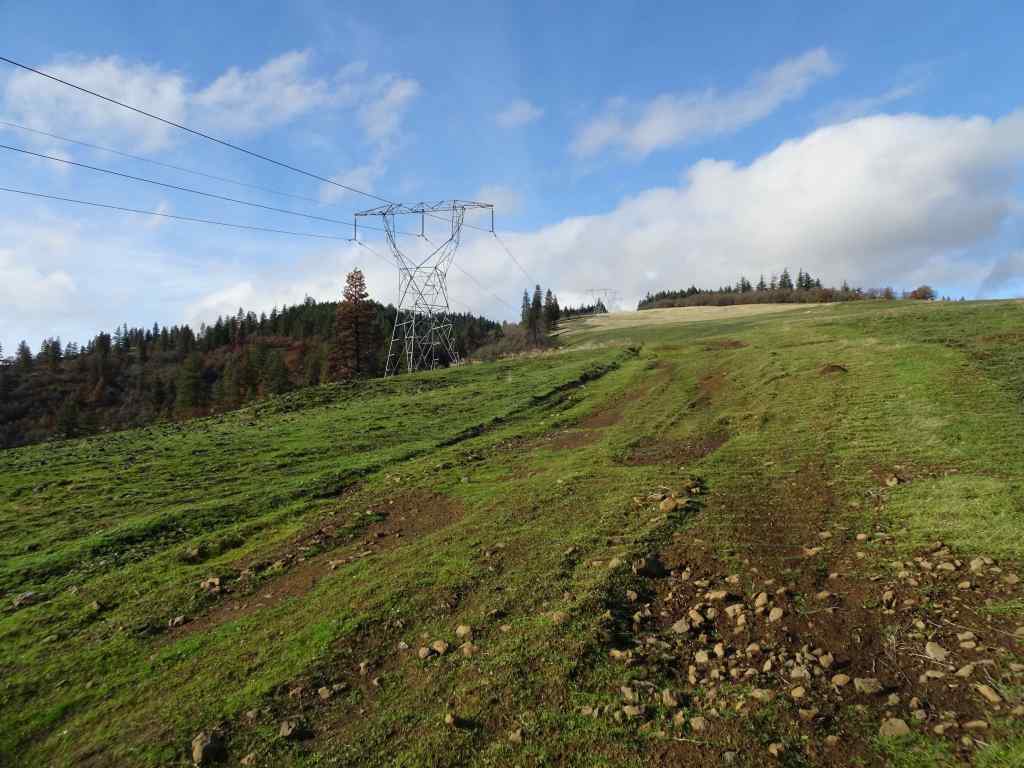
We walked up slope, and past the power pylons to the edge of Rowland Wall.
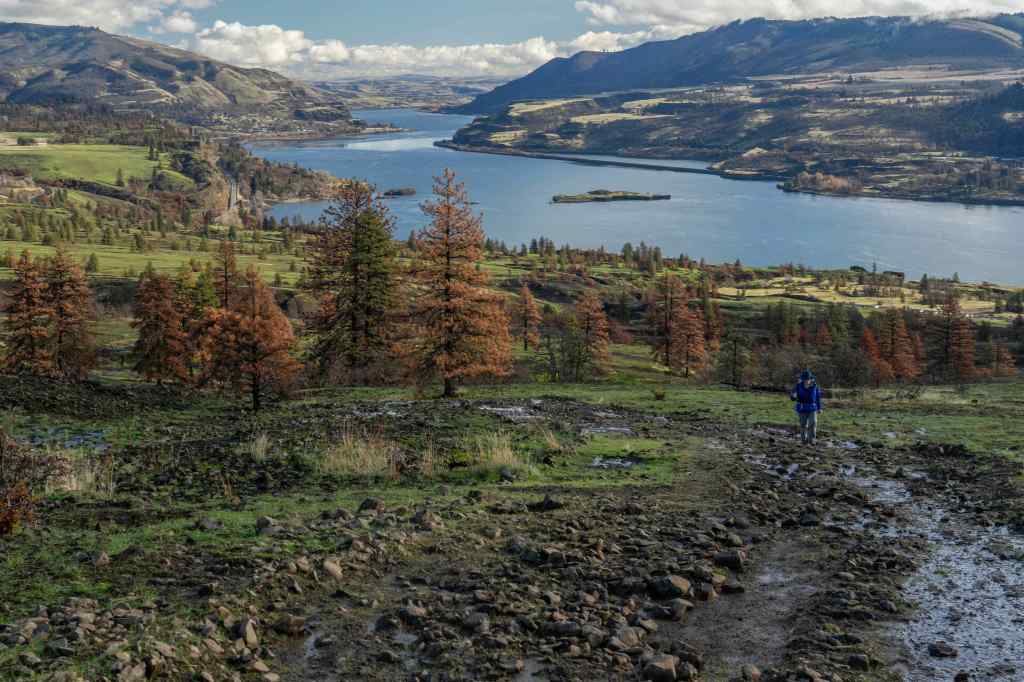
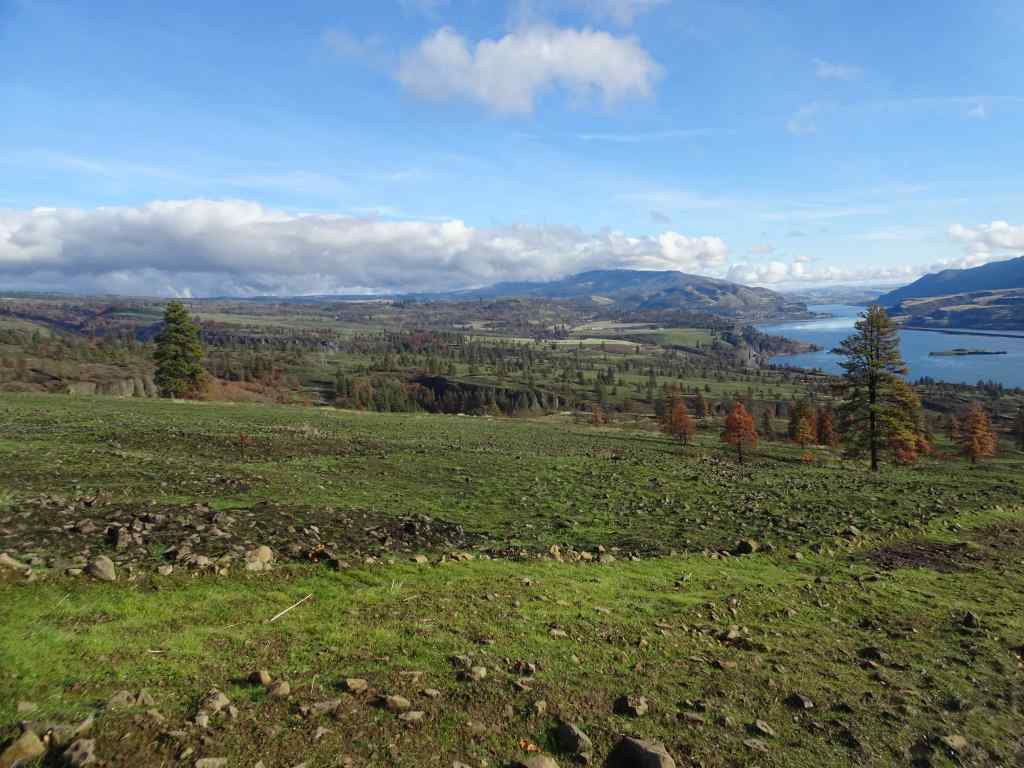
Looking eastward across the landscape, up the Columbia River. Oddly, green areas are burned, golden areas are unburned. Orange pine trees are fire damaged.Continuing uphill toward the power pylons.Near our turning place – the golden, unburned area at the top was burned in last year’s controlled burn of the area, and I guess they held a fire line there in July.Eastward from our high point. It was a gorgeous day!
From the edge of Rowland Wall, we looked at our familiar landmarks to the west to see how they fared.
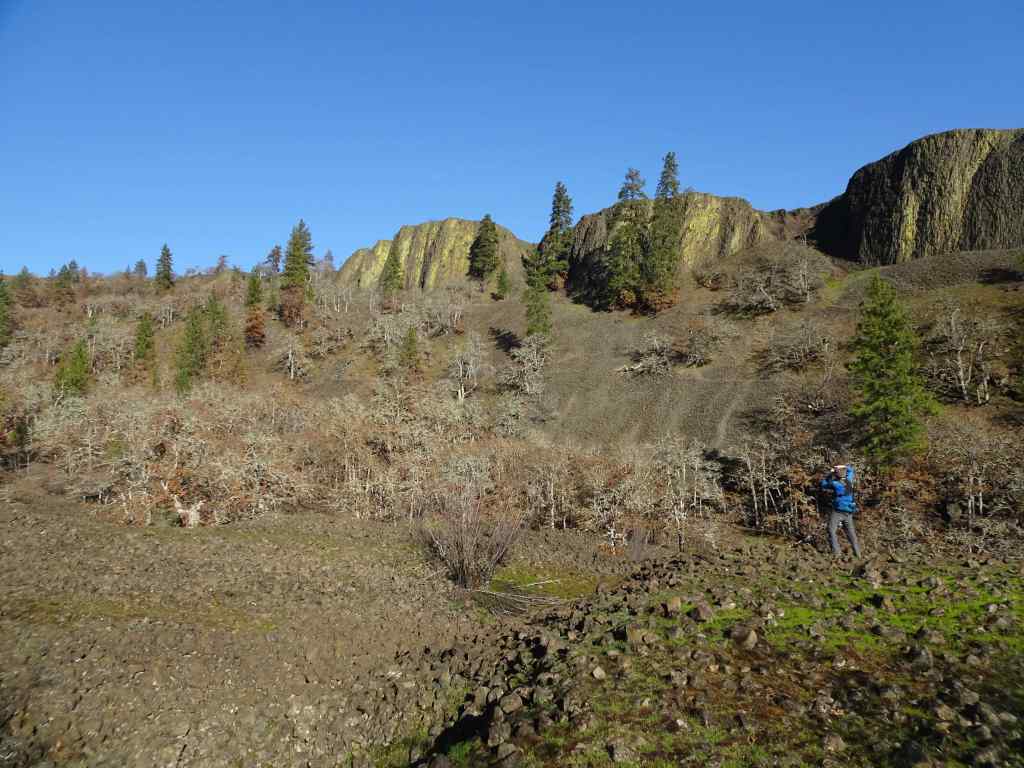
The tall tree here can be seen from many of the trails in the area – I think of it as the ‘guide’ tree.Zooming in – it is still standing, but appears to have some fire damage.Next, we hiked down the Rowland Wall cliffs…I found bitterroot foliage in the usual places – a good omen!Chartreuse lichen on the cliffs – not burned.Wider view: guide tree on the skyline. Lots of burned trees in the volcanic landscape below the wall.
Next, the trail takes us back east toward our parking area. Some of the lower tree stands in this area were very badly burned.
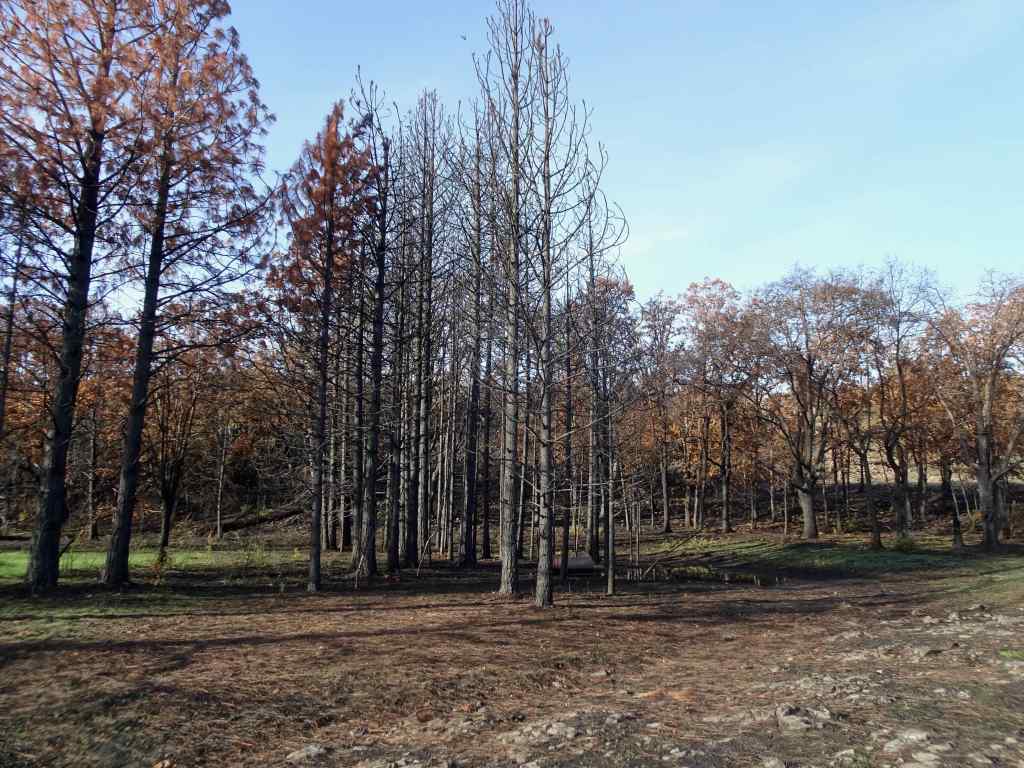
View back toward the parking area.Many burned pine trees.I hope the frogs will be back in this pond, where we often hear them.This is the first time I have seen the rock cliffs behind these trees – all the undergrowth is gone.The ponds are still reflective on this beautiful day.
The experience was a little heartbreaking, but also hopeful – there were still birds, and some of the wildflowers were beginning to sprout up in the blackened dirt. We will return in spring to monitor the changes. I’m glad we can continue to hike here on rainy days in Portland!
Three hikes this month. Our fall hiking areas on the Washington side of the eastern Columbia River Gorge are still impacted by Burdoin Fire damage. We hiked twice on the Oregon side, and once in the Cascade foothills east of Salem.
10/14 – Deschutes River Trail, Oregon
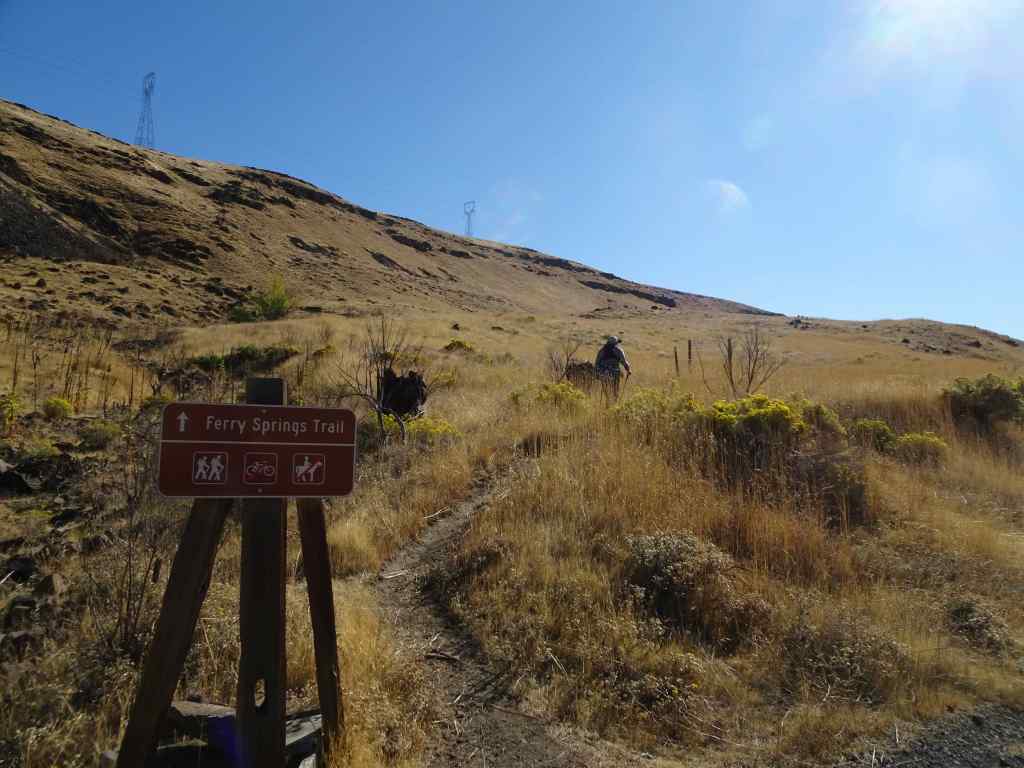
Our usual loop, up to Ferry Springs, and then return along the Deschutes River (4.5 miles, 600 feet).
Blue sky today, a light breeze.
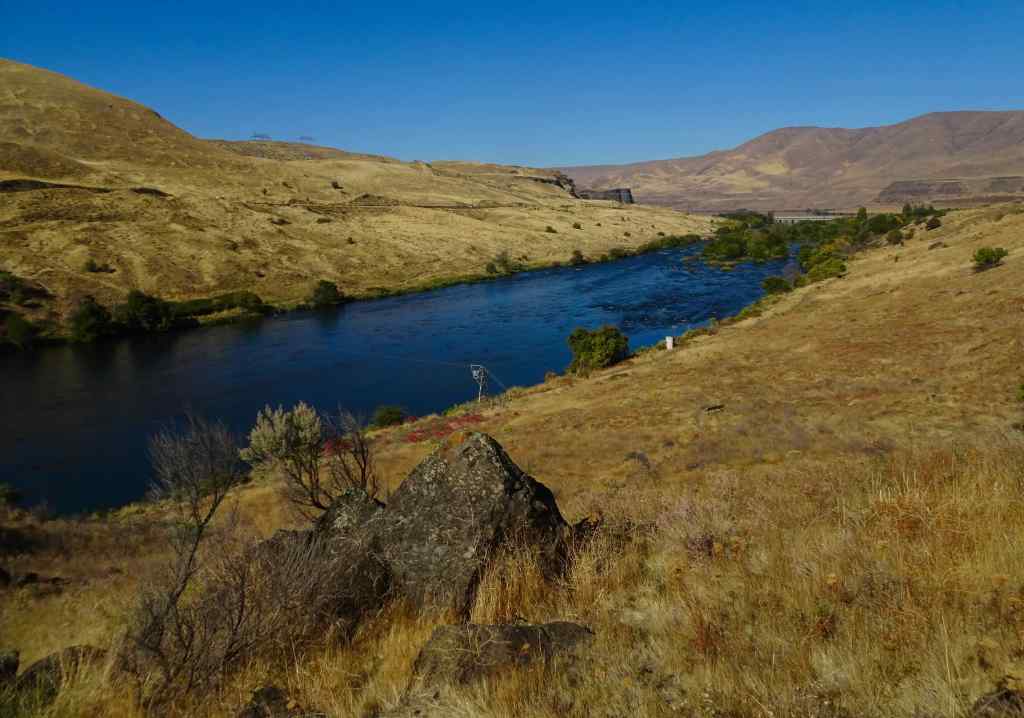
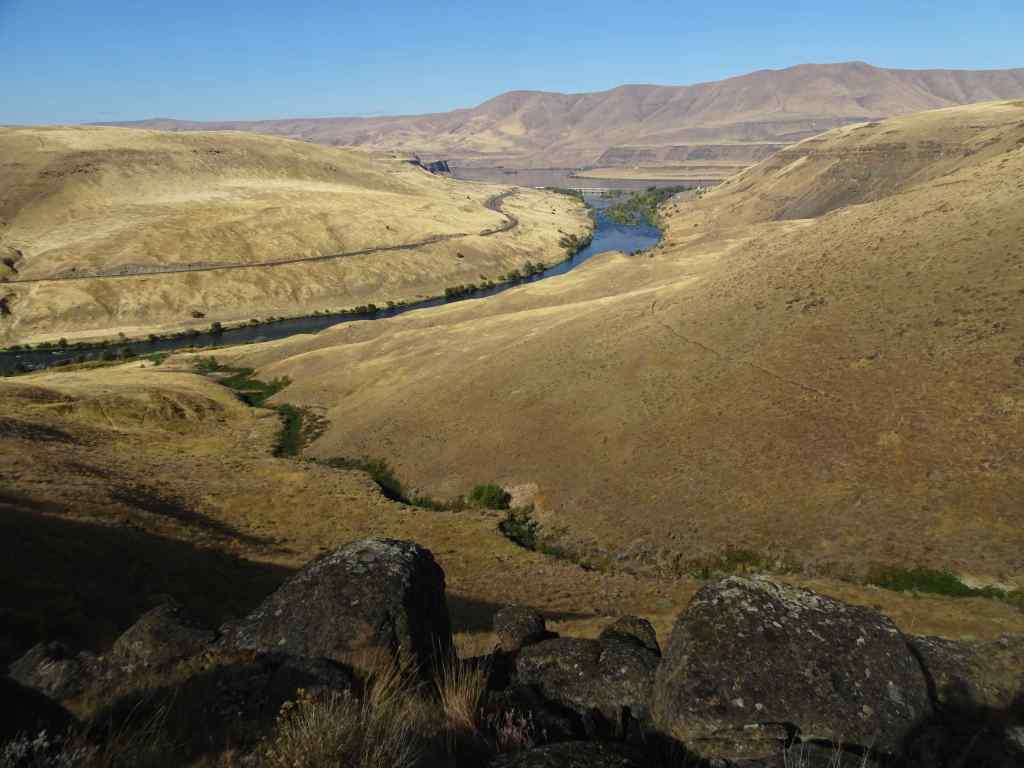
Walking along the Deschutes River. Reflections, a few water birds.Rising up above the river, view to the confluence with the Columbia River.Upstream viewUphill toward Ferry Springs.
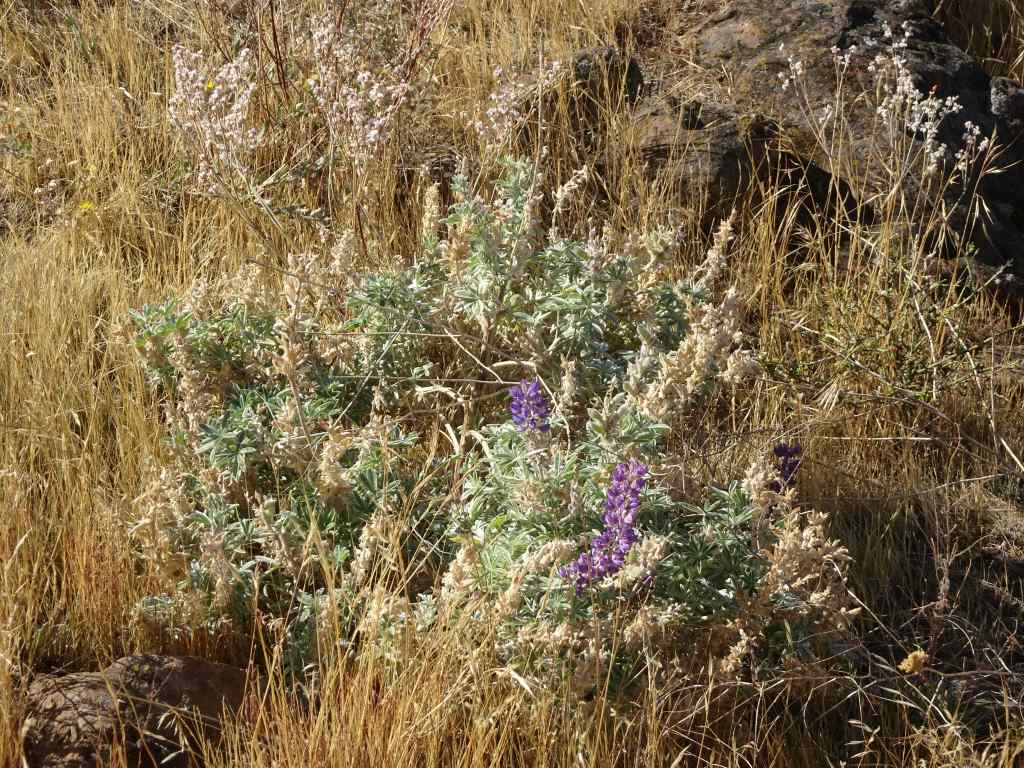
Still losing my breath on the uphill. There are clumps of white and pink blooming buckwheat, yellow rabbit brush, and a few scrabbling lupines. Dried out balsamroots and thistles punctuate the slopes of golden grass where it was blackened and burned a few years ago. Very little sign of the fires now, so much has regrown. Once again, it is peaceful out here – down by the river there are many people fishing for steelhead; we saw one train on the western bank; otherwise a rock wren, a raven call, and us.
RabbitbrushSnow buckwheatLupine
We crossed over Ferry Springs, then looked down toward the river.
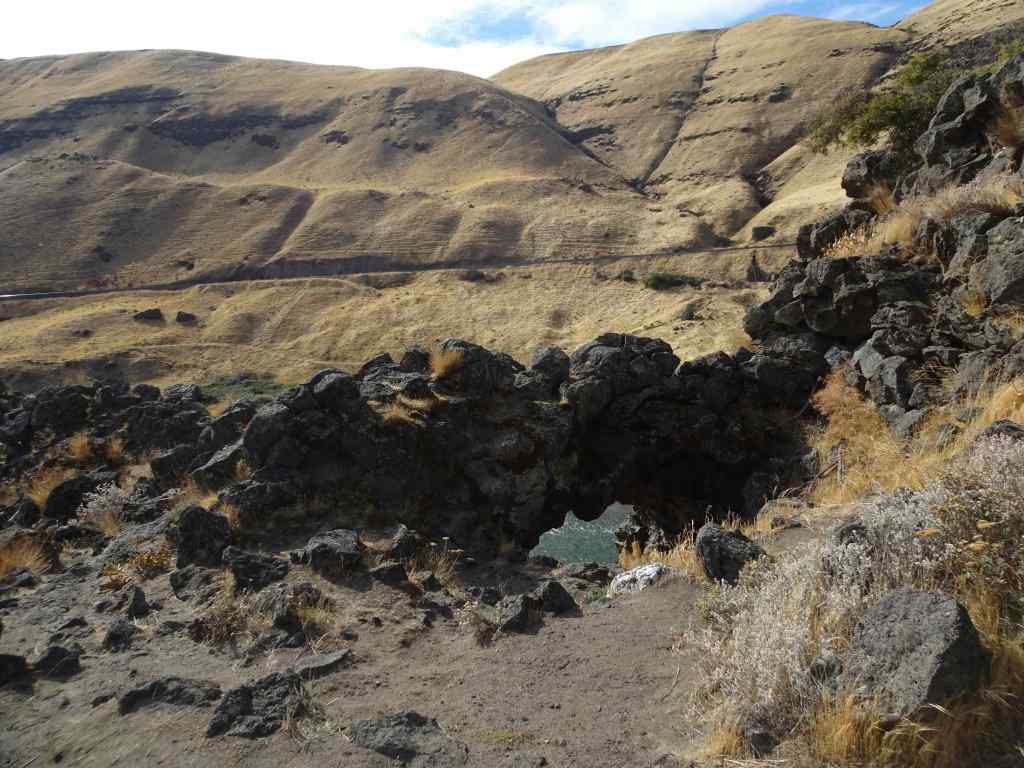
The Ferry Springs CrossingLooking down on Ferry Springs as it joins the Deschutes River.And the view to the Columbia River and Columbia Hills.Almost back to river level, looking through the arch.
Back along the river, walking north –
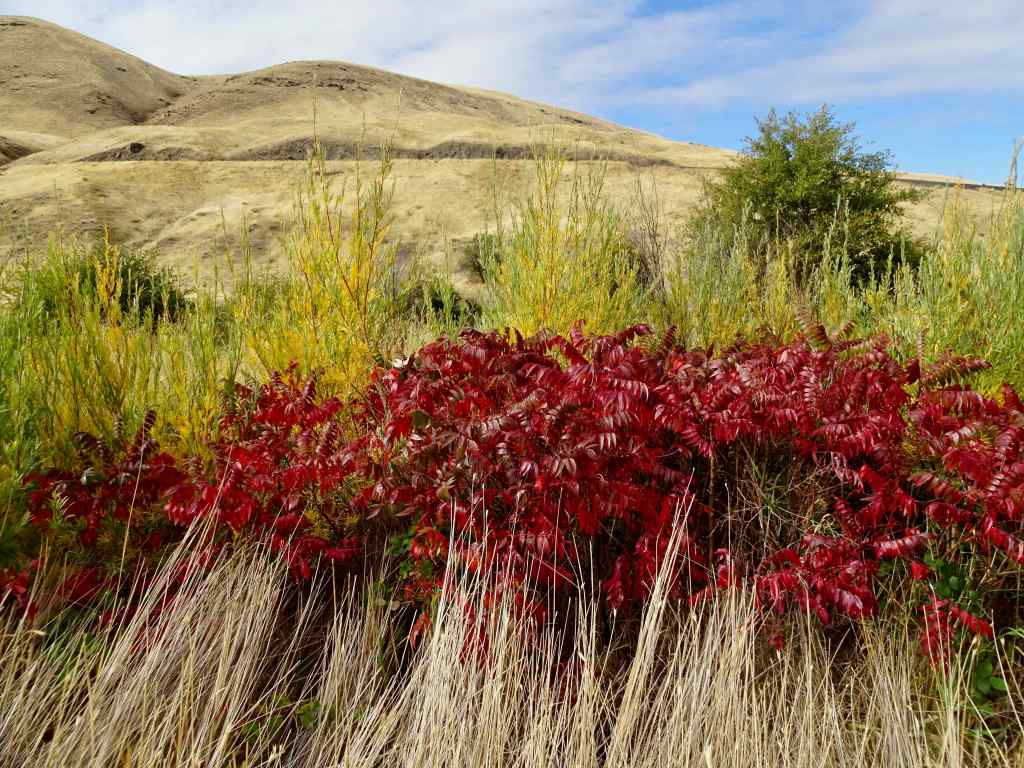
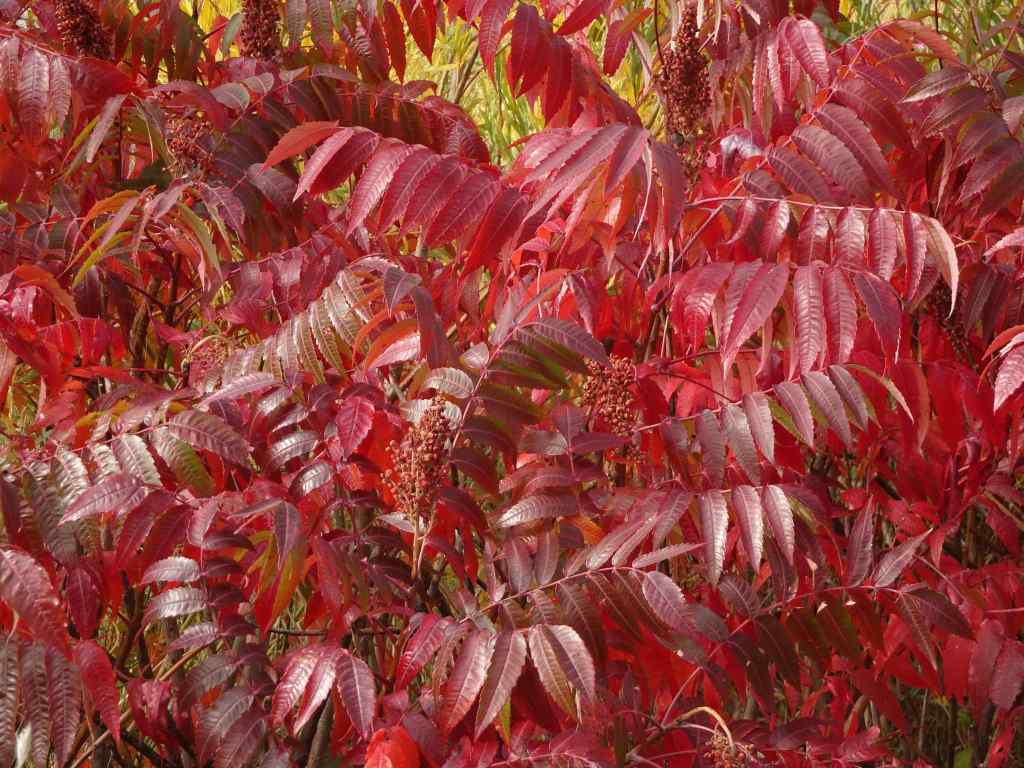
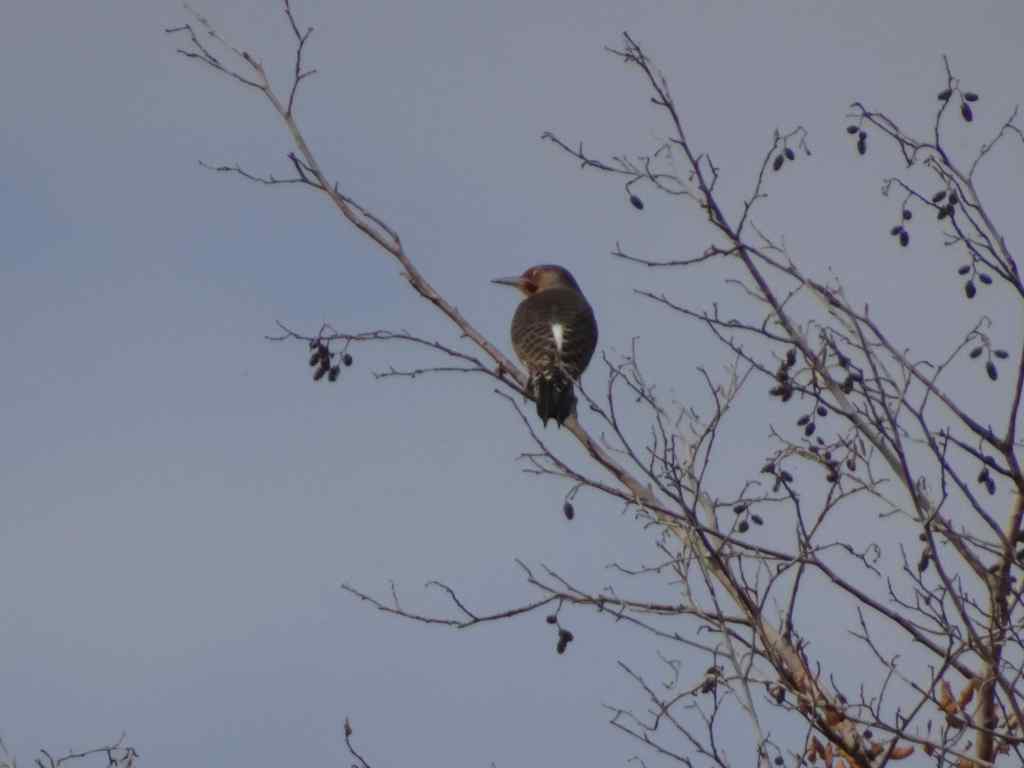
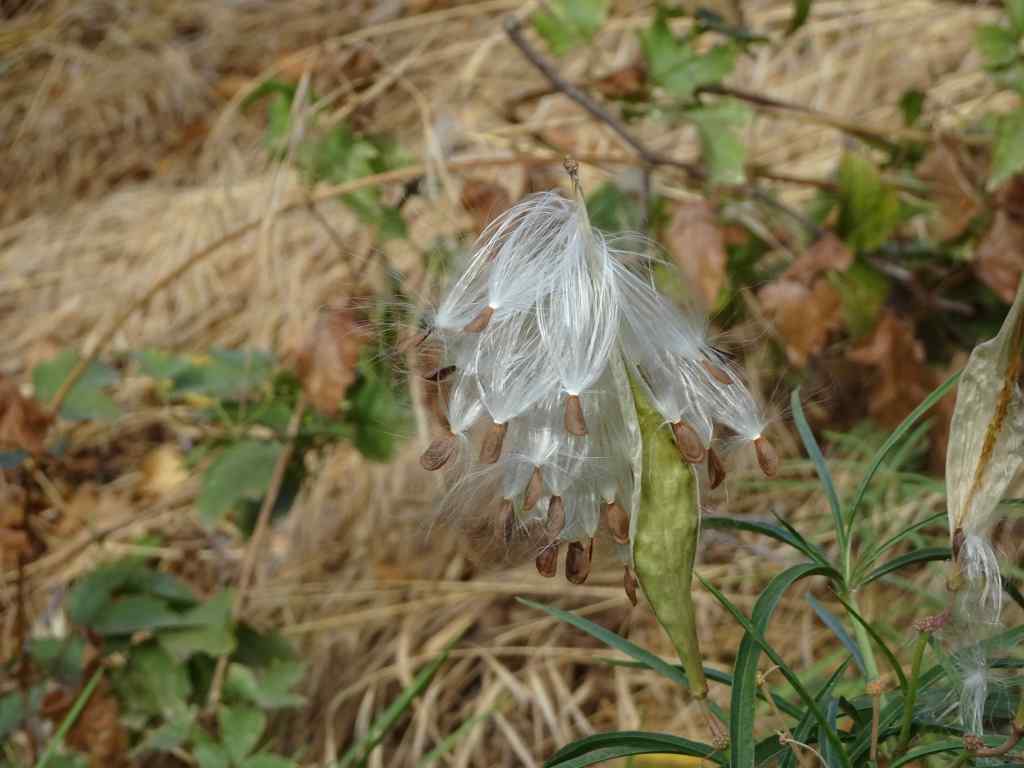
SumacSumacRiver viewDucksNorthern flickerMilkweed seeds getting ready to disperse.Milkweed seed
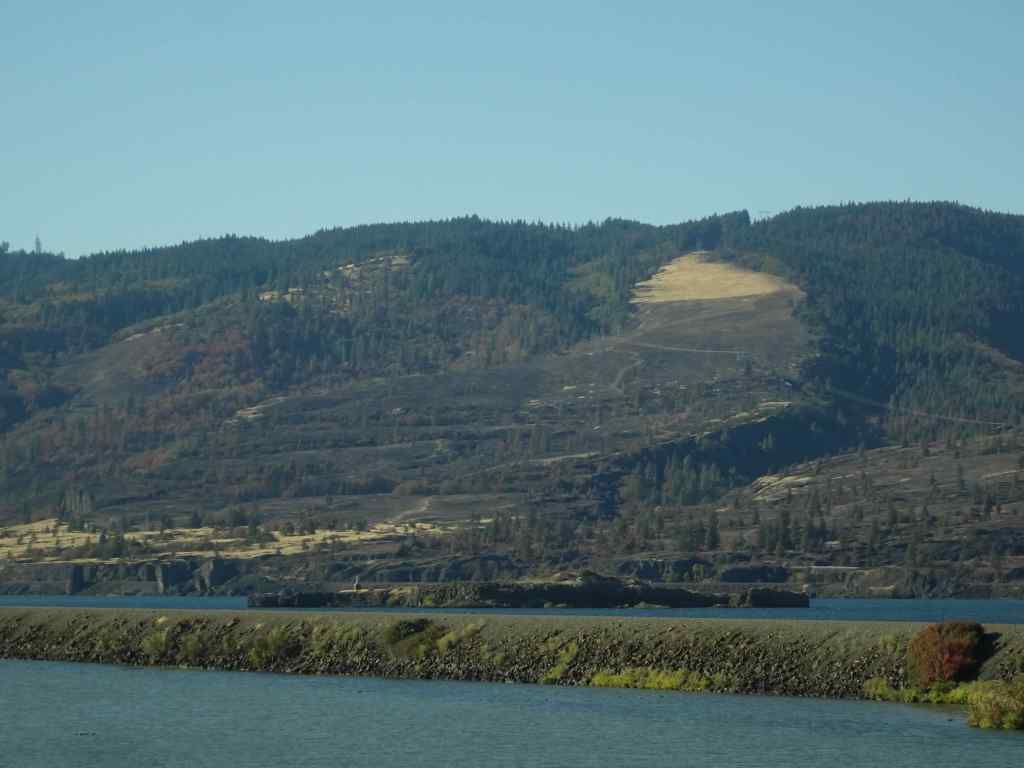
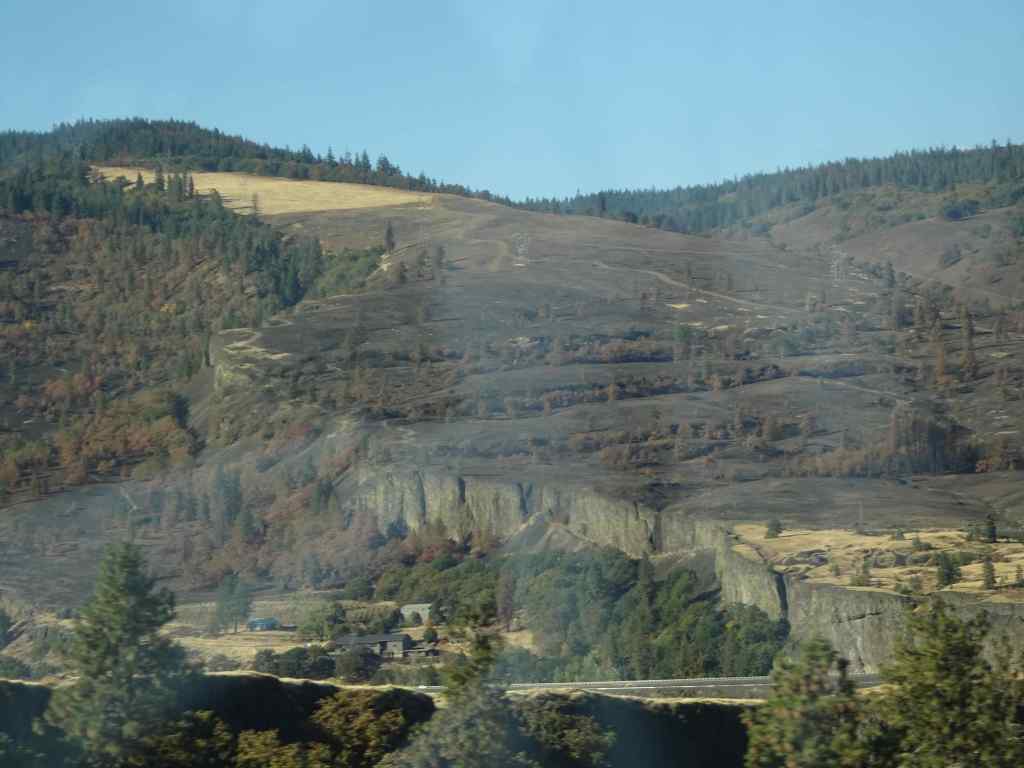
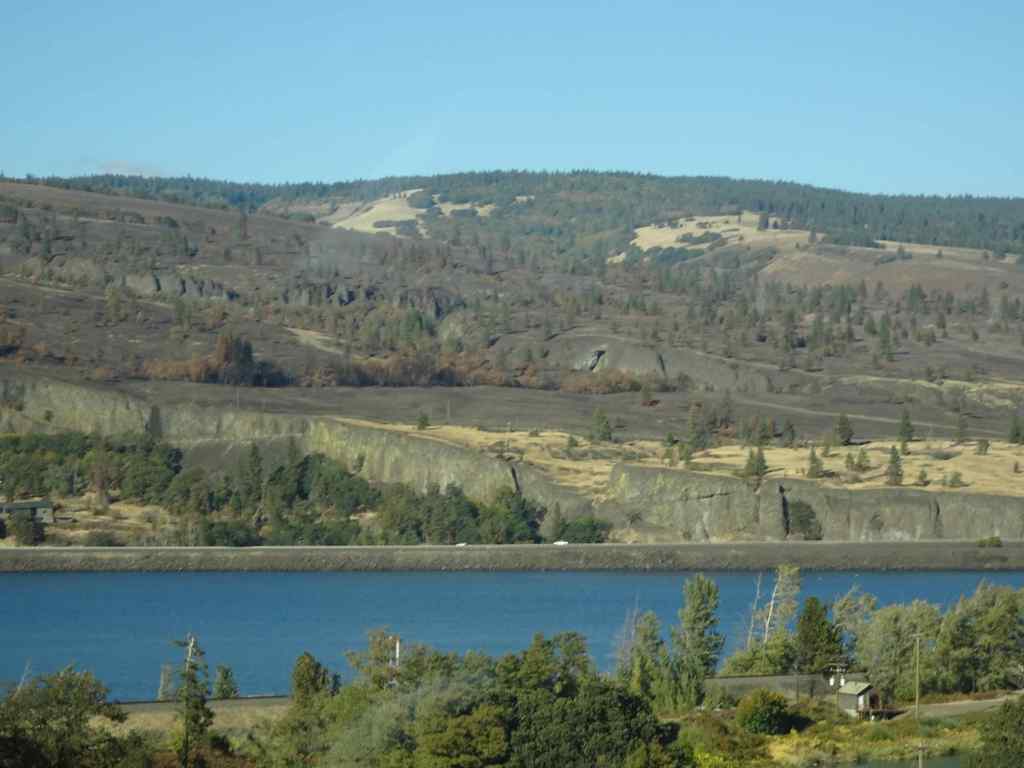
We appreciated the golden slopes we just walked down, especially after seeing the blackened slopes at Catherine Creek. As we drove back west along south side of the Columbia River, I took a few shots of the Burdoin Fire area in Washington that was burned last summer. There are some very black slopes, but also some unburned areas. I can’t quite see my favorite trees from this view.
Catherine Creek hiking area, from I-84, westbound.Catherine Creek areaCatherine Creek area. The Arch and Tracy Hill.
10/20 – Silver Falls State Park, Oregon
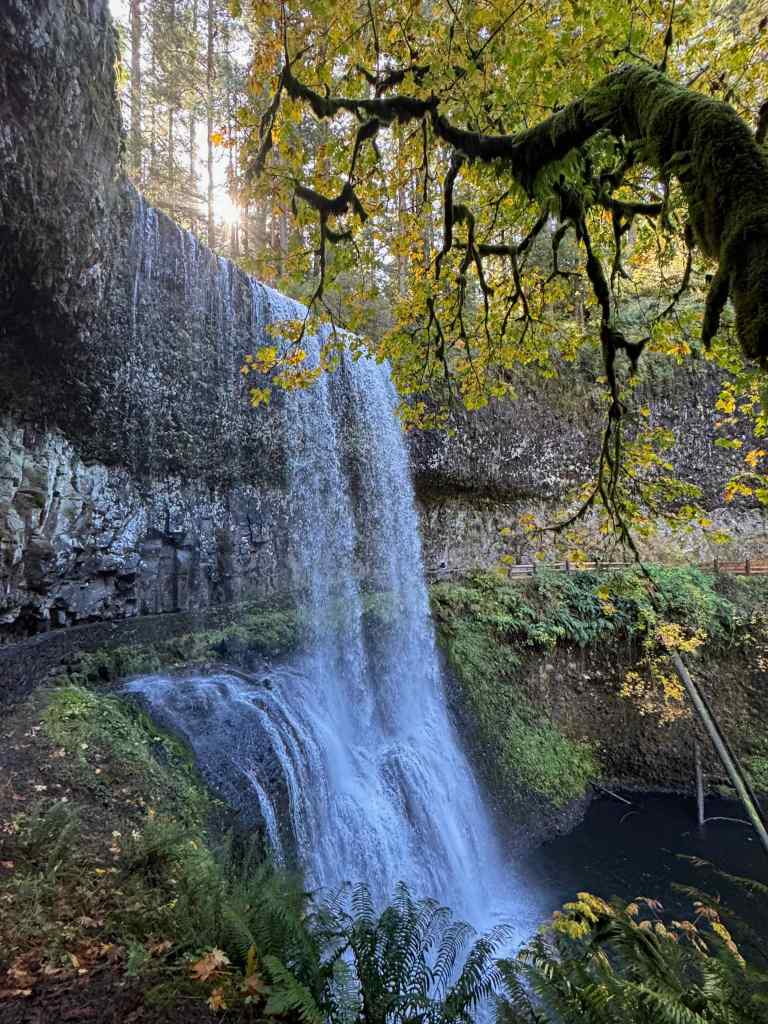
Another place we have hiked many times. Today we saw six of the ten famous falls (5.8miles, 600 feet).
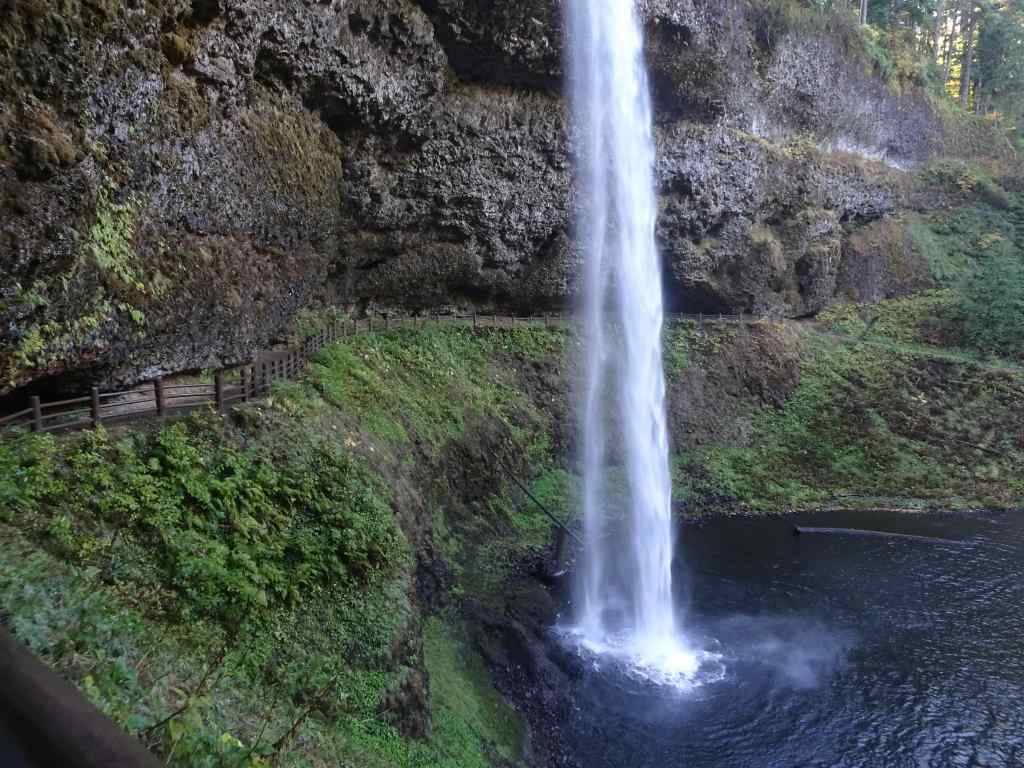
South Falls
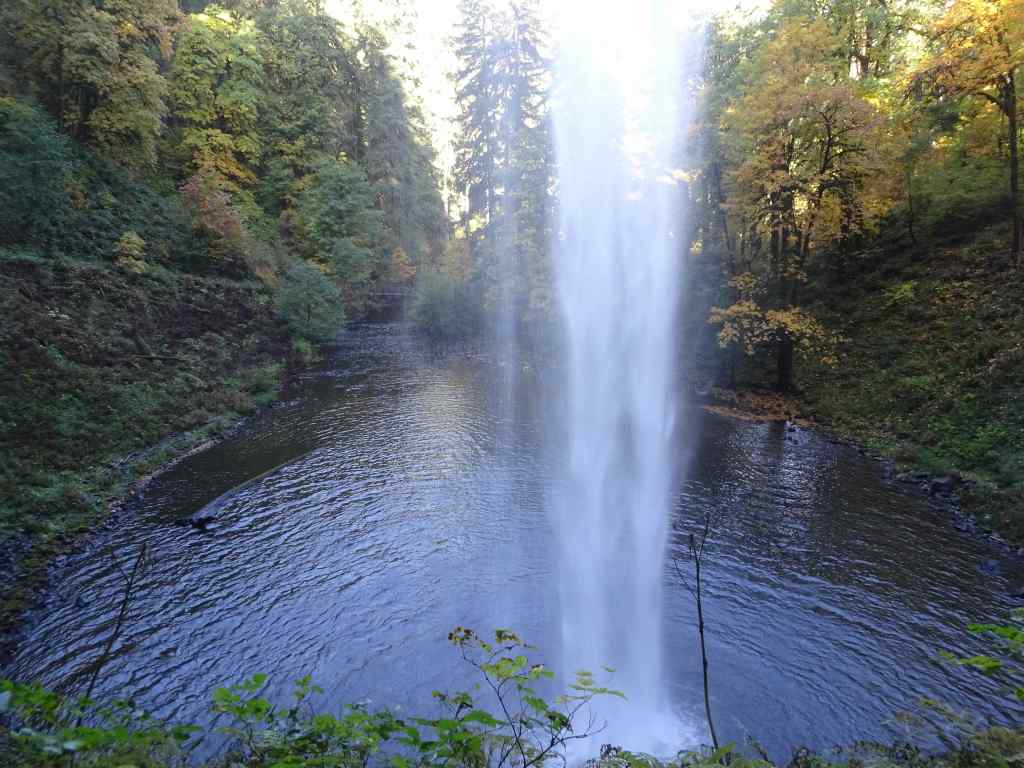
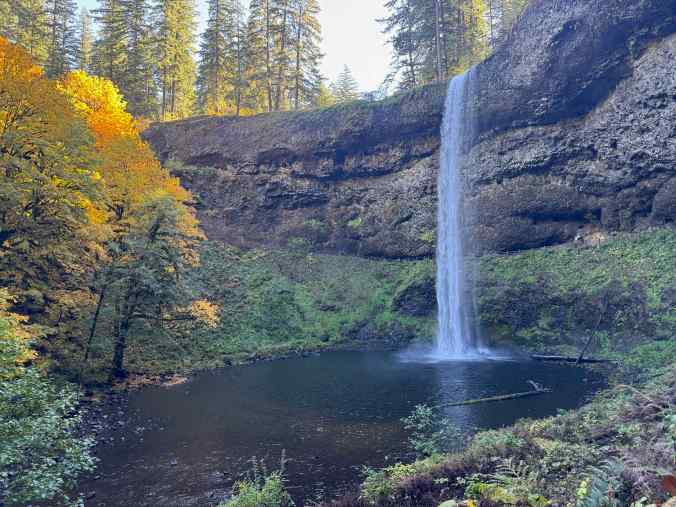
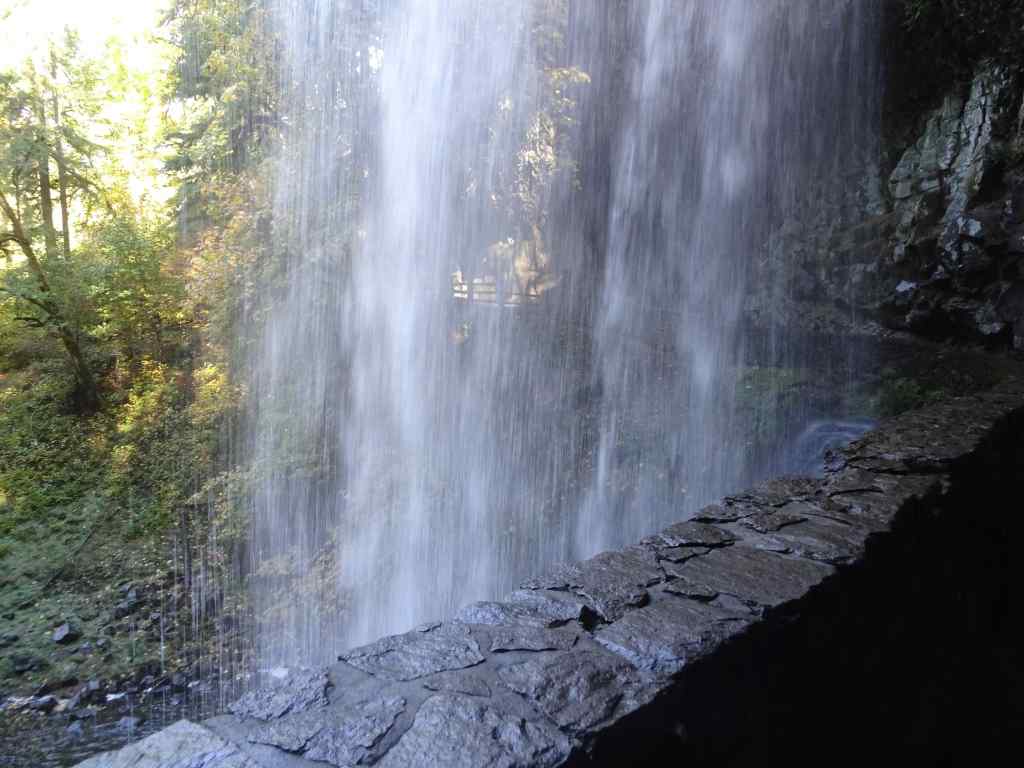
Looking down toward South Falls.Our trail goes behind the falls.Looking downstream from behind the falls. This time of year the spray doesn’t soak us.Looking up toward the rim.And looking back from the other side.
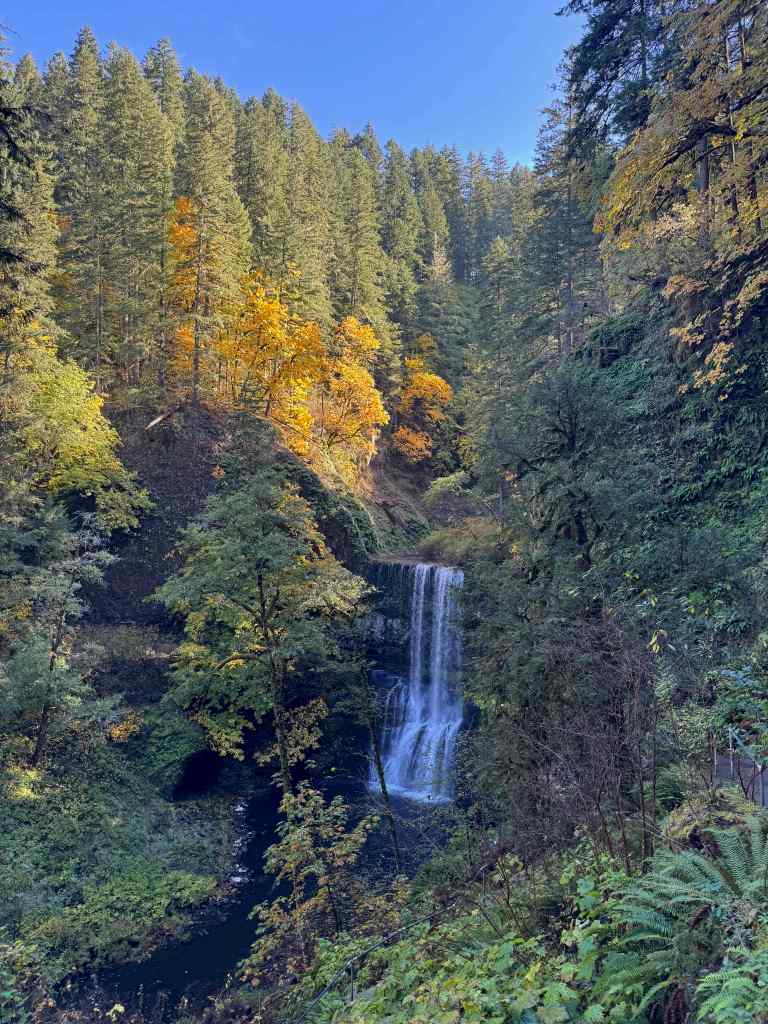
Lower South Falls – We continued downstream along the South Fork of Silver Creek, eventually descending switchbacks and staircases to walk behind Lower South Falls.
Descending toward Lower South Falls.Walking behind the falls.Downstream view.Looking back from the other side.
Lower North Falls – Next, we passed the confluence of the North and South Forks of Silver Creek, and began walking upstream along the North Fork.
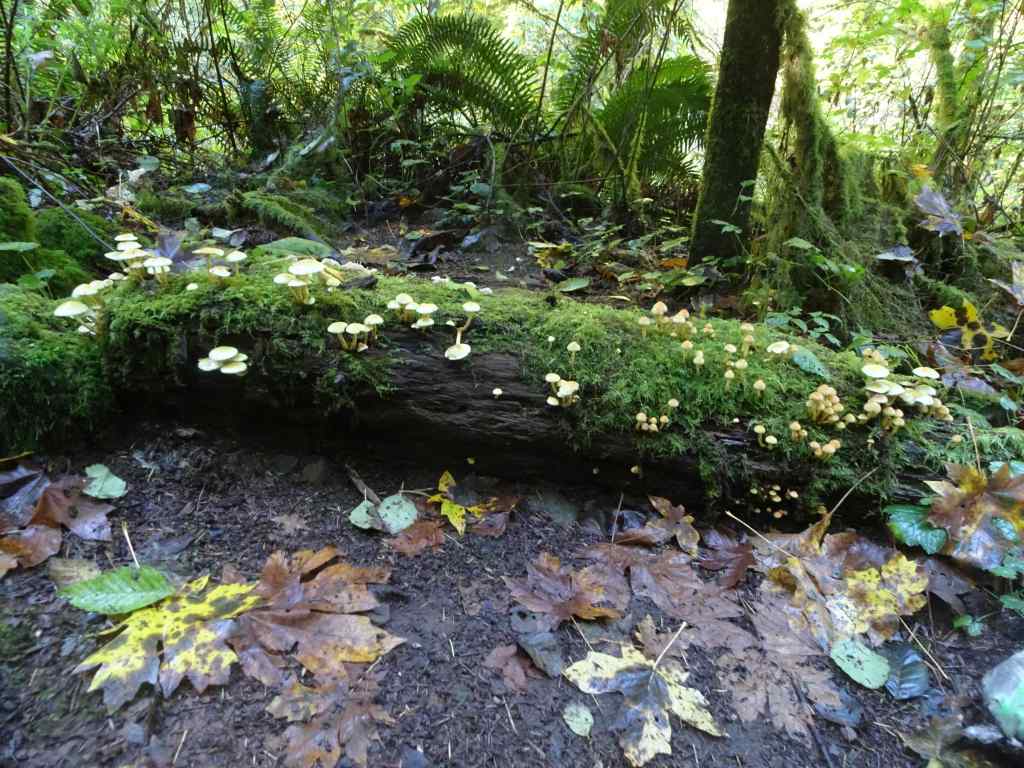
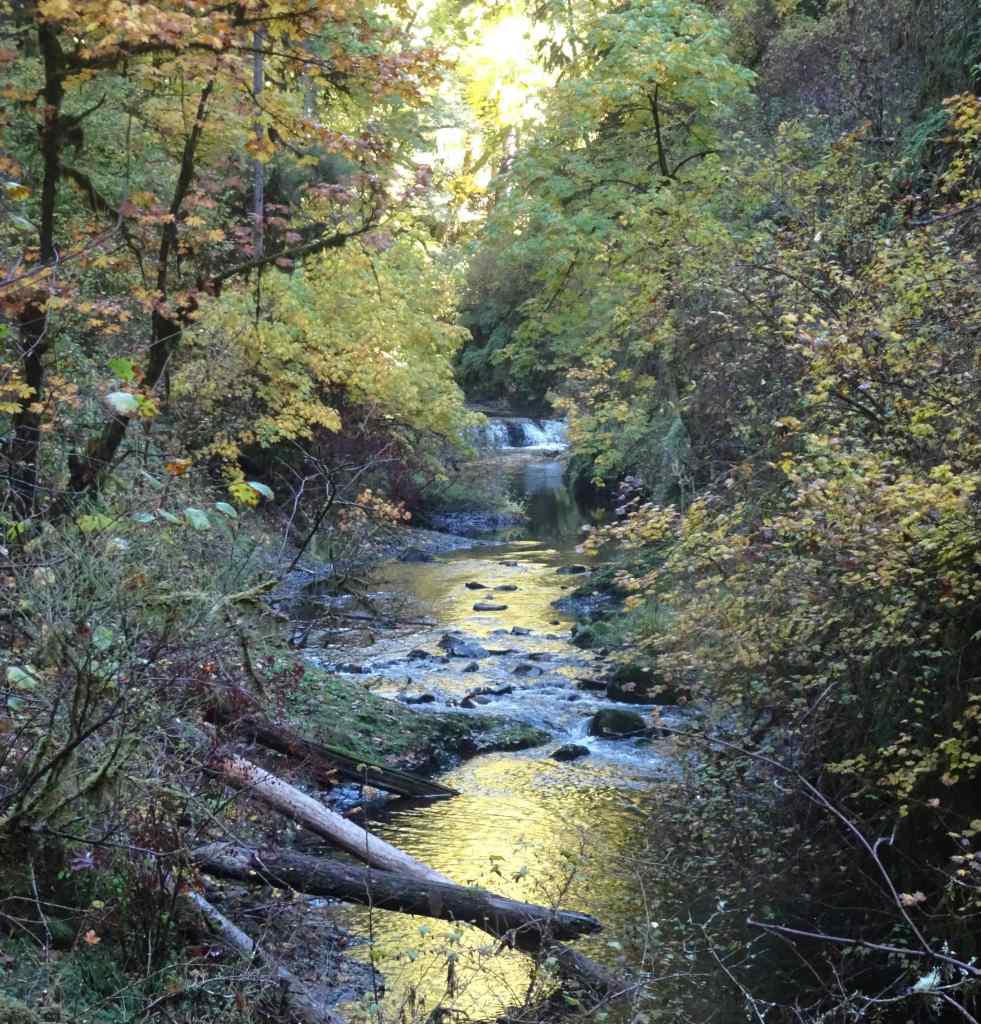
Mushrooms and mossCrossing the North Fork.Lower North Falls
Drake Falls – Continuing upstream along the North Fork…
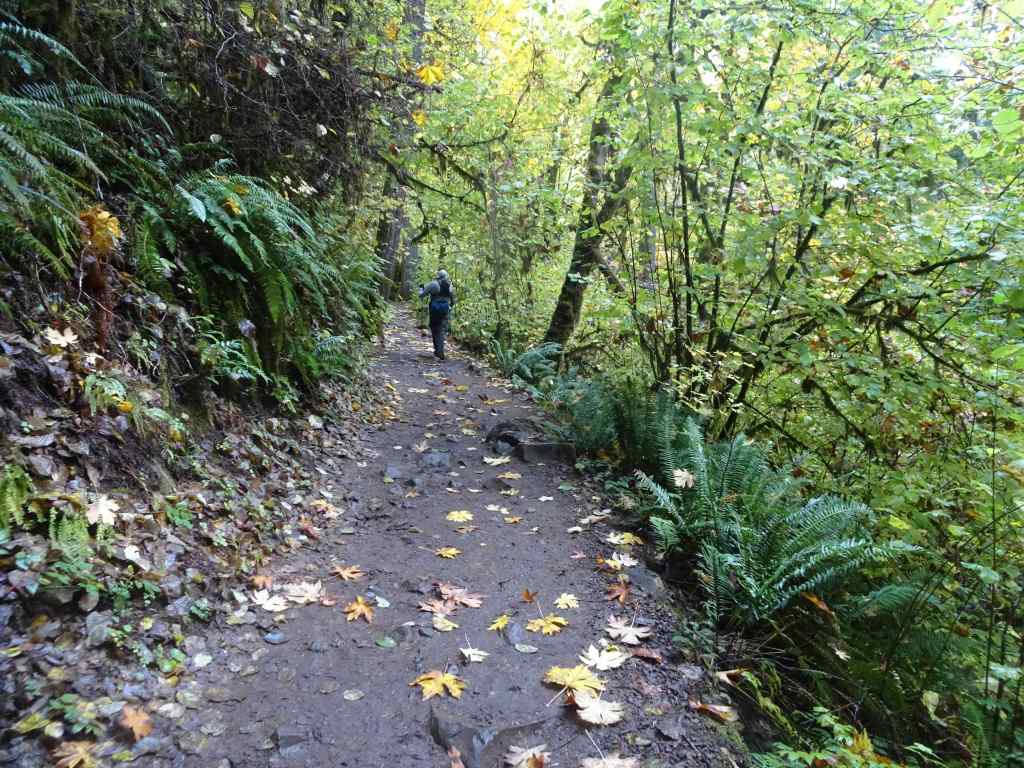
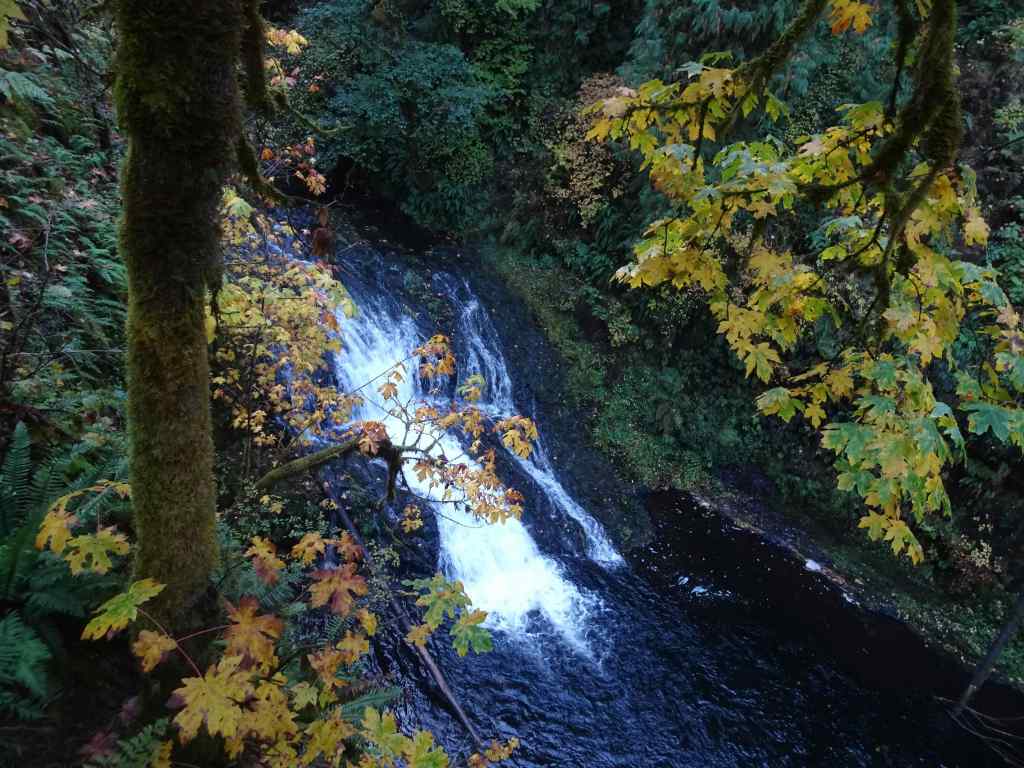
Autumnal trail – lots of big leaf maple leaves drifting down.We only get a sideways view of Drake Falls from the viewing platform.
Middle North Falls – A side trail goes under the falls, but we didn’t take it today.
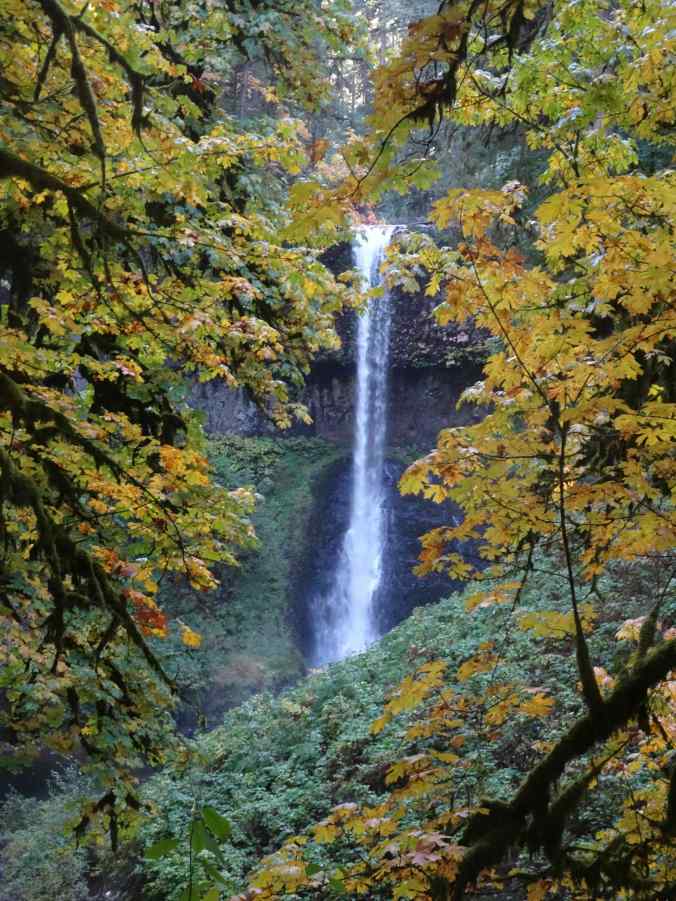
Middle North Falls
Winter Falls – From here, we crossed the river again, and passed the nearly dry Winter Falls while ascending to the rim and walking back to our starting point.
Winter Falls trickling down.
10/28 – Tom McCall Point, Oregon
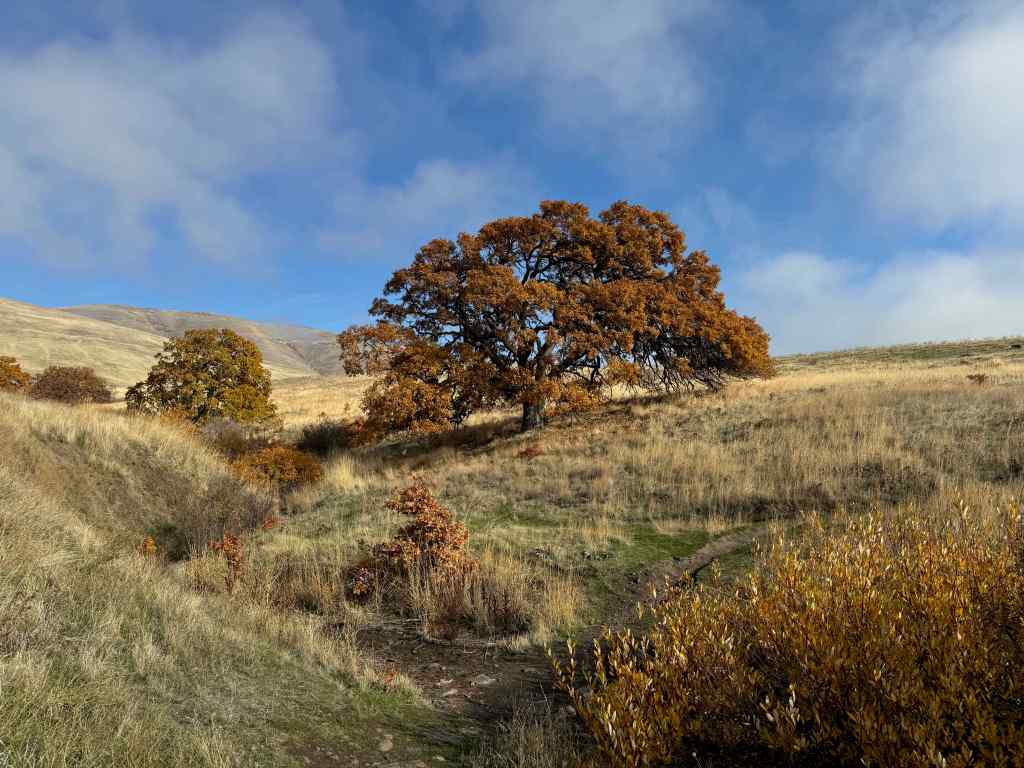
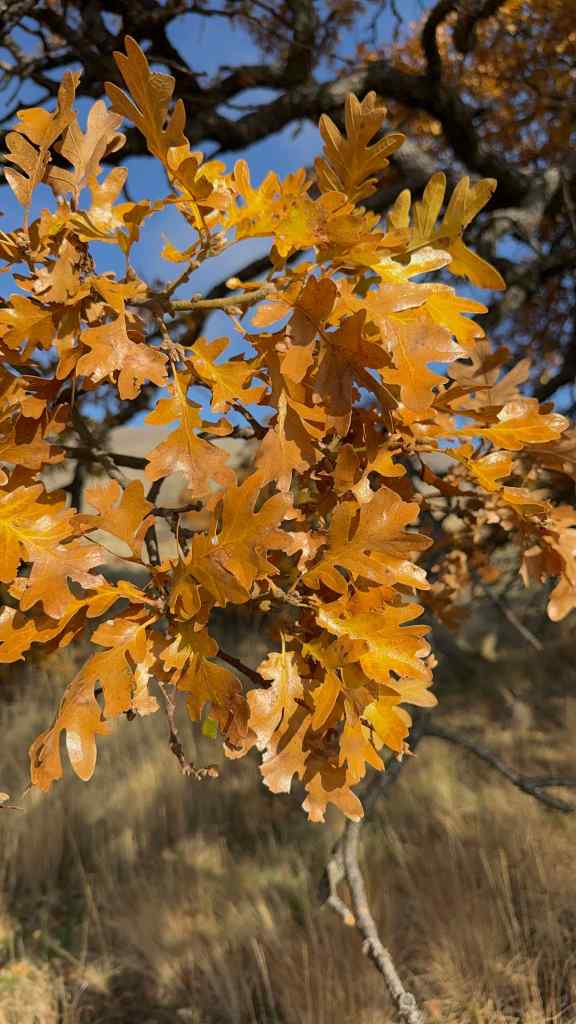
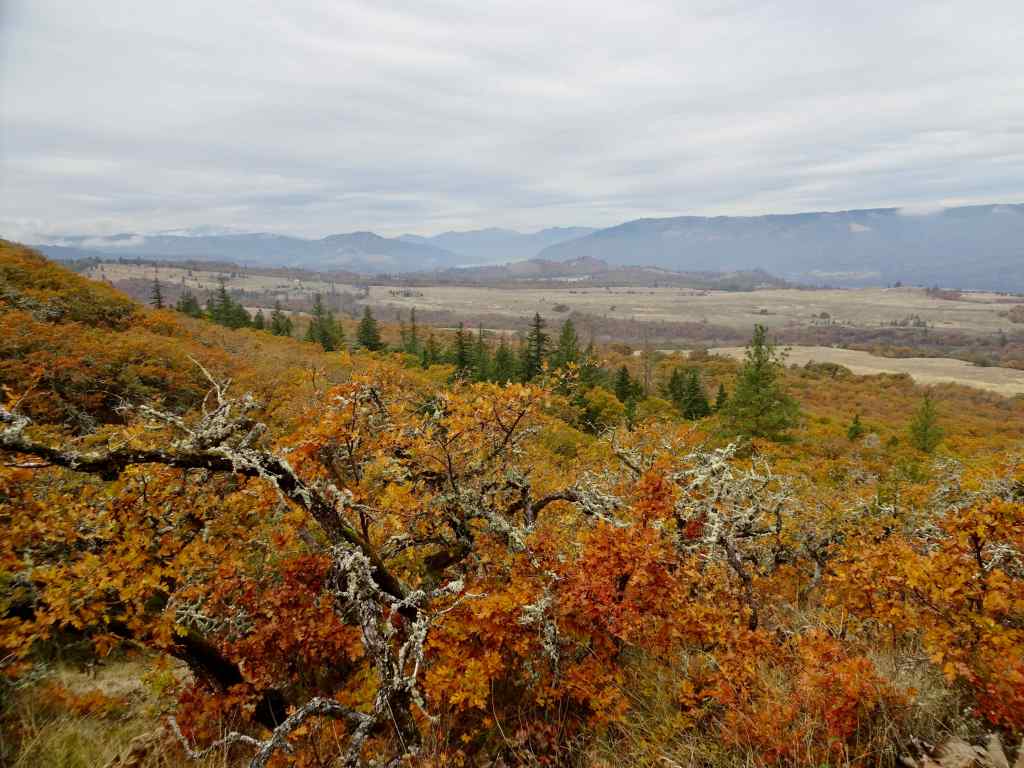
One of the prime wildflower locations of spring; orange oak leaves color the slopes on this quiet autumn day (3.6 miles, 1000 Feet).
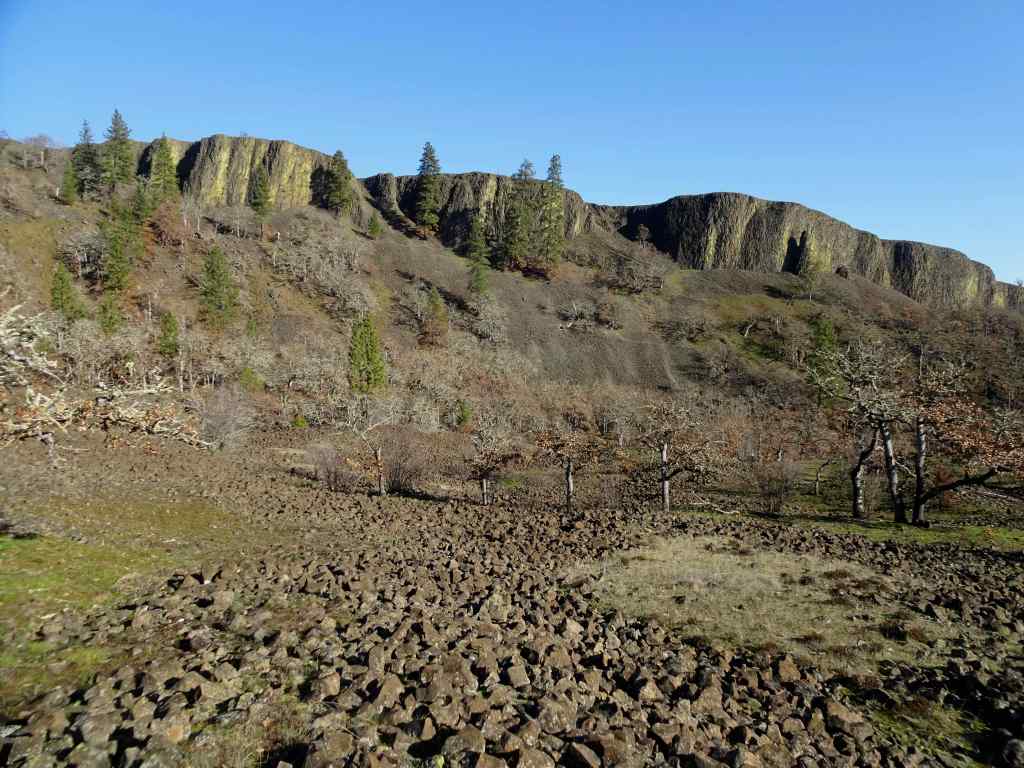
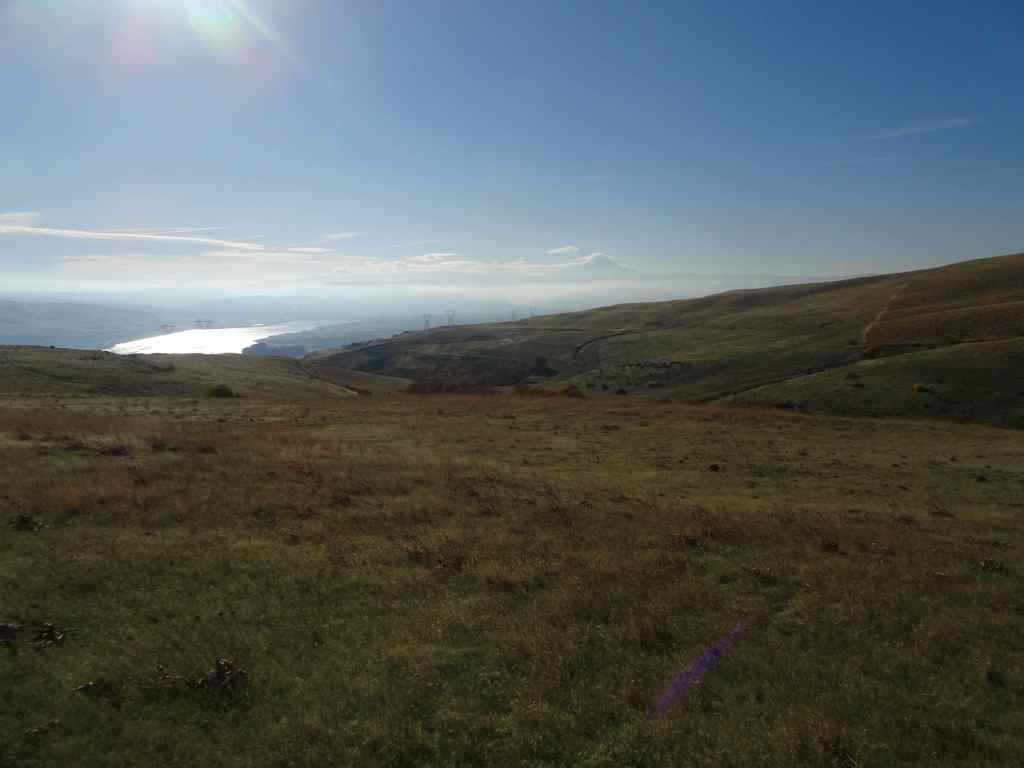
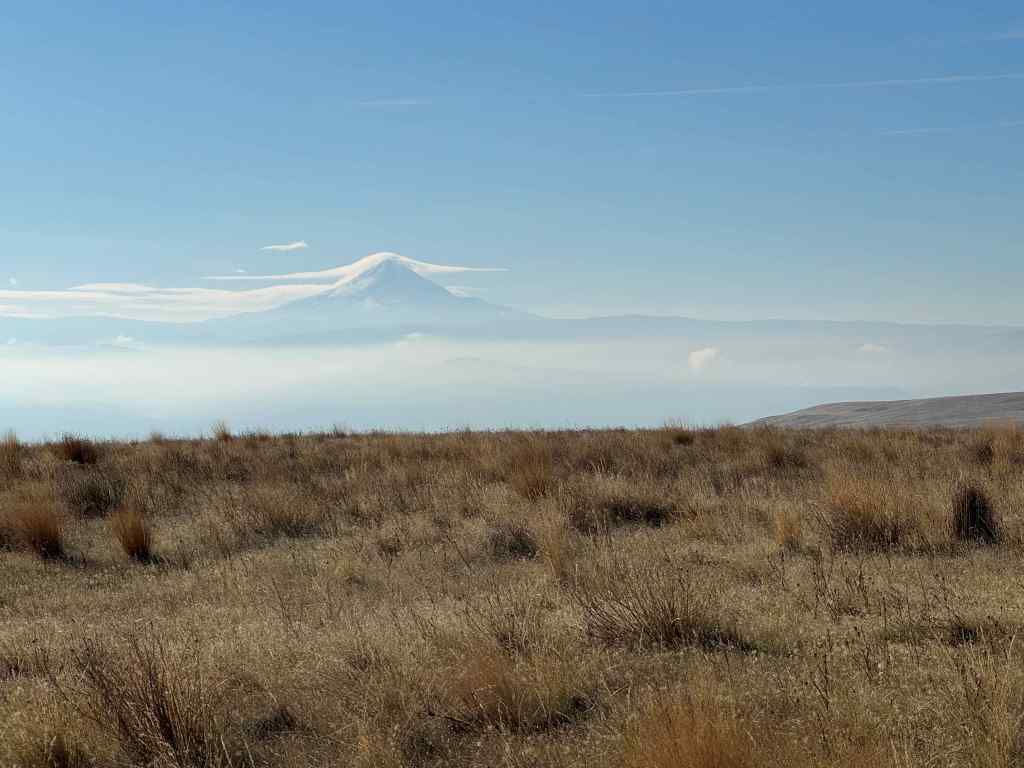
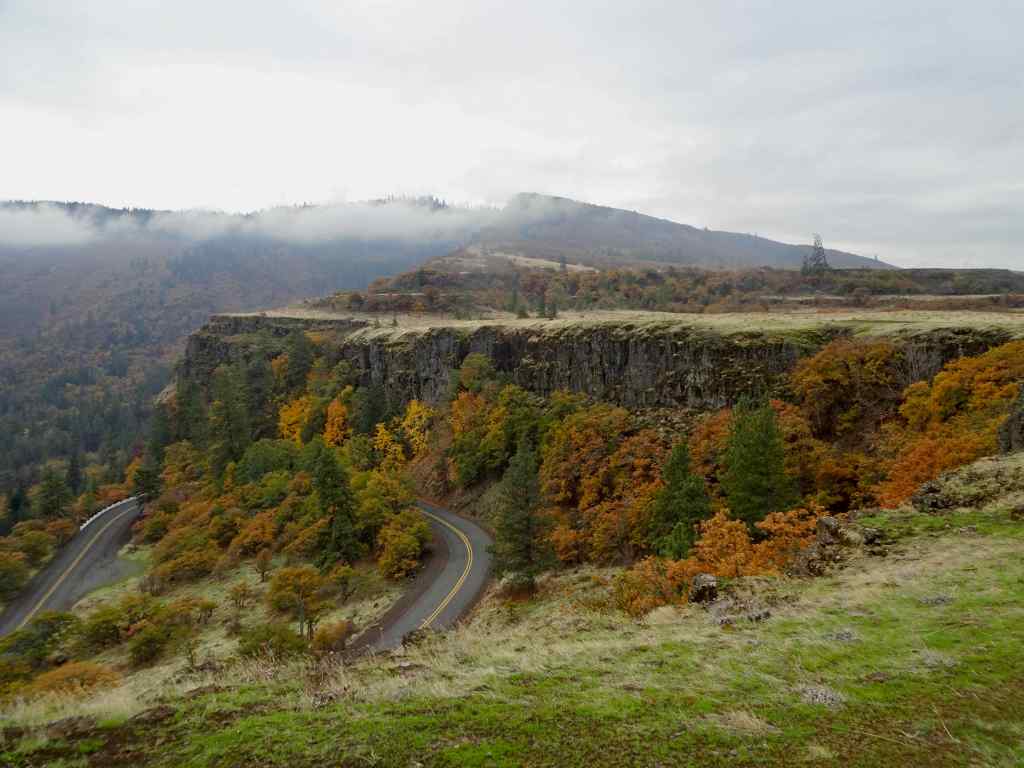
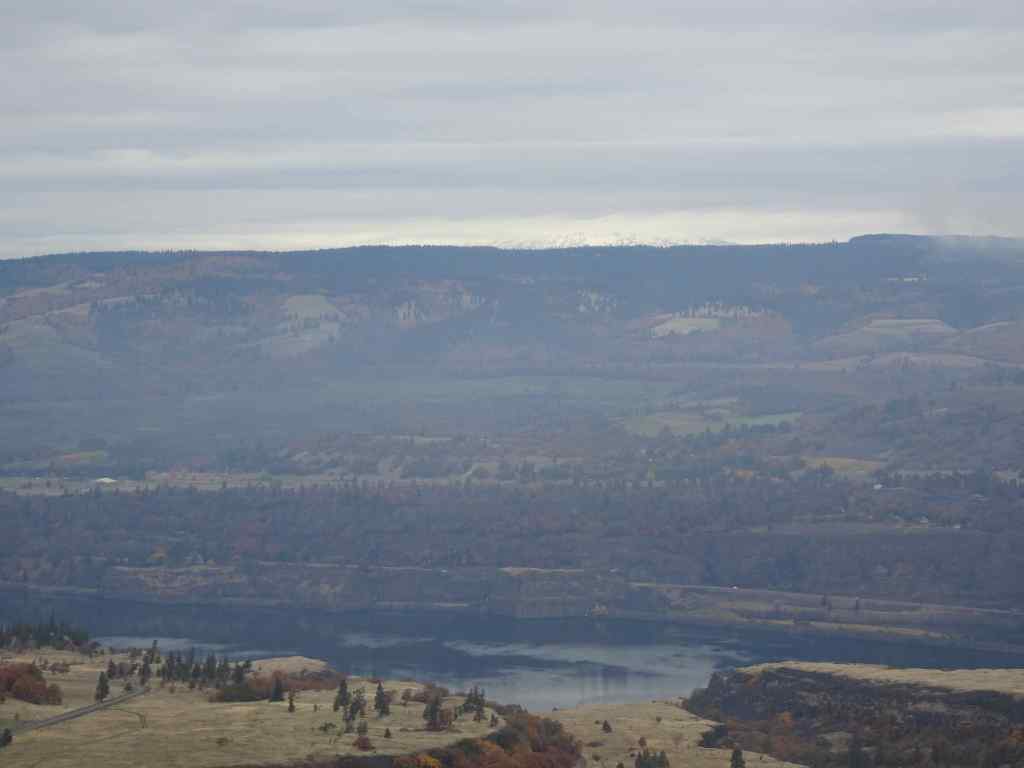
Our destination – Tom McCall Point, through the mist.Parsley alley is rather bare.Looking north from the lower plateau – Rowena Curves below; Lyle, Washington across the Columbia River.Bright orange oak leaves; Memaloose Hills to the west.Zooming in on the shoulders of Mt Adams – the most we would see of it today.
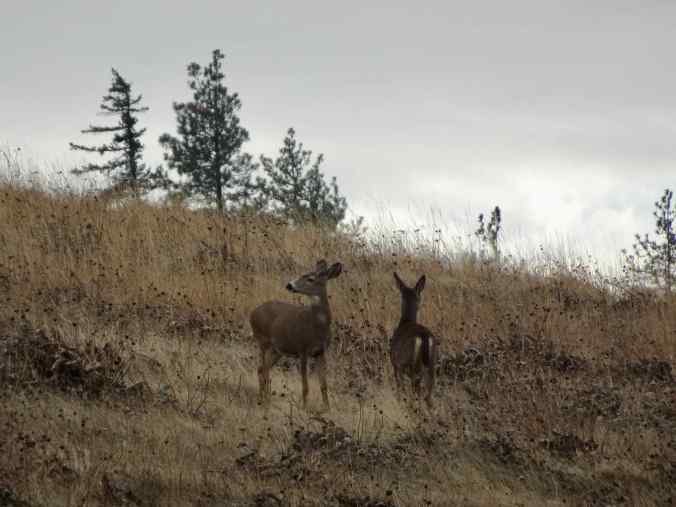
We startled a small family of deer near the summit.
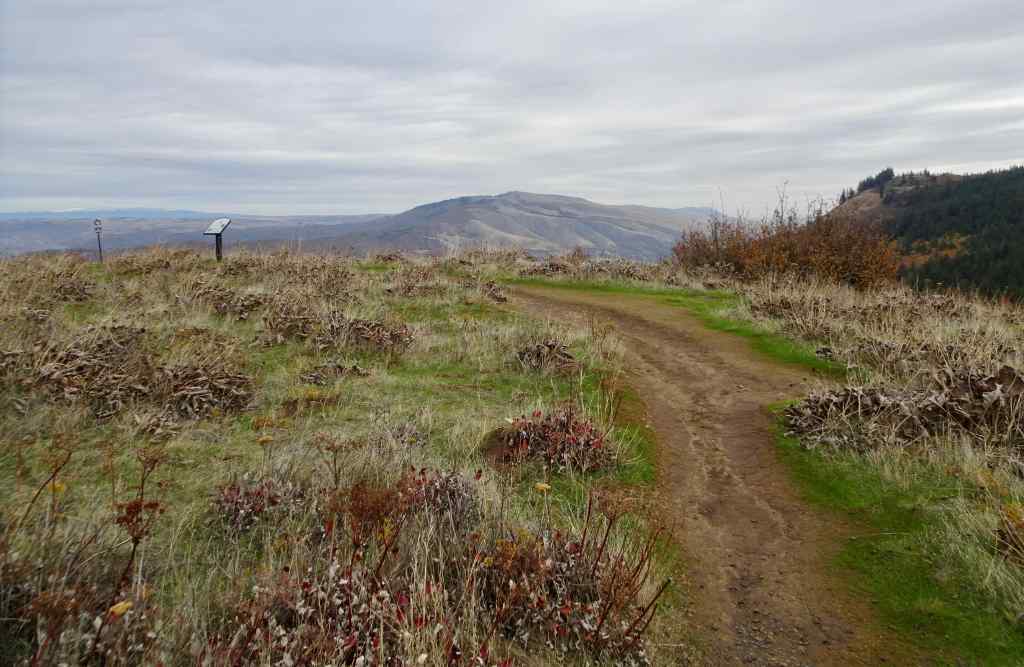
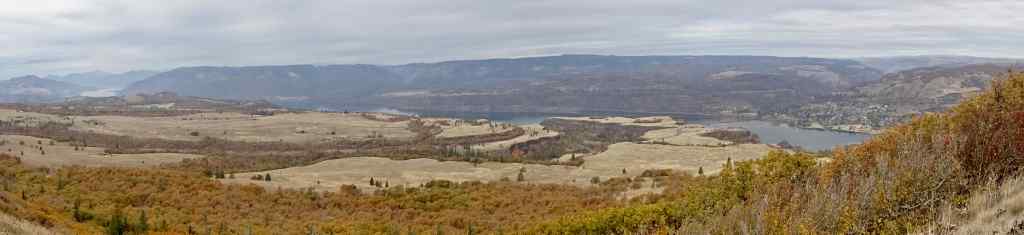
Mule deerMule deerSummit of Tom McCall Point, covered with clumps of dried balsamroot foliage.View toward the Columbia HillsPanorama from this top of the world…The neon orange oak leaves that brightened our day.
I wrote most of this post in July, as this event unfolded.
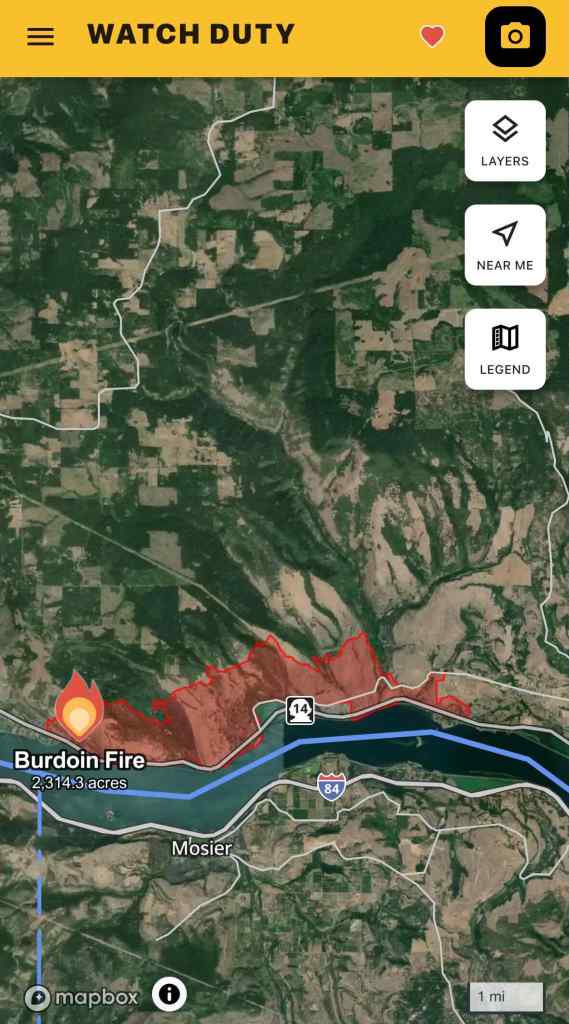
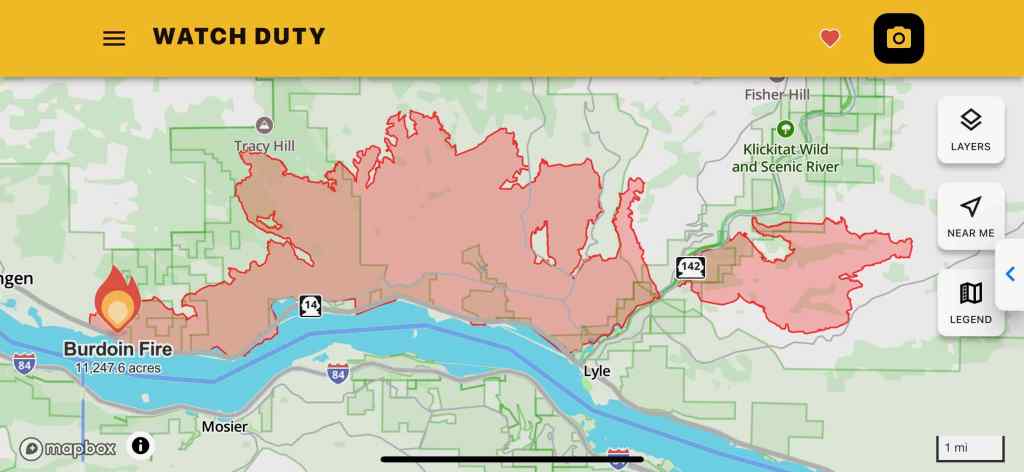
The Burdoin Mountain Fire started on Friday, July 18th, near Coyote Wall: a hot day, an east wind, and whoosh, by Sunday, July 20th, it had burned all the way east to the Klickitat River. In Portland, I followed news reports of evacuations of homes and families and communities; of firefighters on the ground and planes scooping water out of the Columbia River. I kept checking the map on the Watch Duty App – as the red line crept east, remembering all of the many hours we have spent in the fall, winter and spring, hiking the open grassy slopes and rocky cliffs above the river. Wildflowers and fall colors, all captured in my mind’s eye, and stored on my computer hard drive photo files…
July 19th fire boundary – Screenshot from the Watch Duty App.July 24th fire boundary. Screenshot from the Watch Duty App
The biggest concern is for the area residents and their homes. I was keeping my fingers crossed for my favorite trees, too. I hoped the speed of the fire as it traveled through the grass would cause the conflagration to bypass some of the trees:
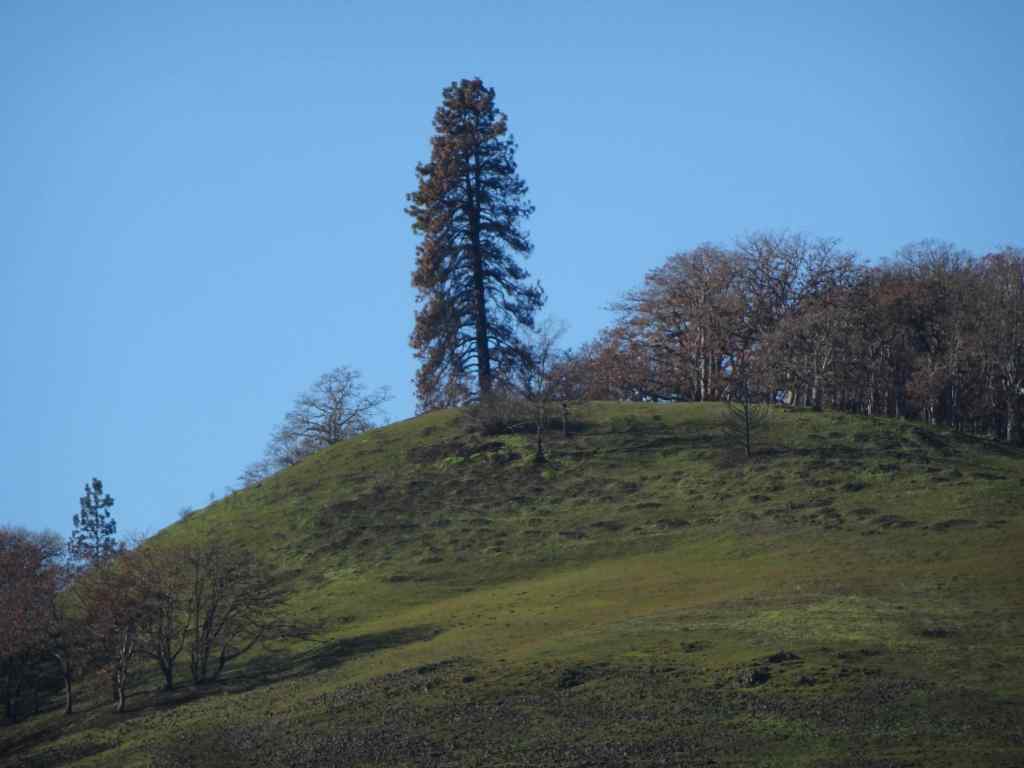
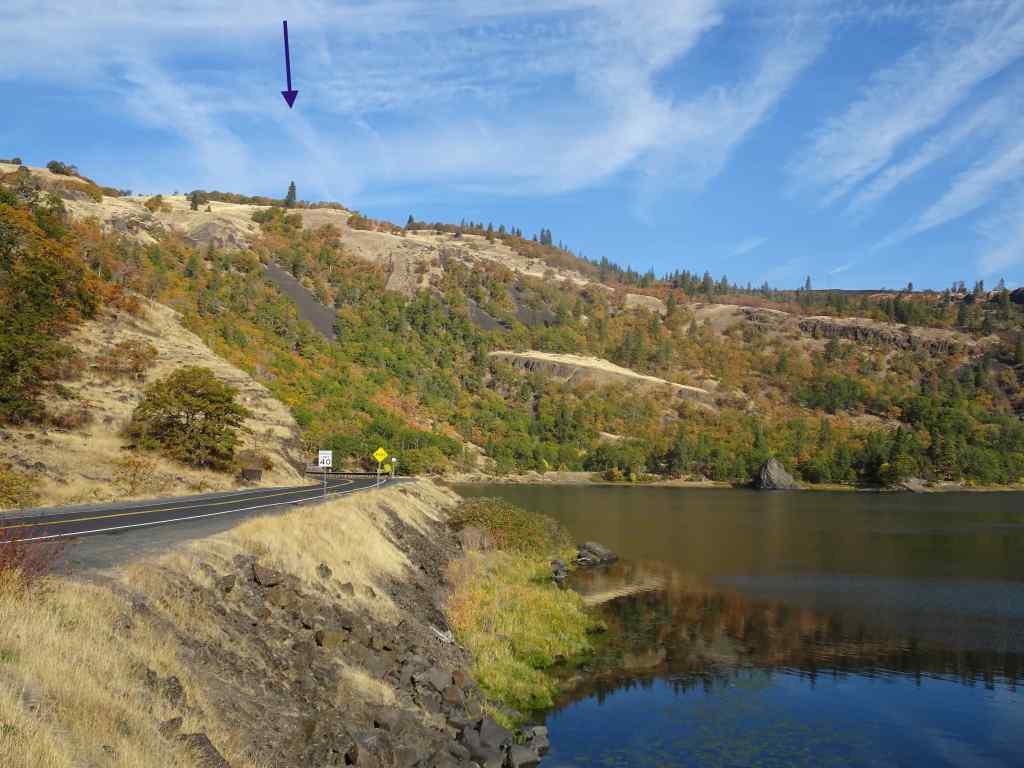
The guide tree above Rowland Lake – a tall ponderosa pine near the spot where we often have lunch when hiking the Labyrinth – it overlooks many of the trails here in its high perch – will it still be there?
Arrow pointing to the guide tree – from near the Labyrinth trailhead above Rowland Lake, October 24, 2024.Guide ponderosa as seen from Rowland Wall, April 20, 2018.Guide ponderosa from the west as we hike toward our lunch stop and turnaround point, December 16, 2017.Lunch stop near the ponderosa, with all the eastern gorge on view, October 17, 2023.
Also along the Labyrinth Trail, my favorite oak grove:
Labyrinth oak grove in the spring, May 17, 2025.Labyrinth oak grove in the fall, October 27, 2021.
The solitary oak tree that perches on the cliff edge is always photogenic, as seen going uphill, to the east:
April 18, 2018October 24, 2024December 3, 2016December 28, 2015
And downhill, to the west:
October 17, 2023, with Mt Hood beyond.
On the way down, I always say goodbye to the one-eyed oak sentinel on the lower trail:
October 17, 2023October 27, 2021
I have been browsing my photo library, and there are so many other beautiful trees there. As the red fire boundary moved farther east on the map, to the Catherine Creek slopes, I thought of the many ponderosa pines, and the small oak groves, including those guarding the fairy ponds:
March 3, 2025
Even farther east, there is my ‘ent’, a snag guarding the eastern slope where there is always so much birdsong in spring, and so many flowers!
November 7, 2024‘Ent’ snag
Next I see fire has made its way all the way east to the Balfour-Klickitat Reserve where we go to see the juvenile bald eagles practicing flight in the small lagoon off of the mouth of the Klickitat River every winter…
January 17, 2023December 28, 2015
We are in the Schroedinger phase…that is, all I know is the fire outline on the map, that keeps spreading eastward. I don’t know what has burned and what has survived.
Part 2 – Preliminary outcome report
As of this writing (late July), the fire is contained, evacuations lifted. Tragically, 19 homes were destroyed and 47 were damaged. No lives were lost. Local people have reported that the burned area was patchy in nature. Many trees were spared. The local residents have a difficult path ahead. Land managers will be monitoring the trail situation. We don’t usually hike here in summer. When the weather turns to cooler temperatures, I hope to find myself on these trails again, to visit my trees and report back.
View north toward the Burdoin Fire area from the Mosier Plateau, April 21, 2025, taken before the fire. All of this area north of the Columbia River is in the burn zone, from Coyote Wall, on the west, past the Catherine Creek slopes on the eastern edge, and farther east, all the way to the Klickitat River. The arrow points to my guide ponderosa, on the slope above the Labyrinth.
We went on five hikes in May, all in the Columbia River Gorge, following the wildflower bloom…
May 6 – Lyle Cherry Orchard, WA
Warm and a bit windy today – we got a chance to see the waning balsam root – everyone’s favorite!
Purple ookow blooming on the Convict Road.Ookow and the seedpods of Columbia desert parsleySwales of lupine on the middle plateauThe last of the yellow balsam rootA poppy patch.
On our drive home, we stopped briefly at the Catherine Creek Trailhead so I could get a peek at the bitterroot that blooms there – probably my only chance this season.
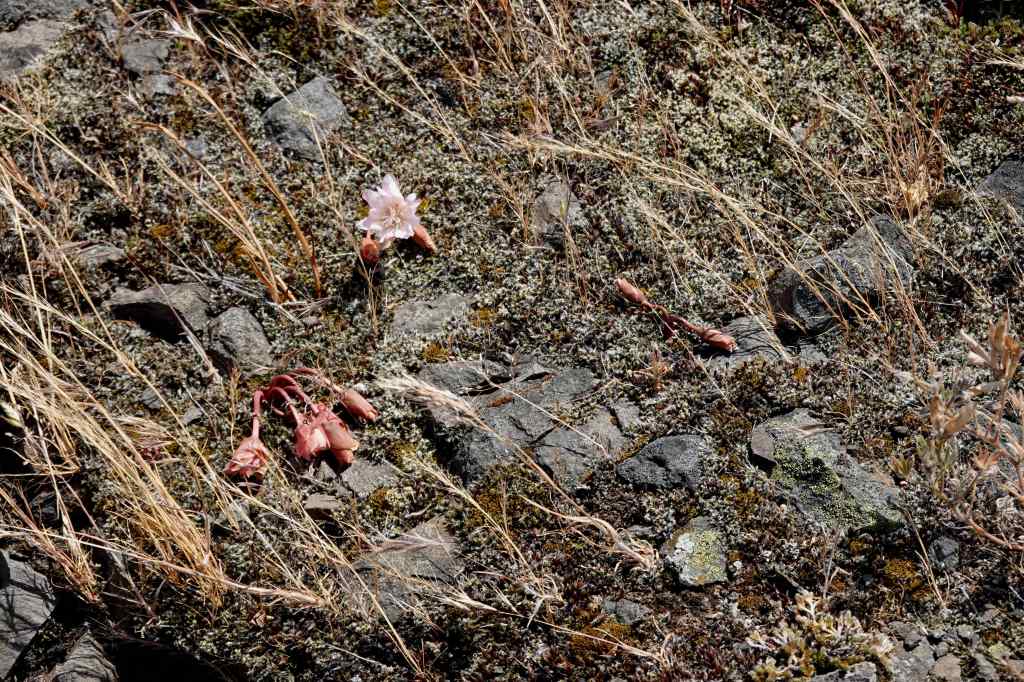
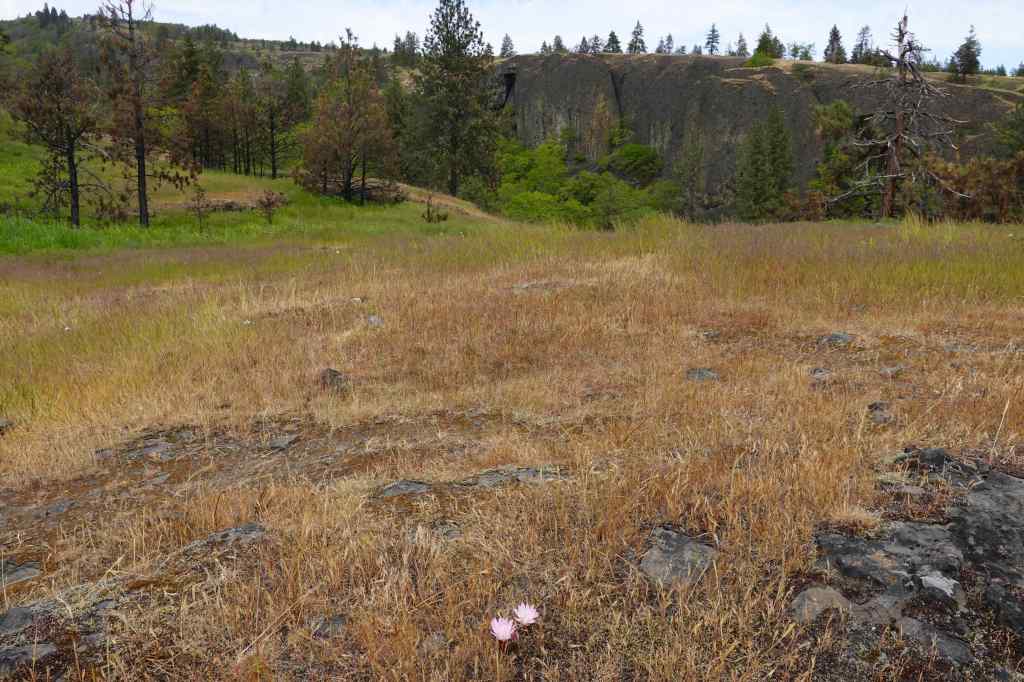
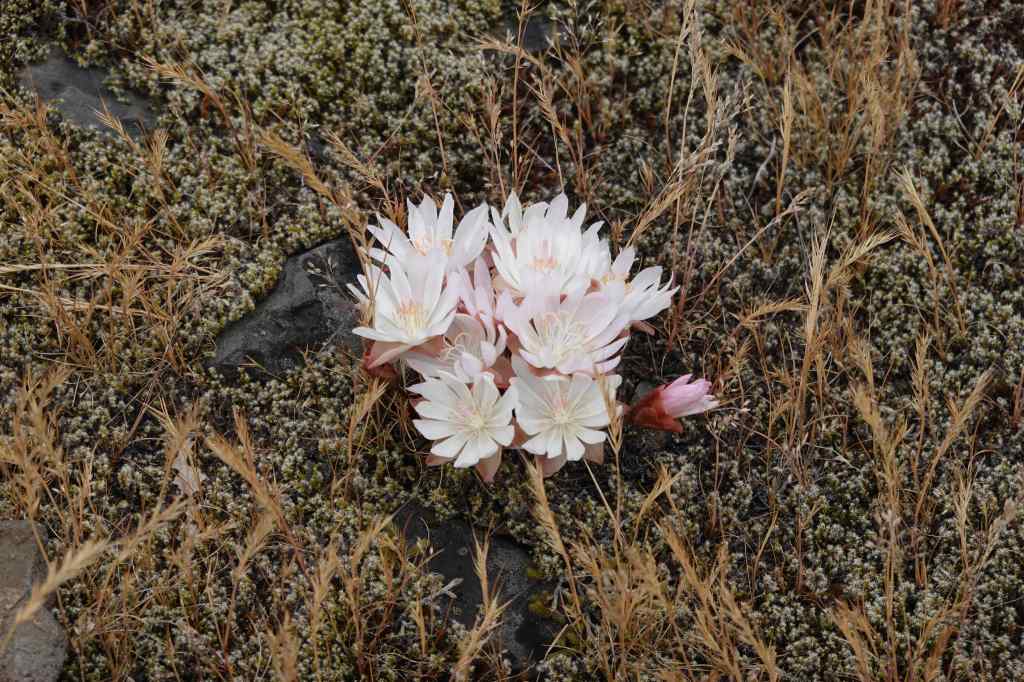
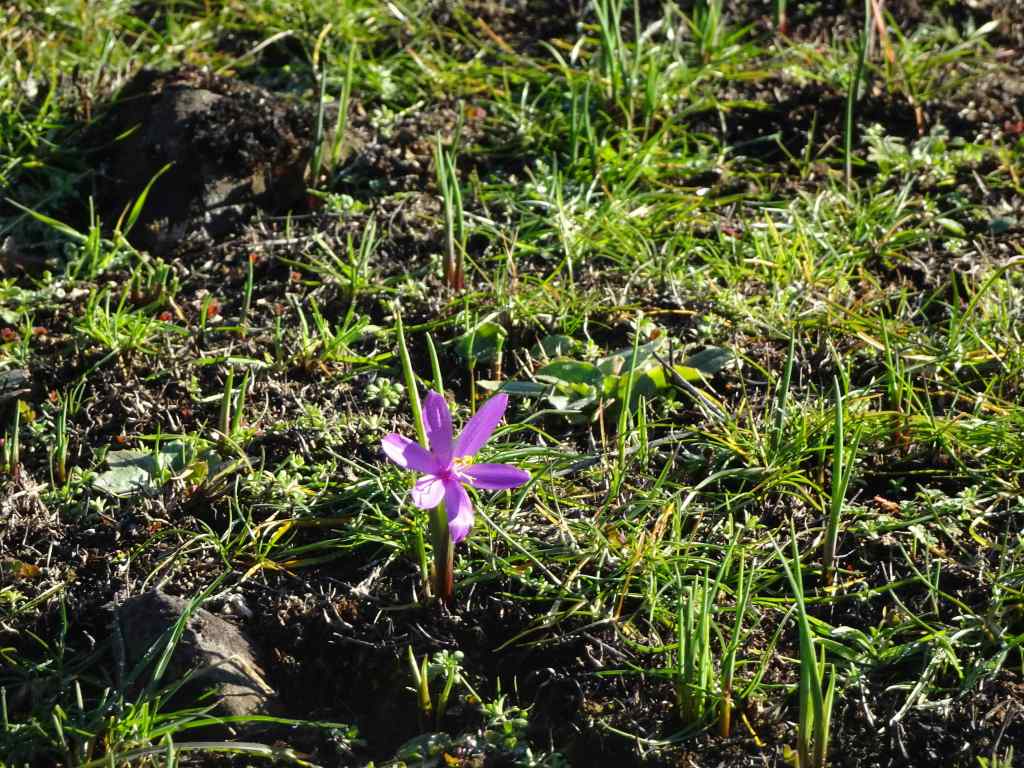
And there it was, on the rocky outcrop just above the parking lot.Lewisia rediviva, bitterroot – one of my all time favorites!
May 10 – Cape Horn, WA
Tall larkspur season at Cape Horn – it is always a treat to walk on the neatly groomed trails here. Today we started at Strunk Road, and walked to one of the lower overlooks – less than two miles, but with rain in the forecast for the next few days, we took our opportunity.
Tall larkspur along the pathCloser viewWhite fringe cup and candy flower also prolific today.Nancy Russell Overlook – we stop to look at the view and say, “Thank you!” to Nancy Russell for her conservation work.Up river view toward Beacon Rock.Continuing downward, the purple path continues…And the fringe cup…A few other flowers tucked in – Hooker’s fairy bells,Fern leaf biscuitroot,and vanilla leaf.
May 13 – Wahkeena-Multnomah Loop, OR
Back again to this five mile long, 1500 foot loop.
We began at Multnomah Falls, and started west along the old highway toward Wahkeena Falls.After passing Wahkeena Falls, the trail ascends up many wildflower-filled switchbacks,to Lemmon’s Viewpoint, overlooking the Columbia River.Continuing up Wahkeena Creek, past Fairy Falls,passing more wildflowers along the way. Columbia windflowers, and salalBaneberryA few fading trilliumLarkspur and fringe cup
After a lunch break at the trail junction, we walked eastward toward Multnomah Creek. This part of the trail has always felt rather magical to me – mostly flat, through a forest of tall firs. The undergrowth has changed a bit since the 2017 fire, but it is still one of my favorite places.
2013 Lookback – Magical trail before the fire.May 2025, Lots of redstem ceanothus filling the forest floor under the burned trees.Still very pretty, and with a view to the river…More wildflowers along the trail as it descends into Multnomah Creek – thimbleberry, columbine, arnica.CorydalisWiesendanger FallsHoneysuckle and inside out flowerBack to the trailhead at the bottom of Multnomah Falls.
May 22 – Cape Horn, WA, again
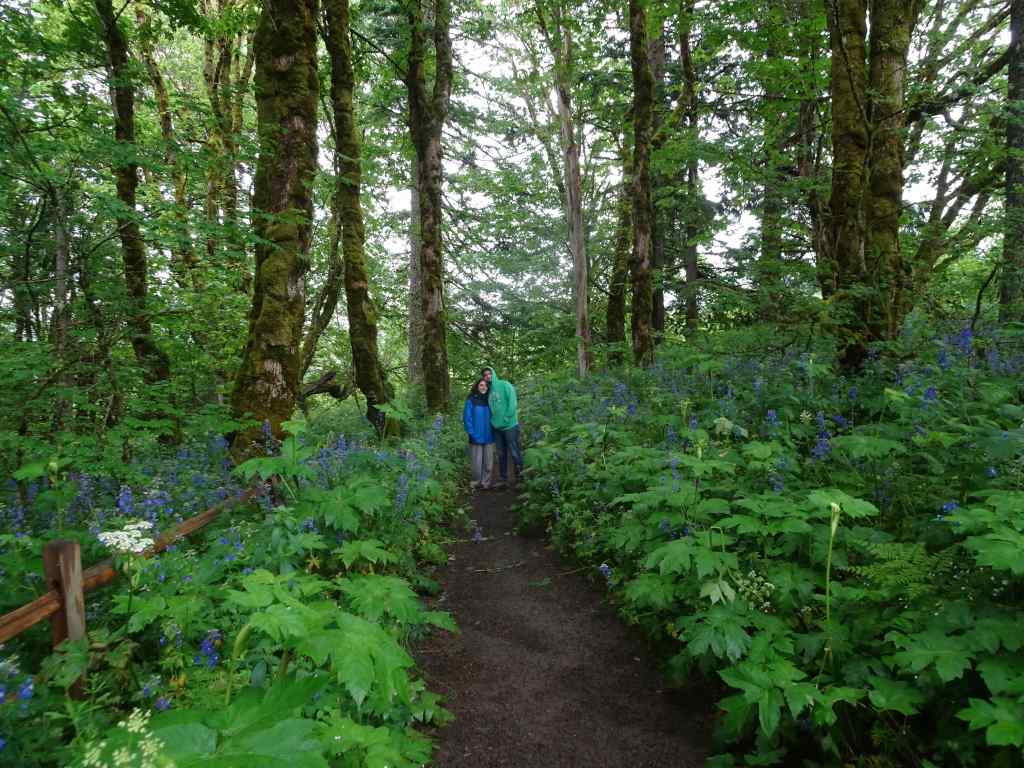
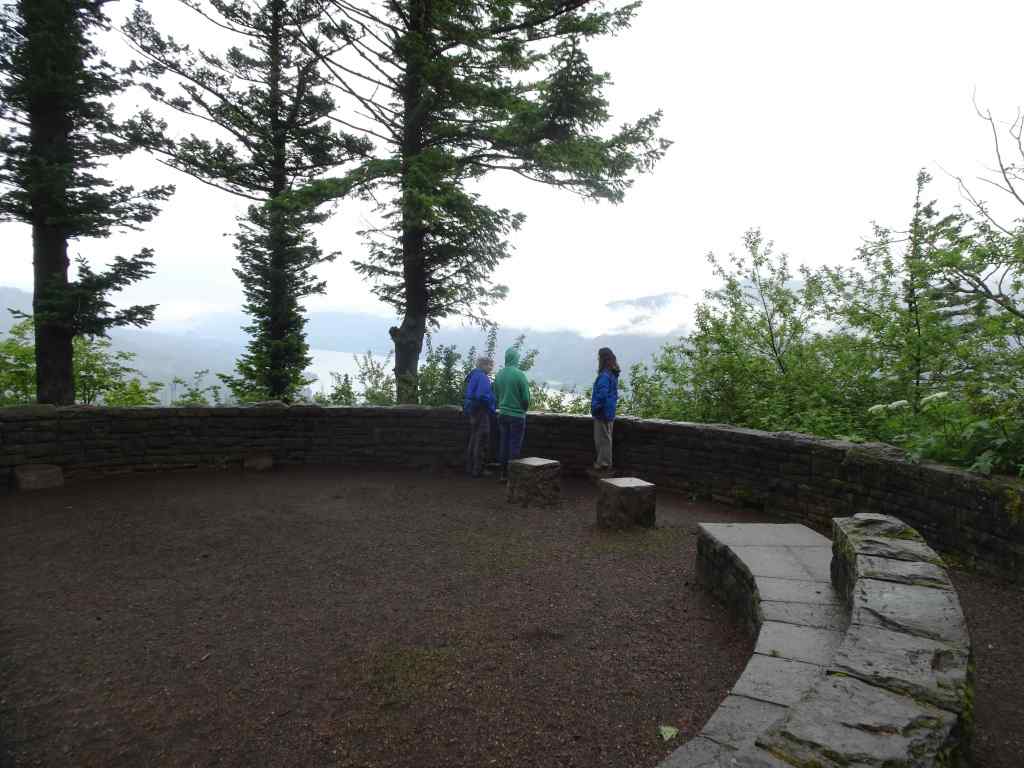
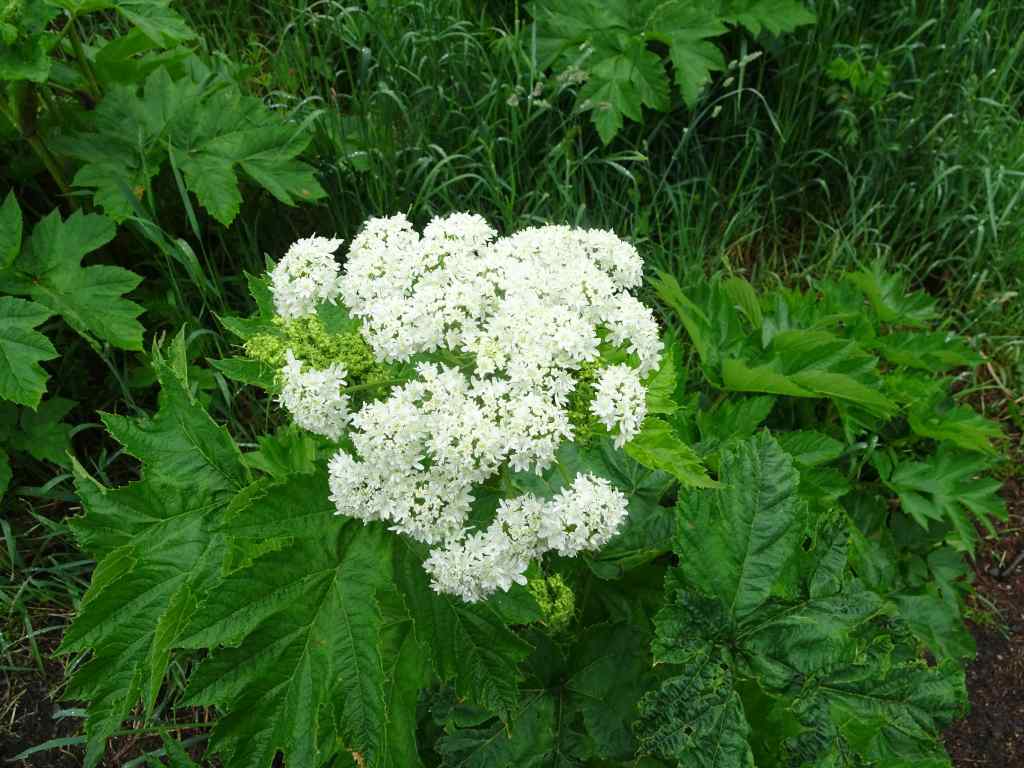
We wanted to take our son and his fiancee for a hike – though they didn’t bring proper shoes, and it was a bit rainy. We settled for going back to the tall larkspur-lined path from Strunk Road to the Nancy Russell Overlook at Cape Horn. It was less than two weeks since our previous visit, the tall larkspur were even more profuse, and the cow parsley were starting to spread their umbrella heads. Lovely, even with a bit of our Oregon sunshine misting us.
Previous week, May 10, with older hiking gentleman.Same path, May 22nd, with cow parsley and a cute young couple.Misty view from the overlook.Cow parsley
May 27 – The Labyrinth, WA
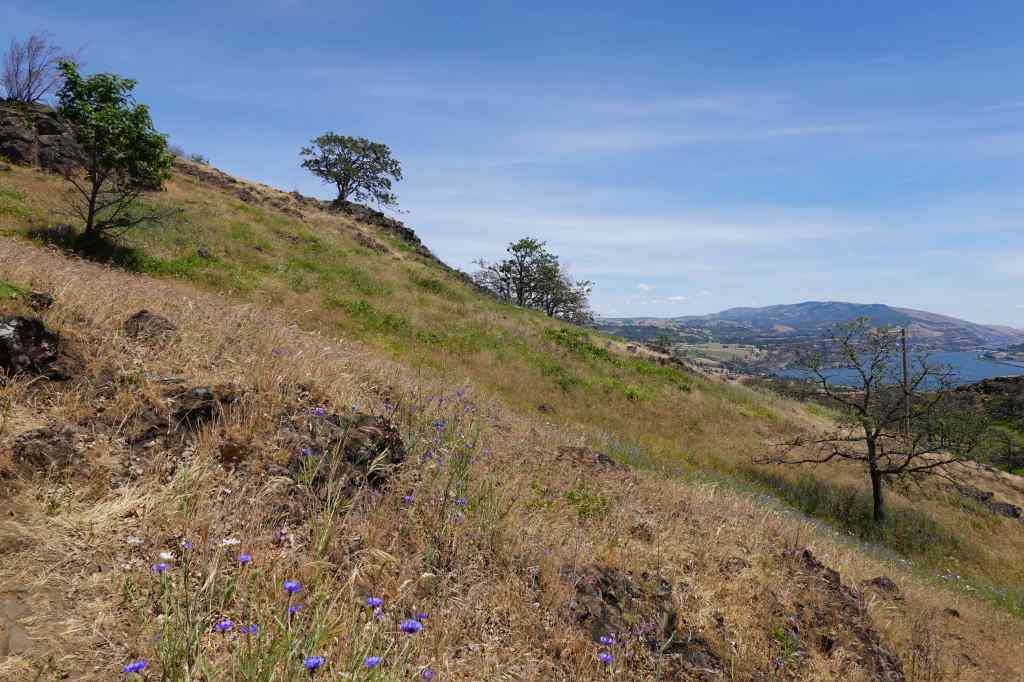
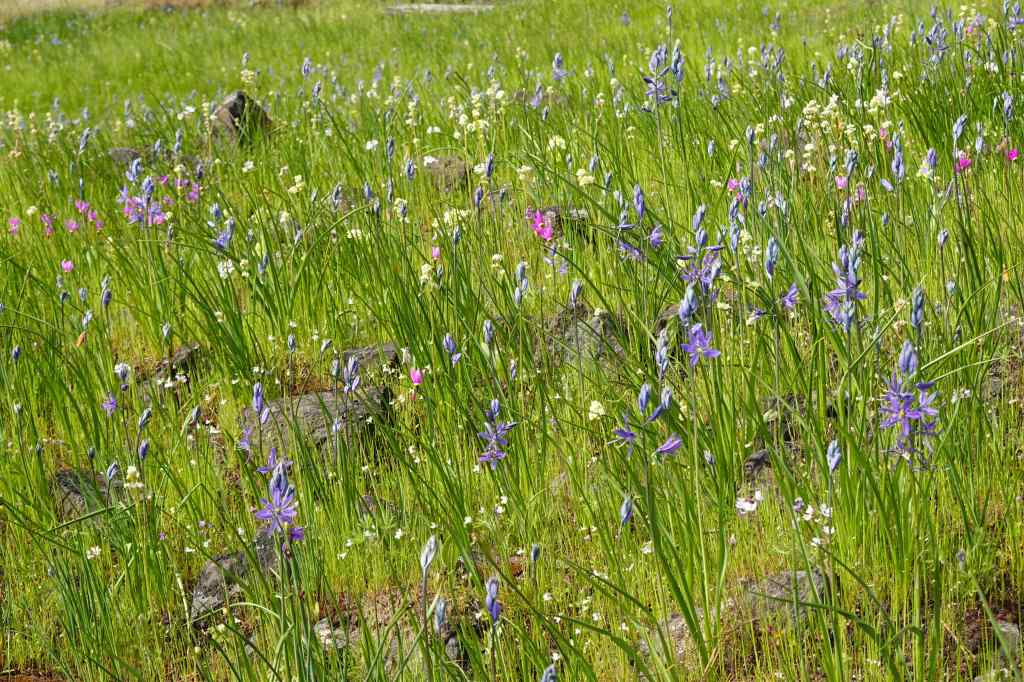
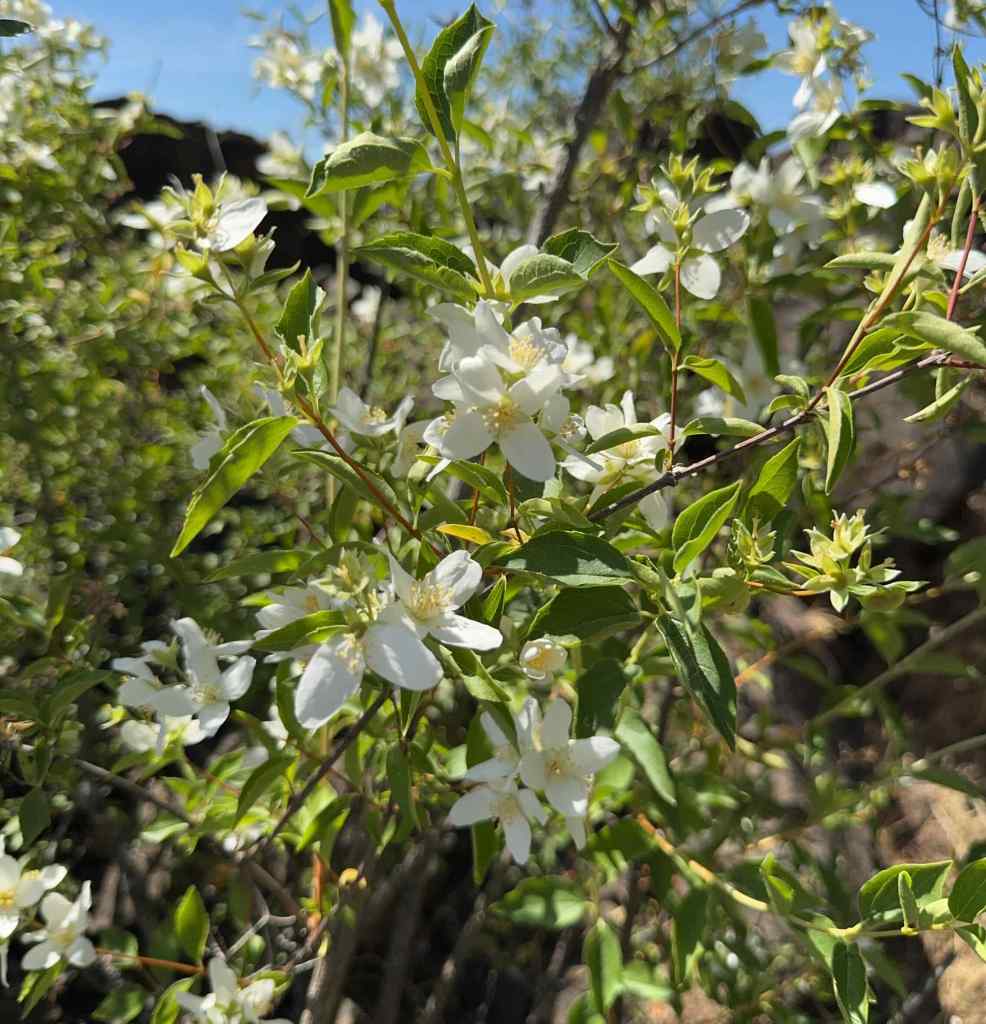
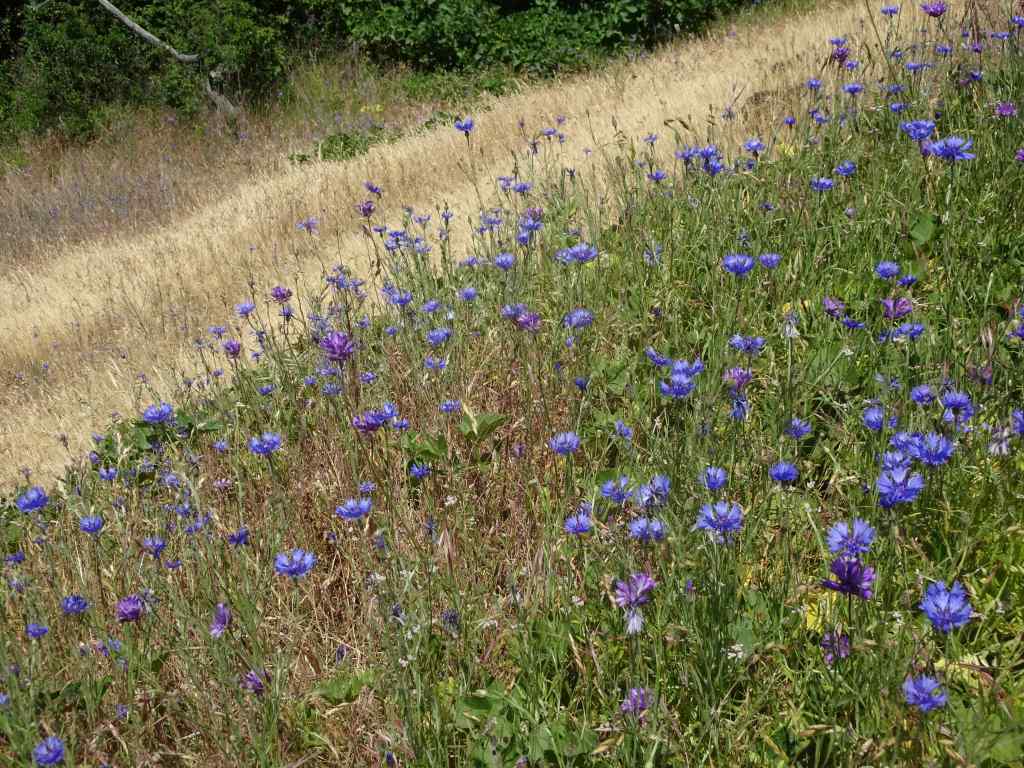
The Labyrinth was one of the first trails we ever hiked in the eastern gorge, and we have returned many times. The path winds through piles of columnar basalt that provide some protection from the wind, and the views are great! Wildflowers change throughout the bloom season. Today was the first time I have seen this particular suite of flowers – blue and purple bachelor buttons and ookow; white buckwheat, yarrow, and mock orange; pink clarkia and onions; all accompanied by a full gauntlet of poison oak.
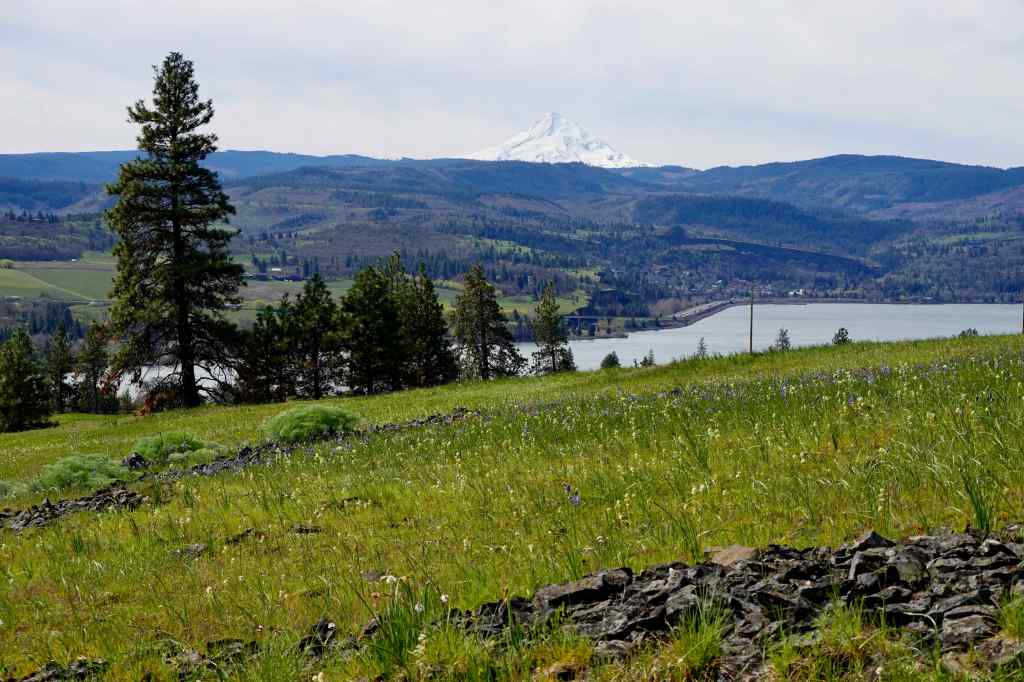
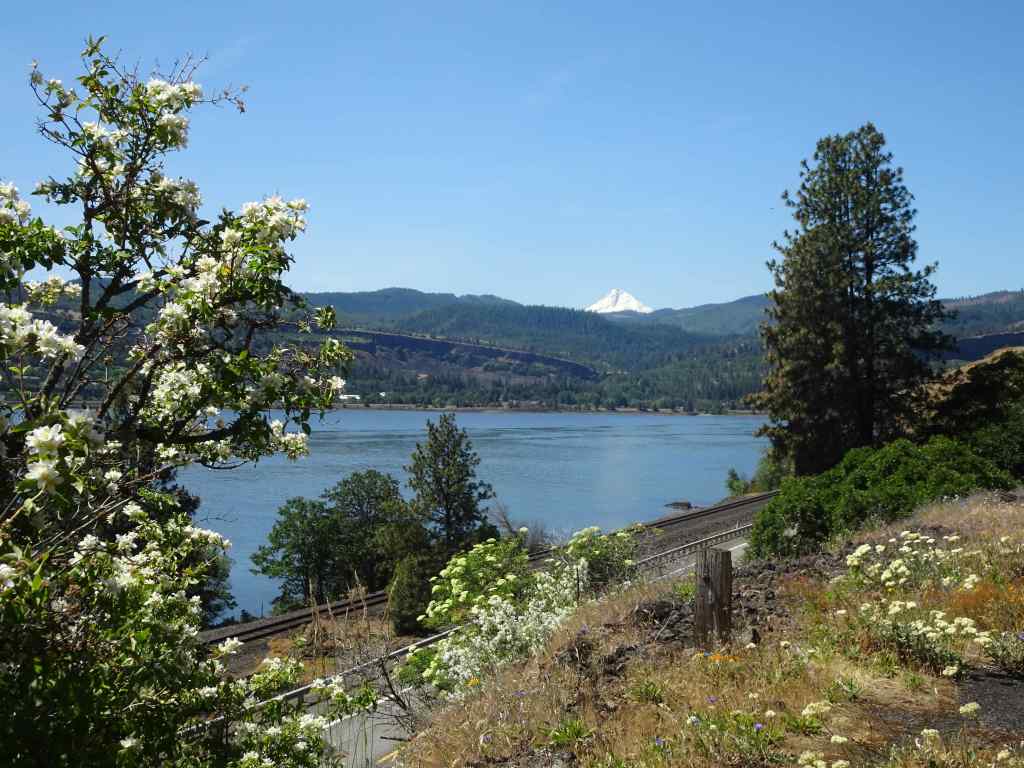
The first surprise – abundant wildflowers surrounding the Lower Labyrinth Waterfall on the old highway approach trail – mock orange, bachelor button, ookow, buckwheat, and monkeyflowersMore mock orange, poppies and buckwheat, the Columbia River, and Mt Hood.Mock orange
Starting up the trail along Labyrinth Creek –
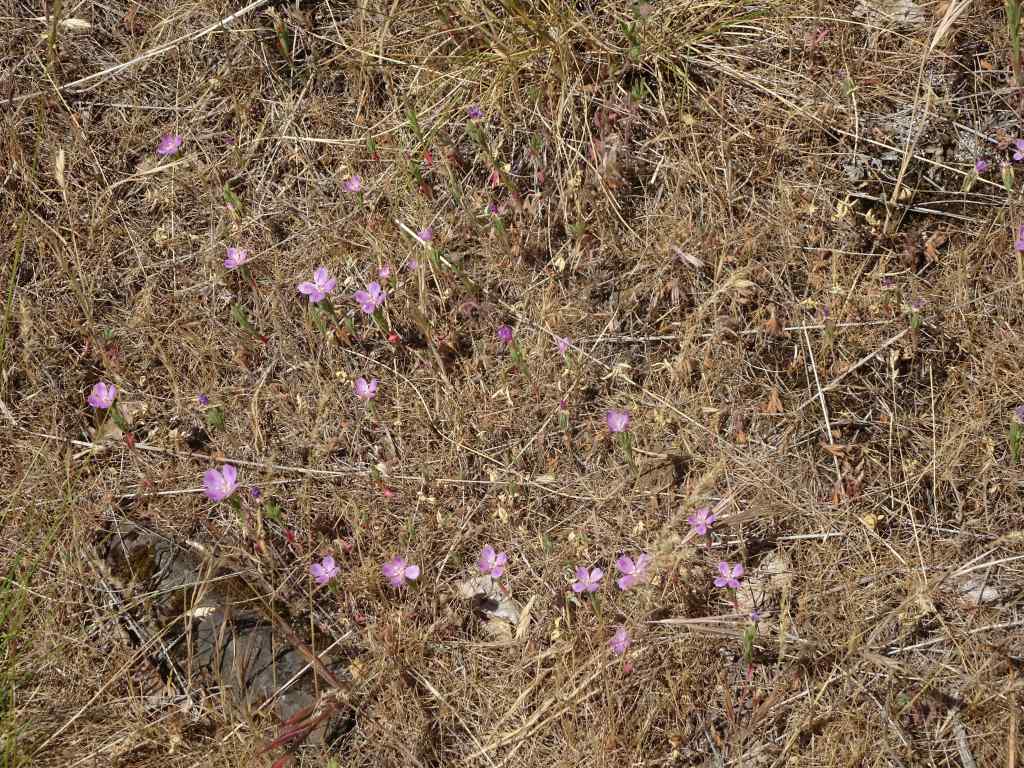
Buckwheat, golden grass with late season flowers. YarrowOokow, and bachelor buttons. The bachelor buttons are considered disturbed, but they do add a pretty color to the late season wildflower suite.Winecup clarkiaSwales of flowers in the drying grass
Continuing up along Labyrinth Creek –
Monkey flowers surrounding the upper waterfallHomage to the poison oak gauntlet that we carefully walked through today.Colorful slopes beneath one of the volcanic buttes.My favorite oak grove, with a lush poison oak understory.
Lunch views, with mule deer…
Westward, mule deer on the next ridgeMule deerEastward – Columbia River shimmeringHooker’s onions
It was getting warm, and I was losing my uphill motivation, but I wanted to go a little higher, to the rocky bluff where bitterroot blooms.
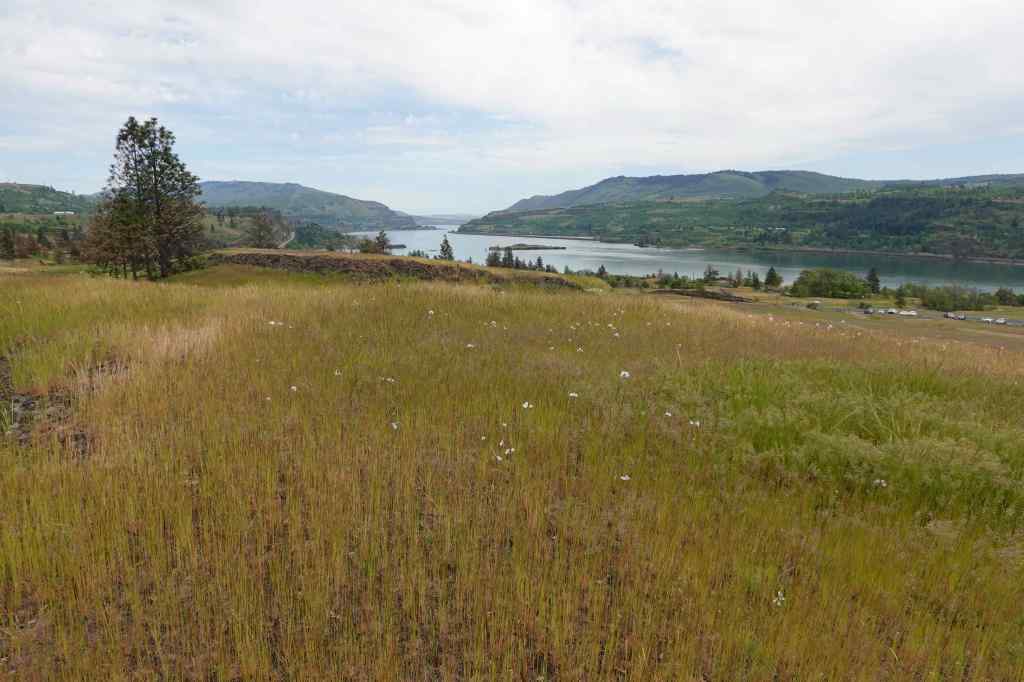
Mt Hood and buckwheatAs I expected, the bitterroot is shriveled up – I’ll have to wait until next year.Looking farther uphill, toward the slopes that lead to Coyote Wall – green grass turning to gold.Another look at Mt Hood, then we begin the return hike…I didn’t notice these White Brodiaea on the way up.Ceanothus blooming in the oak groveAnd past the waterfall again on our return to the trailhead.
It was beautiful day in the Labyrinth. But it is getting too hot for me in the eastern gorge – we may not be back until fall! I am going to southern Utah in June, where it is already very HOT, to help a family member. I may not hike much in the next month, but there will be red rocks and possibly some dinosaur tracks…