Timberline Trail High Point from Cloud Cap 7/28/2017 (#39)
We drove up the dusty switchbacks of Cloud Cap Road, through the burned forest from the 2008 and 2011 fires. Lupine, goldenrod, penstemon, aster and paintbrush lined the road, and the views to the Cascade peaks to the north appeared as we gained elevation.
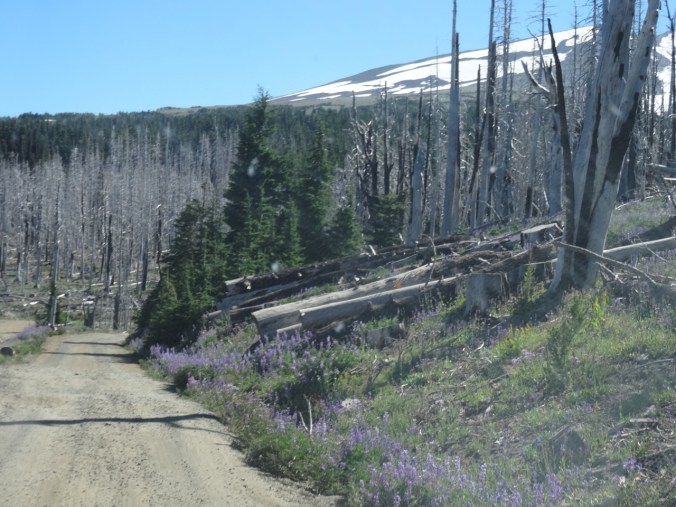
Lupine lined road to Cloud Cap through the burned forest
The trail head is at 5600 feet, and we began our hike in the forest. We soon rounded a bend to clear views of the mountain, and of our trail heading up through loose moraine and across a stream. Abundant wildflowers lined the trail despite the dry dusty nature of the substrate.


After crossing the drainage, we continued up and soon emerged above timberline on a rocky alpine slope with local patches of snow. We saw stunning views to the peak of Mt. Hood and it’s eastside glaciers, and to the Washington Cascade peaks of Mt St Helens, Mt Rainier and Mt Adams.

We continued gently up and down on the Timberline Trail, around ridges and across snowfields. We could see the peak, and the Cooper Spur moraine and ridgeline made distinctive by a huge boulder called tie in rock. We hiked that ridge to the base of the glacier a few years ago, and we could see a few antlike people hiking along the ridgeline today. We opted to stay along the timberline trail to its topographic high point, about 7300 feet. We traversed along the ridge adjacent to this point to a lunch spot with 360 degree panoramic views, including views to the south of Gnarl Ridge, Lamberson Butte, and much further to the south, the silhouettes of Mt Jefferson and Black Butte that were somewhat obscured by wildfire smoke in that direction. To the north, the view was still clear to Mt. Adams and Mt Rainier.


Though the landscape looks barren from a distance there were abundant flowers along the trail, some of them short or dwarf varieties.


I love to look at the shapes and textures of the glaciers:


These suncups in a melting snowfield on the trail created an otherworldly landscape.
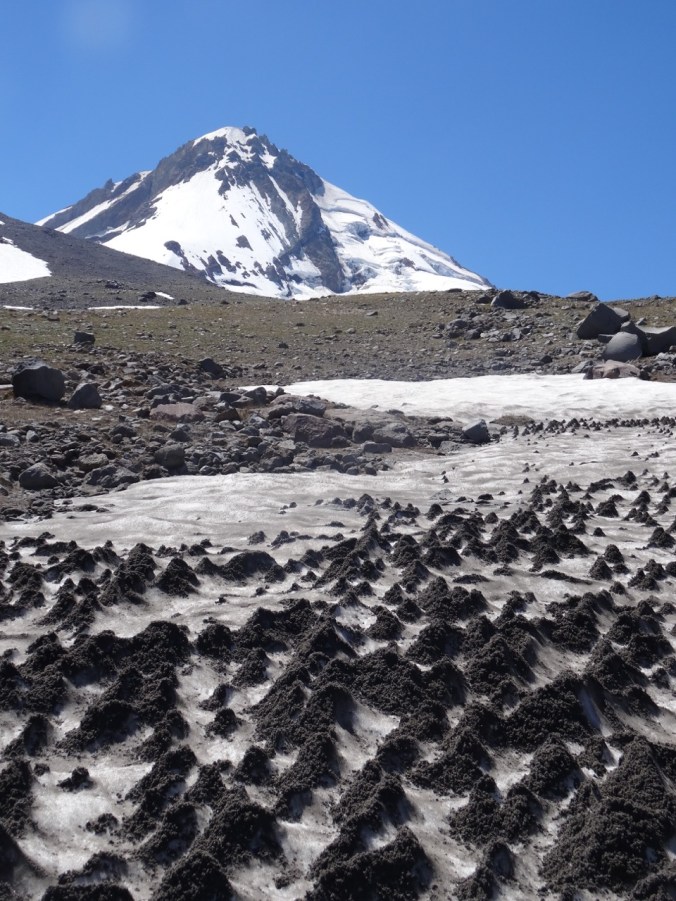
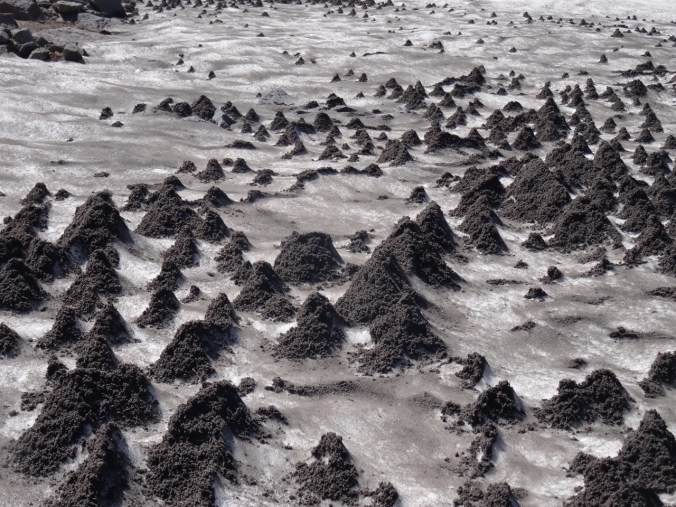
We stopped to look at the stone Cooper Spur shelter, and get a better look at the upper part of the Eliot Glacier.


Our round trip hike for the day was about 6 miles and 1650 feet.


Lookback: We completed this same hike in October of 2015 with friends. At that time there was an early winter dusting of snow, creating a frosted white landscape. The clarity and blueness of the sky was remarkable that day, despite the patchy clouds, with Cascade peaks both north and south easily seen.
The three Washington peaks to the north from timberline:
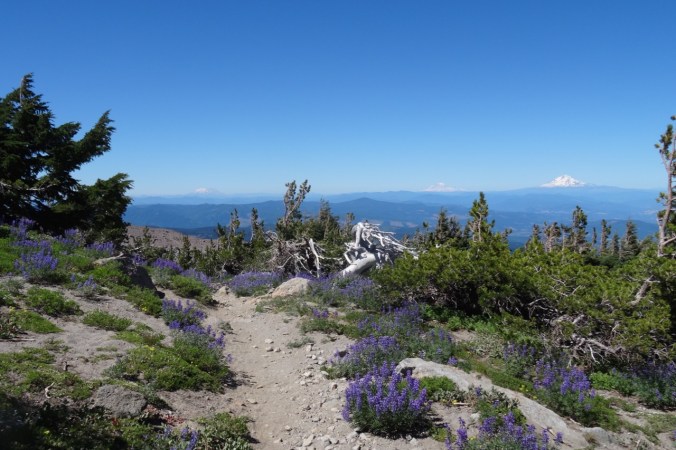
July 2017
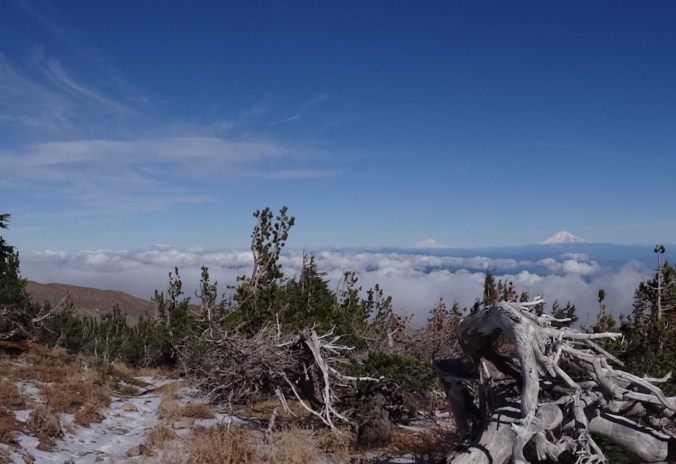
October 2015
and from above timberline, with the Cloud cap shelter on the left:

July 2017
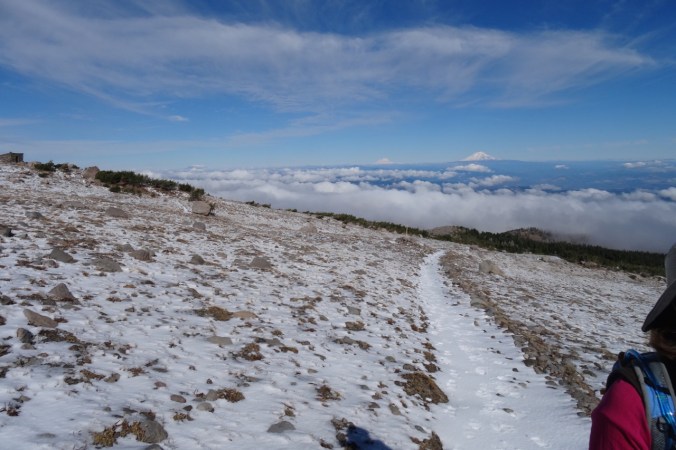
October 2015
Mt. Hood from the Timberline trail high point lunch spot; Cooper Spur/Tie-In Rock on the right:

July 2017

October 2015
Looking down Tilly Jane Creek from the trail crossing:
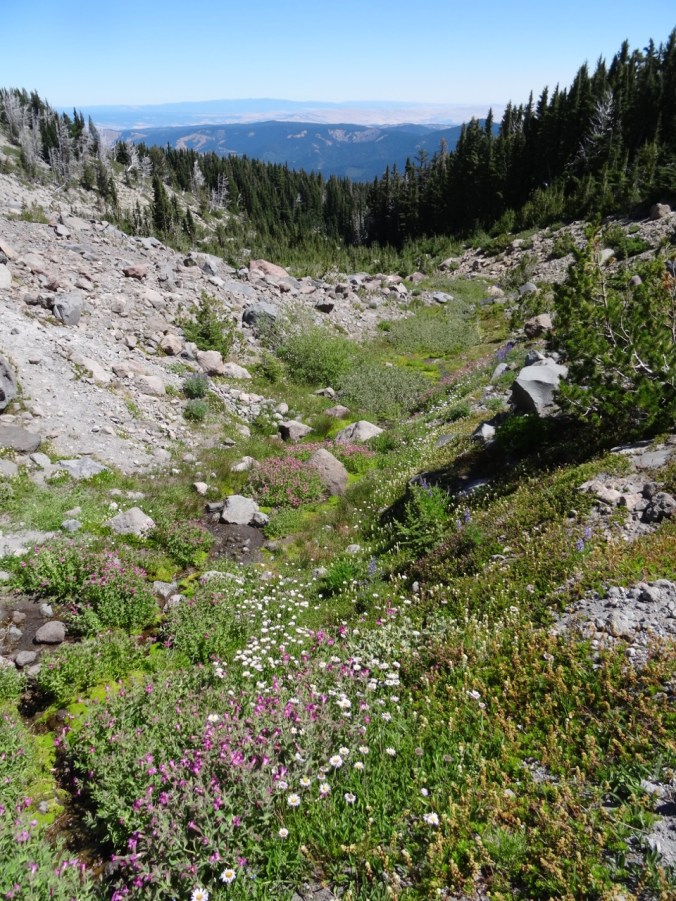
July 2017

October 2015
Craft Update:
I made a key basket for my son, and added one and a half knitted tortillas to my collection:


 Margaret Quilts