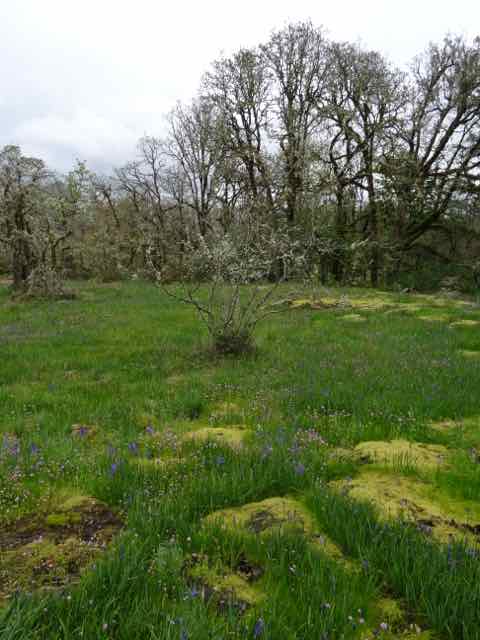
6. Yachats Weekend

Mary’s Peak and Yachats 804 Trail  Friday, May 26   (#28)

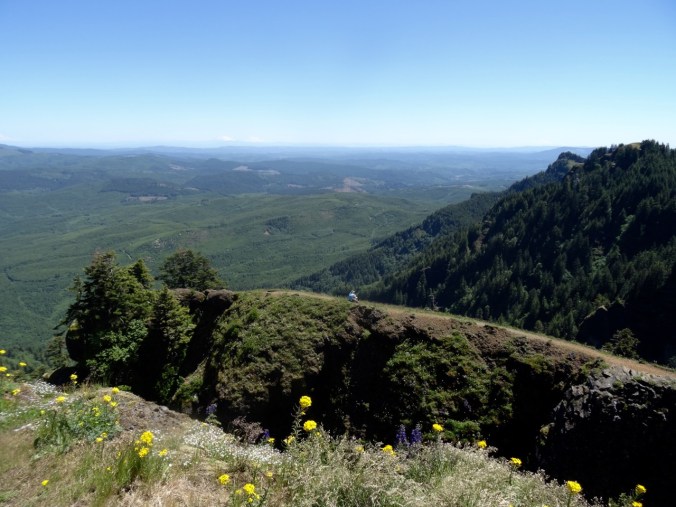
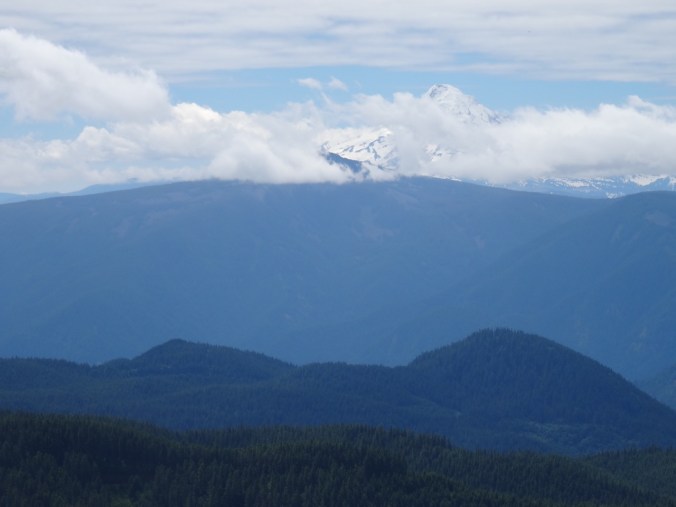
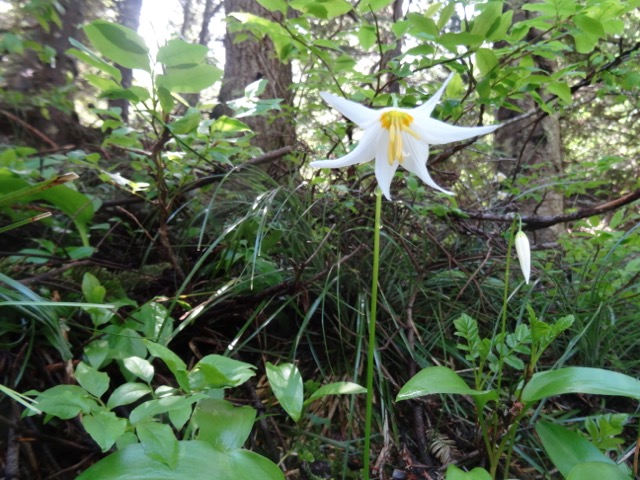
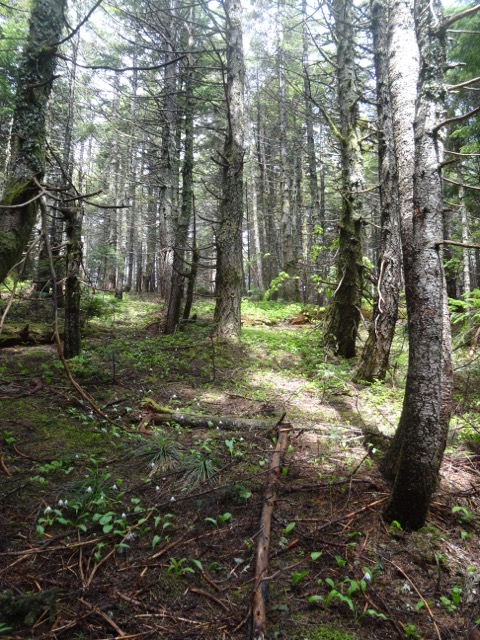
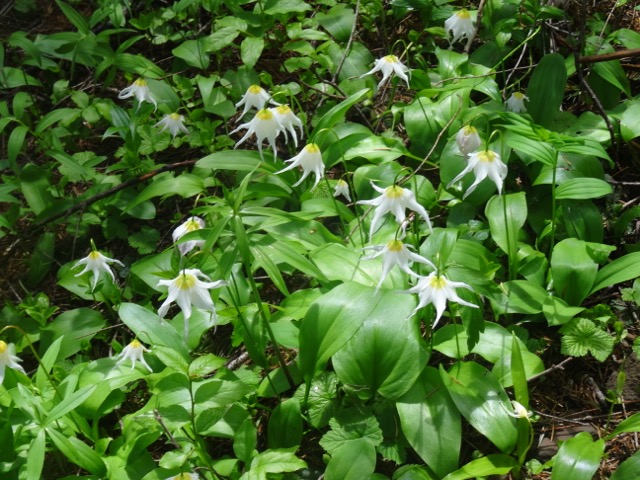
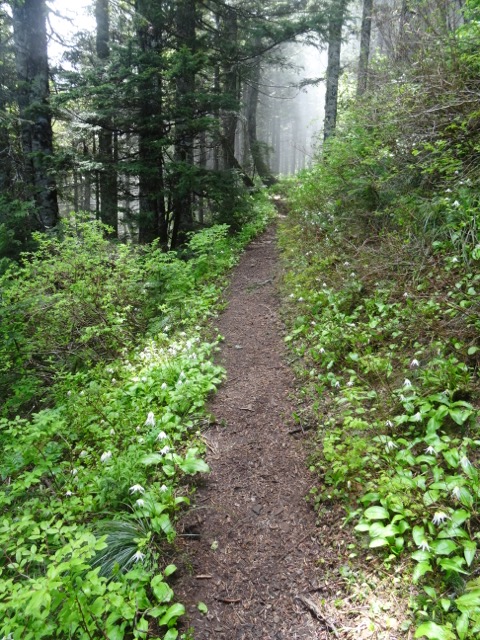
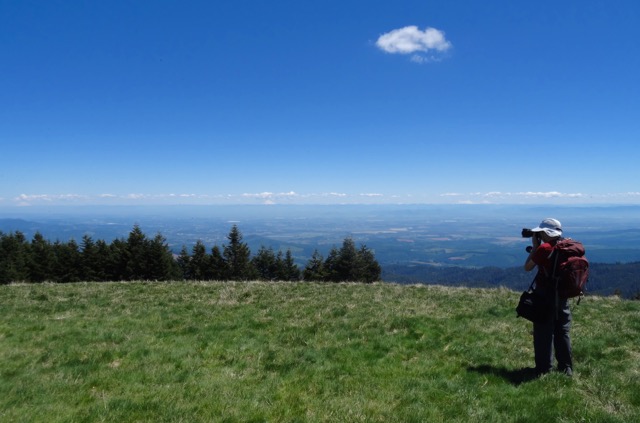
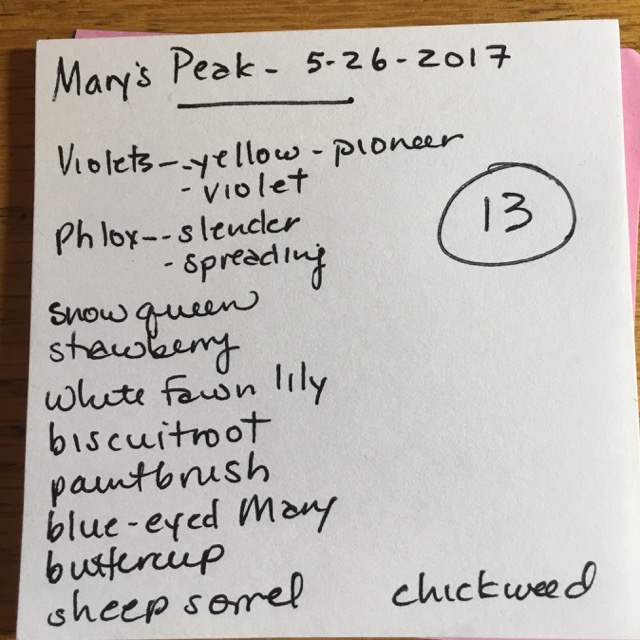
We started our weekend by driving to Mary’s Peak in the central Coast Range just west of Corvallis.  The meadows near the trail head were full of yellow Pioneer violets.  There were glacier lilies and radio towers at the top, along with a view of the Oregon Cascades from north to south: Mt. Hood, Mt. Jefferson, Three Fingered Jack, Mt. Washington, the Three Sisters, Mt. Bachelor, and Mt. Thielson.
DSC04673

Dan at the top of Mary’s Peak, with the Cascade Mountains from Mt. Hood to Mt. Bachelor on the skyline.
IMG_1141

Flower list


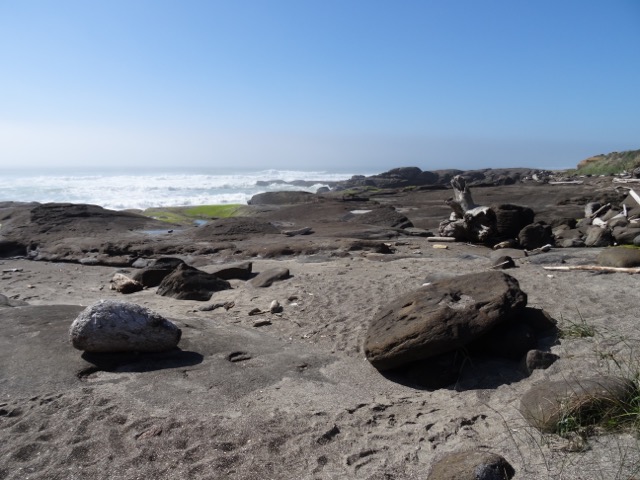
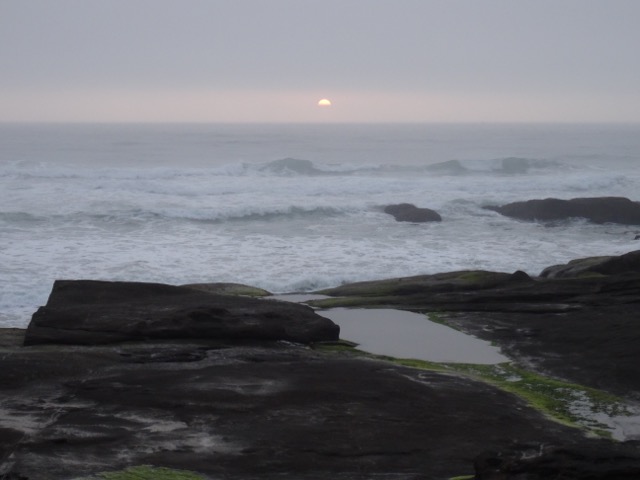
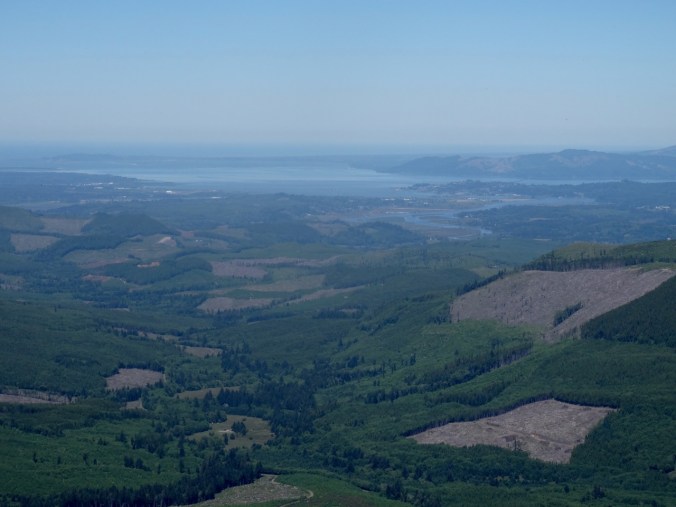
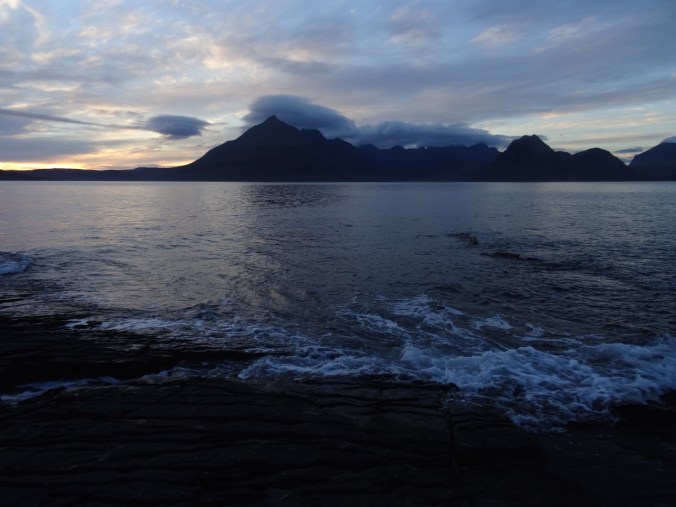
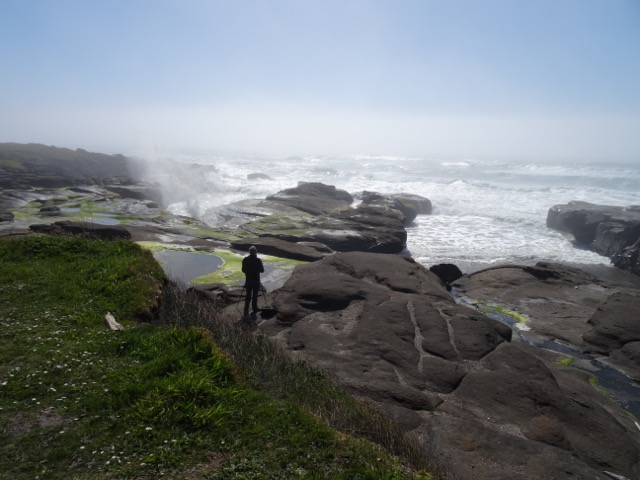
After our short hike we continued on Highway 34 west through the Alsea River valley, twisting and winding through riparian landscape to the sea at Waldport, then south along Highway 101 to Yachats.  The Overleaf Hotel overlooks a black lava armored swash zone that was spouting waves at high tide.  We were also looking out on the 804 trail that outlines the edge of land there.  We walked along the trail after dinner, admiring the early summer wild flowers and exploring some of the coves and natural jetties as the tide ebbed.  We watched a red shrouded sun sink into the sea.
DSC04682

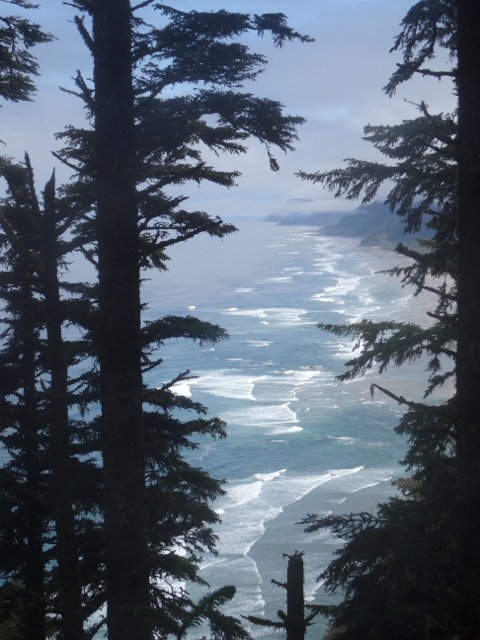
Spouting waves near our hotel

DSC04687

Another beach view

DSC04786

Sunset

Meanwhile, back in Portland, the terrorism had come to our neighborhood. Three honorable men defended two girls from an intolerant ranter on the Max train and were stabbed in the neck at close range, killing two of the men. We followed this horrific story from afar all weekend.

Cape Perpetua             Saturday, May 27         (#29)

We started at the Cape Perpetua Visitor Center, and hiked down to the tide pools at low tide, and then to the Cook’s Chasm area, but decided to return at high tide to see the wave action.

We then hiked up the St. Perpetua trail to the CCC stone shelter on the cliff. The trail passes through forest and hanging wildflower meadows.  The views were somewhat obscured by fog.

In the afternoon we returned to Cook’s Chasm at high tide, and saw the Spouting Horn, and Thor’s Well, and a lot more people.

Back in our room, we saw large sea creatures in the waves, and took photos with our zoom lenses.  At first we assumed it was a whale, or four.  But when I googled whales I could not find the fringed fins I was seeing.  After a little more searching, I realized we were seeing sea lions, whose tail fins look like fingers.  But we did see four of them from our window surfing the waves.

DSC04983

Sea lion or two

Later, we went for a delicious dinner at the Drift Inn in Yachats, and then a walked south from our room on the 804 trail.

DSC04986DSC04990

DSC05026

Sea thrift on the rocks

Heceta Head and Lighthouse, Hobbit Beach                 Sunday, May 28 (#30)

Washburne Beach was foggy as we started our hike.  We walked about a mile along the beach at low tide, few others about, and passed a bald eagle sitting in a snag above the beach.

The southern part of the beach is called Hobbit Beach, presumably because the sandstone bluffs are eroded into hobbit holes by water seeps dripping down.

This slideshow requires JavaScript.

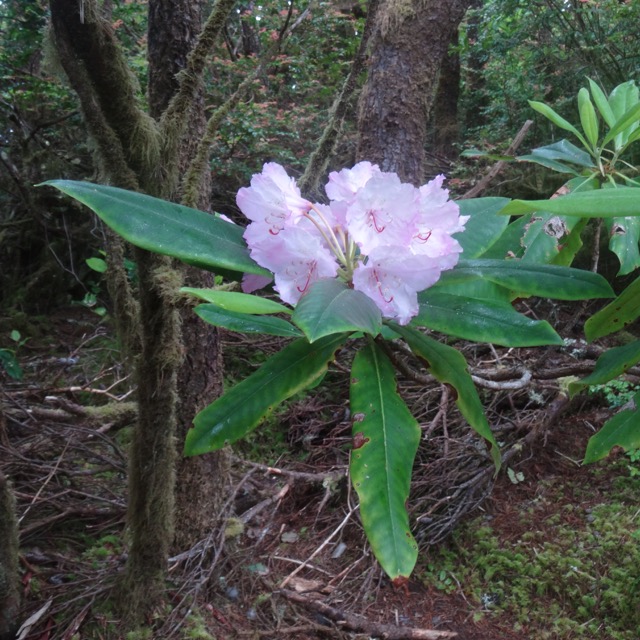
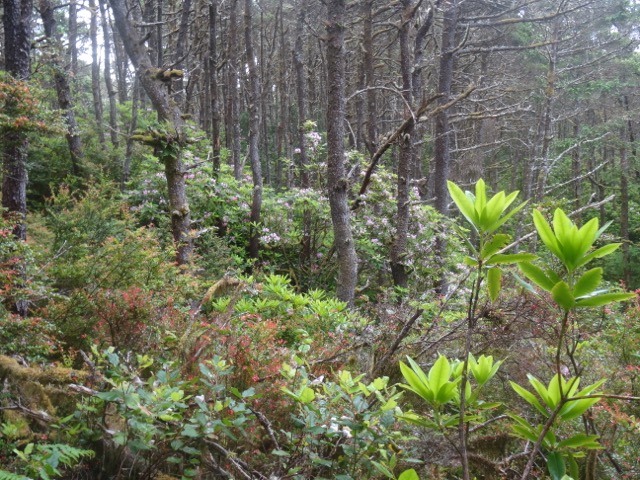
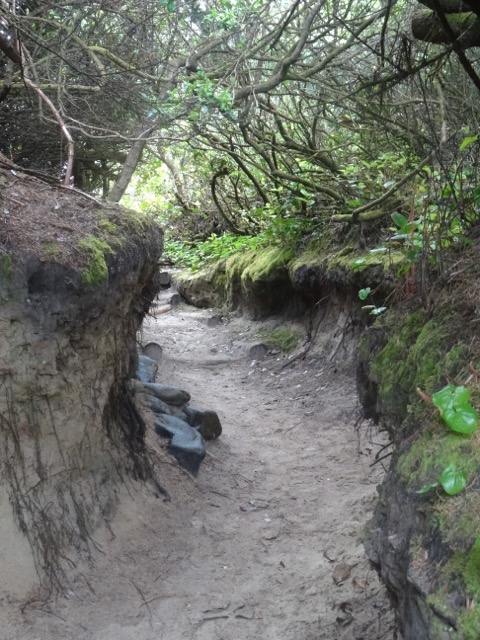
The fog was lifting as we headed up from the beach through the rhododendron and Sitka spruce forest on Heceta Head.
DSC05138

Into the misty forest

DSC05141

rhododendron

DSC05142

Rhododendron forest

DSC05152

View back to Hobbit Beach

By the time we switchbacked down to the Heceta Head Lighthouse on the south side, we could see the lovely blue water and birds on the rocks.  We ate our lunch near the light house and took a brief tour through the lower part of the old building.

Then we retraced our trail back to Hobbit Beach, which by now had plenty of people and a higher tide.

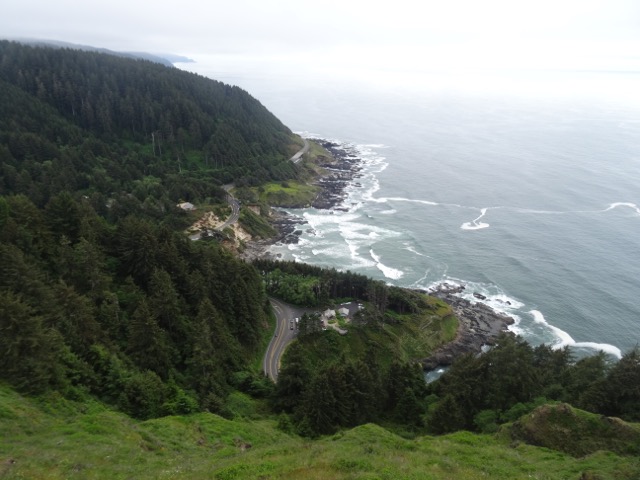
On our way back to Yachats, we drove up to the CCC shelter that we hiked to yesterday.  Today, the skies were clearer and we could see the views we missed.  We also stopped for a look at the Devil’s Churn area, another place where the waves create large splashes as they are constricted in rock crevices.  In the evening, we sat in the spa pools at our hotel that overlook the beach.
DSC05219

Less foggy view from the Cape Perpetua shelter
DSC05234

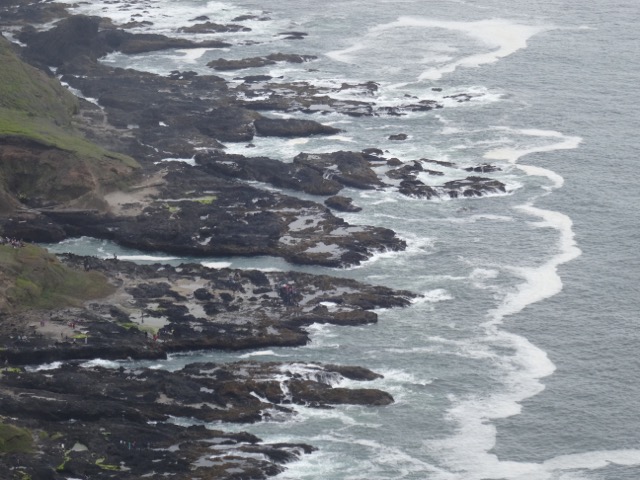
Zoomed in, now I can see the Spouting Horn and Thor’s Well

DSC05237

Devil’s Churn


Yachats 804 Trail and home,      Monday, May 29

We took another low tide walk through the rocky headlands near our hotel.  There were sea stars clinging to the rocks at the lowest levels, giving us hope that the species will recover from the disintegration disease that wiped many of them out during the past few years.  Dan also saw a breaching whale while I poked around in the tide pools. Soon enough it was time to pack up and head home after a lovely weekend by the sea.
DSC05246

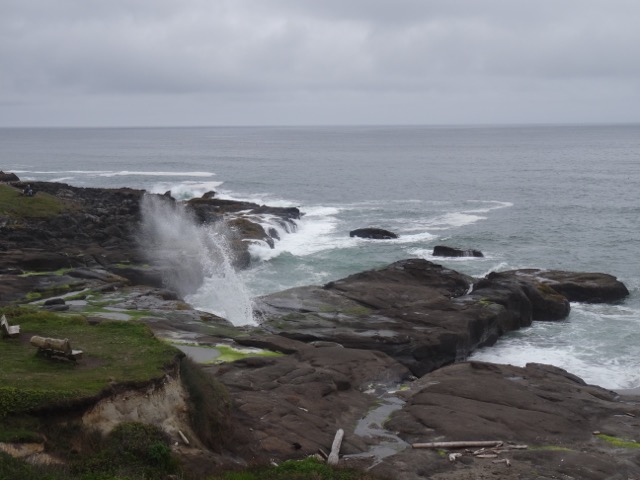
Spouting slot at high tide

DSC05270

Slot at low tide

A few more low tide beach views:

Flowers near the beach:


5. Cape Horn; Lewisia and Clarkia at Tracy Hill

Cape Horn    May 19, 2017    (#26)

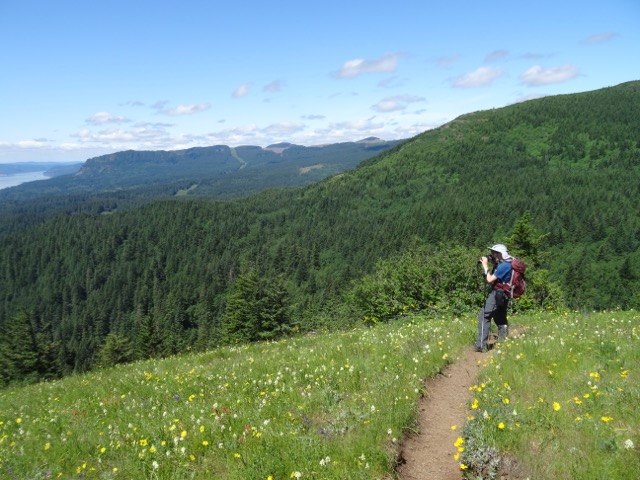
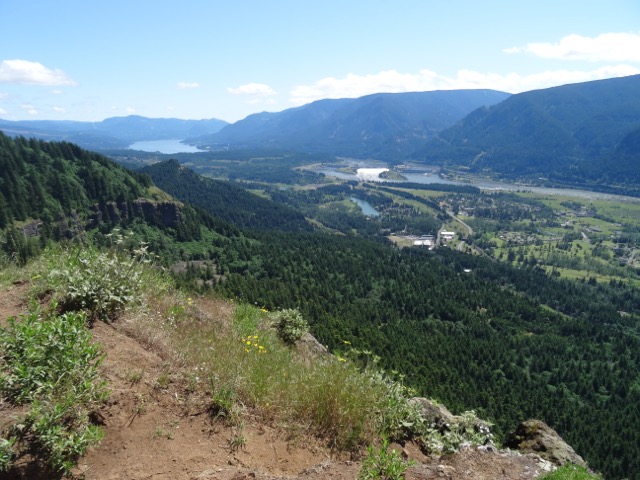
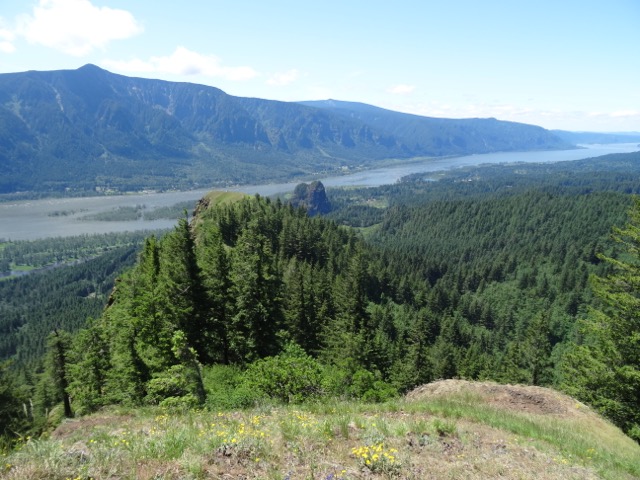
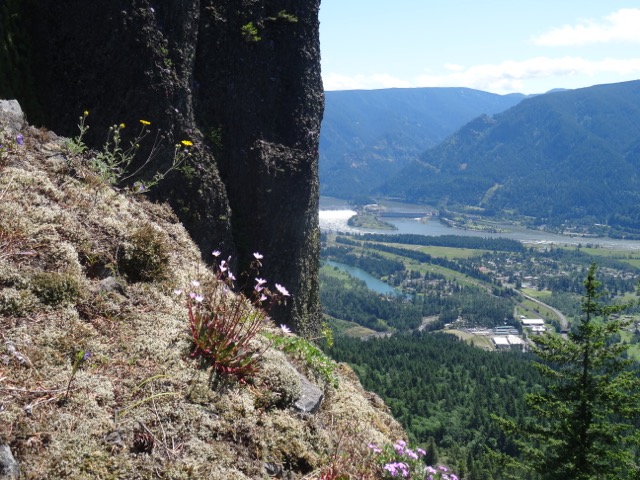
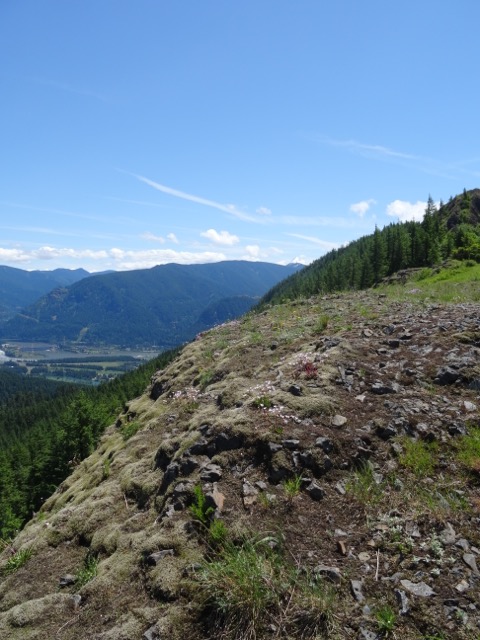
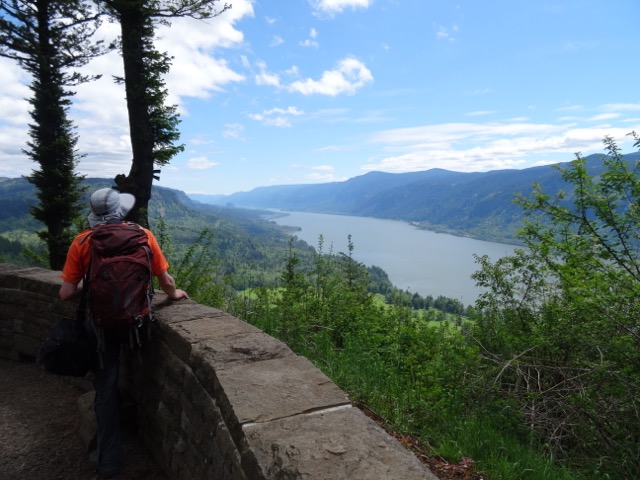
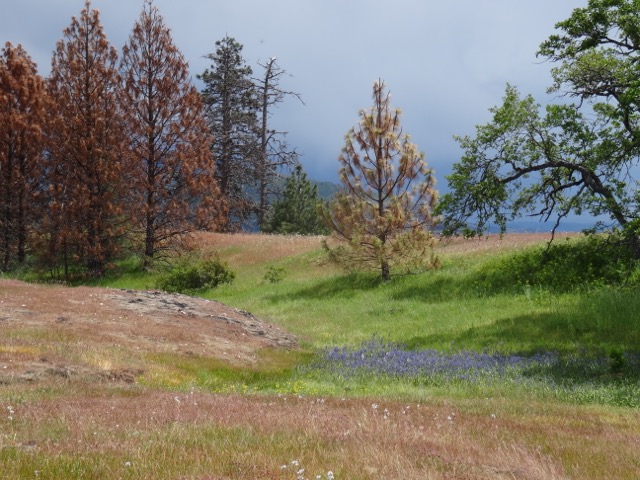
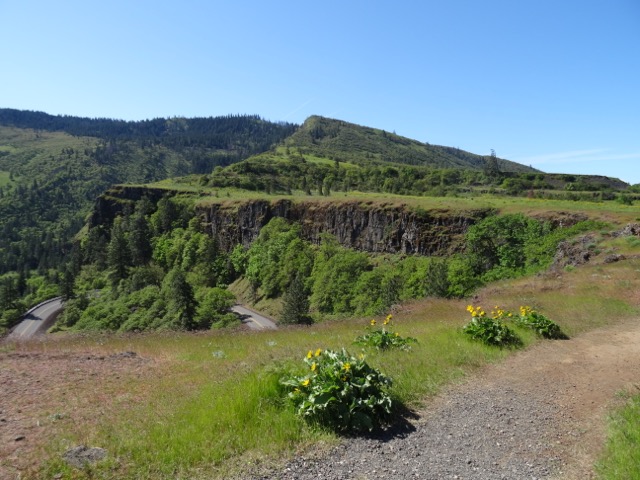
We heard the larkspur might be blooming at Cape Horn, a hike near Washougal, Washington.  The trail is a loop, but this time of year the lower section is closed for peregrine falcon nesting.  We started in the middle, and hiked down to the waterfall overlook, then back up to Pioneer Point.  We did see some falcons flying below us.  The larkspur were blooming in the lower area near Hwy 14, but not in the upper trail near the Nancy Russell overlook yet – should be another week or so up there.  A beautiful day, and not too busy on the trail. (6.0/1200′)

DSC04456

Eastward view from the Nancy Russell overlook

DSC04487

Silverstar Mountain, with snow, looking north from near Pioneer Point

Tracy Hill  May 21, 2017  (#27)

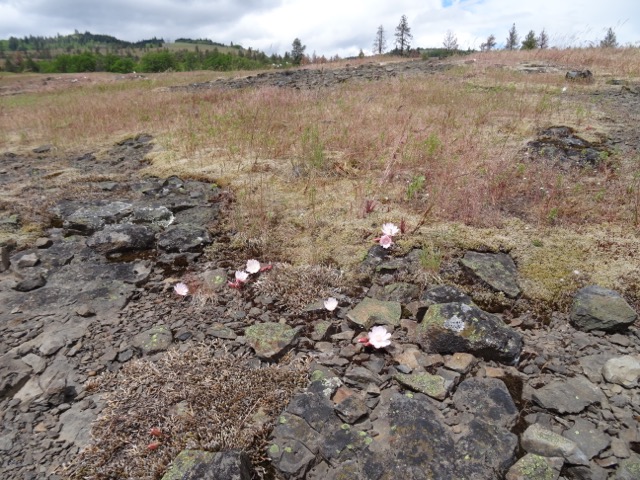
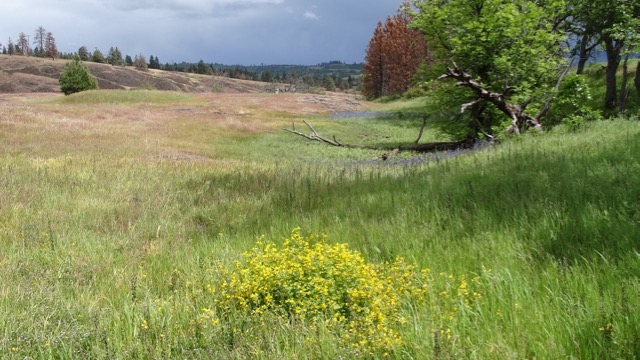
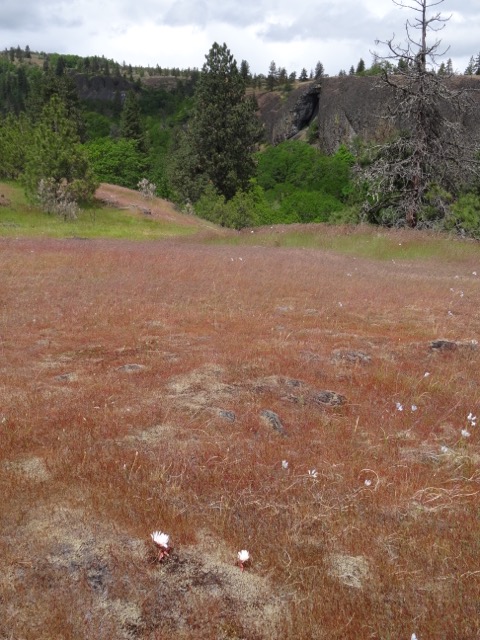
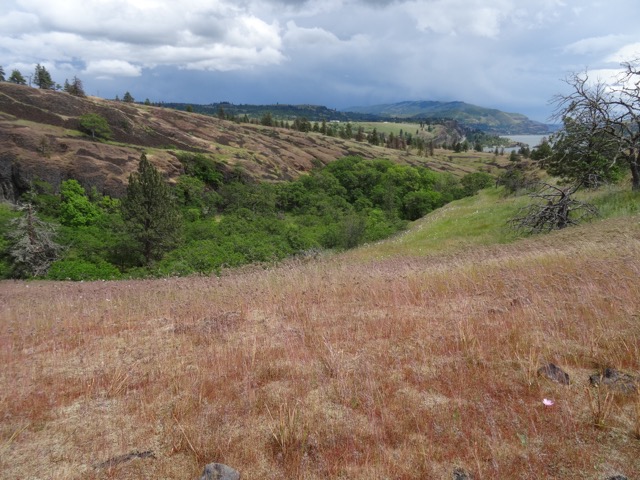
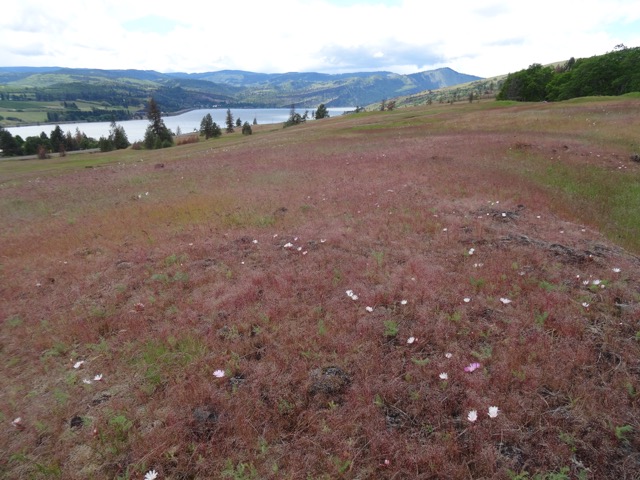
Two years ago in February we hiked up Tracy Hill above Catherine Creek, and I noticed lots of Lewisia (bitterroot) foliage on the rocky patches as we made our way up the hill.  Knowing that the bitterroot is in full bloom now, I wanted to go back and see the handsome pink flowers along the trail.  The suite of wildflowers that bloom in the later, drier season were out, the green grasses and early blooms have faded and gone to seed, so the hills are less spring green, and more a blend of olive greens, browns, and pinks, in a lovely color wash.  The bitterroot were blooming, as expected, but more toward the end of the cycle, compared to two weeks ago, and we also saw a few pink slender Clarkia along the way.  Yellow monkey flower and purple lupine added pops of color to the landscape, and there were purple penstemon blooming along the cliff edge north of the arch.  It was hot (90 degrees) when we finished the hike.  This may be our last eastern gorge hike until fall. (6.0/1300′)

DSC04540

Bitterroot still in bloom


DSC04547

Looking south to Mt. Hood and the parking area

4. Rainy Weekend: Rainbow, Bitterroot and more Balsamroot

Starvation Ridge          May 12, 2017          (# 24 )

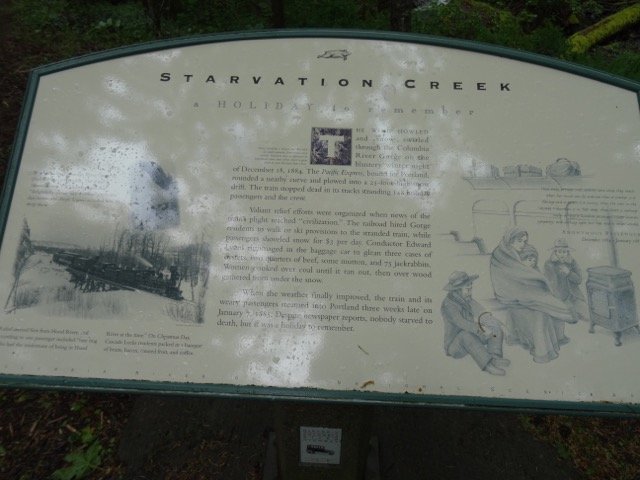
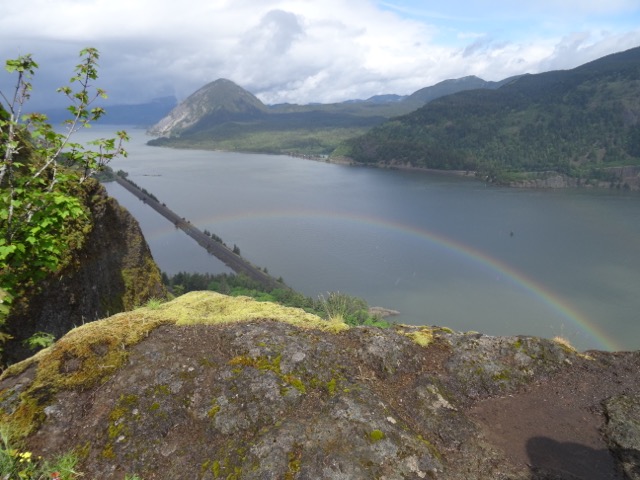
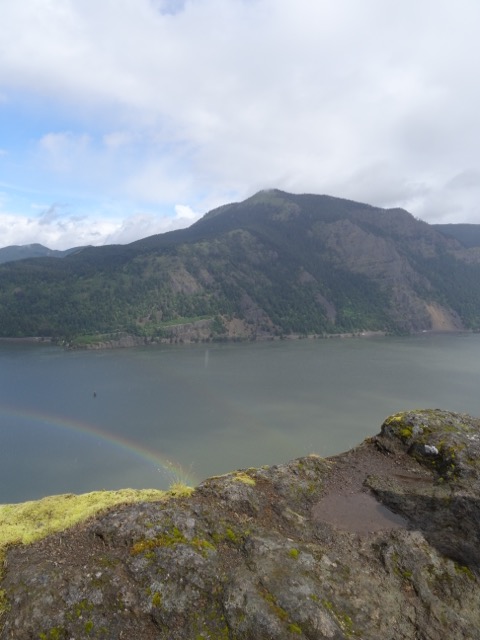
Lots of rain in Portland this weekend.  Friday we decided to try the Starvation Ridge loop near Hood River (50% chance of rain).  Two cars in the parking lot, but no actual raindrops.  Clouds were looming just above the top of Dog Mountain directly across the Columbia River.  The loop is about 3 miles, and the Oregon Hikers trail guide recommends a clockwise loop as the first uphill section is really steep but would be more difficult going down.  We completely agree with their assessment – also there were a couple of washouts on this part of the trail that would be harder down hill.  The trail switchbacks along the ridge and crosses under the power lines.  There are open meadows in places that were full of wildflowers.  We also had drizzle or rain about 50% of the time, but as we were standing on one of the high overlooks, the sun came out behind us, creating a rainbow below us over the river.  We did have to scoot across one stream crossing on a log on our backsides. We enjoyed the hike, and we had the trail entirely to ourselves.  (3 miles, 1100 feet )  We finished the Starvation hike around lunchtime, and ate our lunch while reading the signage about the train that was stuck in the snow here for three weeks in December, 1884, though noone actually starved.

DSC04133

Starvation story

DSC04021

First overlook, east toward the trailhead, with phlox

DSC04066

Rainbow below us, toward Wind Mountain

DSC04068

Dog Mountain, across the Columbia River

DSC04101

Rainy meadow

Bitterroot at Catherine Creek     May 12, 2017

After lunch we crossed over the Hood River Bridge to Catherine Creek as we had seen reports that the bitterroot were blooming.  Yes!  The meadows are starting to look dry, but the rocky balds are sprinkled with clumps of blooms, with more to come.  We wandered up to the vernal ponds area above the road and could see bitterroot bloom far and wide.  The ponds are dried up, but filled with swathes of purple camas and monkey flower.  Buckwheat are starting to bloom, and a few white death camas remain in the shady areas.

DSC04140

Bitterroot

DSC04139

Near the parking area

DSC04162

Vernal Pools filled with camas

DSC04167

DSC04174

Catherine Creek arch

DSC04179

East view – Columbia River

DSC04201

West view- Columbia River

DSC04213

Looking back at the vernal pools

Weldon Wagon Road      May 14, 2017   (# 25)

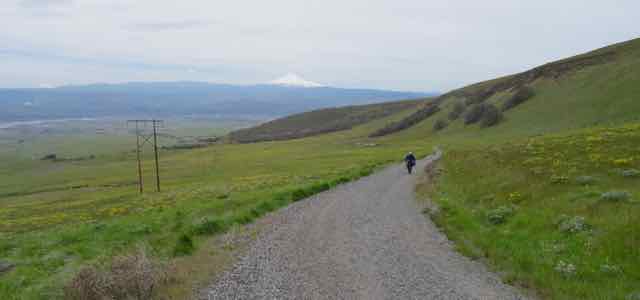
Mothers Day – Once again going east out of the rain, we decided to walk this trail above Husum, Washington. We went with our son, and some friends with their dog. We had been once several years ago, in April, and I remember enjoying walking through the oak woodlands that reminded me of the California hills of my youth.  We were pleasantly surprised to see that in May, the open slopes in the upper part of the trail are covered in balsam root flowers with lupine, buckwheat, and various parsleys. We could only see the very lowest part of Mt. Hood below the rain clouds, but we did not get any rain, and had a very pleasant hike (5.5 miles, 1300′).

DSC04248DSC04250DSC04255

DSC04274

Trail cutting through upper slopes – balsam root in bloom

DSC04286

The lower shoulders of Mt. Hood ahead

DSC04306

DSC04327

Columbia desert parsley in the ravine

3 – Lilacs and Balsamroot

Hulda Klager Lilac Garden    May 6, 2017

We went with friends to see the lilacs in bloom at the 1889 farmhouse in Woodland, Washington.  The lilacs were lovely, there were some interesting quilts in the house, and we enjoyed a picnic lunch at nearby Horseshoe Lake.  We also visited the Tulip farm at the south end of town, and saw the last straggling tulips – mostly done for the season.

Tom McCall Point hike  May 7, 2017    (#23)

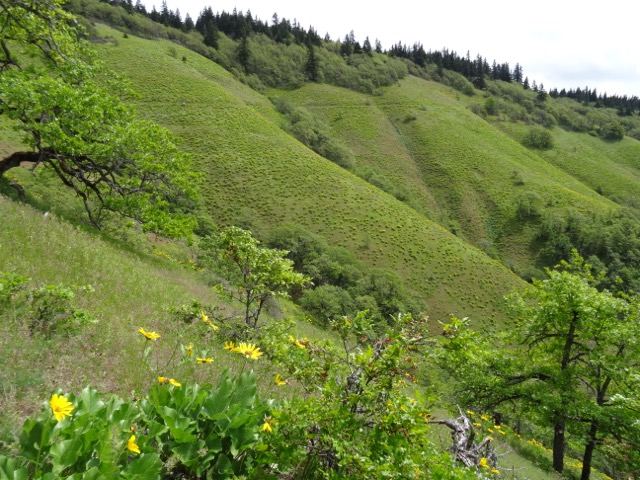
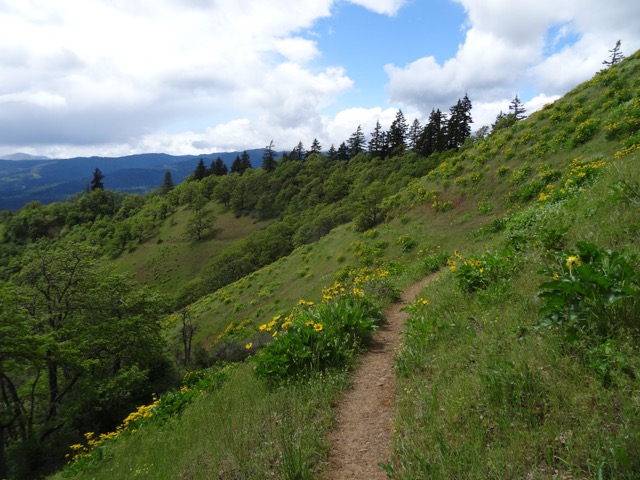
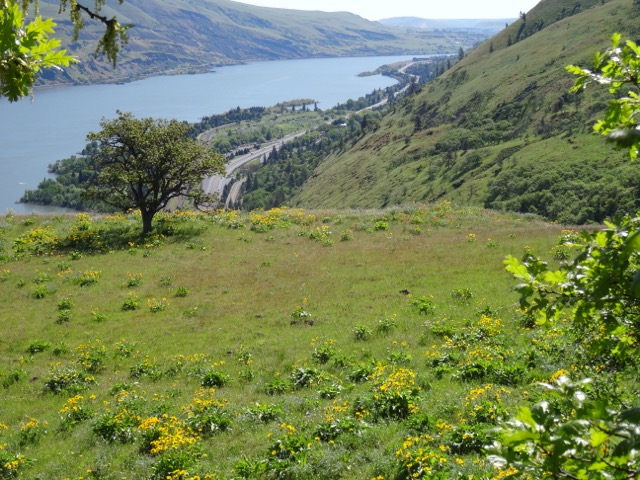
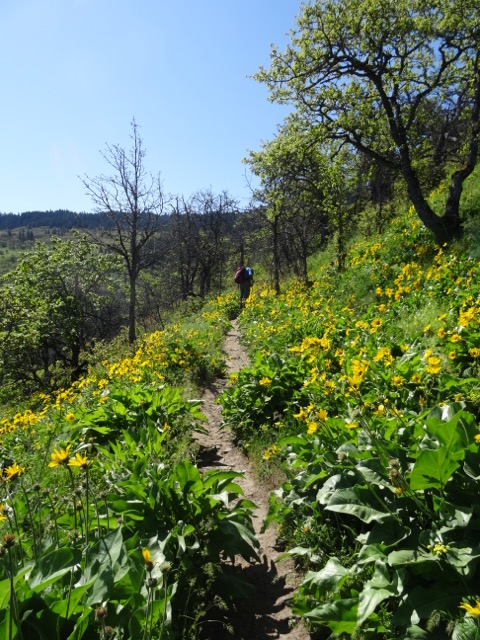
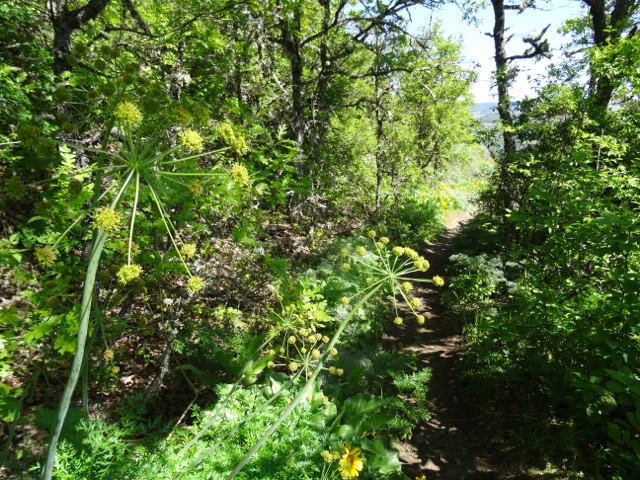
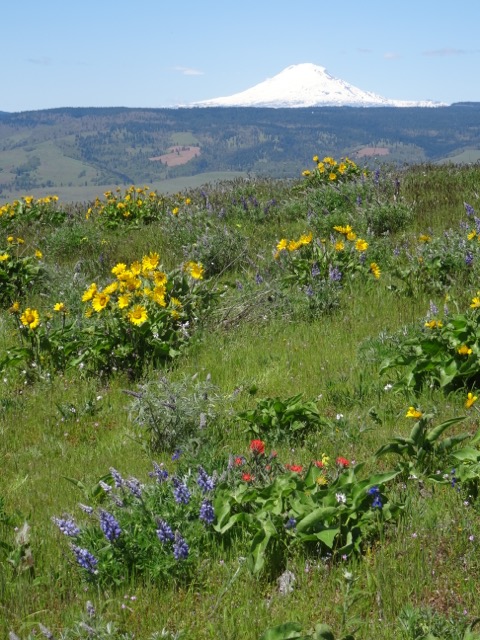
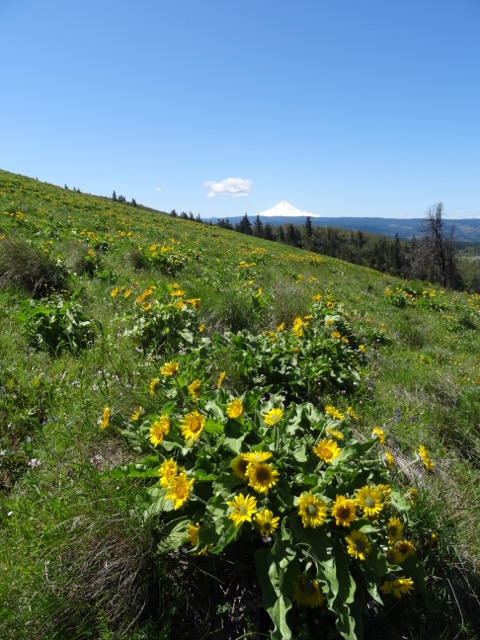
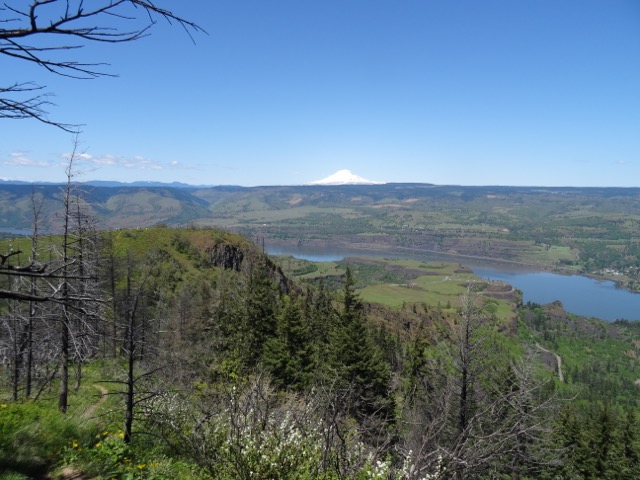
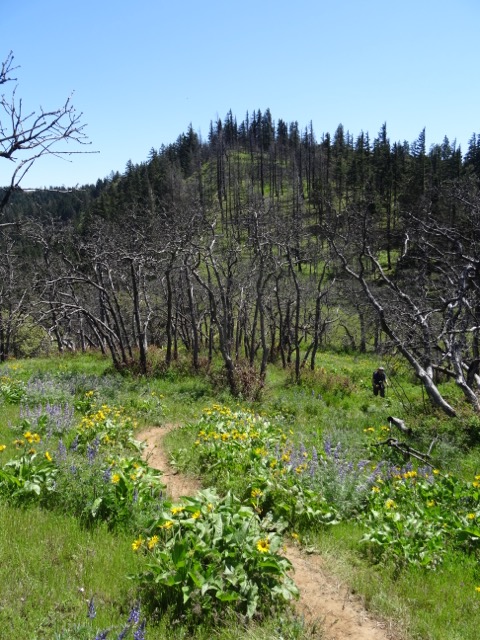
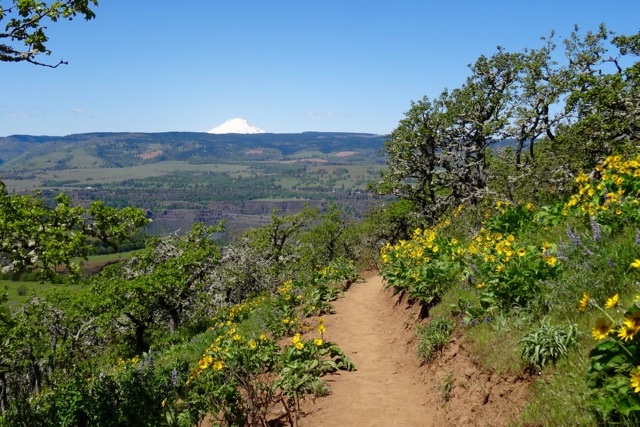
Our best hiking weather for the weekend was Sunday, so we knew there would be plenty of people hiking the trail from Rowena Crest to Tom McCall Point on the eastern edge of the Columbia River gorge.  We were all there to see the amazing show of flowers – and the flowers were amazing!  Bright yellow balsam root, purple lupine, red paintbrush, several varieties of parsley, blue-eyed Mary and saxifrage, prairie stars, larkspur, chocolate lilies .  The trail has been relocated since the fire three years ago, and the grade to the top is a bit less steep, and traverses more open meadow than oak woodland. We continued to the high point on the ridge to the east, heading toward Seven Mile Hill, but stopped where the fence crossed the trail (total about 6 miles/1300′). On our way home, we drove down the Old Highway switchbacks to Rowena.  Later that night, the cliff above the road gave way to a massive landslide which will block the road for a few weeks until repaired.

DSC03720

View from the trailhead

DSC03776

East toward Rowena

DSC03777

Through the balsamroot

DSC03735

Parsley lined trail

DSC03804

Memaloose Hills to the west

DSC03902

Mt. Adams to the north

DSC03840

Mt Hood

DSC03888

View from our highest point, back toward Tom McCall Point, Rowena Crest and the Columbia River

DSC03896

Hiking back up Tom McCall Point

DSC03913

Another view of Mt Adams on the hike down

2. Crystal and Oak Springs


Crystal Springs Rhododendron Garden            4/28/2017     (#21)

We went to Crystal Springs Rhododendron Garden in southeast Portland for an afternoon walk.  Rhodies and azaleas were in various stages of bloom.  The Japanese maples were lovely.

DSC03479

Dan at Crystal Springs

Oak Spring Trail, Dalles Mountain Ranch        4/29/2017     (#22)

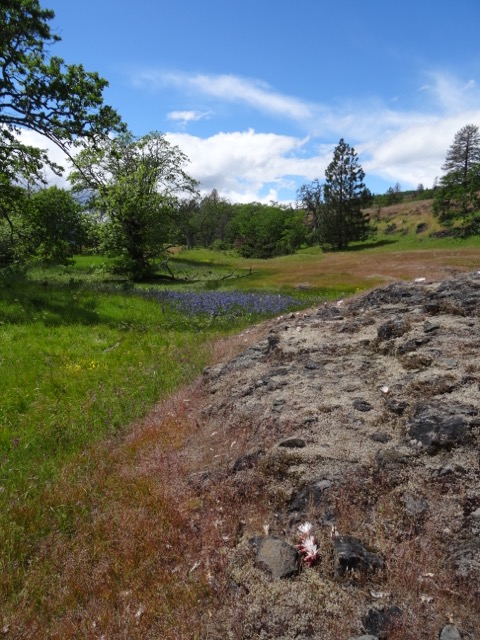
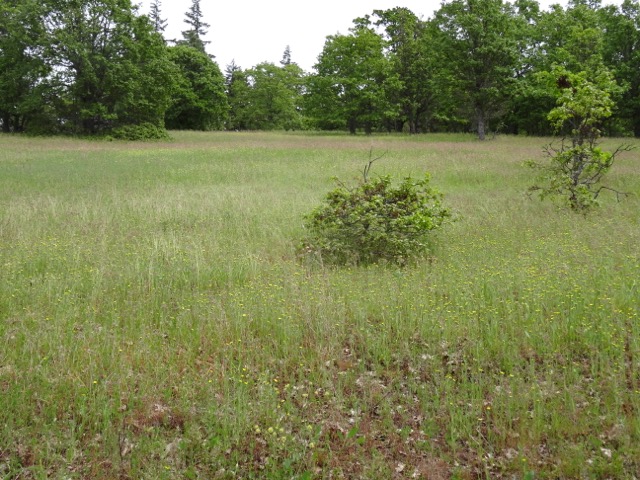
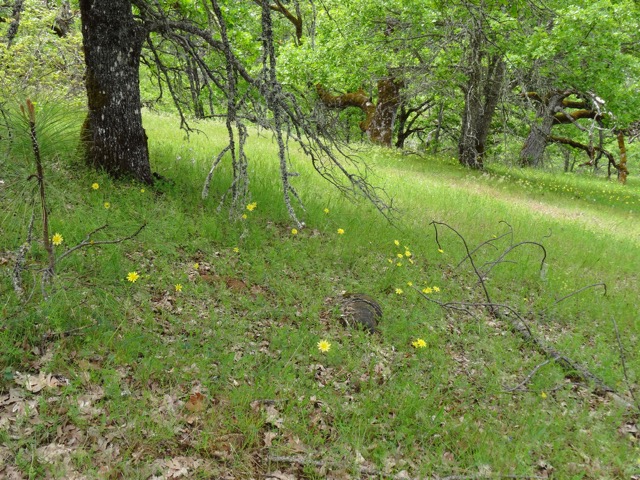
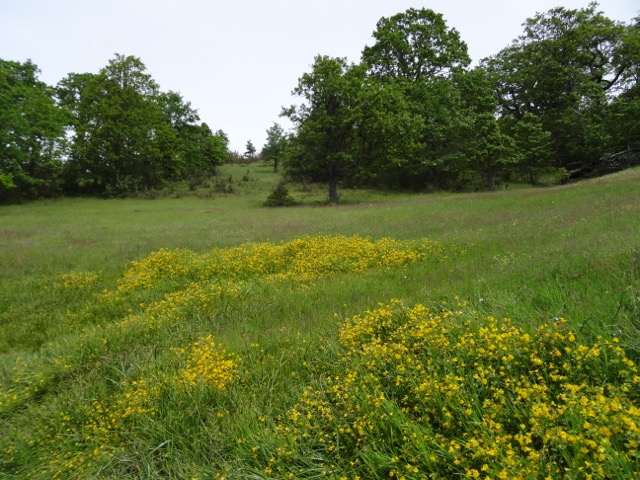
The wildflowers in the eastern gorge are blooming at the middle elevations.  We took the fork to Oak Springs instead of to the top of Stacker Butte to get out of the wind.  We saw the suite of flowers blooming in the oak woodland, including waterleaf, yellow bells and oaks toothwort.

DSC03553

1. Introduction and First Hike Post

I plan to use this blog to document quilts, knitting, and our hiking and other adventures. I am a slow quilter, so quilt posts will be less frequent, but I plan to update with our Hike(s) Of The Week every week.

Hikes of the Week

Coyote Wall    April 21, 2017      (hike #19 for 2017)

We hiked about 8 miles and 1700 feet total elevation on a beautiful blue day where we have hiked many times.  The balsam root were blooming, and we saw 48 different flowers, including the last of the grass widows and yellow bells in the uppermost areas, the first of the chocolate lilies starting to bloom under the oak trees, and large swathes of meadow speckled white with popcorn flowers.

Version 2

Looking north over Coyote Wall from the Little Moab trail.

Version 2 (1)

Looking south to Mt. Hood and the Columbia River

Version 2 (3)

Eastward view toward Catherine Creek and Tom McCall Point, with Balsam Root.

Camassia Natural Area           April 23, 2017         (#20)

On a rainy Sunday we took our chances that we would find a dry weather window, and drove to the Camassia Natural area, a Nature Conservancy property in West Linn.  This site is within view of the 205 freeway, but is a remarkably beautiful.  This was our first visit here.  We walked about 2 miles and saw the early blooming camas flowers, rosy plectritis, buttercups and blue eyed Marys.

Version 2 (6)

Camas fields

Version 2 (5)

Camas and rosy plectritis

I see I may have to adjust photo quality and other formatting issues going forward, but I am happy to have a first post done.